01Curb and landside
1,240
arrivals this hour
Arrival volumes at doors and drop-off points, live and by hour
- Counting
- Scheduling
Airports
Ariadne measures passenger flow through the whole terminal: how many passengers are in each zone, how long they wait and dwell, and where they go next, from the curb and check-in through security to airside retail and the gate. The same flow data runs live wait times and alerts, lane and concession staffing, browser-based wayfinding, offers for passengers who opt in, and Threa AI.
No cameras. No images. No personal data collected.
Glasgow Airport added £54,000 a day in non-aeronautical revenue.
Security A
3 min
p90 6 min
Security B
5 min
p90 11 min
Passport control
4 min
p90 7 min
Wait time at Security B, last 60 minutes
Mean waitp90
Threshold alert · Security B · p90 above 8 min · sent to Teams and email
Illustrative view of the Ariadne Analytics queue-times app.
Customer story
Product tour








What it is
Airport passenger analytics is the measurement of passenger flow: how many passengers are in each part of a terminal, how long they stay, and where they go next. Ariadne does it with Hybrid Fusion, its patented camera-free method. Time-of-Flight depth sensors count every passenger at choke points such as security entries, and phone signal sensing follows passengers through open areas such as the airside retail zone. Both streams are combined centrally into one passenger-flow picture of the whole terminal.
Counting is the base layer. The same sensors run Ariadne's people counting platform in retail, shopping centers, and cities, and the guide to airport people counting technology compares the options. In a terminal the same flow data also feeds scheduling, wayfinding, consented marketing, and Threa AI, so one sensor layer serves operations, commercial, and planning teams.
Products
People counting is the layer underneath. The other six products run on the same passenger-flow data, so operations, commercial, and passenger-facing teams work from one set of numbers.
Select a product to see what it does in a terminal
1 of 7
01
Used by: Every terminal team
Counts at every door and choke point, dwell and occupancy per zone, and passenger flow between zones. The layer everything below runs on.
95%+ accuracy in typical airport deployments
People counting platform02
Used by: Security and terminal operations
Live wait per checkpoint from the median to the 95th percentile, in minute intervals, with threshold alerts. Numbers fit to publish on terminal screens.
Glasgow Airport: 23% fewer passenger complaints
See the queue-times dashboard03
Used by: Duty managers and concession operators
Lane and concession staffing planned on footfall forecasts in 15, 30, or 60-minute intervals instead of last year's rota.
Sangster International: 15-day forecasts feed staff planning
Employee scheduling04
Used by: Passengers and customer service
Browser-based wayfinding to a gate, a shop, or the route between them. Nothing to install. A live blue dot appears only after a passenger opts in.
Patent EP3964852A1
Indoor navigation05
Used by: Commercial and concessions teams
Offers from the stores a passenger passes, sent only to passengers who opted in, and measured against dwell and store visits.
Glasgow Airport: £54,000 a day in non-aeronautical revenue
Visitor marketing06
Used by: Operations leads and management
Ask the terminal's own data a question in plain language. Summaries, alerts by email or Microsoft Teams, forecasts, and an automation when a threshold is crossed.
Included in Ariadne Advanced
Threa AI07
Used by: Airport IT and integration teams
Run Hybrid Fusion on the Wi-Fi access points the terminal already owns, and move counts into SITA, Amadeus, BI tools, and schedulers through the API.
Aruba, Cisco, Ruckus, Sophos, TP-Link
EaseLinkIllustrative sketches of what each product does in a terminal.
Security
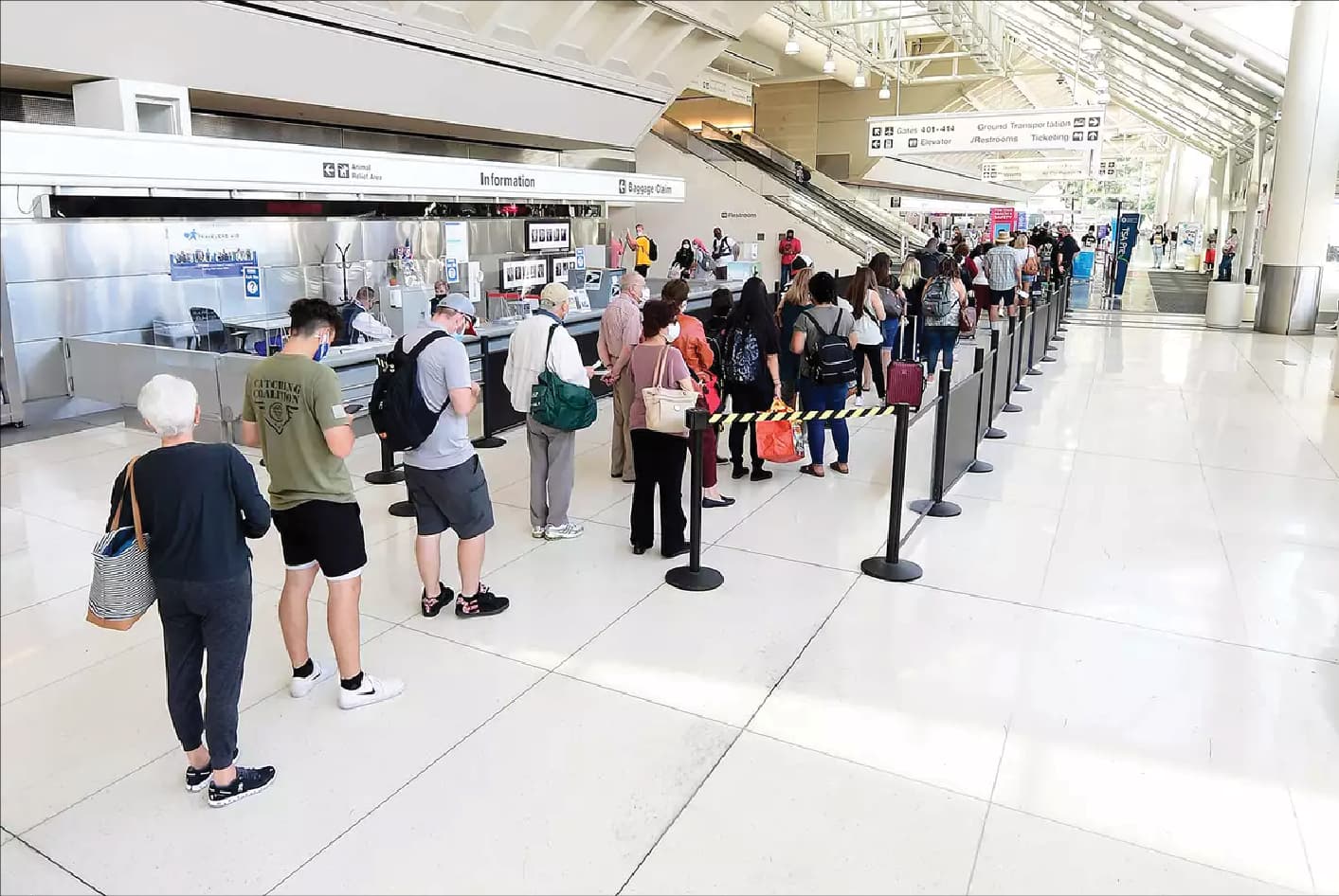
Sangster International Airport in Montego Bay has used Ariadne since late 2023 across six process areas: check-in, outbound security, passport control, the immigration hall, baggage claim, and customs. Threshold alerts flag build-ups, and 15-day footfall forecasts feed staff planning.
At Glasgow Airport, real-time wait-time notifications helped cut passenger complaints 23%.
Ariadne counts every passenger entering and leaving the security checkpoint, measures how long passengers spend in the queue, and turns that into a live wait time.
In typical airport deployments, Ariadne counts with 95%+ accuracy, which is enough to show the number to passengers rather than keep it for reporting.
Passengers see the expected wait before they join the queue.
A threshold alert fires when the wait passes your service level, so a lane opens before the line reaches the stairs.
Where a terminal has more than one checkpoint, signage can point passengers to the one moving faster.
Footfall forecasts tell planners how many lanes each shift needs, broken into 15-minute intervals. See how to staff security lanes to forecast demand, or read about queue prediction for hub terminals.
Counts, wait times, and occupancy reach your own operations tools through the Ariadne API or the SITA and Amadeus integrations, and weekly and monthly reports go to the teams that need them.
Terminal zones
Each zone answers a different question for a different team. Ariadne measures passenger flow in all six on one platform, so a queue at security and a quiet duty-free store show up in the same dashboard.
01Curb and landside
1,240
arrivals this hour
Arrival volumes at doors and drop-off points, live and by hour
02Check-in
6 min
wait at counter bank B
Queue length and wait time per counter bank
03Security
4 min
wait, 9 min at the 90th percentile
Entries, exits, live wait time, and throughput per checkpoint
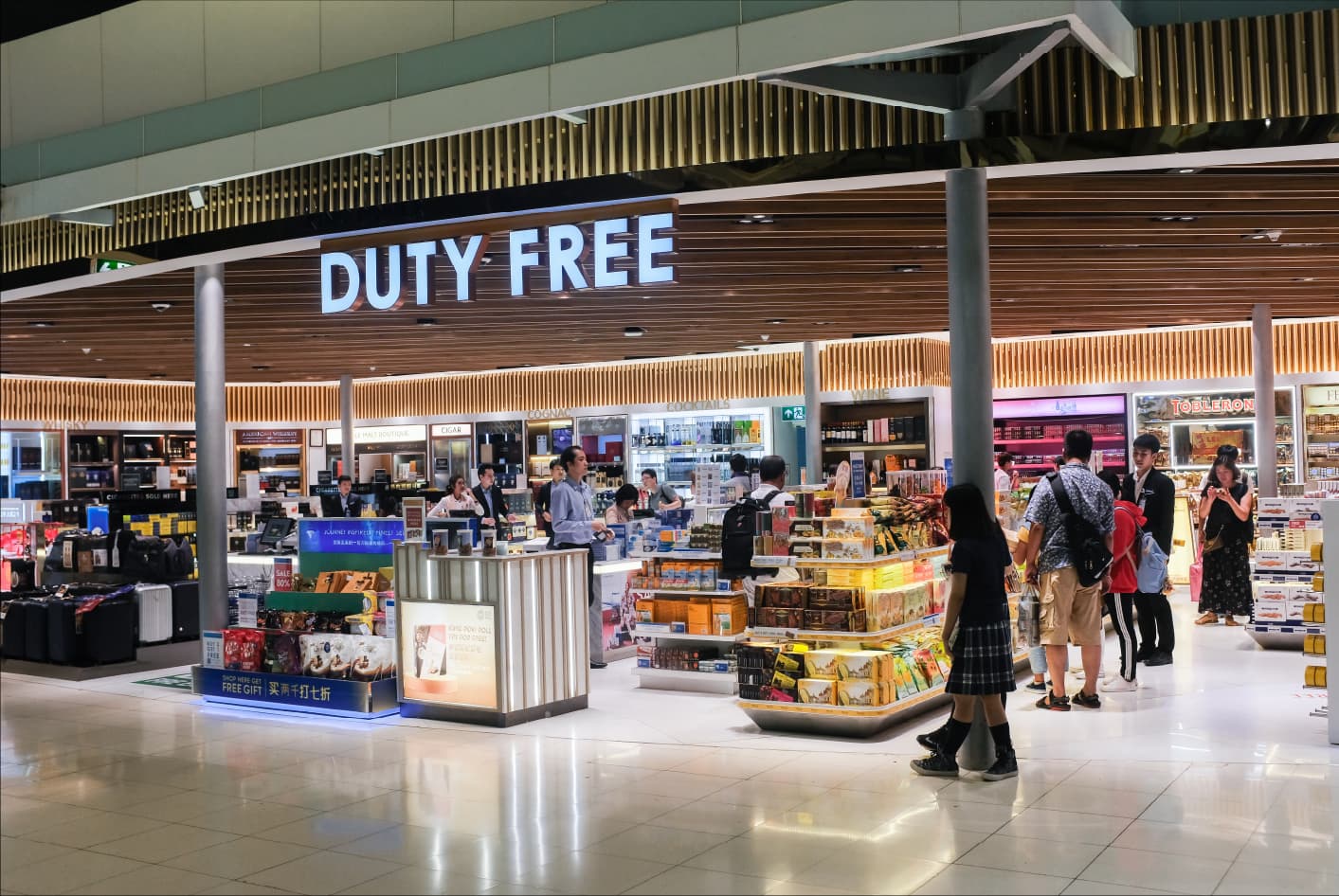
04Airside retail and F&B
38%
capture rate, duty free
Passing traffic, capture rate per storefront, and dwell per zone
05Gates and lounges
62%
lounge occupancy
Occupancy and dwell per gate area and lounge
06Arrivals and baggage
310
at baggage belt 4
Crowding in immigration halls and at baggage belts
Figures are illustrative. The tags show which Ariadne products act in that zone.
| Zone | What Ariadne measures | Who acts on it |
|---|---|---|
| 01Curb and landside | Arrival volumes at doors and drop-off points, live and by hour | Landside operations |
| 02Check-in | Queue length and wait time per counter bank | Terminal operations and handling agents |
| 03Security | Entries, exits, live wait time, and throughput per checkpoint | Security and duty managers |
| 04Airside retail and F&B | Passing traffic, capture rate per storefront, and dwell per zone | Commercial and concessions teams |
| 05Gates and lounges | Occupancy and dwell per gate area and lounge | Terminal operations and lounge managers |
| 06Arrivals and baggage | Crowding in immigration halls and at baggage belts | Arrivals operations and border agencies |
Every zone reports in real time on Ariadne Advanced, or daily on Essentials.
Dashboard
Ariadne Analytics is where the terminal reads its own numbers. The view below is the queue-times app with illustrative data; the labels and controls are the real ones.
Security A
3 min
p90 6 min
Security B
5 min
p90 11 min
Passport control
4 min
p90 7 min
Wait time at Security B, last 60 minutes
Mean waitp90
Threshold alert · Security B · p90 above 8 min · sent to Teams and email
Refresh1 s1 min1 h
Staffing forecast · Security · next 3 hours
Lanes per 15 minutes
Illustrative data. Labels and controls match the Ariadne Analytics queue-times app.
Mean wait and the spread behind it, from the 25th to the 95th percentile, by day, by hour, or by minute, refreshed as often as every second.
A rule per area and service level. When the wait crosses it, the alert goes to email, to a Microsoft Teams channel, or to a popup in the dashboard.
Footfall forecast 15 days ahead, and staffing demand in 15, 30, or 60-minute intervals for lane and concession planning.
Yesterday's terminal in one page every morning, and the week's numbers to the teams that need them, without anyone exporting a sheet.
Ask the data a question in plain language, get the summary, and set the automation that fires when the pattern repeats.
Revenue
Glasgow Airport measured a 1.05% increase in revenue for every 1% increase in passenger dwell time, and added £54,000 a day in non-aeronautical revenue.
Every minute saved in the queue is a minute available airside.
Capture rate per storefront and dwell per zone show which concessions turn passing passengers into visitors and which do not. The metric that ties it together is concession revenue per passenger.
Footfall and dwell at each advertising site give media sales a measured audience instead of an estimate, so you can tie DOOH spend to terminal footfall.
With browser-based terminal wayfinding, passengers find a gate, a shop, or the route between them without installing an app.
Passengers who opt in can receive offers from the stores they pass, and each campaign is measured against dwell and store visits rather than clicks.
For the full revenue playbook, read five non-aeronautical revenue strategies that do not depend on traffic.
Hardware
Three ways to put Hybrid Fusion on the floor, chosen by zone and by what the terminal already owns. All three feed the same dashboard.
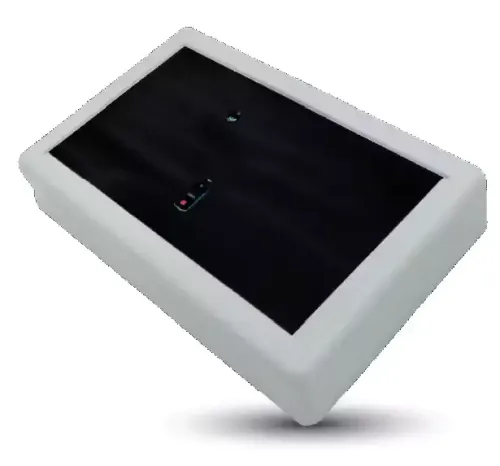
Ariadne ToFu counts every passenger at doors, lanes, and belts, whether or not they carry a phone. Compact, ceiling-mounted, and calibrated by Ariadne.
Ariadne ToFu
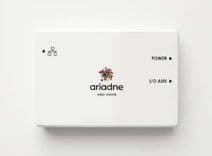
Fusion Pro, Pulse, and SurveyorSIM measure flow and dwell across retail halls and gate areas without line of sight, even when phones are in airplane mode. One unit per major zone is typical.
Ariadne Fusion Pro

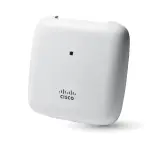
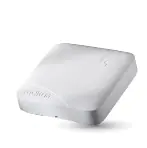
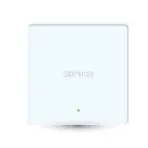
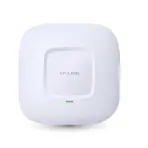
EaseLink runs Hybrid Fusion on the Aruba, Cisco, Ruckus, Sophos, or TP-Link access points already on the ceiling. No new hardware, no firmware changes.
EaseLink
Install path
Zones, choke points, and sensor positions planned remotely on the terminal plan.
Sensors mounted and provisioned, or EaseLink connected to the existing access points.
Counts checked against ground truth per zone until the numbers hold.
Dashboards, alerts, and reports switched on for the teams that use them.
Four to six weeks for a greenfield terminal. Days on EaseLink. San Diego International Airport's own team installed its sensors.
Integrations
Privacy
Ariadne captures no images and no biometric data, and no MAC address by default. Time-of-Flight records the geometry of a passing person, not a face. Signal sensing records presence and movement, not identity. Identifiers are stored only when a passenger explicitly opts in, for example through a guest Wi-Fi login.
Two things follow for an airport. Coverage can run from the curb to the gate without the security line becoming a data-protection boundary. And in procurement, Ariadne is a non-biometric measurement system that sits structurally outside the EU AI Act's biometric categories, rather than relying on an exemption. The reasoning is set out in Ariadne's camera-free approach.
Compare
Most terminals already run cameras for security. Using them for passenger analytics is a different question.
The usual setup
Video analytics on terminal cameras
With Ariadne
Hybrid Fusion, camera-free
What the sensor records
Video frames of passengers
What the sensor records
Geometry and signal presence, no images
Data handling per zone
Video retention, masking, and access rules for every zone covered
Data handling per zone
No video to retain or mask
EU AI Act position
Depends on configuration and on proving biometric functions are off
EU AI Act position
Non-biometric by architecture
Open areas such as retail and gate halls
One lens per viewing angle, with cabling per lens
Open areas such as retail and gate halls
Signal sensing covers open zones without line of sight
Install in a live terminal
Structured cabling and line of sight for each camera
Install in a live terminal
Compact sensors, or your existing Wi-Fi access points through EaseLink
Ariadne can also run on your existing Wi-Fi access points through EaseLink.
Customers
£54,000 a day in added non-aeronautical revenue, 1.05% more revenue for every 1% more dwell time, and 23% fewer passenger complaints.
“Ariadne's real-time wait time notifications helped Glasgow Airport reduce passenger complaints, increase time spent in retail areas, and boost revenue.”
$4 million in non-aeronautical revenue, on sensors the airport's own team installed.
“A truly plug-n-play solution! I did the installation myself!”
Store layouts and staff interactions planned on measured passenger behavior.
“With Ariadne, Munich Airport optimized store layouts and staff interactions, boosting retail engagement and increasing average spend per customer.”
Six process areas measured since late 2023, from check-in to customs.
Passenger counting at Jean Lesage International Airport in Québec City.
Pricing
Three plans, priced per device per month. Which one an airport needs depends on one question: daily numbers, or live ones.
01Daily reporting
Counting, sales integration, visitor forecasting, employee scheduling, capture rates, benchmarks, and automated weekly and monthly reports.
Fits planning, concessions, and reporting teams.
02Real-time reporting
Everything in Essentials, plus real-time reporting, Threa AI, people flow, demand forecasting, visitor opt-in, and marketing campaigns.
The plan live security wait times need.
03Custom features
Volume pricing and custom features such as CRM integration, virtual queuing, alerting, and restroom traffic.
Multi-terminal and multi-airport rollouts.
Background
In partnership with Ferrovial, a research grant brought Ariadne's crowd analytics to Glasgow Airport.
Ariadne is a member of Airports Council International (ACI), the trade association of the world's airports.
Hybrid Fusion is covered by DE102022115597A1, EP3964852A1, and CA3125501A1, from work that began at the Technical University of Munich.
Over 800 locations in 32 countries, across airports, retail, shopping centers, and cities.
FAQ
Time-of-Flight depth sensing counts every passenger entering and leaving the checkpoint at its choke points, while patented signal sensing follows movement through the queue area. Ariadne combines both streams centrally into live queue length and throughput, so operations teams can see pressure building and open lanes before the line does.
Yes. Coverage can span curb, check-in, security, and airside retail in one deployment, because the measurement involves no personal data: no cameras, no images, and no MAC address captured by default. What reaches the platform is presence and movement, so the security line is not a data-protection boundary for the system.
By measuring how many passengers pass, enter, and dwell in retail and food and beverage zones. Capture rate per storefront, dwell time per zone, and transitions between areas show which locations underperform their traffic, and sales integration ties visits to revenue. Glasgow Airport measured a 1.05% revenue increase for every 1% increase in dwell time and added £54,000 a day in non-aeronautical revenue.
The high-risk categories in Annex III concern biometric identification and categorisation. Ariadne captures no images and no biometric data at the sensor, so there is nothing biometric to classify: the architecture sits structurally outside those categories rather than relying on an exemption. For procurement review, it is a non-biometric measurement system.
Counting does not depend on the phone. Time-of-Flight depth sensing counts every person at entrances and choke points regardless of any device. For movement through the terminal, Ariadne's patented signal sensing detects the signals a phone emits even in airplane mode. Together the two streams keep the numbers device-independent.
Yes. API integration moves counts, occupancy, and dwell metrics into your own operations tools, and automated weekly and monthly reports go directly to the teams that need them.
Four to six weeks end to end for a greenfield terminal: floor-plan review and remote sensor planning in week one, install and network provisioning in weeks two and three, calibration against ground truth in weeks three and four. Terminals that run EaseLink on existing Wi-Fi access points can be live in days. San Diego International Airport's own team installed its sensors.
Ariadne Advanced. It adds real-time reporting and Threa AI on top of Essentials, which reports daily. Enterprise adds custom features such as alerting into your CRM and virtual queuing. Plans are priced per device per month on the pricing page, and every deployment can start with a free pilot.
Yes. Ariadne's wayfinding opens in the passenger's own browser, so searching a gate or a shop and following the route works for everyone with nothing to install. A live blue dot showing the passenger's own position appears only after they opt in.
Resources
Field notes on queues, dwell, and terminal revenue from the Ariadne blog.

Every airport journey has a deadline. How terminal navigation handles security, gate changes, and connections, and what Glasgow's deployment shows.

Airport ad inventory is priced on audience, and the audience is measurable: passenger flow, dwell by zone, and the difference between traffic and attention.

How automatic passenger counting (APC) works on buses, trains, and at airports. The sensor methods compared, the accuracy to expect, and how to choose a system.
Related
Live occupancy, wait times, and dwell per zone in Ariadne Analytics.
Time-of-Flight and signal sensors that install in a live terminal, and the third-party units EaseLink can read.
Send Ariadne data to SITA, Amadeus, BI tools, and your own operations systems.
Two questions, twenty minutes, a real walkthrough of your venue's footfall.
What to expect
Got a different question?
Anything that isn't a sales conversation. We'll route it to the right person and get back within one business day.