
The most captive audience in advertising, roughly counted
Airport advertising sells one of the strongest audience stories in media: high-income travelers with long, unavoidable dwell times and little else to look at. The story is true. What is often loose is the counting underneath it: inventory priced on terminal-wide passenger totals, as if every enplaning passenger passed every site. The measurement to do better exists, and both sides of the trade benefit from it.
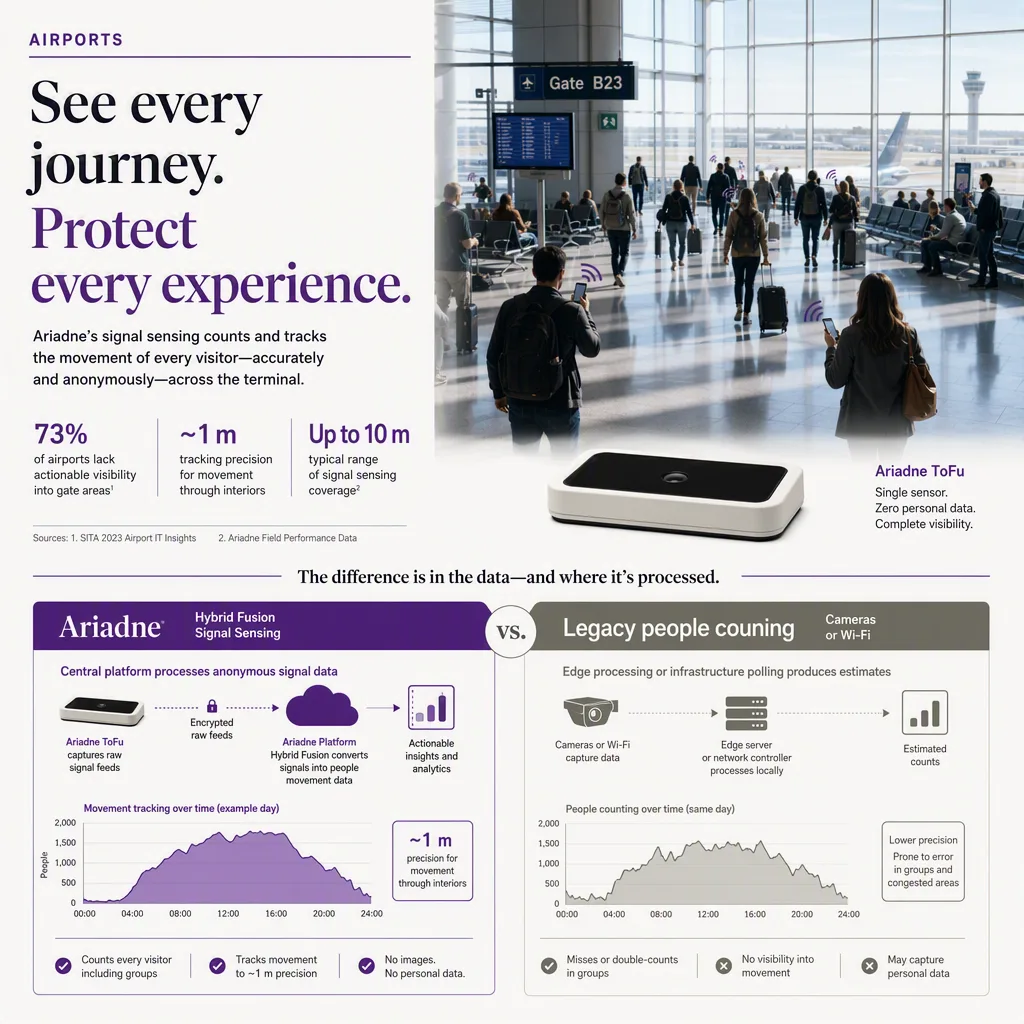
How is airport advertising audience measured?
Traditionally from airport-wide enplanement statistics, allocated to ad sites by assumption; increasingly from measured passenger flow: counts of passengers actually passing each site, with dwell time in the surrounding zone determining exposure quality. Per-site flow measurement converts the audience claim from "the airport handled this many passengers" to "this corridor delivered this many passing passengers, dwelling this long", which is the number a media buyer can actually plan against.
Traffic and dwell are different products
Two ad sites can see identical passing counts and deliver completely different exposure. A departures-corridor site sees everyone briefly and in motion. A gate-lounge or security-exit site sees fewer passengers who stand still for minutes. Pricing both on passing traffic misprices both; the second sells time, not just eyeballs. This is the airport version of the dwell logic in digital signage dwell time, and it maps directly onto the dwell-weighted-reach concept developed for airport retail in concession revenue per passenger.
What per-site measurement changes for the airport
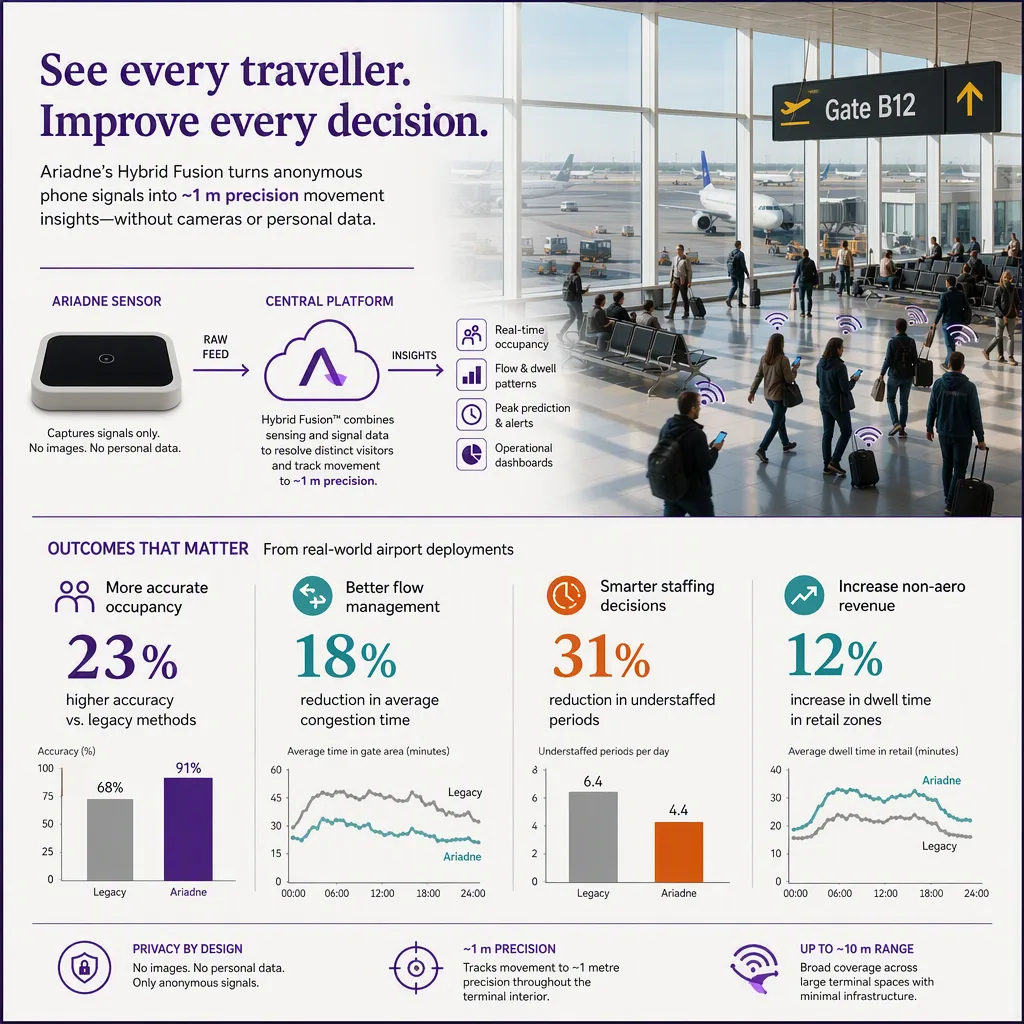
For the airport as media owner, measured flow does three things. It prices the inventory honestly and defensibly, site by site, daypart by daypart (red-eye dwell patterns and morning-bank rushes are different products). It reveals undervalued positions: zones with modest traffic but exceptional dwell that a terminal-total model prices as filler. And it gives the sales team an auditable answer when a media agency asks where the numbers come from, the same verification logic argued in retail media audience verification.
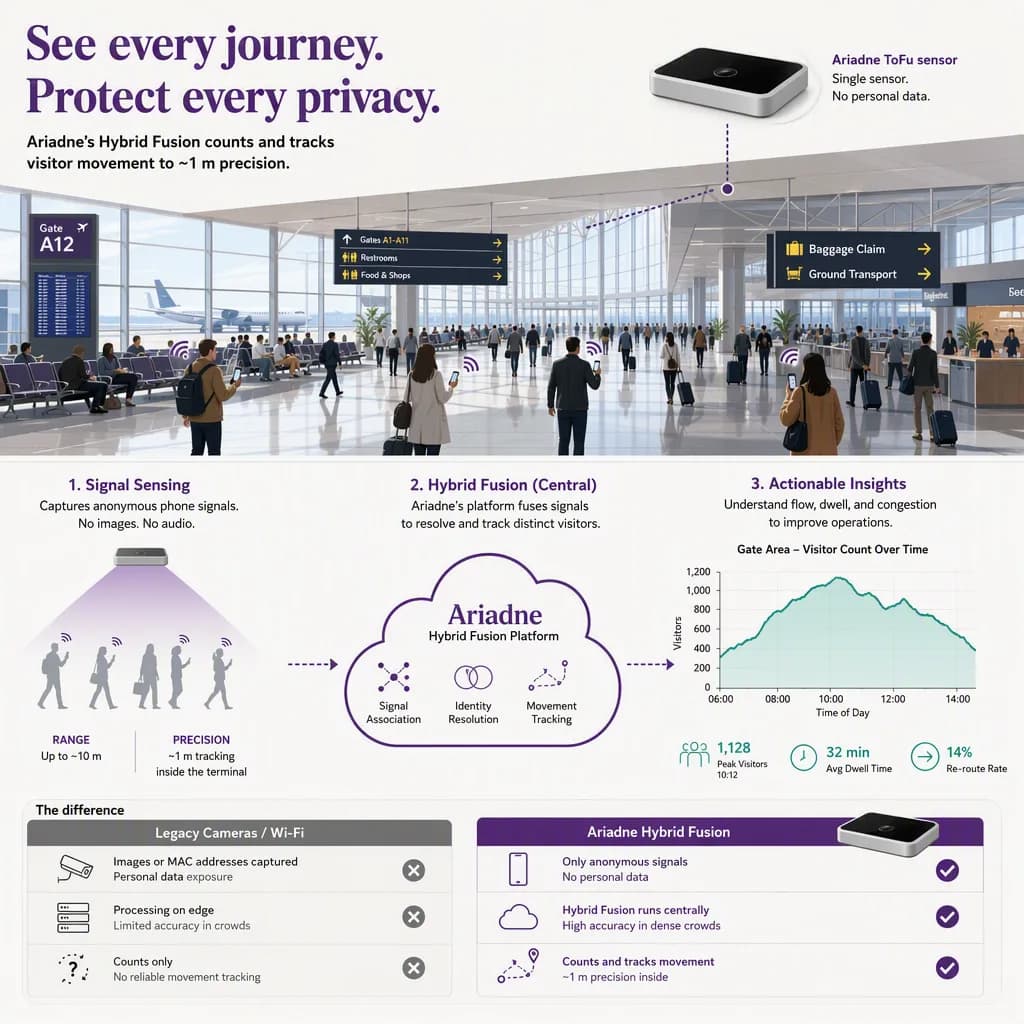
Ariadne measures that flow camera-free: passenger counts and dwell per zone, with no images and no identifiers, which matters doubly in an environment as security- and privacy-sensitive as a terminal. The same measurement layer serves the airport's own operations, from queues to concessions, so advertising verification rides on infrastructure the airport wants anyway; the commercial side of that story is in airport non-aeronautical revenue.
Proving campaigns worked
Audience measurement sells the space; attribution keeps the advertiser. The follow-on question (did the campaign move anything) is answerable with the same flow data, comparing exposed periods and zones against baselines: the method is worked through in airport advertising attribution. Airports that can offer buyers both, verified audience and measured outcomes, are selling a digital-grade product in a physical channel.
---


