
Conversion is not a number you push, it is a set of decisions
Asked to raise conversion, most teams reach for discounting, which raises transactions and destroys margin, or for staff exhortation, which does nothing measurable. The levers that actually move in-store conversion are operational and physical, and each one has a measurement that proves whether it worked. Here are seven, ordered roughly by how reliably they pay back.
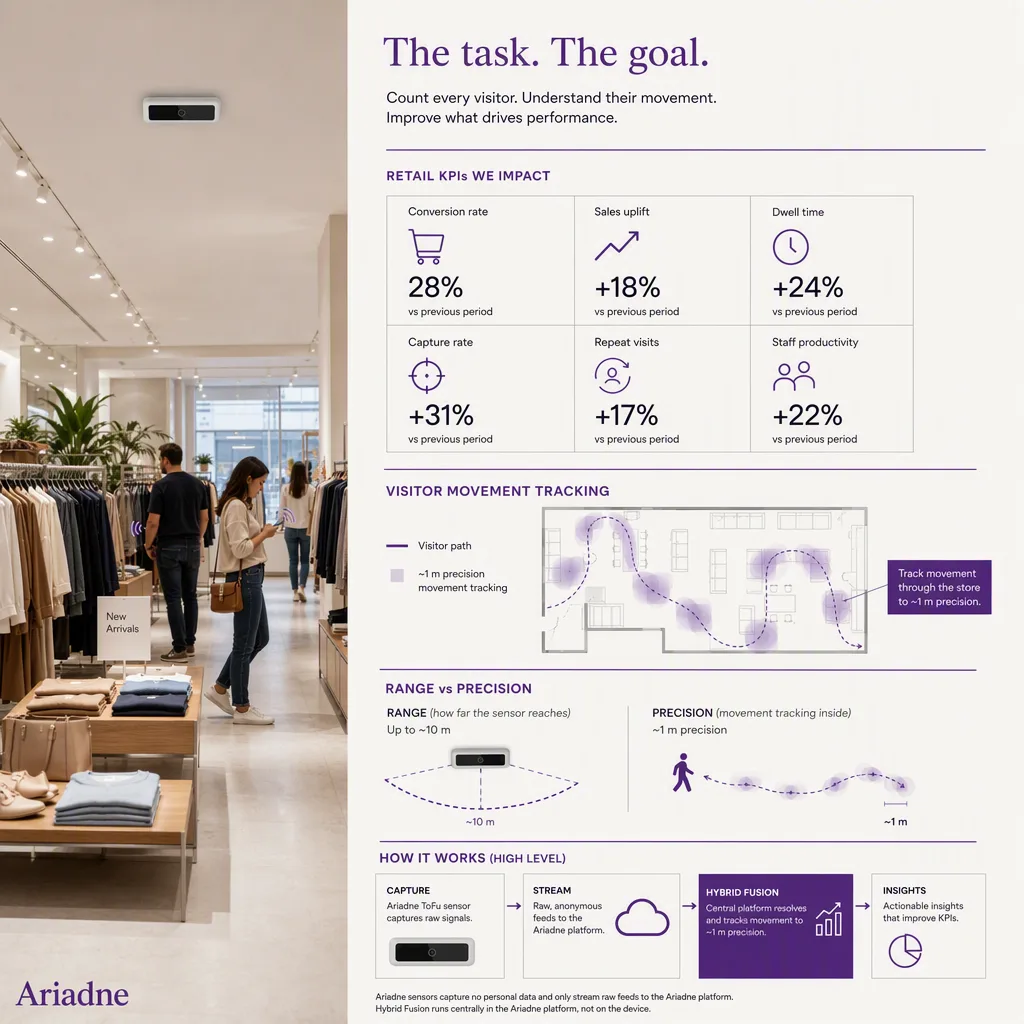
How do you increase conversion rate in a retail store?
By finding which stage of the visit leaks and fixing that stage, rather than pushing the whole funnel. In practice seven levers cover almost all of the available gain: match staffing to measured traffic, fix the entrance zone, revive dead zones, remove queue friction, raise fitting-room or demo engagement, convert dwell into assistance, and align opening hours with real demand. Each is verifiable by comparing the same store against its own baseline before and after a single change.
The seven levers
1. Match staffing to measured traffic. The single most reliable lever, because understaffing at peaks is the most common cause of unconverted visits. Move hours from quiet periods into measured peaks without increasing total hours, then read conversion during those peaks. The method is in demand-based scheduling, the ratio work in staff-to-customer ratio, and the short-horizon forecasting in the 4-hour traffic forecast.
2. Fix the entrance zone. Merchandise placed in the first meters is largely invisible because arriving shoppers are still adjusting, so that space is spent rather than used. Keep it open and put the first real statement just beyond it: the retail decompression zone.
3. Revive dead zones. Zones that journeys never reach cannot convert. Heatmap data locates them, and the fix is usually a destination category or a sight line rather than signage: reading a store heatmap and retail layout optimization.
4. Remove queue friction. A visit that reached the till and left is the most expensive loss in retail. Queue length at peak is a staffing and layout problem, and it is measurable in the same data as everything else here.
5. Raise trial engagement. In fashion, fitting-room entry is the strongest purchase predictor available, so routing more journeys to trial converts better than adding stock (try-on rate, fitting room utilization). In electronics the equivalent is working demo units with staff coverage (the electronics journey).
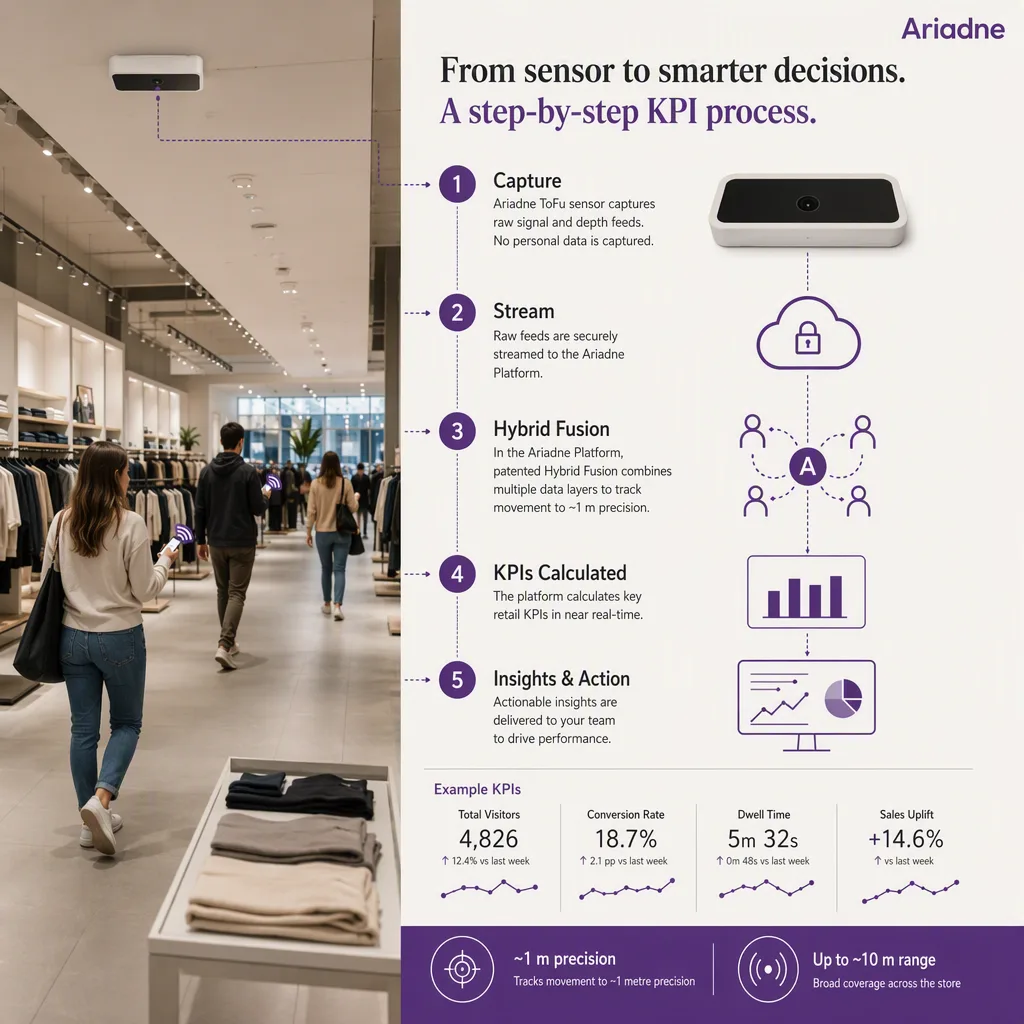
6. Turn dwell into assistance. Long dwell without a transaction usually marks an unanswered question, not a browsing preference. Positioning staff where dwell concentrates, rather than at the door, is what converts it: dwell time vs footfall.
7. Align opening hours with demand. Hours inherited from habit produce staffed periods with no traffic and unstaffed peaks just before closing. The traffic curve settles it: day-of-week footfall and conversion rate by hour.
Do not raise conversion by shrinking the denominator
A warning worth repeating because it catches experienced teams: conversion rises when casual visitors stop coming, so a rate improvement accompanied by falling visits is usually bad news wearing good clothes. Always read the rate alongside absolute visits and transactions, per the retail conversion rate formula. The same applies to discounting, which buys transactions at the cost of the margin the conversion gain was supposed to fund.
Test one lever at a time
Every lever above is a change with a measurable before and after, which means it should be run as an experiment rather than a rollout: baseline the affected stage, change one thing, compare matched periods, keep or revert. The discipline is the same as signage placement A/B testing, and the diagnostic that tells you which lever to reach for first is in the traffic-versus-conversion diagnosis. If you have not yet established what your own baseline should look like, start at retail conversion benchmarks.
Where Ariadne fits
Six of the seven levers need zone-level visitor data (paths, dwell, and per-zone reach) rather than just a door count, and all seven need a denominator you trust. Ariadne measures both camera-free, so the experiment above is a weekly habit rather than an annual study.
---


