
Platzierung ist eine Variable, also behandelt man sie wie eine
Wo ein Screen hängt, entscheidet über den Großteil seines Ertrags, und trotzdem wird die Platzierung meist einmal festgelegt, beim Ausbau, von der Person mit der Zeichnung. Händler, die auf ihrer Website alles testen, testen selten die teuerste Pixelfläche, die sie besitzen. Das Hindernis war nie der Wille, sondern die Messung. Mit Flussdaten auf Zonenebene wird die Platzierung eine testbare Variable wie jede andere.
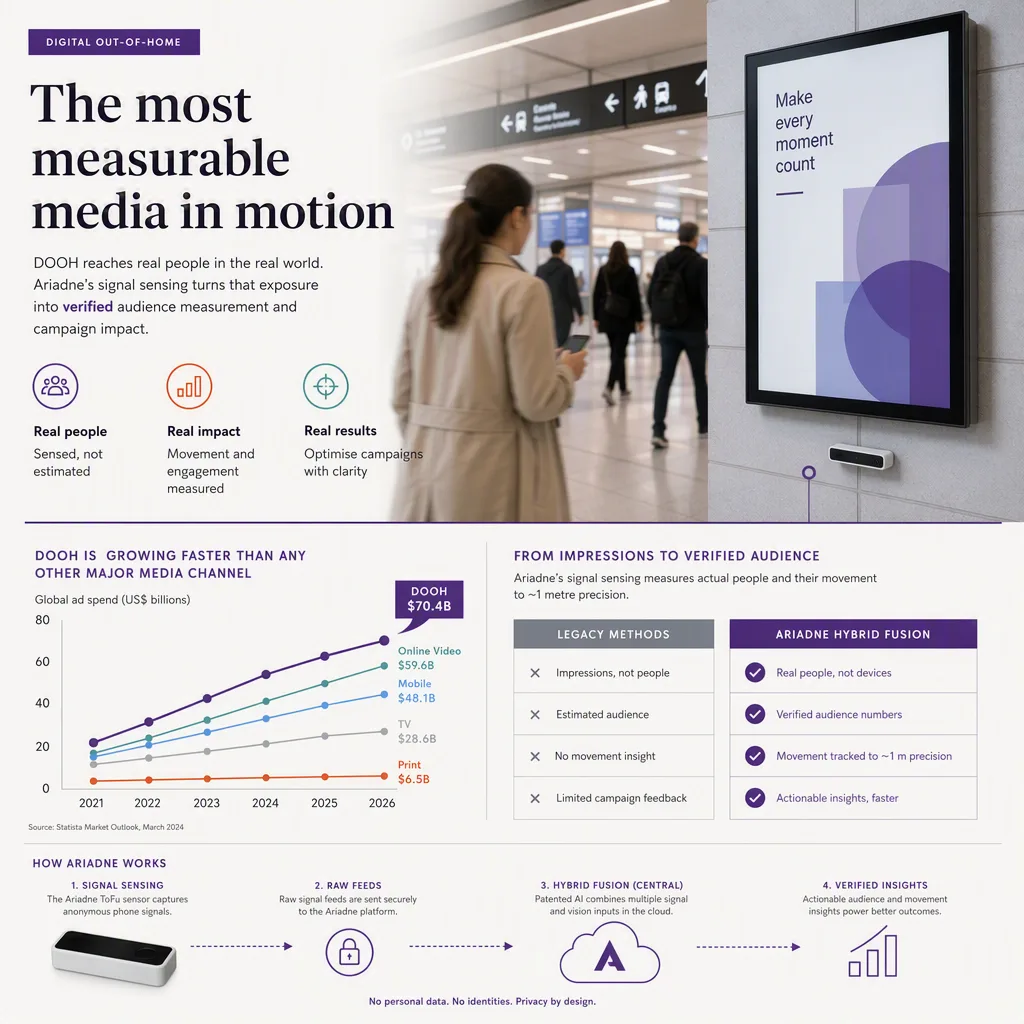
Wie testet man Digital-Signage-Platzierungen im A/B-Verfahren?
Zuerst das Ergebnis definieren (Verweildauer am Screen, Besuche der beworbenen Kategorie oder Abverkauf des beworbenen Produkts), dann eine Variable auf einmal verändern: derselbe Inhalt auf zwei Kandidatenpositionen (Positionstest) oder zwei Inhaltsvarianten auf einer Position (Inhaltstest), nie beides zugleich. Für jede Variante Passantenfrequenz, Verweildauer und das nachgelagerte Ergebnis über vergleichbare Zeiträume messen, und die Baseline-Daten über die Testdauer entscheiden lassen. Die Messschicht muss vor dem Test existieren: kontinuierliche Zählung und Verweildauer pro Position plus Zonenbesuche der beworbenen Kategorie.
Einen Platzierungstest bauen, der Prüfung übersteht
Zeiträume angleichen. Einzelhandelsfrequenz ist saisonal, wetter- und aktionsgetrieben. Gleiche Wochentage über gleich lange Fenster vergleichen und eine Kontrollzone (eine nicht beworbene Kategorie) mitführen, um filialweite Schwankungen zu fangen, die mit dem Screen nichts zu tun haben. Allein der Wochentagseffekt ist groß genug, ein Ergebnis vorzutäuschen; das Muster dokumentiert die Wochentagsanalyse der Frequenz.
Kontakt messen, nicht nur Ergebnis. Eine Position, die bei Kategoriebesuchen gewinnt, aber bei Passantenfrequenz verliert, sagt: Der Inhalt ist stark und die Position schwach. Ohne Frequenz und Verweildauer pro Position lässt sich beides nicht trennen. Die Verweildauermessung an Screen-Positionen ist hier das Kerninstrument: Verweildauer bei Digital Signage.
Eine Variable. Den Screen versetzen und in derselben Woche den Inhalt erneuern erzeugt eine Zahl, die nichts bedeutet. Tests nacheinander fahren.
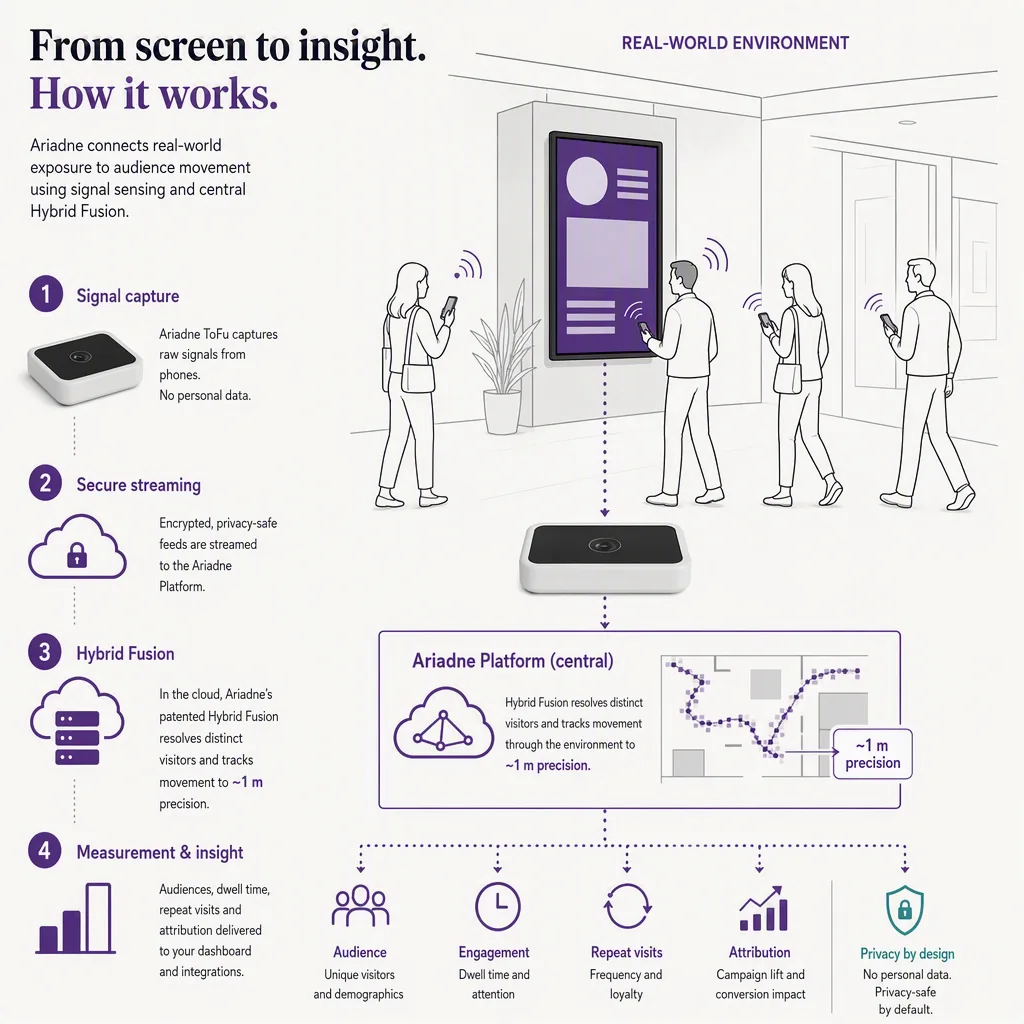
Was Platzierungstests typischerweise zeigen
Drei Befunde kehren über Standorte hinweg wieder. Positionen auf Augenhöhe entlang natürlicher Laufwege schlagen erhöhte Positionen, die mehr Fläche "abdecken", denn Abdeckung ist nicht Aufmerksamkeit. Positionen nahe Entscheidungspunkten (Kategorieeingänge, Warteschlangen) übertreffen Positionen am Eingang, wo Besucher noch in Bewegung sind; die Mechanik der Eingangszone beschreibt die Dekompressionszone im Einzelhandel. Und verweildauerstarke Positionen rechtfertigen längere Inhaltsschleifen, während Durchgangspositionen die Botschaft auf einen Blick verdichten müssen.
Die Messinfrastruktur darunter
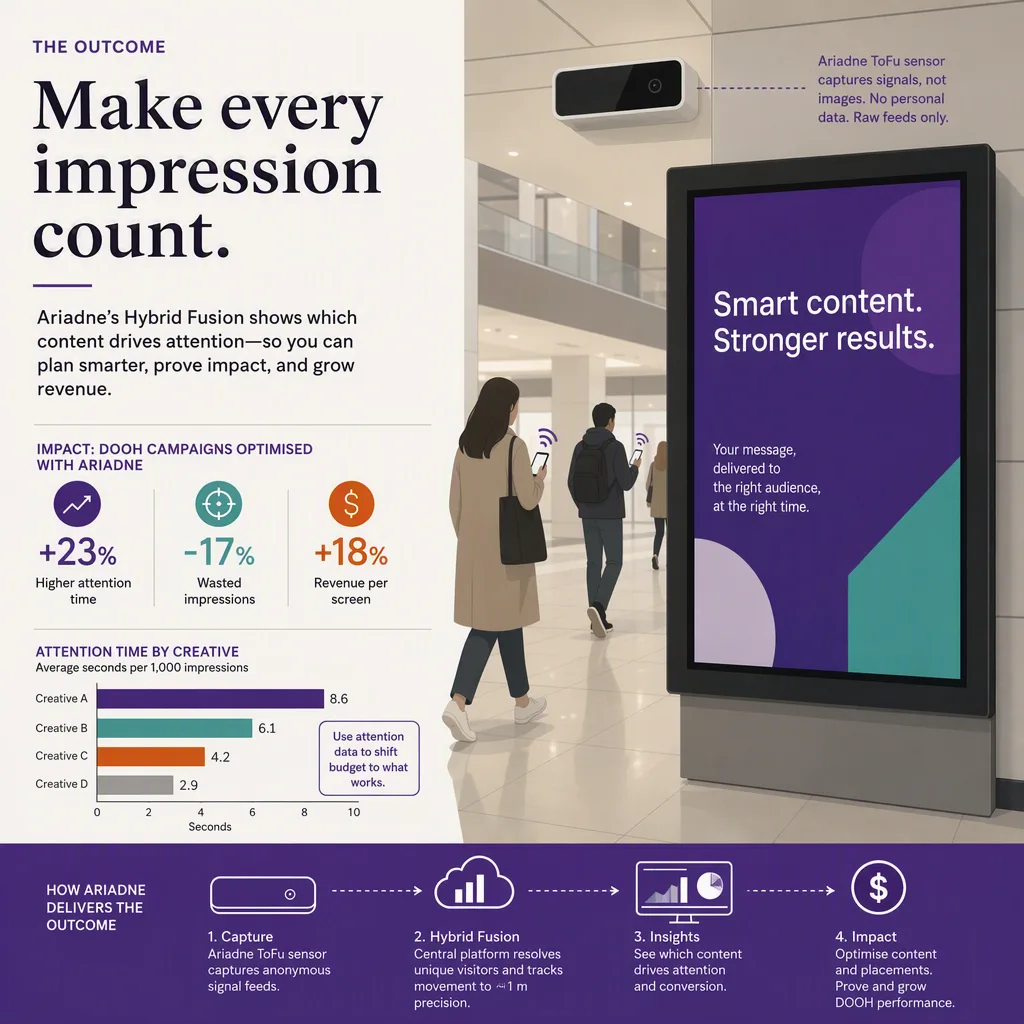
Ein Platzierungstest braucht Passantenzählung pro Position, Verweildauer pro Position und Zonenbesuche für die Ergebnismessung, kontinuierlich laufend, damit Baselines existieren, bevor jemand einen Test verlangt. Ariadne liefert genau diese Schicht, kamerafrei: Besucher erscheinen als Zählwerte, Verweildauern und Wege, nie als Aufnahmen. Für Center-Betreiber beantwortet dieselbe Infrastruktur die Nachbarfrage, wo Directory-Screens hingehören, behandelt in der Platzierung von Center-Directories. Die Außenversion dieser Logik zeigt die Billboard-Fallstudie.
---


