
"We need better data" is not a business case
Counting projects die in finance review for a predictable reason: the requester asks for visibility and the approver buys outcomes. Visibility is an input. The business case has to name the decisions the data will change, the size of the money attached to those decisions, and how the change will be verified afterwards. That case is usually strong, and it is usually written weakly.
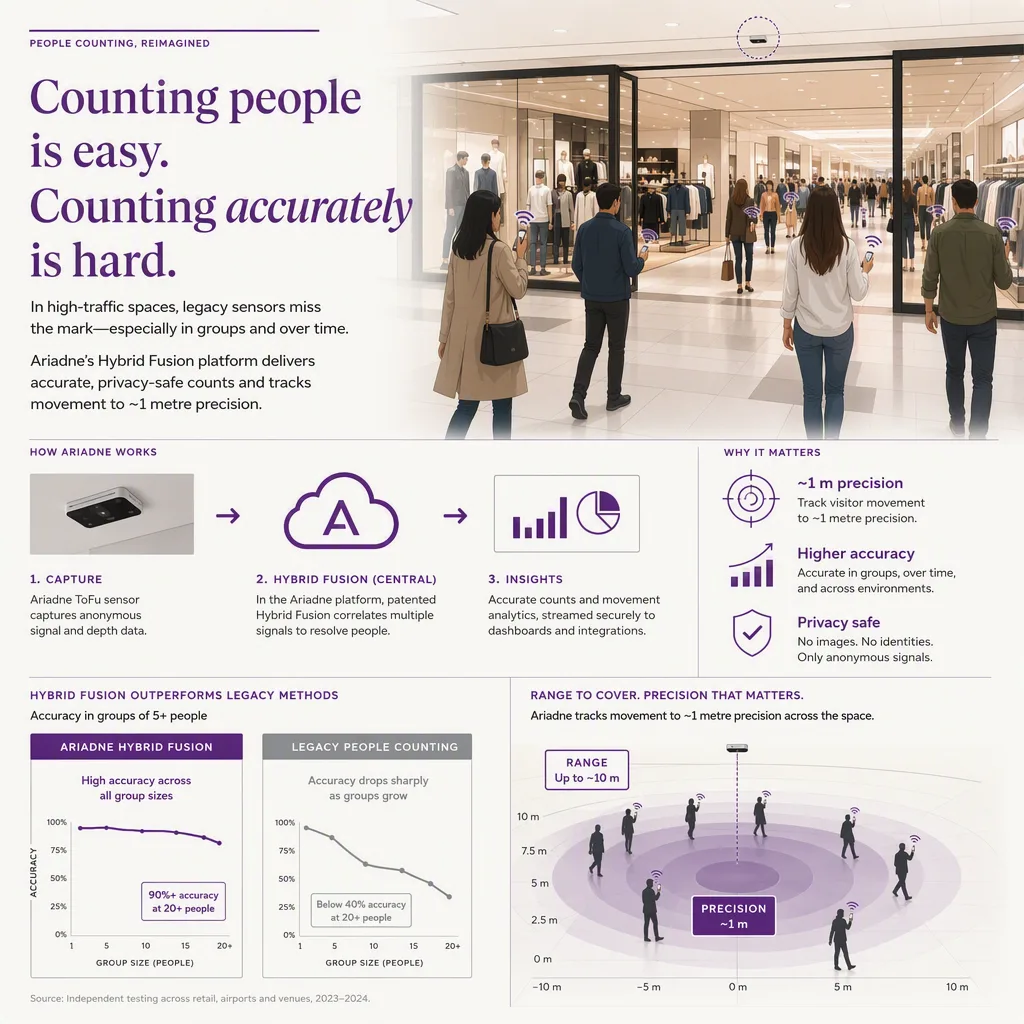
How do you justify a people counting investment?
By tying it to four value lines with numbers your organization already has. Labor efficiency: matching staff hours to measured traffic instead of flat rotas, the largest and most reliable line for most retailers. Conversion improvement: knowing visits, not just transactions, makes conversion a managed metric rather than an unknown one. Space and layout decisions: putting product and fixtures where measured traffic actually goes. And evidence in negotiations: rent, tenant reporting, funding claims, or campaign attribution, depending on the organization. Then state the verification method, because a case that cannot be checked afterwards will not be believed the second time.
Gather these numbers before you write anything
Labor: total store hours per week and average loaded hourly cost. Sales: transactions per day and average basket. Space: rent per square meter for the areas in question. Traffic: whatever you have today, even a doorway clicker sample or POS-derived estimate, because the gap between your estimate and reality is often the most persuasive slide in the memo. The formulas that convert these into outcomes live in the retail conversion rate formula, the staffing arithmetic in the retail labor cost benchmark and staff-to-customer ratio, and the general model in people counting ROI.
The labor line does most of the work
For most multi-site retailers, the dominant return is not a clever insight; it is scheduling to a measured demand curve instead of to habit. The mechanism is unglamorous and repeatable: measure the arrival curve by hour and weekday, move hours from the quiet parts to the peaks without adding total hours, and read the effect in conversion during the peaks. The supporting work is in demand-based scheduling and day-of-week footfall, and it is the line finance finds easiest to check, because payroll is already instrumented.
Cost side: five years, per covered door
Put the honest cost in the memo rather than the optimistic one: hardware, installation, subscription, and support over five years, per covered door, using your own pilot's per-door effort rather than a vendor estimate. The model is in total cost of ownership. A business case that survives scrutiny is one where the reviewer cannot find the hidden line, and installation is nearly always the hidden line.

The one-page structure that gets approved
Decision requested, in one sentence with the number. Current state: what we cannot see today and what that costs, with the estimate gap quantified. Proposed measurement: scope in doors and sites, not in product features. Value lines: the four above, each with a conservative number and its assumption written next to it. Cost: five-year total, per door. Verification: the metrics that will be reported at 90 days and 12 months, agreed with finance now. Risks: what makes this fail, including the honest ones (data nobody uses, accuracy unverified), each with a mitigation. The verification row is what turns a one-off approval into a renewable one, and it needs the acceptance test behind it: acceptance testing.
Where Ariadne fits
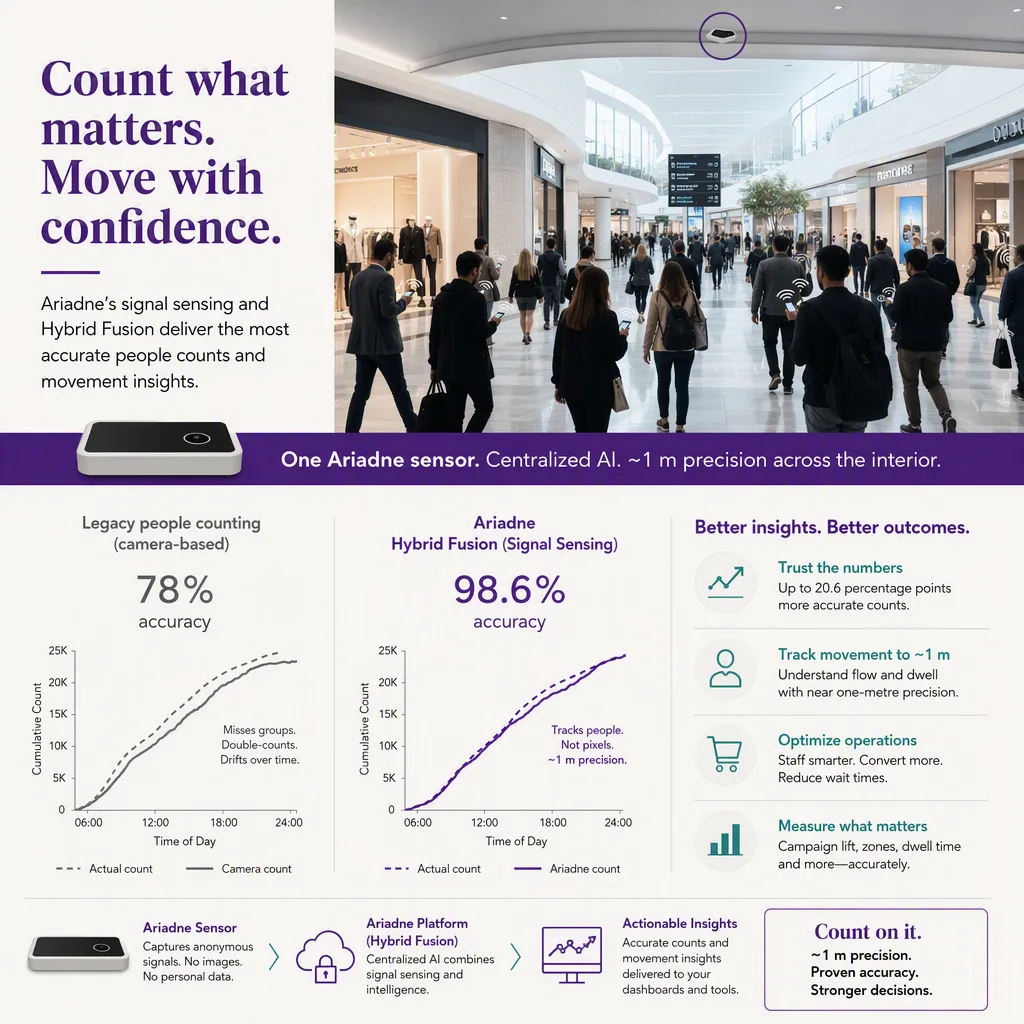
Ariadne supplies the measurement the case rests on, camera-free and identity-free, which also removes the legal-review cost line that camera-based alternatives add to their own business cases. The procurement path from here runs through the RFP template and pilot to contract.
---


