
The last moment the balance of power favors you
Acceptance is the point where a counting project either locks in what was promised or quietly accepts whatever arrived. Before sign-off, the vendor has a strong incentive to fix things; after it, fixes become support tickets and goodwill. That asymmetry is why the acceptance test should be written into the contract at signature, with the criteria, the method, and the consequence of failure all defined before anyone installs anything.

What should a people counting acceptance test include?
Five checks, run on the delivered system at the buyer's sites. Coverage: every specified entrance and zone is monitored, with device counts matching the design and no unmonitored side door quietly excluded. Accuracy: measured against a manual ground truth using the metric definition from the specification, over a window that includes a real peak. Integration: data arriving in the buyer's own systems at the specified granularity, not merely visible in the vendor dashboard. Reporting: the agreed reports produced from live data. Service: monitoring and alerting demonstrated, including a simulated sensor failure.
The accuracy check, precisely
This is the check that gets fudged, so specify it tightly: which doors, which hours (including the busiest), what reference method, which metric definition (net, absolute, directional, or per-interval, per people counting specifications), what tolerance, and who observes. Two people counting manually in parallel, or a video-verified reference reviewed independently, both work; a vendor-run test with vendor-supplied ground truth does not. The procedure is written up in accuracy test methodology, and the error sources to expect in accuracy factors and group entry counting.
Define what failure means before it happens
An acceptance test without a failure procedure is a formality. Write down the three outcomes: pass (sign off, payment milestone releases), conditional pass (defined defects, a remediation window, retest date, and a withheld portion of payment), and fail (right to reject, with the remedy stated). Also name who decides, because acceptance disputes are usually not technical disagreements but authority vacuums. Tie the withheld payment portion to the accuracy criterion specifically, since that is the criterion most likely to need remediation and the one hardest to fix later.

Re-test after every material change
Acceptance is not a single event across a multi-site rollout: each site should clear the same test, and a sample should be re-tested after entrance reconfigurations, seasonal display changes, and firmware updates that could alter counting behavior. That cadence is the same one the service terms should already require, per maintenance and SLA and calibration.
What good vendors do here
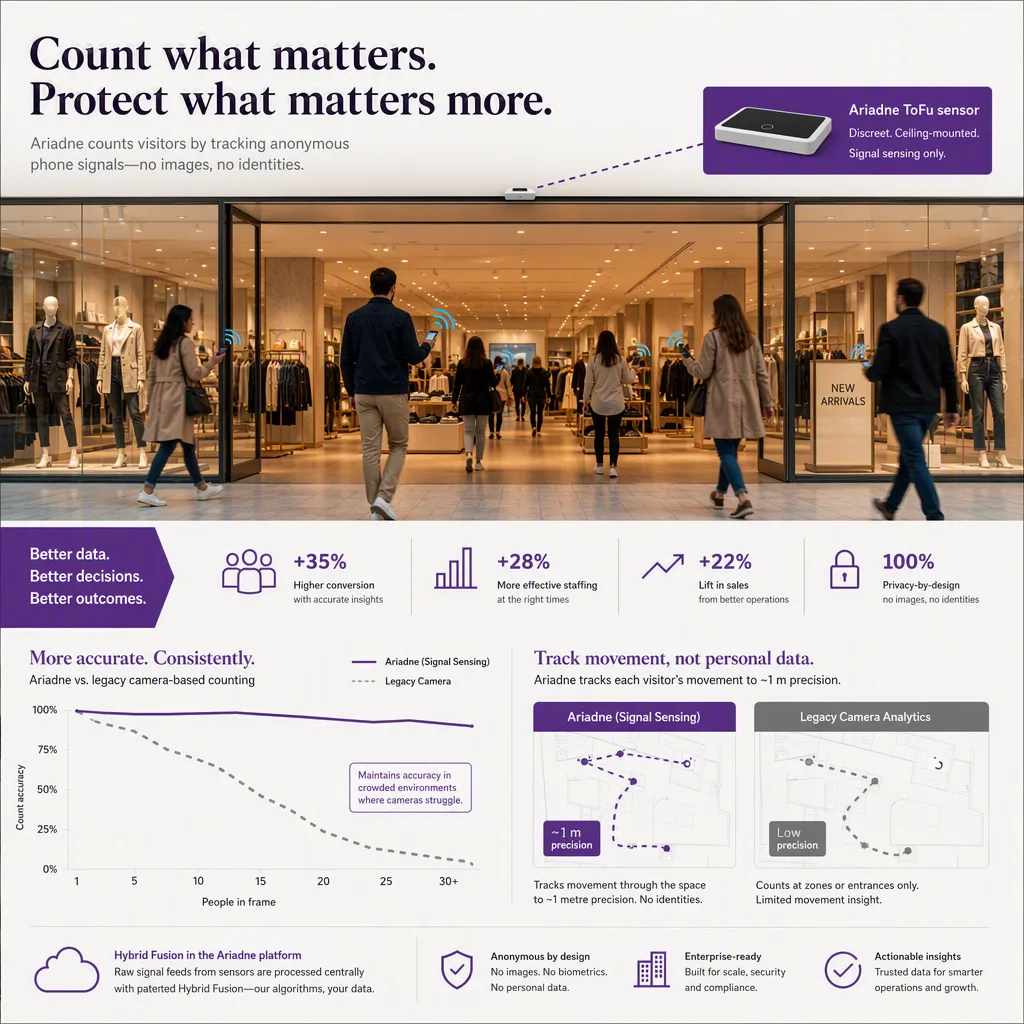
A vendor confident in its measurement proposes the acceptance test rather than negotiating it down, supplies its own accuracy methodology for comparison, and accepts an independent ground truth. Ariadne's position is that no datasheet figure, ours included, should be trusted over a test on your own doors, which is why the verification route runs through every stage of this cluster: the RFP template to specify it, pilot to contract to trial it, and this test to hold it.


