
Airports measure passengers for three different teams. Operations wants queue and process times, commercial teams want dwell time in the retail zones, and planning wants peak loads for the next terminal phase. The technology you choose decides which of those questions you can answer, and how much of the building you have to wire to answer them.
Redefining People Counting with Precision and Privacy
Traditional people counting technologies, such as camera-based or infrared systems, count well at a fixed line like a security lane or a boarding door, but they only see what is inside their field of view. Airports also need the open spaces in between, because that is where passengers spend their commercial time.
Ariadne measures this with Hybrid Fusion, its patented camera-free method. Time-of-Flight depth sensing counts every visitor at the entrances, capturing geometry rather than images, while patented phone signal sensing follows movement through the interior, detecting the signals a phone emits even in airplane mode, and tracks that movement to about one-metre precision. The sensor streams both feeds to Ariadne, where Hybrid Fusion combines them into one trajectory per visit and computes counts, dwell, and paths. The streams carry no identifier: no MAC address, no device ID, no biometric data, and no camera is involved. Identifiers are stored only when a visitor explicitly opts in, which keeps the method GDPR-friendly and outside biometric territory.
More Than Counting: Creating Real Operational Intelligence
Airports using signal based technologies don’t just count people but to understand them. Signal based systems can enable:
- Real-time queue and process time measurements at security, check-in, or boarding areas.
- Forecasting and alerts based on historical patterns.
- Full curb-to-gate passenger trajectories, which help optimize staffing and passenger flow.
- Bus dwell-time monitoring to optimize ground transport operations.
How long passengers wait at the gate is one of the clearer operational signals in a terminal, because crowding and boarding problems show up there first. We cover how to measure it in airport gate dwell time.
Boosting Commercial Revenue by Tracking Dwell Time
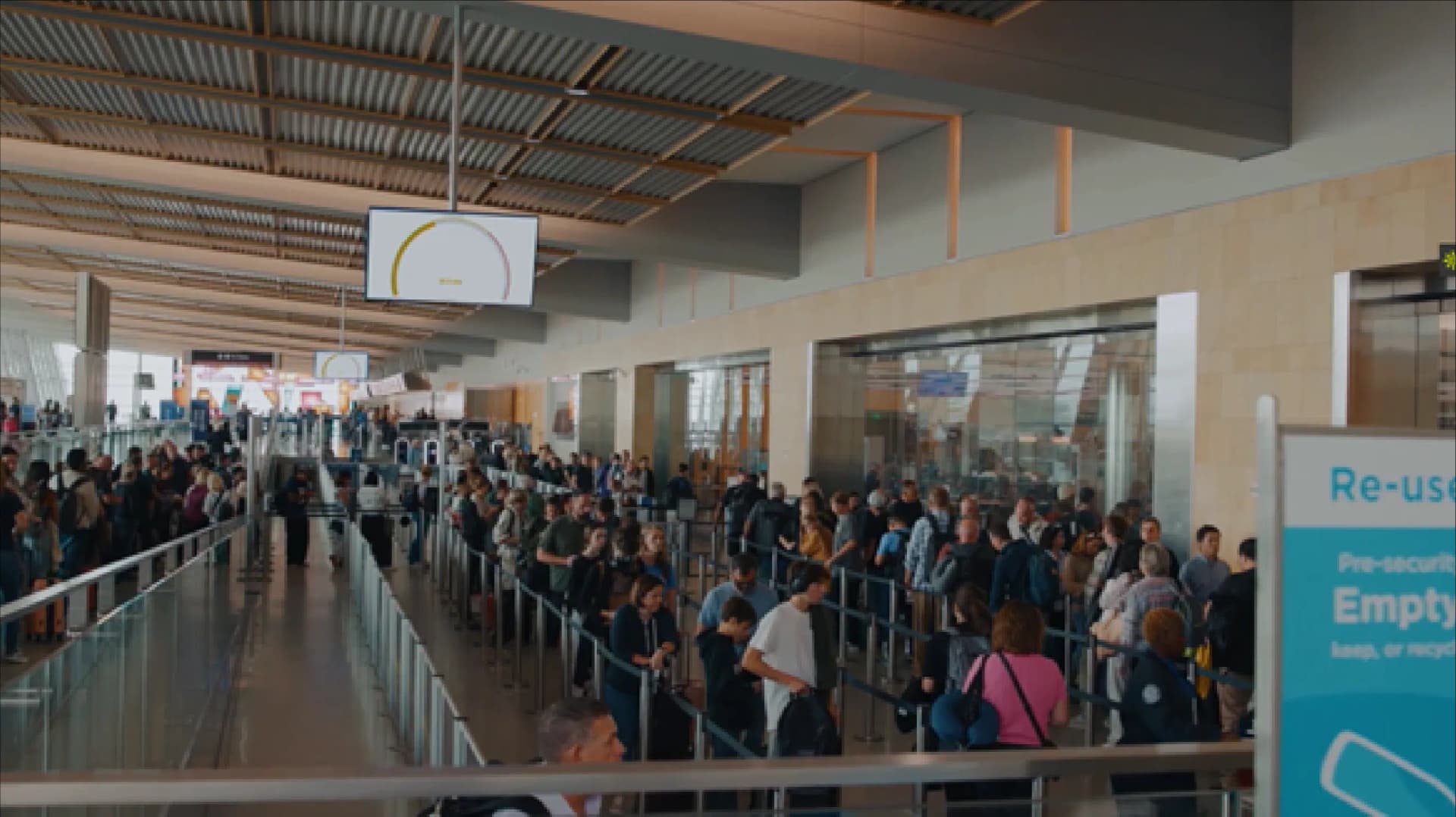
Commercial teams benefit most, because non-aeronautical revenue follows how long passengers stay in the retail zones more closely than how many pass through. At Glasgow Airport, every 1% increase in dwell time came with a 1.05% increase in revenue, passenger complaints fell 23%, and the airport added £54,000 a day in non-aeronautical revenue, as the Glasgow Airport case study shows.
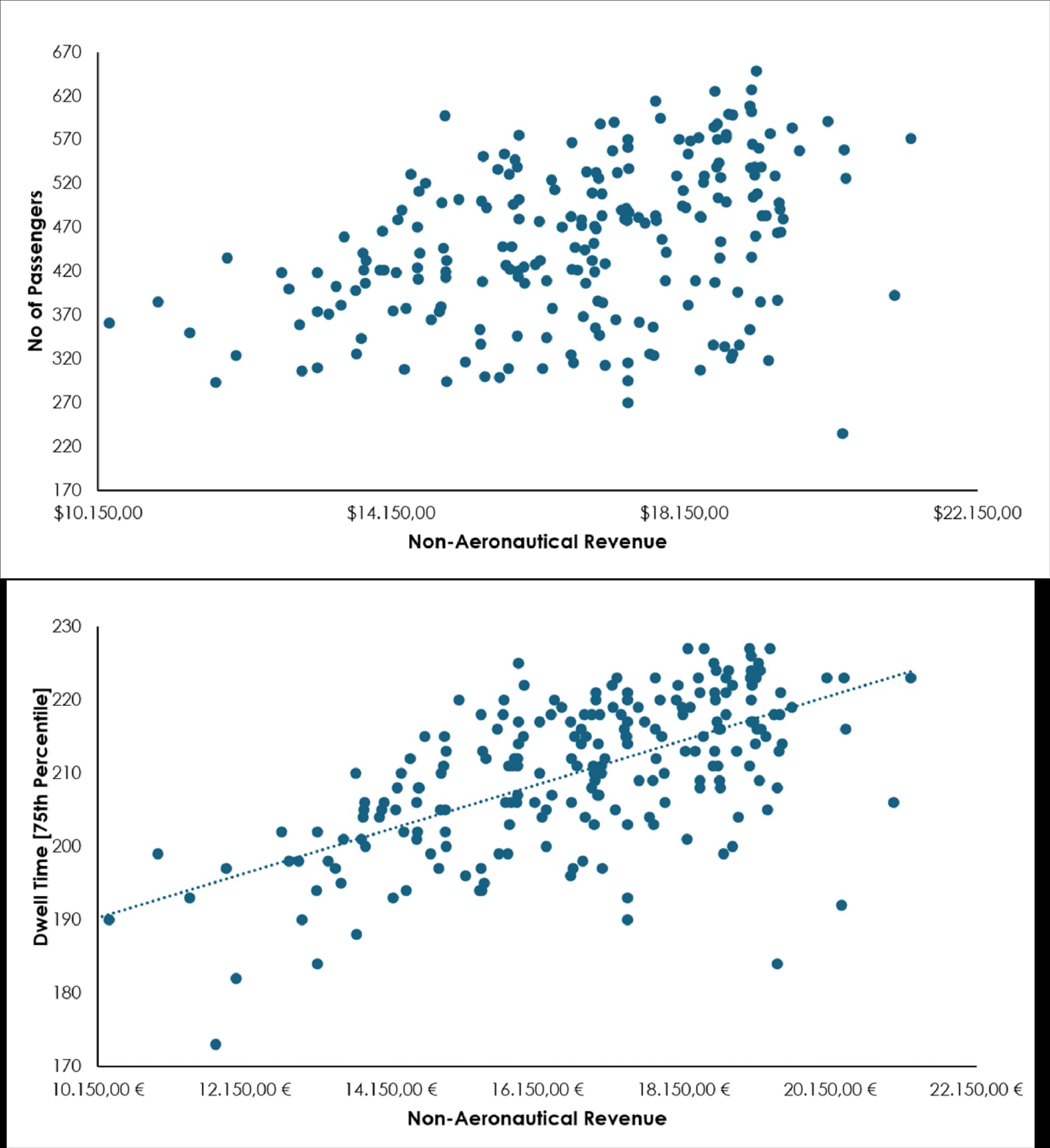
That is the case for measuring the whole terminal rather than a few doors. A count at the security lane tells operations how busy the day was; passenger counting through the retail and gate areas tells the commercial team where the revenue was made.
Close the Loop with Passenger Feedback
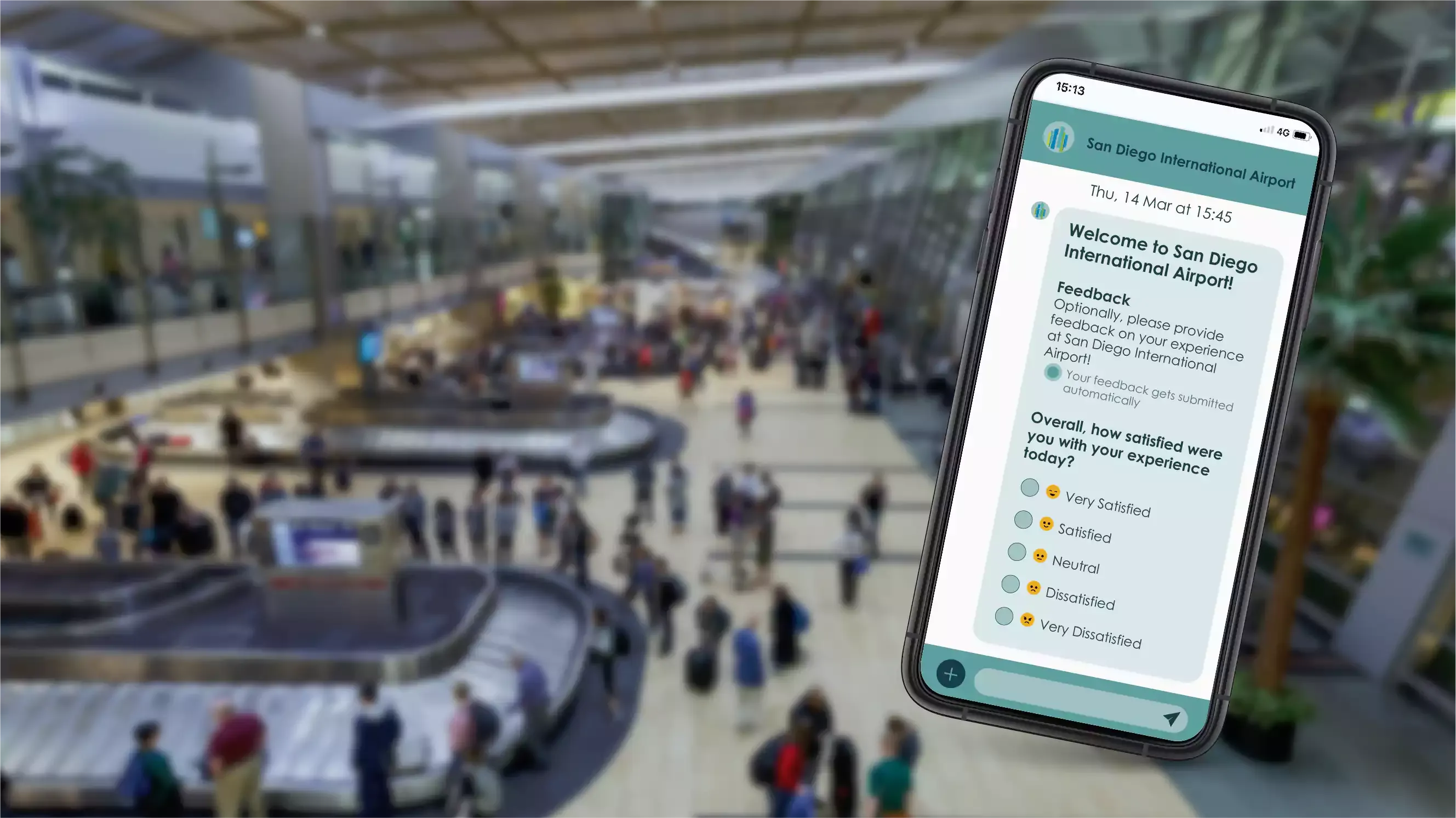
Through optional opt-in methods such as QR codes and Wi-Fi consent, signal based technology can enable two-way communication with passengers. This means:
- Push surveys for real-time Net Promoter Score (NPS) feedback.
- Behavioural analytics based on feedback tied to location and experience.
- Real-time marketing campaigns targeting passengers who walked past, but didn’t enter, specific stores.
How to choose airport people counting technology
Five questions separate the options, and each maps to a zone of the terminal:
- Signal-based or camera-based. Cameras and beams count a fixed line well; signal and depth methods also cover open areas such as gates, lounges, and retail.
- Accuracy by zone. Ask for accuracy measured at your busiest security lane and in an open gate area, not in a test corridor.
- Privacy posture. What the sensor captures (images, depth, or signals), what leaves the building, and whether any identifier is stored without an opt-in.
- Install footprint. Mounting height, power, network, and whether existing Wi-Fi access points can be used, which matters in terminals that cannot close an area for works.
- Integration depth. Whether counts, queue times, and footfall analytics feed your operations, staffing, and retail reporting, or stay in a separate dashboard.
If cameras are already installed and you are weighing a camera-free option, see an alternative to people counting cameras for airports.
Ariadne: Compatible, flexible & privacy-proof
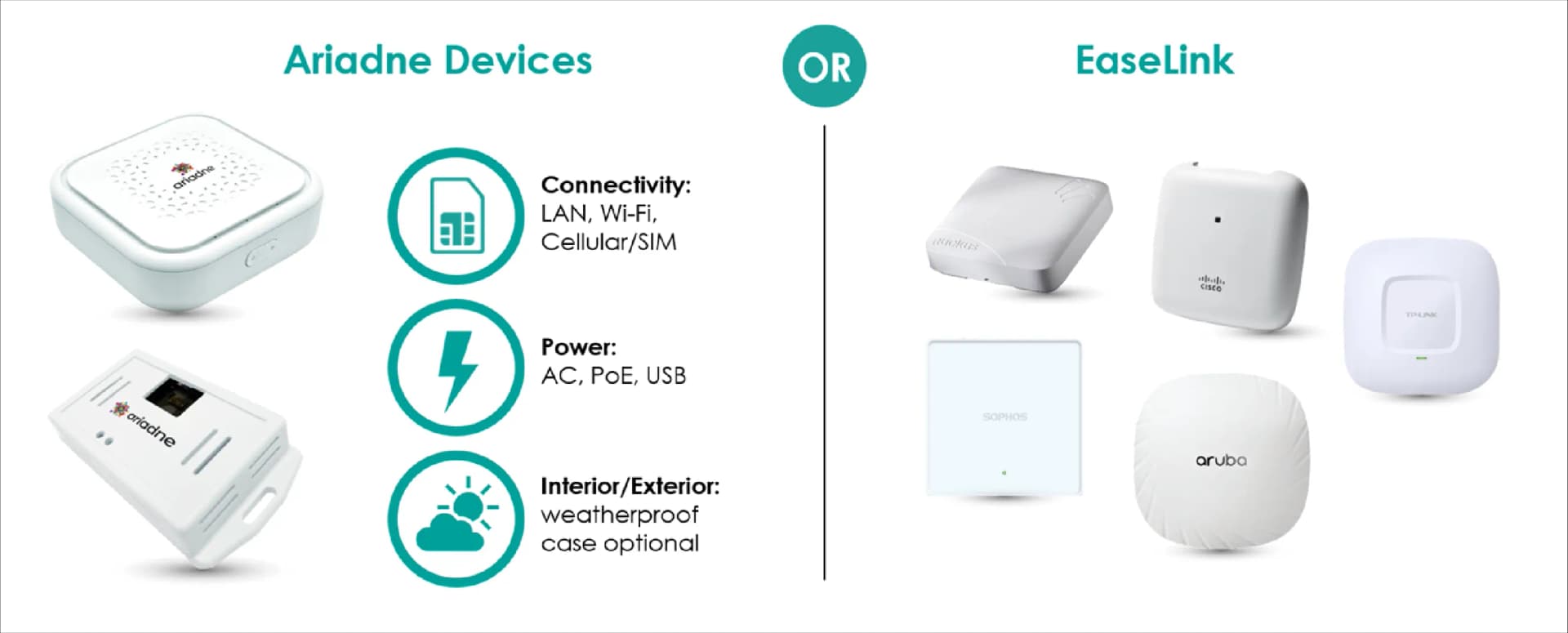
Ariadne works with existing Wi-Fi infrastructure from vendors such as Cisco and Aruba through EaseLink, or with its own plug-and-play sensors.
And when it comes to privacy, the measurement collects no personal data in the first place: Time-of-Flight sensing captures geometry rather than images, and signal sensing stores no MAC address by default, so no video, no faces, and no biometric data are involved.
Built for Today. Ready for Tomorrow.
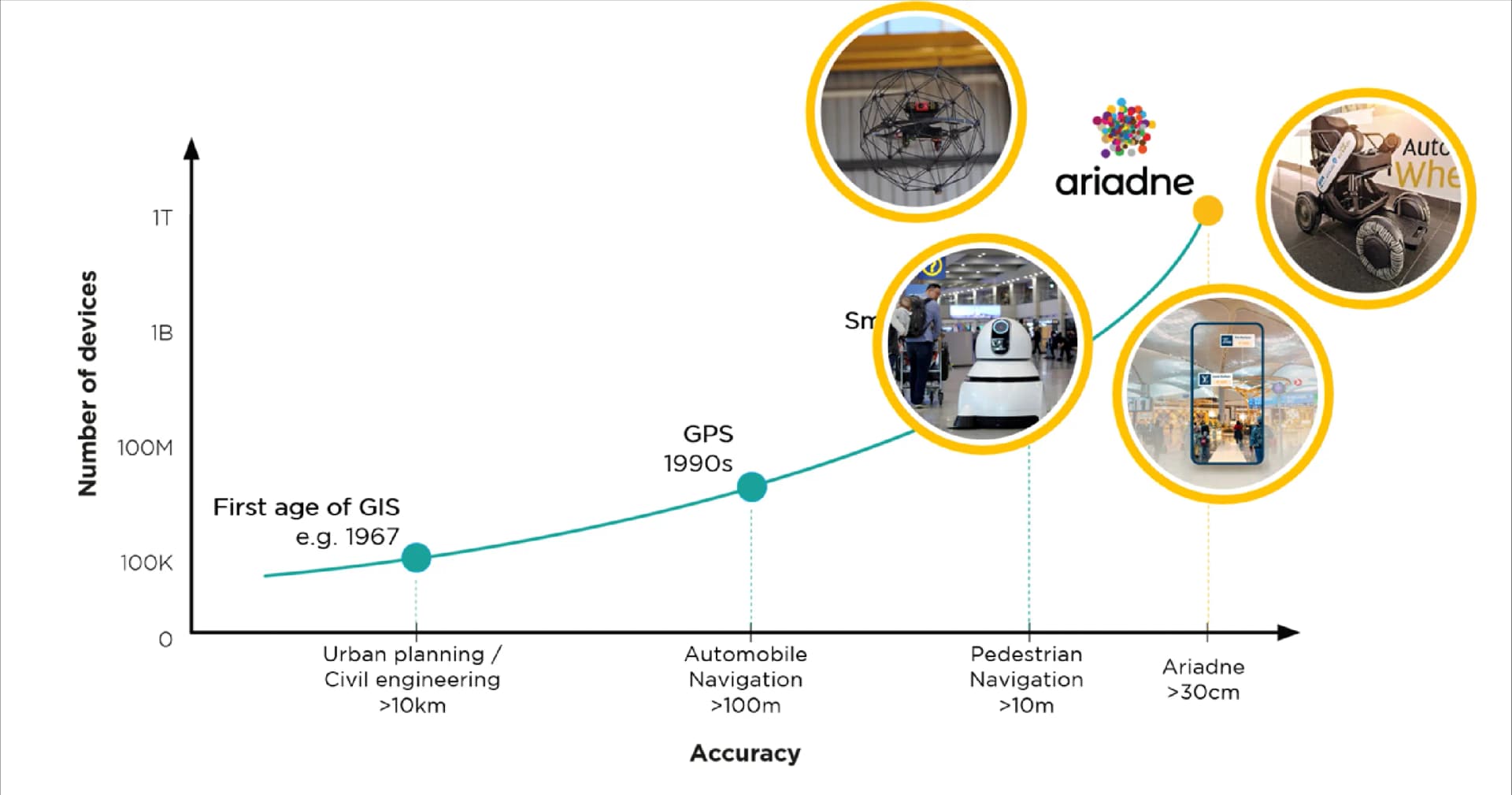
Ariadne isn’t just about counting today’s passengers. Our vision is to become the indoor GPS of the future, enabling:
- Autonomous wheelchair routing
- Smart robot cleaning schedules
- AR navigation and wayfinding
- Connected location sharing between retail and airport ecosystems
Airports including Munich, Glasgow, San Diego, Stuttgart, Budapest, and Singapore Changi have used Ariadne, among more than 800 locations worldwide.
If you're designing the airport of the future, start with the right foundation
Whether you're planning a new terminal, optimizing existing space, or simply trying to reduce wait times and improve concession revenue, Ariadne gives you the visibility, data, and tools you need to succeed.


