
Interactivity is a claim; conversion is a measurement
Every store-tech pitch promises an "interactive shopping journey": kiosks, configurators, smart mirrors, scan-and-go, demo stations. Some of it moves conversion; some of it is expensive theater that wins design awards and changes nothing. The difference is measurable, and stores that measure it buy very different technology than stores that do not.
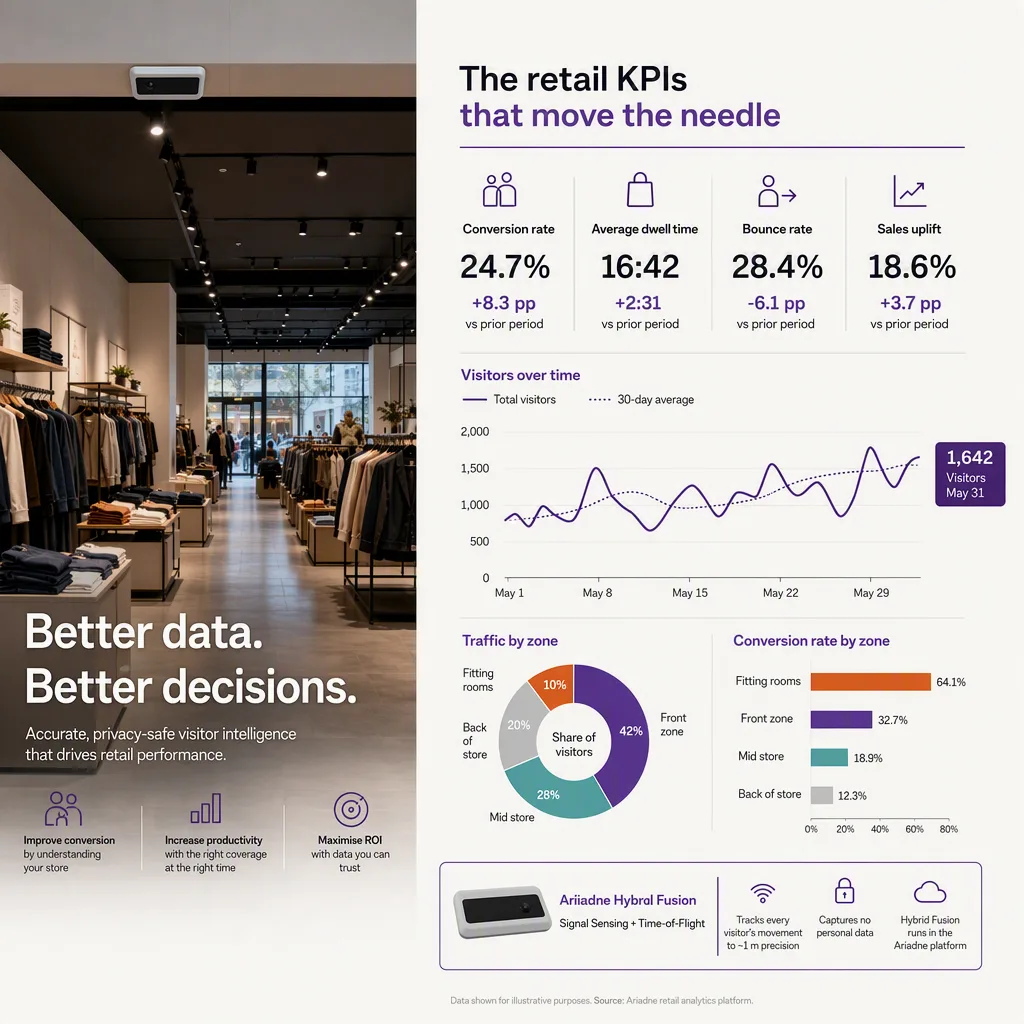
How do interactive shopping journeys improve conversion?
By removing a specific stall in the journey, or not at all. Interactivity converts when it answers the question that was about to end the visit: a configurator that resolves "will it fit my room", a demo that resolves "does it feel right", a kiosk that resolves "is it in stock in my size". Interactivity that answers no pending question (a touchscreen for its own sake) adds dwell without adding resolution, and dwell without resolution is entertainment, not conversion. The test is always the same: which journey stall does this touchpoint remove, and did the stage-to-stage rate move after it arrived.
The interactive touchpoints that earn their floor space
- Availability and wayfinding kiosks resolve the most common stall (cannot find it, cannot find my size) and are cheap relative to staff time; placement follows flow, per wayfinding kiosk design.
- Configurators and planners own the considered-purchase verticals (kitchens, wardrobes, PCs): they convert research visits into concrete plans, the multi-visit dynamic described in the furniture showroom journey.
- Working demos are the electronics journey's decisive stage, covered in the electronics retail journey.
- Fitting-room tech (request-from-the-room, queue-free returns) attacks fashion's highest-stakes stage, whose base rates live in try-on rate.
Measuring whether the interaction works
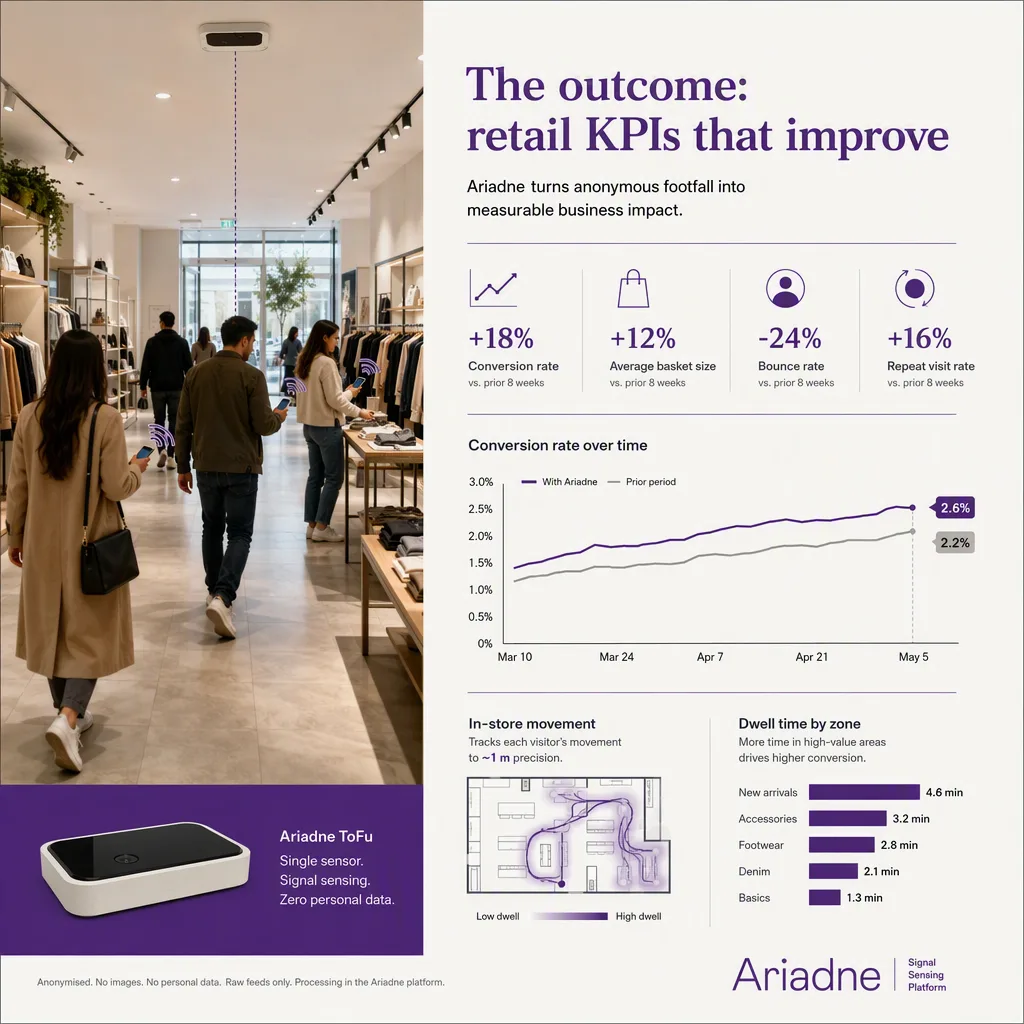
Three numbers, before and after installation, same methodology as any placement change (signage placement A/B testing transfers directly). Reach: do journeys actually arrive at the touchpoint, or is it off the flow. Engagement dwell: distribution, not average, of time spent there. Downstream rate: the stage the touchpoint was meant to unblock (try-on rate, demo-to-till, category conversion), compared across matched periods. A touchpoint with reach and dwell but no downstream movement is theater; without reach it is furniture; with all three it earns replication across stores.
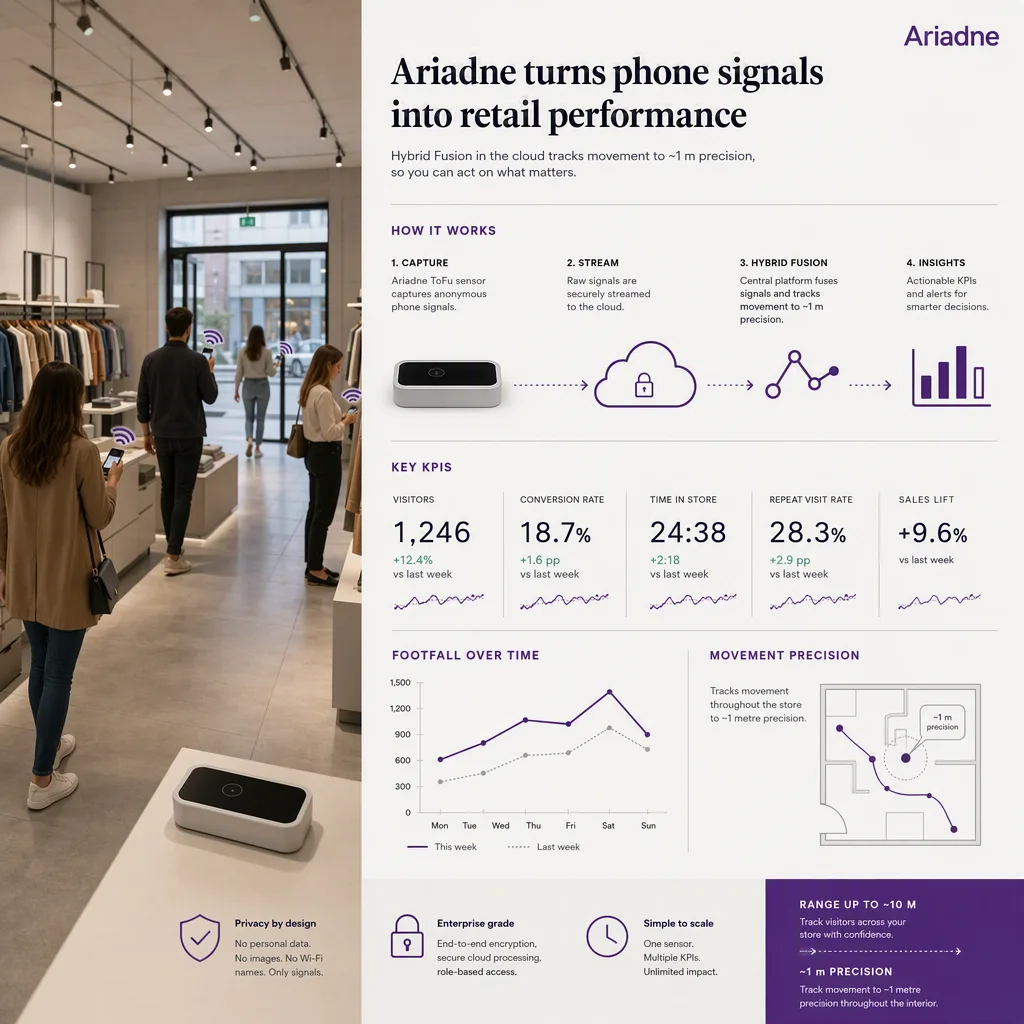
The journey view keeps interactivity honest
The reason to measure interactivity at journey grain rather than device logs: the device always reports itself busy. Screen analytics count taps; journey measurement shows whether the tappers were people who would have bought anyway, whether the kiosk queue itself became a stall, and whether the interaction redirected journeys somewhere productive. Ariadne provides that surrounding measurement camera-free, anonymous trajectories with per-zone dwell, the same layer described in journey touchpoint measurement; the method context is the pillar, customer journey mapping.
---


