
A salon or spa runs on the appointment book, and it is easy to treat that book as the full picture of the business. It is not. The book shows the treatments you delivered. It does not show the person who put their head round the door to ask about availability and left, the regular who came in only to buy the shampoo they like, or the booking that never turned up. Those visits are real demand and real traffic, and none of them appears in the diary. A door count captures them, which is the difference between knowing how busy you actually were and knowing only how busy the calendar said you would be.
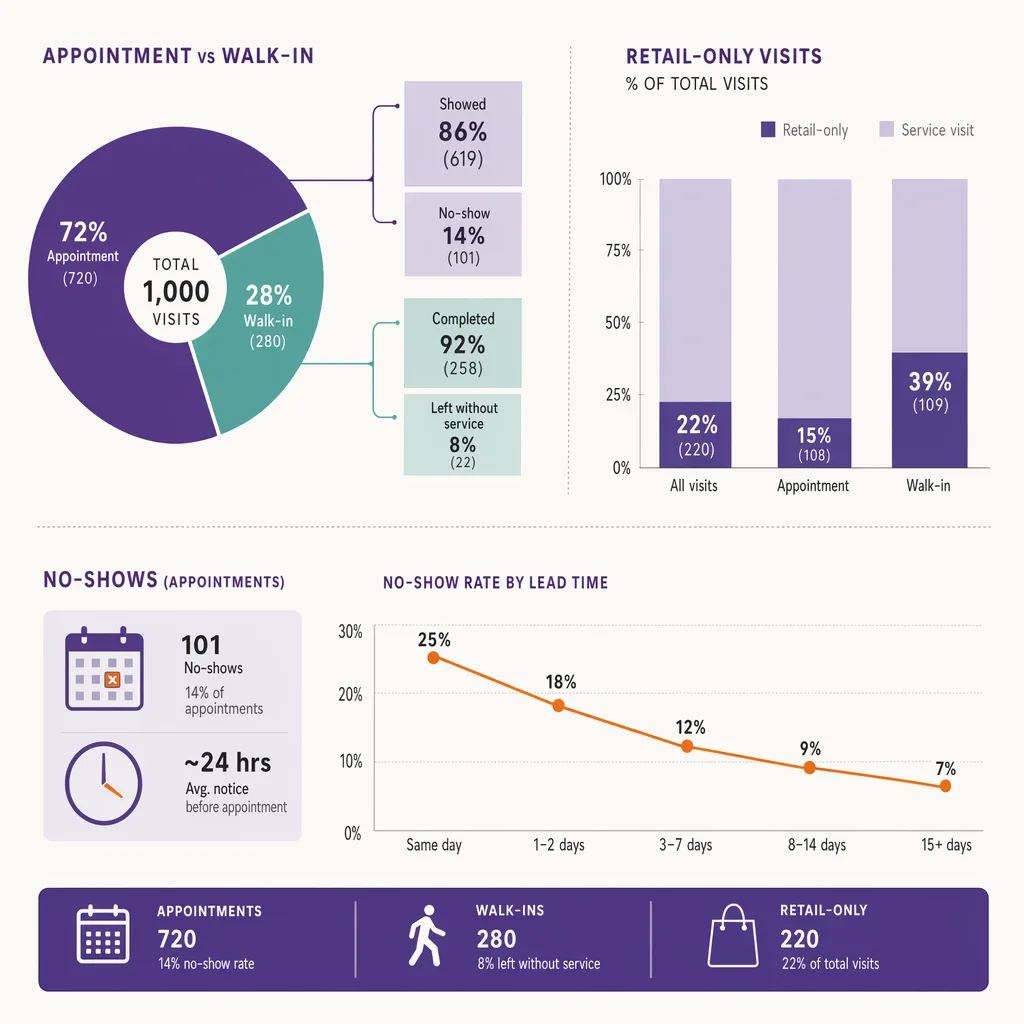
This is a guide to footfall counting for a salon or spa. It covers the walk-in and retail demand the diary misses, staffing reception to the real door rather than the booking sheet, why counting belongs at the threshold and never in the treatment areas, and how an owner or front-of-house manager turns the entry curve into decisions about cover, retail, and hours.
Why count footfall in a salon or spa?
Salons and spas run mostly on appointments, so it is easy to assume the booking system is the full picture. It is not. Footfall counting captures the walk-ins asking about availability, the people picking up retail products, and the no-shows who never arrived. Comparing entries to booked treatments shows the demand the diary missed and how reception should be staffed at the busy end of the day. Counting at the door without a camera fits a setting where guests are relaxed and undressed in treatment areas.
The value is in the gap between entries and the book. A day where forty people walked in but the diary shows twenty-five treatments is telling you something about walk-ins, retail, and no-shows that the booking system alone cannot.
The salon pain point: the diary looks full, but walk-ins and retail go uncounted
The appointment book creates a comfortable illusion of completeness. It is the system the whole business runs through, so it feels like it must capture everything that matters. But three streams of activity flow past it. The first is the walk-in: someone who passes, likes the look of the place, and comes in to ask if there is a slot this week. If reception is mid-treatment-handover and the answer is a distracted "we're fully booked," that person leaves and the demand is gone, unrecorded. The second is the retail-only visit: a client or a passer-by who comes in just to buy the products you stock, a real transaction that never touches the treatment diary. The third is the no-show: a booking that occupies a slot in the book but never walks through the door, so the book overstates how busy the day actually was.
The result is a business that does not know its own traffic. It knows its delivered treatments, which is a different and smaller number than the people who came through the door. That matters because the decisions reception and management make, when to add cover, whether walk-ins are worth chasing, whether the retail shelf earns its space, all depend on knowing the real door traffic, not just the completed bookings.
The gap also distorts how an owner judges the business. A diary that looks full reads as a healthy salon, but if a steady stream of walk-ins is being turned away at the door because reception is buried, the salon is busier in demand than in delivery and is quietly leaking the easiest growth it has. Conversely, a diary that looks thin on a given afternoon might be hiding real footfall, people coming in for products or to ask about a future booking, which is a different and more hopeful picture than an empty shop. Neither reading is available from the booking system, because the booking system only ever records the slots that were offered and filled, not the demand that arrived and found no room. The door count is the only honest measure of how busy the place actually was.
Walk-in demand and product-only visits
Counting at the door, set against the booking system, separates these streams. Total entries against booked-and-attended treatments shows the walk-in and retail layer the diary never recorded. If a meaningful number of people are coming in beyond your booked clients, that is demand you can act on: hold a few walk-in slots at the busy end of the day, make sure reception is free to greet rather than buried, treat the people who come in for products as the retail customers they are.
Product-only visits are their own signal. A salon that stocks retail lines but treats them as an afterthought may be turning over more product traffic than it realises, or far less. The conversion logic that a shop uses applies to the retail side of a salon too: people in against people who bought. And the small-format discipline of people counting for small formats fits a salon better than big-store thinking does, because the numbers are small enough that every walk-in counts and a single door is most of the picture.
The small-format reality cuts both ways and is worth being honest about. Because the daily numbers are low, a salon does not need a heavy analytics setup, and a single accurate count at the door does most of the useful work. But low numbers also mean small contaminations matter: staff stepping out for a break and back, a delivery, the owner popping to the bank. On a busy shop those are lost in the noise; on a salon counting a few dozen entries a day they can swing the figure enough to mislead. This is the argument for a count that distinguishes a genuine visitor arriving and staying from staff crossing the threshold, rather than a simple beam that adds every interruption to the total.
Reception staffing to the door, plus no-show patterns
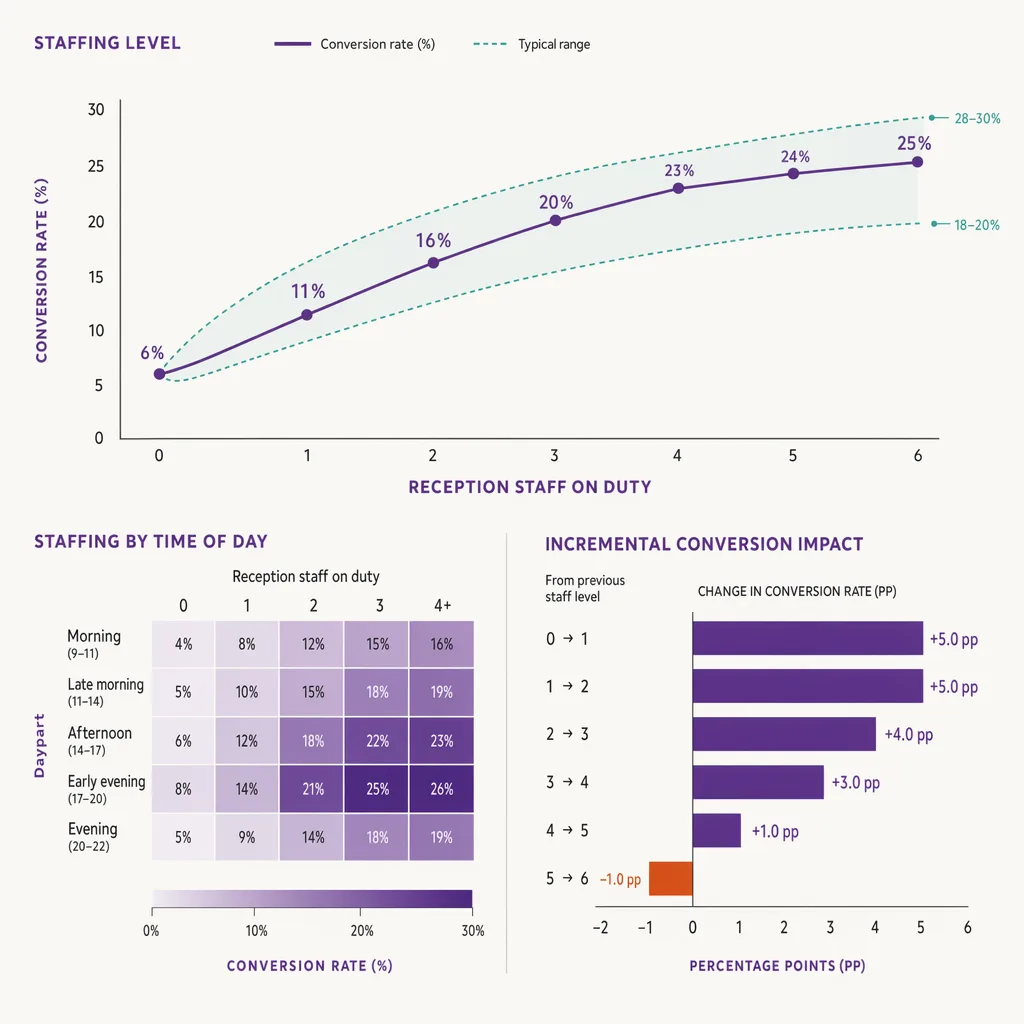
Reception is the pinch point in a salon, and it is usually staffed to the clock or to a sense of how busy the day "feels," not to the actual door. Footfall counting fixes that. The entry curve across the day shows when the door is genuinely busy, which is often the end of the working day and the start of the weekend rather than a flat spread, and that is when reception needs to be free to greet a walk-in properly rather than turning them away while juggling a phone and a payment. Reception staffing to the real door curve is a small change that directly affects whether walk-in demand converts or evaporates.
No-shows are the other half. By comparing entries to the bookings on the diary, you can see how the attended-versus-booked gap moves across days and times, which is the input for whether a deposit policy, a reminder change, or a different booking rhythm is worth trying. The count gives you the denominator the booking system cannot: who actually came.
The honest limit here is worth stating, because it keeps the claim grounded. A door count cannot tell you which specific booking failed to arrive; it tells you the size of the gap between people booked and people through the door at a given time. That is enough to see a pattern, the Monday-morning slot that no-shows more than the rest, the new-client bookings that fall through more often than regulars, and to test a fix against it. Pairing the count with what the booking system already knows about each slot is what turns a vague sense that no-shows are a problem into a measured one you can act on without guessing.
Counting at reception only, never the treatment areas
This is the non-negotiable boundary, and it is the reason a camera is simply the wrong instrument in a salon or spa. Guests are relaxed, sometimes in robes, sometimes undressed in treatment rooms. Nothing that records images belongs anywhere near a treatment area, and even at reception a camera carries a weight of surveillance that is wrong for a space built around comfort and discretion.
Ariadne measures this with Hybrid Fusion, its patented camera-free method. Time-of-Flight depth sensing counts every visitor at the entrances, capturing geometry rather than images, while patented phone signal sensing follows movement through the interior, detecting the signals a phone emits even in airplane mode, and tracks that movement to about one-metre precision. The sensor streams both feeds to Ariadne, where Hybrid Fusion combines them into one trajectory per visit and computes counts, dwell, and paths. The streams carry no identifier: no MAC address, no device ID, no biometric data, and no camera is involved. Identifiers are stored only when a visitor explicitly opts in, which keeps the method GDPR-friendly and outside biometric territory.
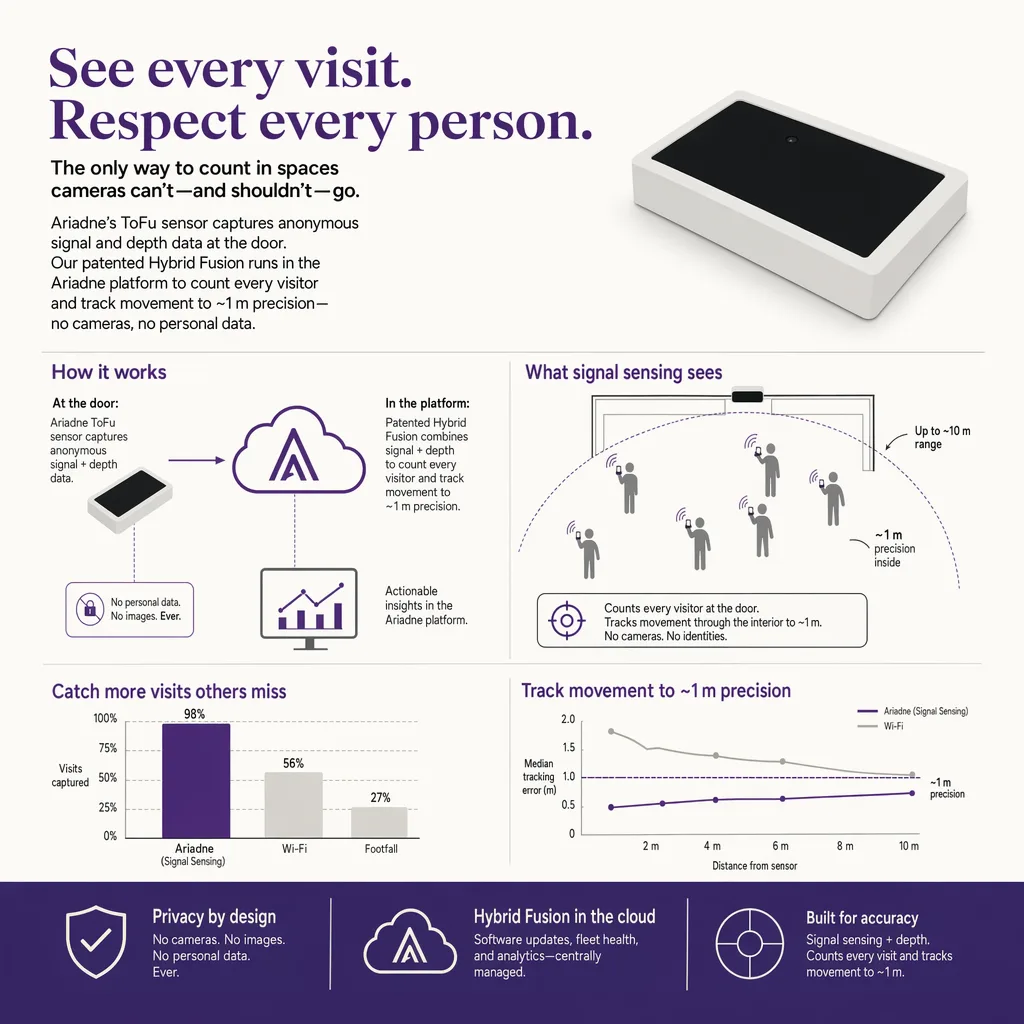
For a salon that means the count sits at the entrance and reception threshold only, measuring who comes in, with no footage anywhere and nothing personal stored. The treatment areas are not a place to count, and a camera-free method at the door respects that completely while still giving you the traffic data. If the alternative being pitched is any kind of camera, counting without cameras is the obvious fit for this environment.
From counts to action: retail placement, opening hours, walk-in capture
The data turns into a handful of practical decisions.
Walk-in capture is the first. Once you can see the real walk-in demand and when it lands, you can hold slots, brief reception to greet rather than reflexively decline, and stop leaking the passers-by who would have booked if someone had been free to say yes.
Retail placement is the second. Knowing how many product-only and browsing visits you get tells you whether the retail shelf deserves a better spot near reception, a small range, or more attention from staff. Capture rate on the retail side, people in against products sold, makes the case either way.
Opening hours are the third. The entry curve shows whether your quietest hours are genuinely dead or just under-promoted, and whether the busy end of the day justifies a later close or extra reception cover. That is a more honest basis for setting hours than the booking diary, which only ever reflects the slots you offered, not the demand you turned away.
How a salon owner actually uses the numbers
For an owner running a single site, this is not a dashboard exercise; it is a handful of checks that change small, concrete things. The weekly look is at the entry curve against the diary: where did more people come in than the book recorded, and when. If the answer is consistently the late afternoon and the start of the weekend, that is when reception needs to be free to say yes to a walk-in rather than buried in a handover, and the fix is a rota change, not a marketing campaign. The monthly look is at the retail side, people in against products sold, which settles whether the shelf deserves a better spot near reception or a smaller range. And the slower look is at hours, where the entry curve shows whether the quiet first hour is genuinely dead or whether demand is arriving and finding the door not yet open. The thread through all three is the same: the booking diary tells the owner what they delivered, and the door count tells them what they could have, which is the more useful number for running the place.
FAQ
My salon runs on appointments. Why would I count footfall?
Because the appointment book only records delivered treatments. It misses the walk-ins who ask about availability, the people who come in only to buy products, and the no-shows who occupy a slot but never arrive. A door count captures all three, so you know your real traffic rather than just your completed bookings, which is what you actually staff and stock to.
Will counting put a camera in the treatment rooms?
No, and it should never. Ariadne counts camera-free, at the entrance and reception threshold only, using Time-of-Flight depth sensing and phone-signal sensing. There is no video anywhere and nothing personal stored, which is the only acceptable approach in a space where guests are relaxed and sometimes undressed in treatment areas.
Can footfall data help with no-shows?
Indirectly and usefully. By comparing door entries to the bookings on the diary, you can see how the attended-versus-booked gap moves by day and time. That tells you where no-shows cluster, which is the input for deciding whether a deposit policy or a reminder change is worth trying.
How does footfall help reception staffing?
The entry curve shows when the door is genuinely busy, which is often the end of the day and the start of the weekend rather than a flat spread. Staffing reception to that curve means someone is free to greet a walk-in properly at the peak, rather than turning demand away while juggling other tasks.
My salon is small. Do I really need this, or is it overkill?
A salon is a good fit for light counting precisely because the numbers are small: a single accurate count at the door does most of the useful work, with no heavy setup. The thing to get right is that small numbers make small contaminations matter, so the count needs to tell a genuine visitor from staff or a delivery crossing the threshold, rather than a simple beam adding every interruption.
Can footfall tell me which specific client did not show up?
No, and it should not claim to. It tells you the size of the gap between people booked and people through the door at a given time, which is enough to see a pattern, such as a slot or a client type that no-shows more than others. Pairing that with what the booking system already knows about each slot turns a vague worry into something you can measure and test a fix against.
---


