
Ein Full-Service-Restaurant misst seinen Abend an Gedecken. Gedecke sind die Gäste, die sich setzten, bestellten und zu Umsatz wurden, und sie sind die Zahl, die jeder Betreiber beobachtet. Aber Gedecke sind das Ende einer Geschichte, nicht der Anfang. Vor einem Gedeck steht ein Mensch an der Tür, liest die Wartezeit, wirft einen Blick auf die Karte, entscheidet, ob er bleibt. Manche bleiben und werden zu einem Gedeck. Manche schauen die Schlange an oder warten zwei Minuten, ohne begrüßt zu werden, und gehen wieder hinaus. Diese Menschen erscheinen nirgends in den Daten des Restaurants. Sie sind Nachfrage, die ankam und ging, und das Reservierungsbuch hat keine Ahnung, dass es sie gab.
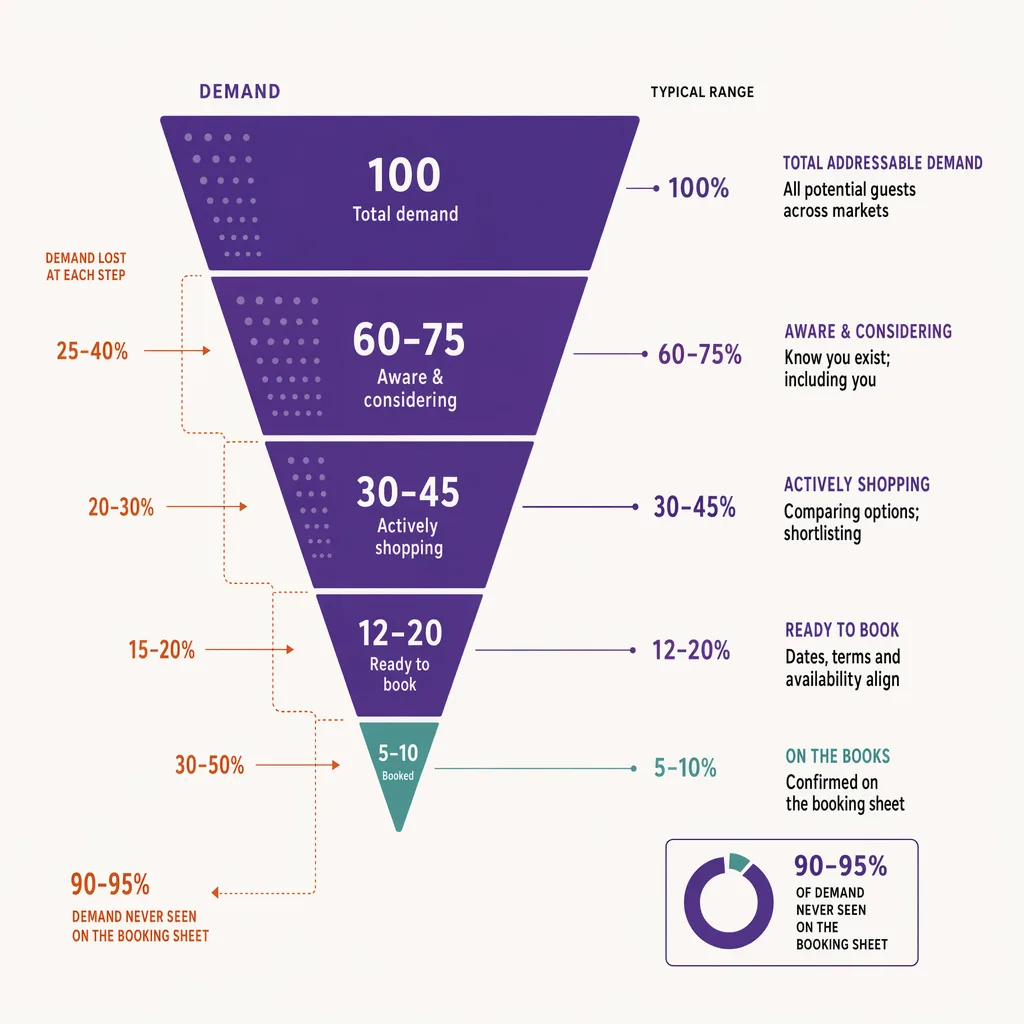
Dieser unsichtbare Abgang ist die Lücke zwischen Frequenz und Gedecken, und zur Spitze kann sie groß sein. Ein Restaurant, das auf dem Papier voll aussieht, jeder Tisch umgeschlagen, eine gesunde Gedeckzahl, wandert vielleicht zugleich einen stetigen Strom an der Tür ab, den es nie misst und für den es nie besetzt. Das ist eine andere Frage als die, wie schnell Sie einen Tisch umschlagen. Sie beginnt am Eingang, und sie ist genau die, die das Reservierungsbuch strukturell nicht beantworten kann.
Was ist der Unterschied zwischen Gedecken und Besucherfrequenz in einem Restaurant?
Gedecke zählen die Gäste, die sich setzten und bestellten. Die Frequenz zählt alle, die hereinkamen, einschließlich der Menschen, die die Wartezeit ansahen, die Karte lasen und gingen. Die Lücke zwischen beiden ist die Nachfrage, die ein Restaurant nie bediente. Beides zu messen zeigt, wie viele Walk-ins zur Spitze verloren gehen, ob eine Schlange oder eine langsame Begrüßung die Ursache ist und wie sich die Front-of-House-Besetzung an der Tür statt am Reservierungsbuch orientieren sollte. Es ist eine andere Frage als der Tischumschlag, und die Tür ist, wo sie beginnt.
Beachten Sie die Abgrenzung zum Schnellservice. Ein Schnellservice-Betrieb misst Durchsatz, wie viele Menschen er in einer Stunde durch eine Schlange und eine Kasse bewegen kann. Ein Full-Service-Restaurant misst die Conversion einer Sitzentscheidung, wo der Verlust an der Tür geschieht, bevor jemand einen Tisch erreicht. Dasselbe Wort, Frequenz, ein ganz anderer Trichter.
Der restaurant-spezifische Schmerzpunkt: ein volles Reservierungsbuch verbirgt die Walk-ins, die Sie an der Tür abwiesen
Die Falle ist, dass sich ein voller Abend wie ein erfolgreicher Abend anfühlt. Die Tische sind voll, die Küche ist überrannt, die Gedecke sind oben, und der Manager geht zufrieden nach Hause. Was dieses Bild verbirgt, ist die Tür. An den vollsten Abenden, wenn das Restaurant an der Kapazität ist und die Wartezeit am längsten, ist auch die Walk-in-Nachfrage am höchsten, und genau dann geben die meisten Menschen auf und gehen. Das Restaurant verliert die meisten Kunden an den Abenden, an denen es sich am erfolgreichsten anfühlt, und nichts in seinem System erfasst es.
Reservierungsdaten machen das schlimmer, nicht besser, weil sie eine selbstsichere und unvollständige Geschichte erzählen. Das Reservierungsbuch zeigt die geplanten und die angekommenen Gedecke. Es schweigt über den Walk-in, der das "ausgebucht"-Schild sah und nebenan ging, das Paar, das an einem unbesetzten Empfangstresen wartete und aufgab, die Gruppe, die eine zwanzigminütige Schlange ansah und sich dagegen entschied. Ein Restaurant, das sich auf Reservierungen verlässt, um die Nachfrage zu verstehen, liest den halben Raum. Die andere Hälfte kam herein und ging wieder, und der einzige Weg, sie zu sehen, ist die Tür zu zählen.
Es gibt eine Folgekostenwirkung, die die erste verstärkt. Ein Walk-in, der abgewiesen oder ignoriert wird, steht nicht nur für einen verlorenen Tisch heute Abend; er bildet ein Urteil, ob das Restaurant einen weiteren Versuch wert ist. Ein Paar, das zwei Minuten unbeachtet am Empfangstresen stand und ging, kommt oft nicht zurück, und es wird dem Restaurant nicht sagen warum, denn was die Daten des Restaurants betrifft, war es nie da. Der Verlust, den die Tür nicht sehen kann, ist also nicht nur die heutigen Gedecke, sondern ein Stück künftiger Nachfrage, und deshalb sind Betreiber, die die Lücke schließlich messen, oft überrascht, wie groß sie ist und wie sauber sie auf ihre am langsamsten erholenden Abende passt.
Die Walk-in-Conversion-Lücke messen
Die Messung ist der Vergleich zweier Zahlen, die schon halb existieren. Gedecke kommen aus dem Kassensystem oder dem Reservierungssystem. Die Frequenz, die Zählung aller, die durch den Eingang kamen, kommt von einem Türzähler. Legen Sie sie über dieselben Stunden nebeneinander, und die Lücke ist die Walk-in-Nachfrage, die nicht konvertierte.
Diese Lücke ist die Kennzahl, die zu managen sich lohnt. Eine kleine, stetige Lücke ist normal; nicht jeder, der hereinschaut, will essen. Eine Lücke, die zur Spitze aufbläht, ist ein Signal: Das Restaurant stößt an eine Wand, und die Wand ist entweder die Kapazität, die Schlange oder die Begrüßung. Dieselbe Conversion-Logik, die der Einzelhandel auf Eintritte anwendet, gilt hier direkt, mit der Frequenz als Spitze des Trichters und den Gedecken als Boden. Über Wochen verfolgt zeigt die Conversion-Lücke auch, ob eine neue Karte, ein Umbau oder eine Marketingaktion mehr Menschen durch die Tür zog, getrennt davon, ob sie mehr Tische füllte, und sie schärft, was "Frequenz" tatsächlich zählt, damit Sie Türschwünge nicht für einzelne Gäste halten.
Die Lücke nach Tageszeit und nach Wochentag zu lesen ist, wo die Diagnose schärfer wird. Eine Lücke, die die ganze Woche flach ist, aber nur an Freitag- und Samstagabenden ausschlägt, deutet klar auf ein Kapazitäts- oder Schlangenlimit im vollsten Service, was ein anderes Problem ist als eine Lücke, die an jedem Werktagsmittag auftritt, wo die wahrscheinlichere Ursache ein während eines vorhersehbaren Ansturms unbesetzter Empfangstresen ist. Die Form der Lücke, nicht nur ihre Größe, sagt dem Betreiber, welchen Hebel er ziehen muss, und deshalb lohnt der Vergleich fortlaufend statt als einmalige Prüfung. Eine Momentaufnahme einer einzelnen Woche kann in die Irre führen; ein Muster über mehrere Wochen, gelesen gegen den Dienstplan, nicht.
Front-of-House-Besetzung an der Tür, nicht an den Reservierungen
Die meiste Front-of-House-Besetzung ist um das Reservierungsbuch und eine feste Vorstellung vom Service gebaut. Das Problem ist, dass das Reservierungsbuch die Tür nicht vorhersagt. Der Walk-in-Druck, besonders zu Beginn eines Service oder in einem bekannten vollen Fenster, kann in einer Welle ankommen, die die Buchungs-Zeitachse glättet. Ist der Empfangstresen die zwei Minuten unbesetzt, in denen die Welle trifft, verliert das Restaurant Gedecke, die es die Kapazität hatte zu bedienen.
Frequenzdaten korrigieren den Input. Die Tür, die Begrüßung und die Engpässe zu Servicebeginn nach der gemessenen Ankunftskurve zu besetzen statt nach der Reservierungszahl hält genau dann jemanden am Empfangstresen, wenn Walk-ins anschwellen. Das ist dieselbe Disziplin Personal-zu-Frequenz, die jeder frequenzstarke Betrieb nutzt, und sie ist besonders scharf an vorhersehbaren Engpässen wie der Mittagsspitze, wo eine fünfzehn Minuten lange langsame Begrüßung still ein Dutzend Gedecke kosten kann.
Die Diskrepanz ist meist strukturell statt ein einmaliger Ausrutscher. Ein Reservierungsbuch, das Tische ab sieben Uhr gebucht zeigt, ermutigt einen Front-of-House-Plan, der um das Platzieren dieser Buchungen gebaut ist, was die verfügbaren Kräfte genau in dem Moment auf die Fläche zieht, in dem die Walk-in-Welle die Tür trifft. Die gemessene Ankunftskurve zeigt fast immer, dass diese Welle früher beginnt und stärker läuft, als die Buchungs-Zeitachse nahelegt, weil Walk-ins nicht buchen und so keine Spur hinterlassen, bis sie erscheinen. Sobald der Manager die reale Ankunftsform sehen kann, ist die Lösung oft so einfach wie den Empfangstresen für ein festgelegtes Fenster zu Servicebeginn zu schützen, was wenig kostet und Gedecke zurückgewinnt, die an nichts als eine unbesetzte Tür verloren gingen.
Zählen am Eingang ohne Kamera über dem Gastraum
Der offensichtliche Einwand gegen das Zählen in einem Restaurant ist, dass niemand unter einer Kamera speisen will. Gäste essen, reden, entspannen; eine Linse über dem Gastraum wäre aufdringlich und würde das Gefühl des Ortes verändern. Das Zählen muss an der Tür und nirgends sonst geschehen, und es muss Zahlen erfassen, nicht Gäste.
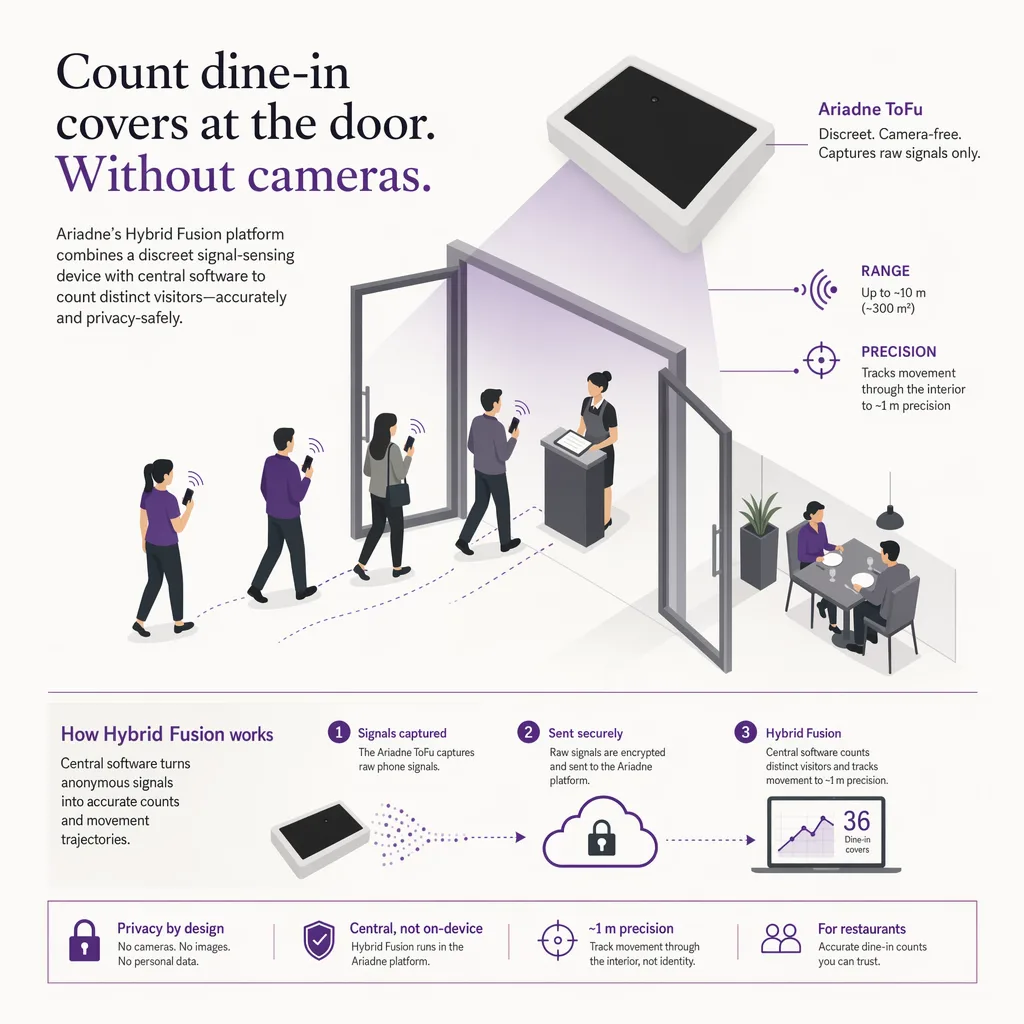
Ariadne misst dies mit Hybrid Fusion, der patentierten kamerafreien Methode. Time-of-Flight-Tiefensensorik zählt an den Eingängen jeden Besucher und erfasst Geometrie statt Bilder, während die patentierte Signalerfassung die Bewegung im Innenraum verfolgt und die Signale erkennt, die ein Telefon aussendet, selbst im Flugmodus, und diese Bewegung auf etwa einen Meter genau auflöst. Der Sensor streamt beide Datenströme an Ariadne, wo Hybrid Fusion sie zu einer Trajektorie pro Besuch zusammenführt und Zählwerte, Verweildauer und Wege berechnet. Die Datenströme tragen keine Identifikatoren: keine MAC-Adresse, keine Geräte-ID, keine biometrischen Daten, und es ist keine Kamera beteiligt. Identifikatoren werden nur gespeichert, wenn ein Besucher ausdrücklich zustimmt, was die Methode datenschutzfreundlich und außerhalb des biometrischen Bereichs hält.
Für ein Restaurant bedeutet das eine kleine Einheit am Eingang, die zählt, wer hereinkommt und hinausgeht, ohne Aufnahme des Raums und ohne Aufzeichnung eines Gastes. Das Gasterlebnis bleibt unangetastet, und die kamerafreie Methode umgeht die Datenschutzdiskussion vollständig, was in einem Umfeld zählt, das darauf gebaut ist, dass Gäste sich wohlfühlen.
Von Zahlen zum Handeln: Begrüßungstempo, Schlangenhandhabung, Tageszeit-Besetzung
Der Sinn, die Lücke zu messen, ist, sie zu schließen. Drei Hebel bewegen sie am meisten. Das Begrüßungstempo ist der erste und günstigste: Wenn die Conversion-Lücke ausschlägt, sobald der Empfangstresen unbesetzt bleibt, ist die Lösung schlicht, die Tür während der Ankunftswelle zu besetzen, die die Frequenzkurve nun genau lokalisiert. Die Schlangenhandhabung ist der zweite: Wenn Walk-ins bei einer sichtbaren Schlangenlänge gehen, sagen Ihnen die Daten, wo die Toleranz bricht, was informiert, ob eine Nummer vergeben, die Bar angeboten oder eine ehrliche Wartezeit genannt wird, die Menschen hält statt verliert.
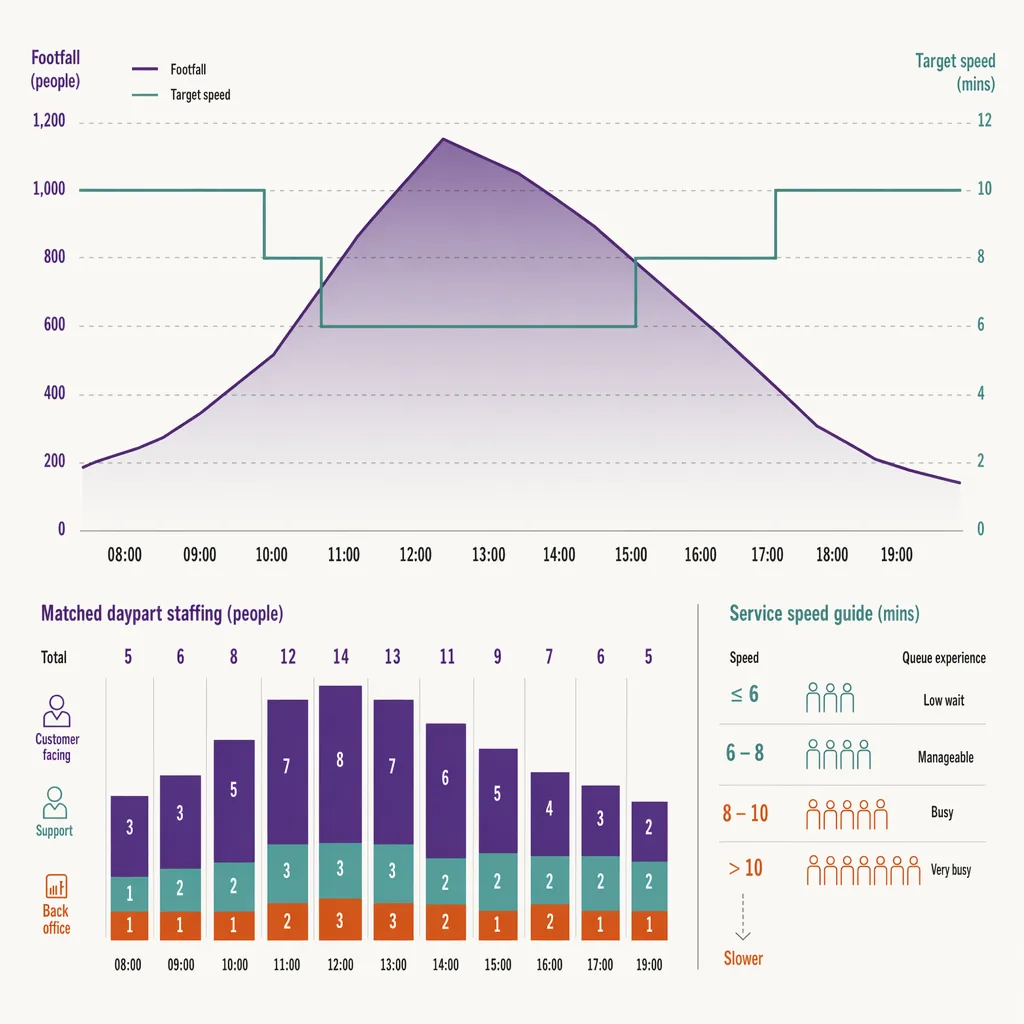
Die Tageszeit-Besetzung ist der dritte und der strukturellste. Die Ankunftskurve, nicht die Reservierungszahl, sollte festlegen, wie viele Menschen auf der Fläche und an der Tür durch den Tag sind. Eine Tageszeit mit hoher Frequenz und niedriger Conversion ist unterbesetzt und überverlierend; eine Tageszeit mit niedriger Frequenz ist überbesetzt. Den Dienstplan an die gemessene Tür auszurichten, so wie es das Playbook Personenzählung-zum-Handeln beschreibt, macht aus der Conversion-Lücke statt eines unsichtbaren Verlusts eine gemanagte Zahl.
Wie ein Restaurantmanager es tatsächlich nutzt
Der Nutzer ist der General Manager oder die Front-of-House-Leitung, und der praktische Rhythmus ist eine morgendliche Durchsicht und eine wöchentliche Musterprüfung. Am Morgen betrachtet der Manager die Frequenz der Vornacht gegen die Gedecke pro Stunde. Eine saubere Nacht zeigt Frequenz und Gedecke im Gleichlauf. Eine schlechte Nacht zeigt sie an einem bestimmten Fenster auseinanderlaufen, und dieses Fenster ist das Gespräch: War der Empfangstresen um 19:30 besetzt, als die Walk-in-Welle traf, oder platzierte jeder eine große Buchung. Diese eine Durchsicht macht aus "es fühlte sich gestern hektisch an" eine konkrete, behebbare Besetzungsnotiz für den nächsten gleichwertigen Service.
Über eine Woche nutzt derselbe Manager das Muster, um den Dienstplan neu zu formen statt auf gestern Nacht zu reagieren. Öffnet sich die Lücke zuverlässig zu Beginn des Freitag- und Samstagservice, ist die Lösung ein eigener Empfangsmitarbeiter an der Tür für dieses Fenster, kalkuliert gegen die Gedecke, die die Lücke als verloren zeigt. Die Disziplin, die das zum Funktionieren bringt, ist, Gleiches mit Gleichem zu vergleichen: Ein nasser Dienstag und ein trockener Samstag haben aus Gründen, die nichts mit dem Service zu tun haben, unterschiedliche Frequenz, also liest der Manager die Conversion-Lücke, den Anteil der Ankünfte, die zu Gedecken wurden, statt der rohen Türzählung, denn die Lücke ist der Teil, den Front-of-House tatsächlich bewegen kann.
FAQ
Ist die Frequenz dasselbe wie Gedecke in einem Restaurant?
Nein. Gedecke sind die Gäste, die sich setzten und bestellten. Die Frequenz ist jeder, der hereinkam, einschließlich derer, die ohne sich zu setzen gingen. Die Lücke zwischen ihnen ist die Walk-in-Nachfrage, die das Restaurant nicht bediente.
Wie messe ich die Walk-ins, die ich verliere?
Zählen Sie jeden, der eintritt, mit einem Türzähler und vergleichen Sie es mit den Gedecken aus Ihrem Kassen- oder Reservierungssystem über dieselben Stunden. Die Differenz, besonders wie sie zur Spitze wächst, ist die Walk-in-Conversion-Lücke.
Funktioniert das für ein Restaurant, das überwiegend auf Reservierungen läuft?
Ja, und dort ist es oft am nützlichsten, denn ein reservierungsgeführtes Restaurant hat die geringste Sicht auf Walk-ins. Das Reservierungsbuch zeigt geplante Gedecke; es kann die Menschen nicht zeigen, die in der Hoffnung auf einen Tisch kamen und gingen.
Brauche ich eine Kamera im Gastraum?
Nein. Das Zählen geschieht am Eingang mit Tiefen- und Signalerkennung, nicht mit Kameras, es gibt also keine Aufnahme des Gastraums und keine Aufzeichnung einzelner Gäste. Das Gasterlebnis bleibt unberührt.
Wie erkenne ich, ob die Schlange oder die Begrüßung mir Walk-ins kostet?
Lesen Sie die Conversion-Lücke pro Fenster und gegen Ihren Flächenzustand. Schlägt die Lücke aus, wenn das Restaurant wirklich an der Kapazität ist, ist das Limit die Plätze; schlägt sie aus, wenn Tische frei waren, aber der Empfangstresen unbesetzt war, ist das Limit die Begrüßung. Die beiden haben unterschiedliche Lösungen, und das Timing der Lücke ist, was sie trennt.
Kann ein einzelner Zähler ein Restaurant mit einem separaten Bar-Eingang abdecken?
Das Zählen braucht einen Sensor an jedem tatsächlich genutzten Eingang, eine separate Bartür erhält also ihre eigene Einheit, und die Zahlen fügen sich zusammen. Das lässt Sie auch das Bar-Geschäft und das Restaurantgeschäft als getrennte Ströme sehen, was zählt, wenn die Bar Walk-ins konvertiert, die der Gastraum abwies.
---


