
Ein Geschäft hat eine Tür. Zählen Sie jeden hindurch, ziehen Sie die Ausgänge ab, und Sie wissen, wie viele Menschen drinnen sind. Ein Platz hat keine Tür. Ein Park hat ein Dutzend Zugänge und lange Abschnitte offener Ränder, wo die Grenze zwischen drinnen und draußen eine Frage dessen ist, wo Sie sie ziehen. Dieser eine Unterschied verändert alles daran, wie man einen öffentlichen Raum misst, und er ist der Grund, warum eine Methode, die für einen Ladeneingang gebaut ist, sich nicht einfach auf einen offenen Platz übertragen lässt.
Städte wollen die Antwort trotzdem zunehmend haben. Wenn ein Platz umgestaltet, ein Park neu bepflanzt oder eine Sitzanlage installiert wird, muss jemand sagen, ob es funktioniert hat, und "es fühlt sich belebter an" ist keine Antwort, die ein Investitionsbudget respektiert. Auslastungsdaten machen aus einer Umgestaltung eine Frage des Belegs statt des Geschmacks: Wann ist der Raum am vollsten, welche Ecken werden nie genutzt, verändert eine neue Bank, wie lange Menschen bleiben, und sollte die Reinigungscrew zu der Stunde kommen, zu der der Raum tatsächlich voll ist, statt zu der Stunde, die der Plan vorgibt.
Dieser Beitrag handelt speziell von der Messung offener öffentlicher Räume: Plätze, Marktplätze, Parks und Grünflächen, nicht ein Geschäft und nicht eine verkehrsberuhigte Einkaufsstraße. Er behandelt die zentrale Unterscheidung zwischen dem Zählen von Menschen, die eine Linie überqueren, und dem Messen, wie viele in einer Fläche anwesend sind, das Verweildauer-Signal, das sagt, ob ein Raum funktioniert, was die Daten tatsächlich steuern, und wie man einen offenen Außenraum ohne Kamera zählt. Eine verkehrsberuhigte Einzelhandelsstraße ist ein verwandter, aber anderer Fall, und der Besucherfluss im Zieltourismus ist wiederum etwas anderes; dieser Beitrag bleibt beim offenen Raum außerhalb des Einzelhandels.
Wie misst man die Auslastung in einem Platz oder Park?
Ein offener öffentlicher Raum hat keinen einzelnen Eingang, daher wird die Auslastung anders gemessen als in einem Geschäft. Ein Ansatz zählt die Menschen, die die Eingangslinien um eine definierte Fläche überqueren, und hält eine laufende Bilanz darüber, wer drinnen ist; ein anderer erfasst stichprobenartig, wie viele Menschen im Zeitverlauf in Zonen des Raums anwesend sind, um ein Bild von Auslastung und Verweildauer aufzubauen. Die Daten beantworten praktische Fragen: Wann ist ein Platz am vollsten, welche Ecken eines Parks bleiben ungenutzt, verändert eine neue Sitz- oder Bepflanzungsanlage, wie lange Menschen bleiben, und wann sollten Pflege und Reinigung stattfinden, um sich an der echten Nutzung statt an einem festen Zeitplan zu orientieren.
Diese beiden Ansätze, die Grenze zählen und das Innere abtasten, sind nicht austauschbar, und den falschen für die Frage zu wählen, ist der häufigste Fehler bei der Messung offener Räume. Der nächste Abschnitt trennt sie auseinander.
Linienzählung vs. Flächenbelegung: zwei verschiedene Fragen
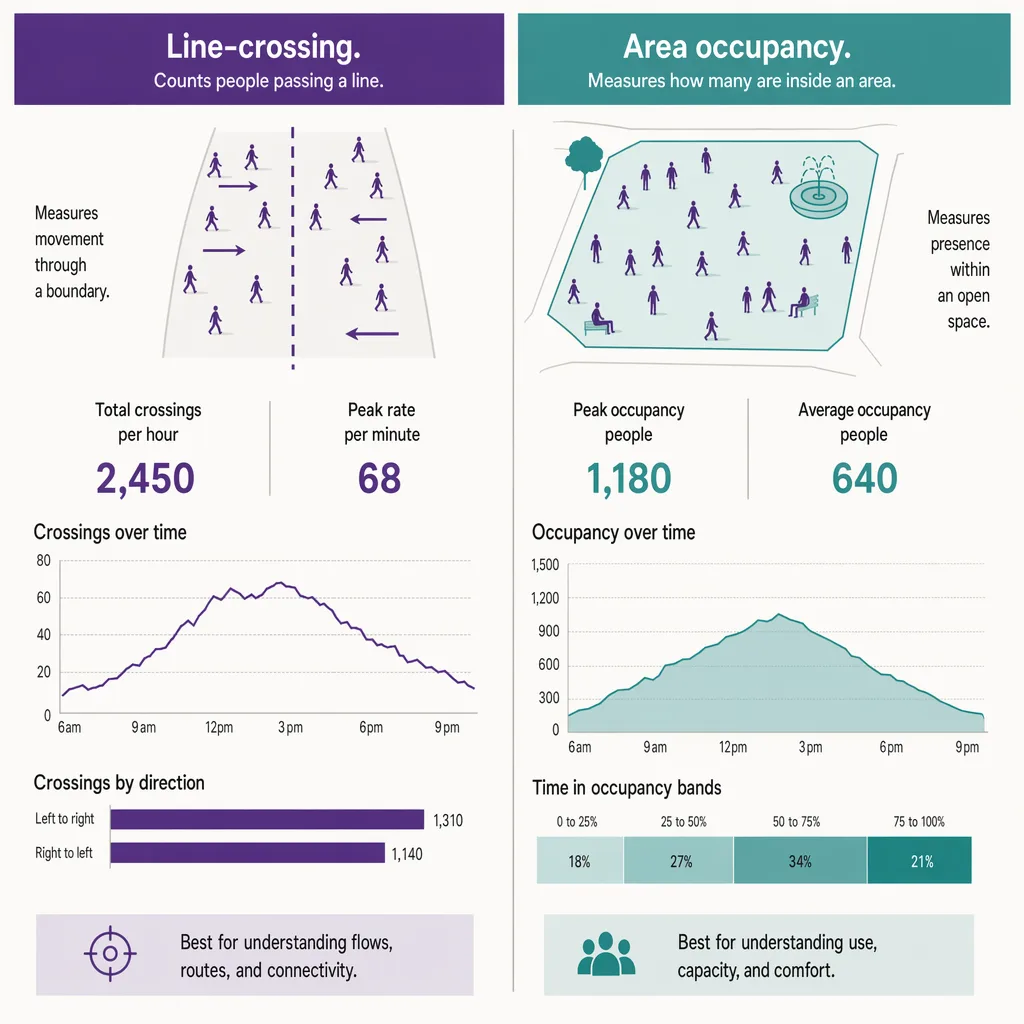
Die beiden Fragen klingen ähnlich und sind es nicht. Die Linienzählung misst den Fluss: wie viele Menschen einen Punkt in einer bestimmten Richtung über einen Zeitraum passiert haben. Die Flächenbelegung misst die Anwesenheit: wie viele Menschen sich zu einem bestimmten Moment in einer definierten Fläche befinden. Ein belebter Durchgangsweg über einen Platz kann sehr hohe Linienzählwerte und eine sehr niedrige Belegung haben, weil alle hindurchgehen und niemand bleibt. Eine kleine sonnige Ecke kann einen bescheidenen Fluss und eine hohe Belegung haben, weil die wenigen, die kommen, sich für eine Stunde niederlassen.
Sie können die Belegung aus der Linienzählung ableiten, wenn, und nur wenn, Sie jeden Ein- und Ausgang einer definierten Fläche zählen und eine genaue laufende Bilanz aus Eintritten minus Austritten halten können. Das funktioniert gut für einen Platz mit einer zählbaren Menge an Zugangspunkten, wo Sensoren an jedem Eingang eine Live-Zählung darüber führen, wer drinnen ist. Es funktioniert schlecht für einen weitläufigen Park mit offenem Umfang, wo es keine vollständige Menge zählbarer Linien gibt und die Bilanz abdriftet, während kleine Fehler an jeder Überquerung sich über einen Tag anhäufen. Gruppen an diesen Eingangslinien korrekt zu zählen, ist ein eigenes technisches Problem, weil Menschen zu zweit und zu dritt ankommen und ein naiver Zähler sie falsch zählt; die Genauigkeitsfaktoren werden in Gruppen genau zählen behandelt.
Für Räume mit offenem Umfang ist das stichprobenartige Erfassen der Anwesenheit innerhalb von Zonen der Fläche die ehrlichere Methode: Statt zu versuchen, eine unvollständige Menge von Grenzen auszubilanzieren, messen Sie, wie viele Menschen in jeder Zone anwesend sind, und lesen Auslastung und Verweildauer direkt ab. Die praktische Regel ist einfach. Hat der Raum eine zählbare Grenze, liefert die Linienzählung mit laufender Bilanz Ihnen sowohl Fluss als auch Belegung. Hat er das nicht, messen Sie die Anwesenheit in Zonen und geben Sie nicht vor, eine unvollständige Grenzzählung sei eine echte Belegungszahl.
Verweildauer und Verweilen: die Kennzahl, die Ihnen sagt, dass ein Raum funktioniert
Die Belegung sagt Ihnen, wie viele Menschen in einem Raum sind. Die Verweildauer sagt Ihnen, wie lange sie bleiben, und für einen öffentlichen Raum ist das die Kennzahl, die tatsächlich sagt, ob die Gestaltung funktioniert. Ein Platz, den Menschen überqueren, ist Infrastruktur; ein Platz, in dem Menschen verweilen, ist ein Ort. Der ganze Sinn, in Sitzgelegenheiten, Schatten, Bepflanzung und Programm zu investieren, besteht darin, einen Raum von der ersten Kategorie in Richtung der zweiten zu bewegen, und die Verweildauer ist die Zahl, die registriert, ob die Bewegung geschah.
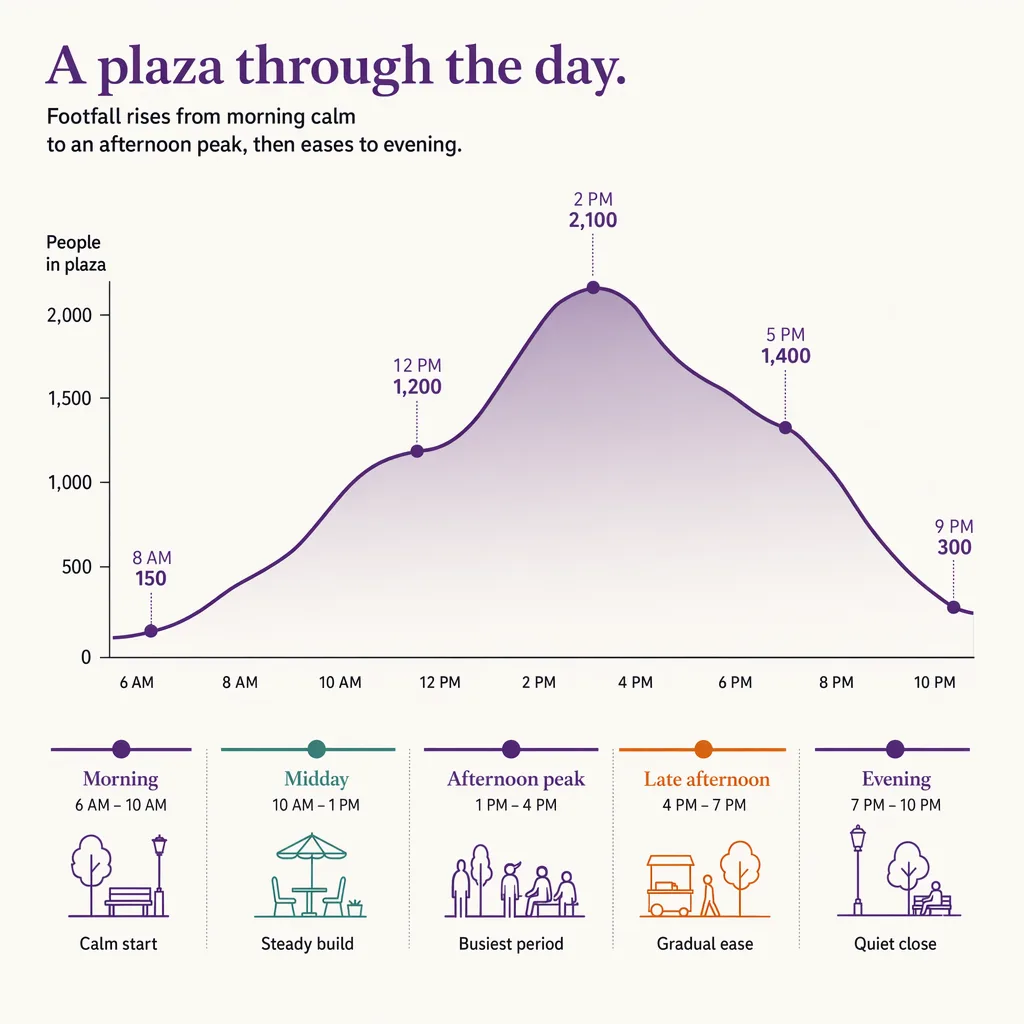
Das Verweilen ist auch die Stelle, an der sich der Wert eines öffentlichen Raums auf eine Weise zeigt, die eine Zählung nicht kann. Ein Platz, auf dem Menschen bleiben, trägt die Cafés und Kioske um ihn herum, beherbergt die Veranstaltungen, die eine Stadt programmieren will, und erzeugt das Gefühl von Sicherheit, das daraus entsteht, dass ein Raum belegt statt leer ist. Die Verweildauer über den Tag zu lesen, zeigt den Rhythmus eines Raums: das mittägliche Füllen und Leeren eines Platzes im Bürobezirk, die langen Wochenendnachmittage eines Parks, die toten Stunden, auf die eine Umgestaltung zielen könnte. Das ist ein naher Verwandter dessen, wie ein Reiseziel die Besucherverweildauer über einen ganzen Ort liest, das Thema von Analytik zum Städtetourismusfluss, obwohl der Rahmen hier ein einzelner Raum ist.
Das Signal, dem eine Stadt üblicherweise nachjagt, ist ein Anstieg der Verweildauer ohne einen Rückgang des Umschlags: Menschen bleiben länger, während der Raum weiterhin allen dient, die ihn nutzen wollen, statt dass wenige ihn für sich beanspruchen. Auslastung und Verweildauer zusammen gelesen fangen das ein. Steigende Verweildauer bei gleichbleibender Belegung ist ein Raum, der besser funktioniert; steigende Belegung bei fallender Verweildauer ist ein Raum, der belebter, aber unangenehmer zum Bleiben ist, was oft das erste Zeichen dafür ist, dass eine Gestaltung überlastet wird.
Was die Daten steuern: Pflege, Sicherheit, Programm, Gestaltung
Auslastungs- und Verweildauer-Daten lohnen sich nur zu erheben, wenn sie eine Entscheidung verändern, und in einem offenen öffentlichen Raum verändern sie mehrere konkrete.
- Zeitplanung der Pflege. Reinigung, Abfallentsorgung und Wartung, geplant nach den Stunden, in denen ein Raum tatsächlich voll ist, und in den echten Ruhephasen erledigt, statt nach einem festen Zeitplan, der eine Crew zur Stoßzeit durchschickt oder den Schmutz ganz verpasst.
- Sicherheit und Gedränge. Die vollsten Stunden und die Ecken zu kennen, die sich füllen, lässt eine Stadt Beleuchtung, Sichtachsen und Betreuung an der echten Belegung ausrichten statt an Annahmen und erkennen, wenn ein normalerweise ruhiger Raum sich ungewöhnlich füllt.
- Programm. Märkte, Aufführungen oder Pop-ups in die Stunden und Zonen setzen, die Kapazität zum Füllen haben, und die Besucherzahl danach belegen, sodass der Programmkalender darauf aufbaut, wo und wann Menschen tatsächlich sind.
- Gestaltungsbewertung. Auslastung und Verweildauer vor und nach einer Änderung an einer Sitzanordnung, Bepflanzung oder Oberfläche lesen, sodass eine Umgestaltung danach beurteilt wird, ob Menschen den Raum mehr nutzten und länger blieben, nicht danach, wie sie in einem Rendering aussieht.
Jeder dieser Punkte ist ein Fall, in dem eine feste Annahme durch ein gemessenes Muster ersetzt wird, und jeder verstärkt sich: Dieselben kontinuierlichen Daten, die die Reinigung planen, bewerten auch die Umgestaltung und verorten den Markt der nächsten Saison.
Einen offenen Außenraum ohne Kameras zählen
Einen Platz oder Park zu messen bedeutet, Menschen in einem Raum zu messen, der per Definition öffentlich ist, wo der Einwand gegen eine Kamera am lautesten und berechtigtsten ist. Menschen sitzen auf einem Platz gerade deshalb, weil er ein offener bürgerlicher Raum ist, kein überwachter, und eine Stadt, die bilderfassende Kameras daran anbringt, um Köpfe zu zählen, lädt genau die Gegenreaktion ein, die ein Vorhaben zum Scheitern bringt. Kamerafreie Messung ist das, was das Zählen eines offenen öffentlichen Raums akzeptabel macht, und weil diese Räume bis in den Abend und nach Einbruch der Dunkelheit genutzt werden, muss die Methode auch ohne Tageslicht funktionieren.
Ariadne misst dies mit Hybrid Fusion, der patentierten kamerafreien Methode. Time-of-Flight-Tiefensensorik zählt an den Eingängen jeden Besucher und erfasst Geometrie statt Bilder, während die patentierte Signalerfassung die Bewegung im Innenraum verfolgt und die Signale erkennt, die ein Telefon aussendet, selbst im Flugmodus, und diese Bewegung auf etwa einen Meter genau auflöst. Der Sensor streamt beide Datenströme an Ariadne, wo Hybrid Fusion sie zu einer Trajektorie pro Besuch zusammenführt und Zählwerte, Verweildauer und Wege berechnet. Die Datenströme tragen keine Identifikatoren: keine MAC-Adresse, keine Geräte-ID, keine biometrischen Daten, und es ist keine Kamera beteiligt. Identifikatoren werden nur gespeichert, wenn ein Besucher ausdrücklich zustimmt, was die Methode datenschutzfreundlich und außerhalb des biometrischen Bereichs hält.
Für einen offenen Raum sind die Leistung im Freien und nach Einbruch der Dunkelheit keine Fußnote, sie sind die Anforderung, denn Time-of-Flight misst Entfernung statt sich auf Licht zu verlassen und zählt weiter durch den Abend, an dem ein Park oder Platz oft am lebendigsten ist. Die Einzelheiten des zuverlässigen Zählens im Freien und bei wenig Licht werden in Zählen im Freien und nach Einbruch der Dunkelheit behandelt. Die Datenschutzhaltung und die Zuverlässigkeit im Freien sind die zwei Gründe, warum die Methode zum öffentlichen Raum passt, wo eine Kamera es nicht tut.
Von der Messung zu einem Gestaltungs- oder Finanzierungsantrag
Der Grund, einen offenen Raum zu messen, ist üblicherweise, mit dem Ergebnis einen Antrag zu begründen: eine Umgestaltung zu rechtfertigen, das Kapital für eine Parksanierung zu gewinnen oder einem Geldgeber zu zeigen, dass bereits ausgegebenes Geld etwas bewegt hat. Auslastungs- und Verweildauer-Daten leisten das auf eine Weise, die ein Foto eines belebten Nachmittags nicht kann, weil sie kontinuierlich, über die Zeit vergleichbar und ehrlich über die Stunden und Ecken sind, die nicht so gut funktionieren wie die, die es tun.
Die stärksten Anträge kombinieren eine Vorher-Nachher-Auslastungsmessung mit einer Verweildauer-Messung, an denselben Messpunkten, über vergleichbare Jahreszeiten. Eine Umgestaltung, die sowohl Auslastung als auch Verweildauer gegenüber ihrem eigenen Basiswert hebt, ist ein vertretbarer Beleg, dass der Raum nun mehr leistet; eine, die die Auslastung hebt, aber die Verweildauer senkt, erzählt eine vorsichtigere Geschichte, die es wert ist, gekannt zu werden, bevor das nächste Vorhaben den Fehler wiederholt. Den Trend statt eines einzelnen starken Tages darzustellen, ist das, was einen Beleg von einer Anekdote trennt, und es ist das, wonach ein Geldgeber fragt, der über den nächsten Raum entscheidet. Wie eine kontinuierliche, kamerafreie Messung ein Portfolio öffentlicher Räume in einer Stadt unterstützt, zeigt, wie People Counting die Smart-City-Analytik speist.
Weitere Beiträge
FAQ
Wie misst man die Auslastung in einem Platz oder Park?
Entweder indem man die Menschen über die Eingangslinien einer definierten Fläche zählt und eine laufende Bilanz darüber hält, wer drinnen ist, oder indem man stichprobenartig erfasst, wie viele Menschen im Zeitverlauf in Zonen des Raums anwesend sind. Ein Platz mit einer zählbaren Menge an Zugangspunkten eignet sich für den Linienzählungsansatz; ein Park mit offenem Umfang wird besser durch die Anwesenheit innerhalb von Zonen gemessen.
Was ist der Unterschied zwischen Linienzählung und Flächenbelegung?
Die Linienzählung misst den Fluss, wie viele Menschen einen Punkt über einen Zeitraum passiert haben, während die Flächenbelegung die Anwesenheit misst, wie viele sich zu einem bestimmten Moment in einer Fläche befinden. Ein belebter Durchgangsweg kann hohen Fluss und niedrige Belegung zeigen, weil Menschen hindurchgehen; eine sonnige Ecke kann niedrigen Fluss und hohe Belegung zeigen, weil Menschen bleiben.
Warum ist die Verweildauer für einen öffentlichen Raum wichtig?
Weil ein Raum, den Menschen überqueren, Infrastruktur ist und ein Raum, in dem Menschen verweilen, ein Ort ist. Die Verweildauer registriert, ob Sitzgelegenheiten, Schatten, Bepflanzung oder Programm einen Raum vom einen zum anderen bewegten, und sie erklärt den Wert, den eine Rohzahl verfehlt: den Handel, die Veranstaltungen und das Gefühl von Sicherheit, die daraus entstehen, dass ein Raum genutzt statt durchquert wird.
Kann man die Auslastung von Parks und Plätzen ohne Kameras messen?
Ja, und im öffentlichen Raum ist es meist notwendig. Ariadne nutzt Hybrid Fusion, eine kamerafreie Methode, die Geometrie statt Bilder erfasst und standardmäßig keine MAC-Adresse, was den Datenschutzeinwand beantwortet, den ein offener bürgerlicher Raum erhebt, und weil sie Entfernung statt Licht misst, zählt sie weiter im Freien und nach Einbruch der Dunkelheit.
Brauche ich Kameras, um einen öffentlichen Raum zu zählen?
Nein. Ariadne zählt mit Hybrid Fusion: Time-of-Flight-Tiefenerfassung plus patentierter Handysignal-Erfassung, niemals Kameras. Time-of-Flight erfasst Geometrie statt Bilder, und die Signalerfassung erfasst standardmäßig keine MAC-Adresse, sodass die Messung ohne Video, ohne Gesichter und ohne biometrische Daten auskommt.


