
A counter that is accurate at midday and useless at dusk is a counter you cannot trust for anything that runs after dark: late retail hours, transport hubs, outdoor pedestrian zones, night-time cycle paths. Low light and the outdoors are where a lot of counting technology quietly fails. This explains why, and what holds up.
Why low light breaks camera-based counters
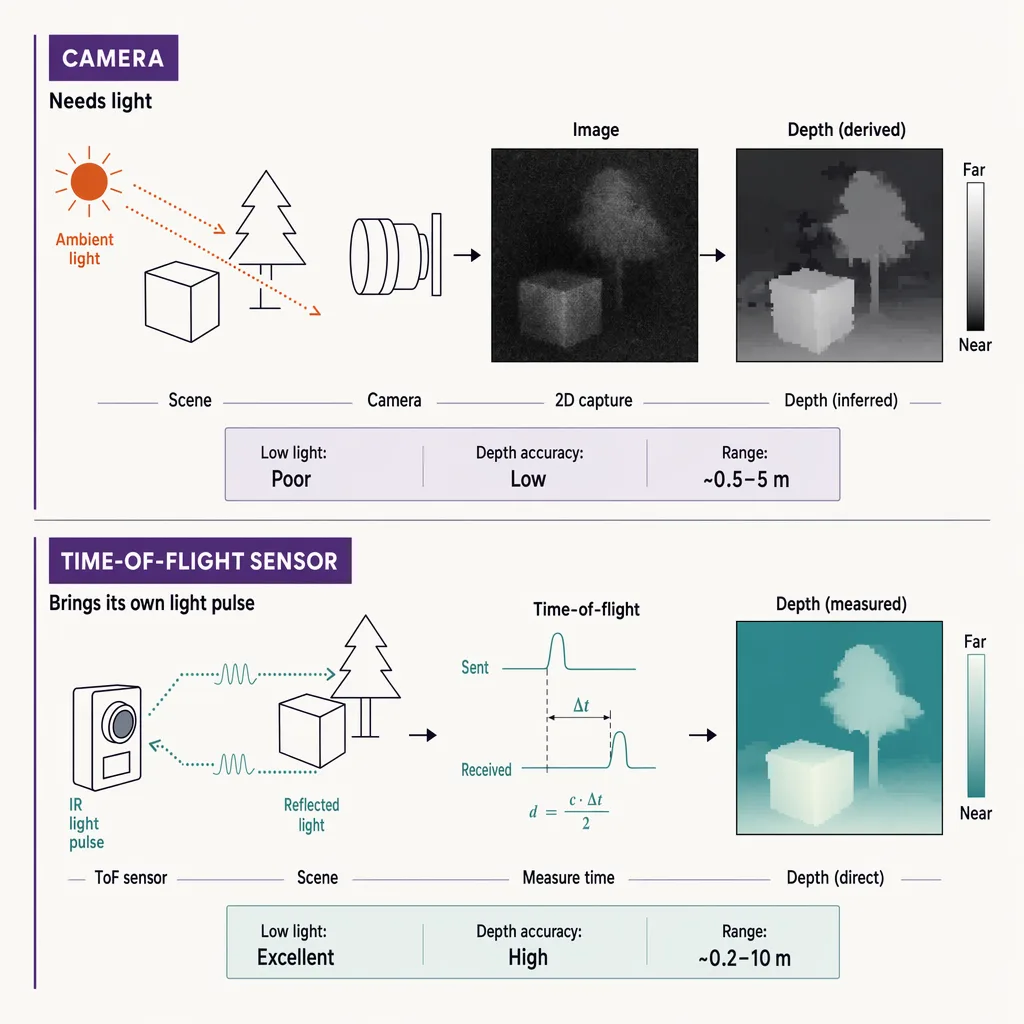
A camera counts what it can see, and in low light it sees less. As light drops, image noise rises, contrast falls, and the detection model has thinner information to work with, so accuracy slides. Adding lighting fixes it but is often impractical or unwanted, especially outdoors or after hours. The limitation is fundamental: a method that reads a picture needs enough light to take one.
Why time-of-flight works in the dark
Time-of-Flight does not depend on ambient light because it brings its own. The sensor emits an infrared pulse and times the return to build a depth map, so it measures geometry in complete darkness exactly as it does in daylight. For any site that operates at night or in variable light, that independence is the difference between a count you can use and one you cannot.
Outdoor challenges: rain, glare, temperature, mounting
Outdoors adds problems beyond light:
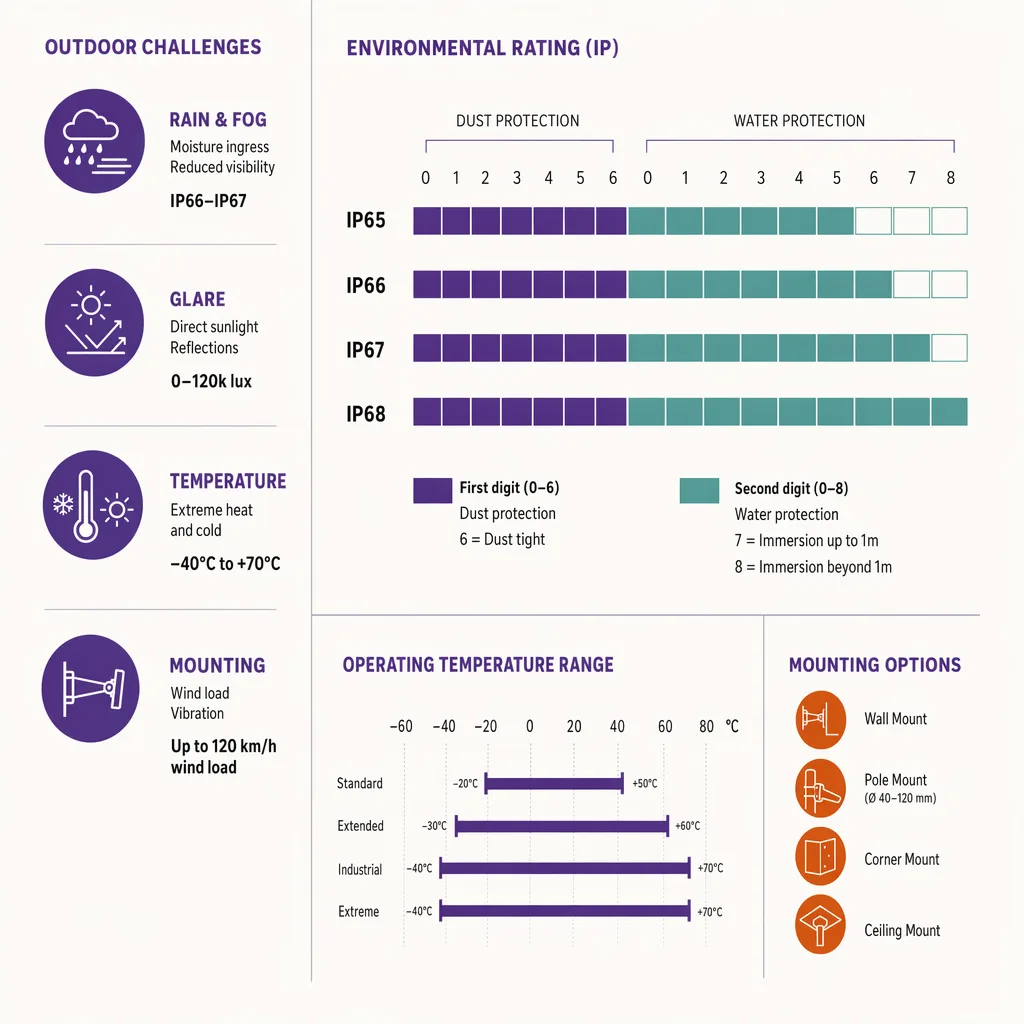
- Rain and fog scatter light and can affect optical sensors; weatherproof outdoor units are built and rated for it, so check the environmental rating.
- Direct sun and glare can wash out cameras; depth sensors are generally more tolerant.
- Temperature swings demand hardware rated for the range you will see.
- Mounting outdoors is less forgiving: wind, vibration, and sightlines all matter.
The takeaway is to match the hardware's environmental rating to the real site, not to assume an indoor unit will cope outside.
Counting cyclists and pedestrians at night
Outdoor pedestrian and cycle counting is a classic low-light case: the busiest insight often comes from evening and night-time flows, in weather, without convenient lighting. A method that works in the dark and tolerates weather is the requirement, not a nice-to-have. See the cycle path counter case for the outdoor cycle and pedestrian case.
How Ariadne handles low light
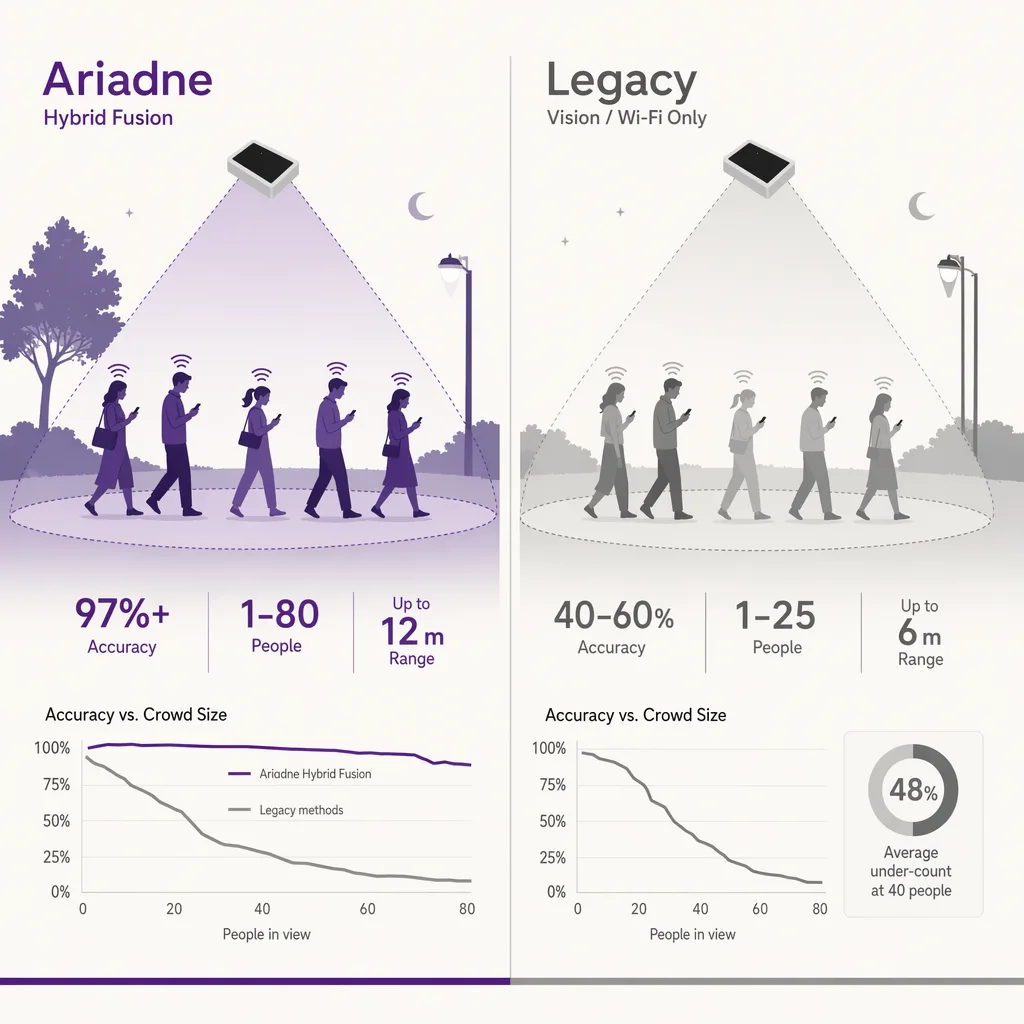
Ariadne measures this with Hybrid Fusion, its patented camera-free method. Time-of-Flight depth sensing counts every visitor at the entrances, capturing geometry rather than images, while patented phone signal sensing follows movement through the interior, detecting the signals a phone emits even in airplane mode, and tracks that movement to about one-metre precision. The sensor streams both feeds to Ariadne, where Hybrid Fusion combines them into one trajectory per visit and computes counts, dwell, and paths. The streams carry no identifier: no MAC address, no device ID, no biometric data, and no camera is involved. Identifiers are stored only when a visitor explicitly opts in, which keeps the method GDPR-friendly and outside biometric territory.
Because the depth sensing supplies its own light, the count does not fade as the daylight does.
FAQ
Do people counters work in the dark?
Time-of-Flight counters do, because they provide their own infrared light. Camera-based counters need adequate ambient light.
Can you count pedestrians outdoors at night?
Yes, with hardware rated for the environment and a method that does not depend on daylight, such as time-of-flight.
Does rain affect people counting accuracy?
It can affect optical sensors, which is why outdoor units carry environmental ratings. Match the rating to the site.
---


