
Die meisten gehen davon aus, dass das Zählen von Menschen bedeutet, sie zu beobachten, und Beobachten bedeutet eine Kamera. Das ist das naheliegende mentale Modell: Ein Objektiv auf eine Tür richten, etwas Software laufen lassen, eine Zahl erhalten. Die Vorstellung, ohne Kamera überhaupt genau zu zählen, klingt daher entweder nach einem Trick oder nach einem Kompromiss, einer Methode, die etwas aufgeben muss, um den Videofeed zu vermeiden.
Es ist keins von beidem. Kamerafreie Zählung ist kein Behelf für die Kamera; sie ist eine andere Art zu messen, die das Bild ganz nebenbei umgeht. Statt aufzuzeichnen, wie eine Person aussieht, misst sie die physikalische Tatsache, dass sich ein Körper einer bestimmten Größe und Form zu einer bestimmten Zeit durch einen bestimmten Raum bewegt hat. Das reicht, um zu zählen, zu messen und einen Weg nachzuzeichnen, und es stellt sich heraus, dass man für nichts davon ein Bild braucht. Dieser Beitrag erklärt den Mechanismus: wie die Erfassung tatsächlich funktioniert, was jede Methode erfasst und, ebenso wichtig, was sie nie erfasst.
Dies ist eine Technologieerklärung, kein Vergleich. Wenn Sie bereits entschieden haben, dass die Kamera ein Problem ist, und die Argumente für den Umstieg weg von Kamerazählern suchen, findet sich dieses Argument in einem eigenen Beitrag. Hier ist das Ziel zu erklären, wie die kameralosen Methoden überhaupt funktionieren.
Wie zählt man Menschen ohne Kamera?
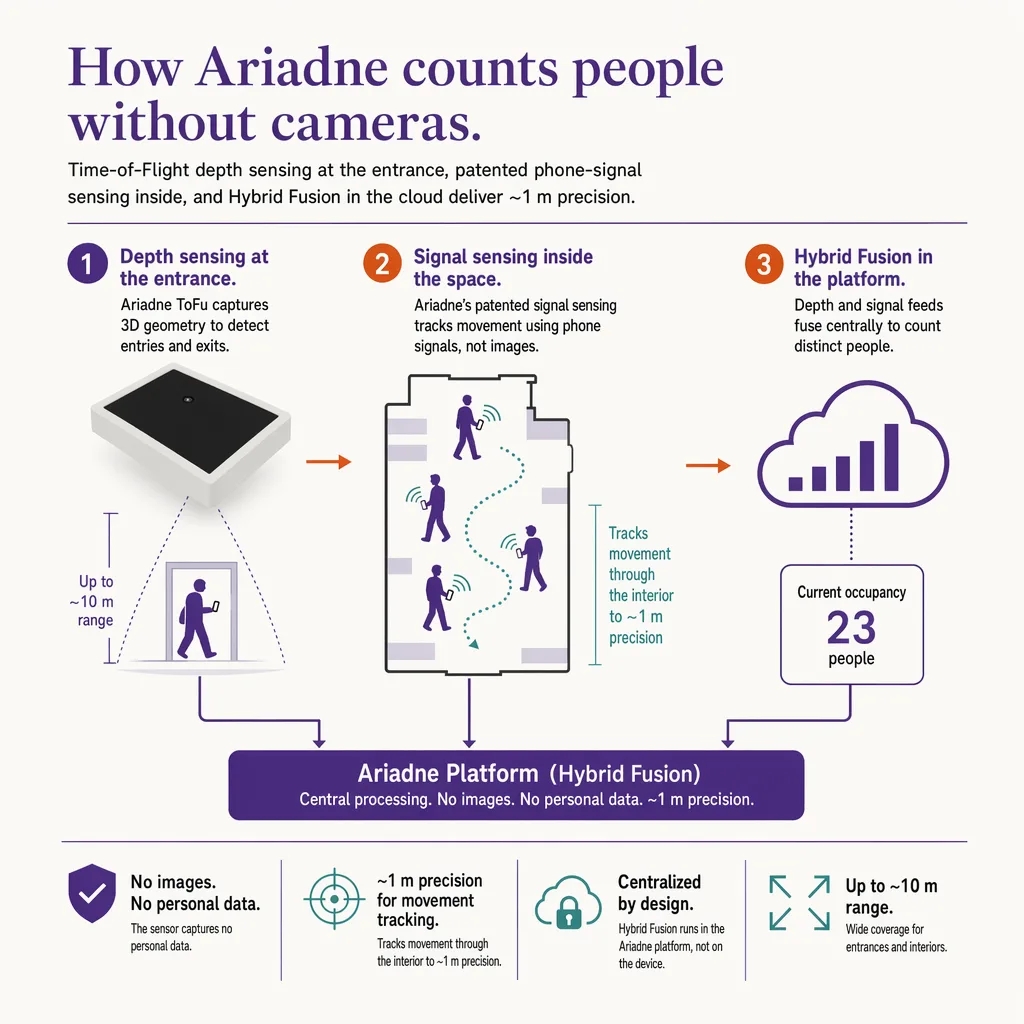
Man zählt Menschen ohne Kamera, indem man die physische Form und Bewegung von Körpern misst, statt ihre Bilder aufzuzeichnen. Die Time-of-Flight-Tiefensensorik feuert Infrarotimpulse an einem Eingang ab und misst, wie lange sie zur Rückkehr brauchen, und baut so eine Tiefenkarte auf, die eine Person als sich bewegende Form registriert und sie beim Überqueren zählt, wobei sie Geometrie statt eines Bildes erfasst. Die Signalerfassung erkennt die Funksignale, die ein Telefon aussendet, um die Bewegung durch einen Innenraum zu verfolgen, ohne eine MAC-Adresse zu speichern. Keine der Methoden erzeugt Video oder ein erkennbares Gesicht, es gibt also kein Bild zu speichern, zu verpixeln oder preiszugeben, und dennoch liefert sie genaue Zählungen, Verweildauern und Bewegungswege.
Time-of-Flight-Tiefensensorik: Form messen, nicht Aussehen
Die erste Methode zählt, indem sie Distanz misst. Ein über einem Eingang montierter Time-of-Flight-Sensor feuert schnelle, unsichtbare Infrarotimpulse nach unten ab und misst präzise, wie lange jeder Impuls zum Zurückspringen braucht. Licht bewegt sich mit einer bekannten, konstanten Geschwindigkeit, die Rückkehrzeit lässt sich also direkt in eine Distanz umrechnen, und tut man dies über ein Punktraster, entsteht eine Tiefenkarte: ein lebendiges, dreidimensionales Abbild davon, wie weit jede sichtbare Oberfläche entfernt ist, viele Male pro Sekunde aktualisiert.
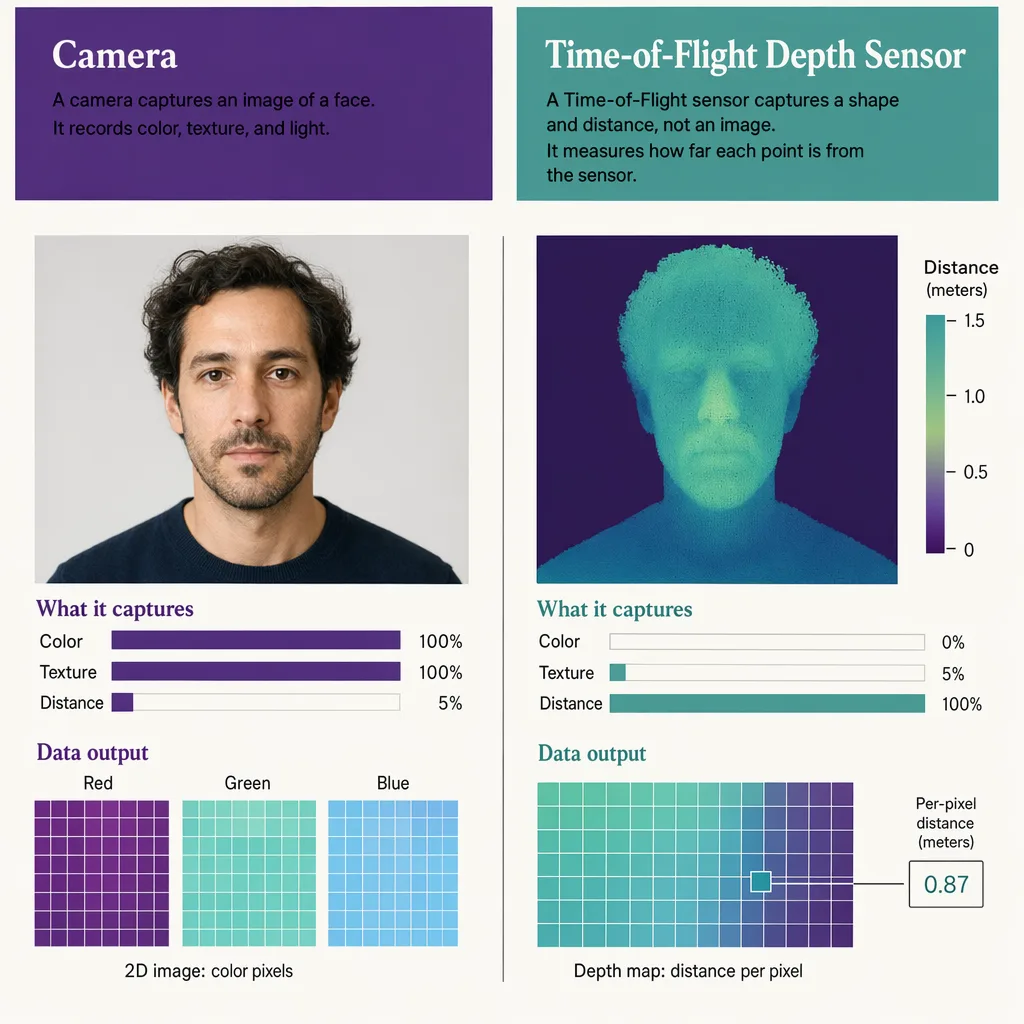
Wenn eine Person unter dem Sensor hindurchgeht, weist der Boden, der eine feste Distanz darunter lag, plötzlich ein erhöhtes Objekt auf Kopf- und Schulterhöhe auf, das sich darüber bewegt. Die Tiefenkarte registriert dieses Objekt als eine Form von charakteristischer Größe und Profil, verfolgt es, während es sich durch das Sichtfeld bewegt, und erhöht die Zählung, während es die Linie überquert. Was der Sensor liest, ist Geometrie, die Höhe, der Umriss und die Bewegung einer Form, nicht das Aussehen. Er hat keine Ahnung, welche Farbe die Person trägt, wie ihr Gesicht aussieht oder wer sie ist, denn nichts davon steht in einer Tiefenkarte. Eine Tiefenkarte ist ein Feld von Distanzen, und Distanzen tragen keine Identität.
Das ist der entscheidende Unterschied zu einer Kamera. Eine Kamera zeichnet das Licht auf, das von einer Szene reflektiert wird, genau die Information, die ein Gesicht erkennbar macht. Ein Time-of-Flight-Sensor zeichnet auf, wie weit Dinge entfernt sind, was das nicht tut. Die Ausgabe sieht überhaupt nicht wie ein Foto aus; sie sieht aus wie ein topografisches Abbild des Raums, und eine Person erscheint darin als eine Erhebung, die sich über den Boden bewegt. Das macht sie auch geräteunabhängig: Sie zählt den Körper selbst, es spielt also keine Rolle, ob die Person ein Telefon trägt, und sie hängt von keinem Signal ab, das die Person aussendet. Zum Sensor selbst im Detail siehe wie Time-of-Flight-Erfassung funktioniert, und dazu, wie er sich gegen bildbasierte Ansätze schlägt, behandelt Computer Vision im Vergleich zu Time-of-Flight die Abwägungen.
Signalerfassung: Bewegung durch einen Innenraum verfolgen
Die Tiefensensorik ist an einem definierten Übergangspunkt hervorragend, einem Eingang, einem Korridor, einem Engpass, wo alle durch ein begrenztes Sichtfeld passieren. Zu verfolgen, wie sich Menschen durch einen größeren Innenraum bewegen, über eine ganze Etage eines Geschäfts oder eines Terminals, ist ein anderes Problem, und die zweite Methode löst es, indem sie ein Signal erkennt, das das Gerät der Person ohnehin bereits aussendet.
Ein eingeschaltetes Telefon ist ein kleines Funkgerät, und es sendet Signale aus, um verbunden zu bleiben, genug, damit im Raum verteilte Sensoren seine Anwesenheit erkennen und durch Vergleich des Signals über mehrere Empfänger schätzen können, wo es sich befindet. Diese Schätzung, aktualisiert während sich die Person bewegt, zeichnet einen Weg durch den Innenraum nach: hier eingetreten, dort verweilt, in diese Zone gewechselt, durch jene Tür gegangen. Sie funktioniert selbst dann, wenn ein Telefon im Flugmodus ist, denn ein Gerät sendet auch in diesem Zustand erkennbare Signale aus, weshalb die Methode nicht davon abhängt, dass sich der Besucher mit irgendetwas verbindet.
Der für diese Erklärung entscheidende Punkt ist, was die Methode nicht behält. Die Signalgebung eines Telefons kann eine Hardware-Adresse enthalten, die MAC-Adresse, die ein Geräte-Identifikator ist. Eine Signalerfassungsmethode, die sie speicherte, würde etwas erfassen, das viele Aufsichtsbehörden als personenbezogene Daten behandeln. Der hier beschriebene kamerafreie Ansatz speichert standardmäßig keine MAC-Adresse; er nutzt das Signal, um einen sich bewegenden Punkt im Raum zu verorten und seinen Weg nachzuzeichnen, nicht um aufzuzeichnen, welches Gerät es war. Die Ausgabe ist eine Trajektorie, eine Linie durch das Gebäude über die Zeit, ohne daran angehängte Identität. Sie weiß, dass sich eine telefontragende Person so bewegt hat; sie weiß nicht, wessen Telefon.
Wohin die Daten gehen
Keine der beiden Methoden verrichtet ihre eigentliche Arbeit am Sensor. Das ist ein Detail, bei dem es sich lohnt, präzise zu sein, denn es wird oft falsch beschrieben. Die Aufgabe des Sensors ist es, die beiden identifikatorfreien Datenströme zu erzeugen: das Tiefenabbild an den Übergangspunkten und das Signalabbild über den Innenraum. Kein Datenstrom für sich ist das vollständige Bild. Der Tiefensensor weiß, dass ein Körper eine Linie überquert hat, aber nicht, wohin er danach ging; das Signalabbild weiß, dass sich ein Punkt durch den Innenraum bewegt hat, ist aber nicht die maßgebliche Eingangszählung.
Ariadne misst dies mit Hybrid Fusion, der patentierten kamerafreien Methode. Time-of-Flight-Tiefensensorik zählt an den Eingängen jeden Besucher und erfasst Geometrie statt Bilder, während die patentierte Signalerfassung die Bewegung im Innenraum verfolgt und die Signale erkennt, die ein Telefon aussendet, selbst im Flugmodus, und diese Bewegung auf etwa einen Meter genau auflöst. Der Sensor streamt beide Datenströme an Ariadne, wo Hybrid Fusion sie zu einer Trajektorie pro Besuch zusammenführt und Zählwerte, Verweildauer und Wege berechnet. Die Datenströme tragen keine Identifikatoren: keine MAC-Adresse, keine Geräte-ID, keine biometrischen Daten, und es ist keine Kamera beteiligt. Identifikatoren werden nur gespeichert, wenn ein Besucher ausdrücklich zustimmt, was die Methode datenschutzfreundlich und außerhalb des biometrischen Bereichs hält.
Das Wort, das man festhalten sollte, ist *zentral*. Die Fusion, die die Eingangszählung und die Bewegung im Innenraum zu einem einzigen Besuch zusammenfügt, geschieht in der Ariadne-Plattform, nicht auf dem Sensor und nicht am Edge. Der Sensor ist ein Erzeuger roher, identifikatorfreier Datenströme; die Intelligenz, die diese Datenströme in Zählungen, Verweildauern und Wege verwandelt, läuft, nachdem die Daten das Gerät verlassen haben. Deshalb kann die Methode die Genauigkeit einer Tiefenzählung an der Tür mit der Reichweite der Signalerfassung über eine Etage verbinden: Die beiden werden dort abgeglichen, wo der volle Kontext verfügbar ist, nicht isoliert auf einer einzelnen Einheit.
Was kameralose Zählung erfasst und was sie nie erfasst
Es lohnt sich, die Grenze klar zu benennen, denn die ganze Methode ist durch sie definiert.
Was sie erfasst:
- Zählungen: wie viele Menschen eintraten und gingen, an jedem Eingang, über jeden Zeitraum.
- Verweildauer: wie lange Menschen blieben, im Raum insgesamt und in bestimmten Zonen.
- Wege: wie sich Menschen durch den Innenraum bewegten, welche Routen belebt sind, wo sie verweilen, wo sie umkehren.
Was sie nie erfasst:
- Bilder oder Video jeglicher Art, weil keine Kamera beteiligt ist.
- Gesichter, und damit keine Gesichtsgeometrie und keine Grundlage für Gesichtserkennung.
- Biometrische Daten, das heißt kein physisches Merkmal zur Identifizierung einer Person.
- Einen gespeicherten Geräte-Identifikator standardmäßig, weil die MAC-Adresse nicht aufbewahrt wird.
Diese Grenze ist der Grund, warum die Methode so wenig Datenschutzrisiko birgt. Es gibt keine Aufnahmen, die per Gerichtsbeschluss angefordert, preisgegeben oder zweckentfremdet werden könnten, weil keine aufgezeichnet werden. Es gibt keine biometrische Vorlage, die eine Datenpanne offenlegen könnte, weil keine erstellt wird. Gemessen wird Bewegung im Aggregat, und die Identität der sich bewegenden Menschen ist nicht bloß geschützt, sie ist von vornherein nie im System. Das ist eine stärkere Position als eine Kameramethode, die Gesichter erfasst und dann verspricht, sorgsam mit ihnen umzugehen, denn das Risiko, das sie beseitigt, ist das Risiko, dass die Daten überhaupt existieren. Es ist auch der Grund, warum dieser Ansatz einem Standort ermöglicht, Zielgruppen ohne Gesichtserkennung zu messen, wo eine kamerabasierte Zählung genau die Fragen aufwerfen würde, die die kameralose Methode nie beantworten muss. Zum Kategoriebegriff und dazu, wie "anonym" hier präzise definiert wird, siehe anonyme Personenzählung.
Wo kamerafreie Zählung passt
Der Mechanismus passt zu den Orten, an denen Zählung tatsächlich wichtig ist. An einem Eingang liefert die Tiefenmethode eine genaue, geräteunabhängige Zählung aller, die überqueren, was die grundlegende Zahl ist, auf der ein Einzelhändler, ein Veranstaltungsort oder ein Flughafen aufbaut. An einem Engpass, einem Korridor, einem Gate, einer Rolltreppe misst dieselbe übergangsbasierte Zählung den Fluss durch einen begrenzten Raum. Über einen größeren Innenraum zeichnet die Signalerfassung nach, wohin die Menge nach ihrem Eintritt geht, was den Unterschied ausmacht zwischen zu wissen, wie viele kamen, und zu wissen, was sie taten.
Der Datenschutzgewinn ist kein Nebeneffekt; für viele Betreiber ist er der ausschlaggebende Faktor. Eine Kamera an einem Eingang wirft Fragen zur Aufbewahrung von Aufnahmen, zur Einwilligung von Personal und Besuchern und zunehmend zur biometrischen Regulierung auf. Eine Methode, die Formen und Wege und keine Bilder aufzeichnet, umgeht diese ganze Kategorie von Bedenken, während sie weiterhin die Zählungen, Verweildauern und Flussdaten erzeugt, die ein Betreiber braucht, um den Raum zu steuern. Diese Kombination, nützliche Daten ohne das Video, ist der Grund, warum kamerafreie Zählung von einer Nischen-Datenschutzentscheidung zu einer verbreiteten geworden ist. Wenn Sie sie durchgängig angewendet sehen möchten, führt kamerafreie Personenzählung durch das vollständige Bild.
Weitere Beiträge
FAQ
Wie zählt man Menschen ohne Kamera?
Indem man die physische Form und Bewegung von Körpern misst, statt ihre Bilder aufzuzeichnen. Die Time-of-Flight-Tiefensensorik an einem Eingang misst die Distanz zu einer sich bewegenden Form und zählt sie beim Überqueren, wobei sie Geometrie statt Aussehen erfasst, während die Signalerfassung das Funksignal erkennt, das ein Telefon aussendet, um Bewegung durch einen Innenraum nachzuzeichnen, ohne einen Geräte-Identifikator zu speichern.
Ist kameralose Zählung weniger genau als eine Kamera?
Nein. Die Tiefensensorik zählt den Körper direkt und wird nicht durch Beleuchtung oder durch das beeinflusst, was jemand trägt, und sie ist geräteunabhängig, weil sie nicht auf ein Telefon angewiesen ist. Sie erzeugt Zählungen, Verweildauern und Wege, die dem entsprechen, was ein Betreiber erwartet, ohne ein Bild aufzuzeichnen.
Brauche ich Kameras?
Nein. Ariadne zählt mit Hybrid Fusion: Time-of-Flight-Tiefensensorik plus patentierte Signalerfassung, nie Kameras. Time-of-Flight erfasst Geometrie statt Bilder, und die Signalerfassung erfasst standardmäßig keine MAC-Adresse, die Messung umfasst also kein Video, keine Gesichter und keine biometrischen Daten.
Verfolgt die Signalerfassung mein konkretes Telefon?
Nicht nach Identität. Sie erkennt, dass sich eine telefontragende Person durch einen Raum bewegt, und schätzt die Position, um einen Weg nachzuzeichnen, aber sie speichert standardmäßig keine MAC-Adresse, die Ausgabe ist also eine Trajektorie durch das Gebäude ohne daran angehängtes Gerät oder Person.
Wo findet die Zählung tatsächlich statt?
Zentral, nicht auf dem Sensor. Der Sensor überträgt zwei identifikatorfreie Datenströme, das Tiefenabbild an den Übergangspunkten und das Signalabbild über den Innenraum, an die Ariadne-Plattform, wo sie zu einer Trajektorie pro Besuch zusammengeführt und in Zählungen, Verweildauer und Wege verwandelt werden. Die Fusion geschieht, nachdem die Daten das Gerät verlassen haben, nicht am Edge.


