
The board that lies and the screen that costs
Every venue faces this choice at fit-out and again at every refresh: the printed directory board, cheap and dignified, or the interactive kiosk, expensive and capable. The standard framing (capex comparison) misses where the real difference lives: a static map starts lying the day the first tenant moves, while a kiosk's map is as current as the data feeding it. The comparison is between a depreciating snapshot and a living endpoint.
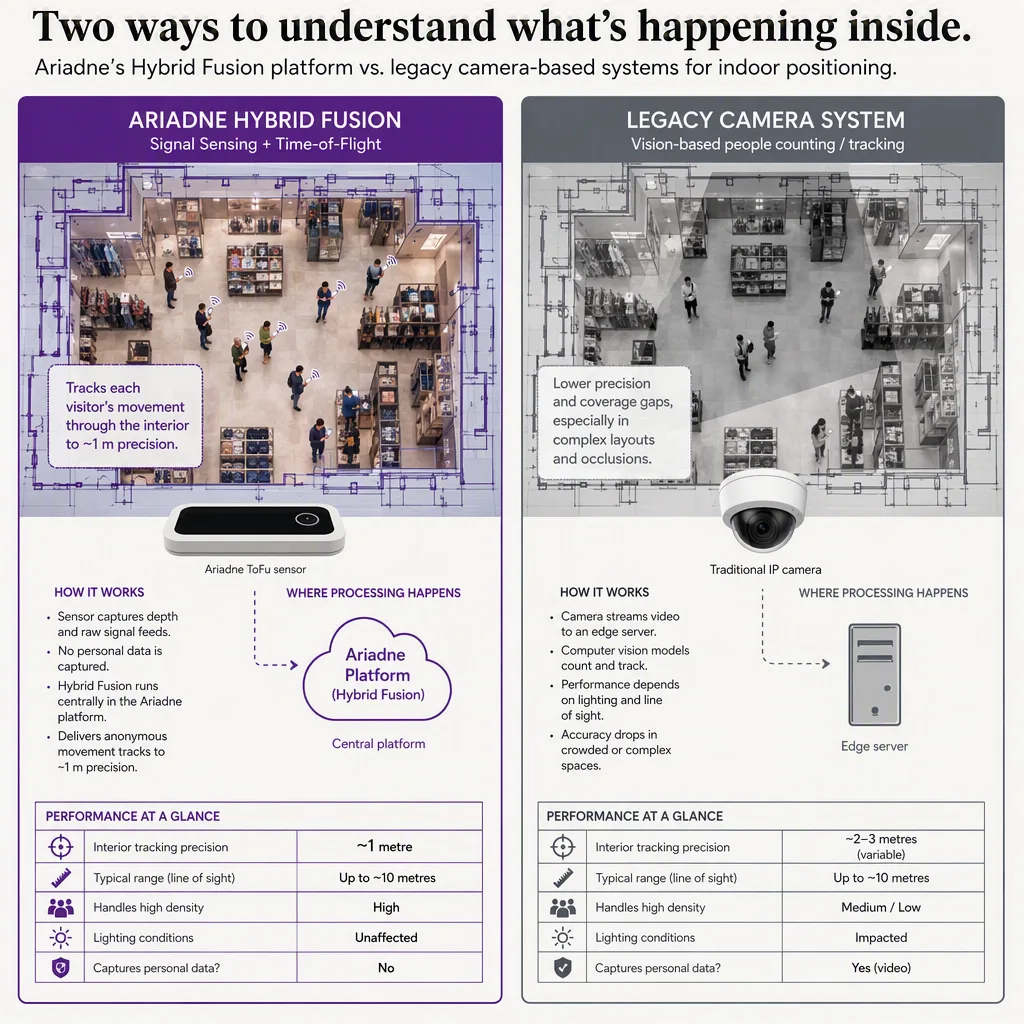
Are wayfinding kiosks worth it compared to static maps?
Where the venue changes (tenants, departments, events) or the visitor population is unfamiliar, yes: the kiosk's searchability, routing, and always-current map outperform a static board on every measured behavior, and the update economics reverse over the asset's life (reprinting and reinstalling boards across a venue at every change versus a data edit). Where the layout is stable for years and visitors are repeat locals, a well-designed static map with a clear you-are-here does the job at a fraction of the cost. The honest answer is a portfolio: kiosks at high-stakes decision points, static maps as ambient reassurance.
What each does that the other cannot
The static board's virtues: zero downtime, zero power, glanceable by several people at once, and immune to the interaction hesitancy some visitors feel at screens. The kiosk's: search (the visitor's actual question is "where is X", not "show me everything"), routing from here to there, accessibility modes, language switching, event overlays, and the handoff (take the route to your phone), which converts a lookup into guidance. Design principles for the screen side are covered in wayfinding kiosk design.
The economics over an asset life
Static: low unit cost, multiplied by every location and every layout change, plus the unmeasurable cost of the months a wrong board misdirects visitors between refreshes. Kiosk: hardware, installation, and content platform, minus the reprint cycle, plus a measurement dividend: kiosks report what visitors search for and fail to find, demand data no printed board can produce, feeding the same analysis as mall directory placement and, for operators, leasing evidence per the mall journey view.
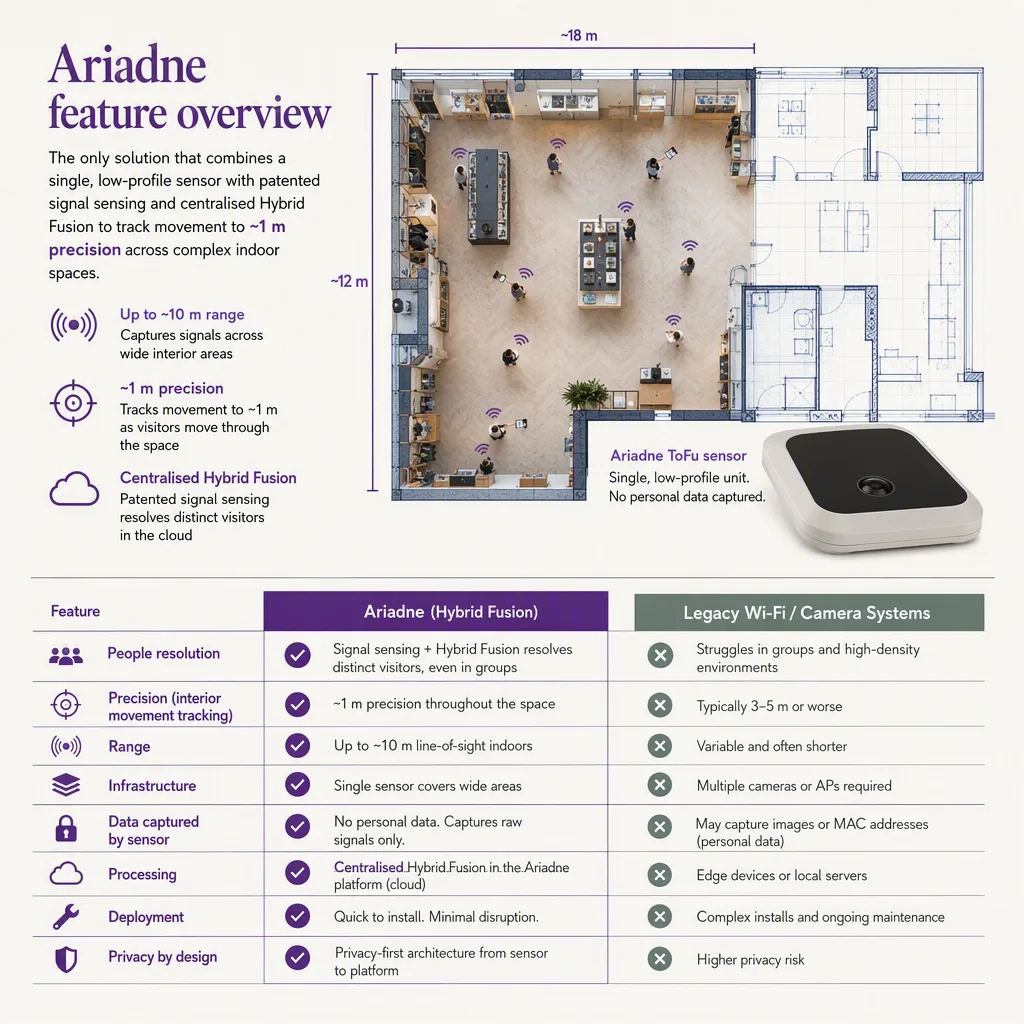
Placement decides both
A perfectly designed kiosk in the wrong place is an expensive static object; a static board at a genuine decision point outperforms a kiosk hidden past it. Placement should follow measured flow (where journeys actually hesitate), the method in kiosk placement by flow data, and effectiveness should be verified afterwards the same way as any signage: measured, not assumed.
Where Ariadne fits
Ariadne feeds kiosks, static-map QR handoffs, web, and app from one living floor-plan source, so the kiosk-vs-static question becomes a surface decision rather than a data decision: every surface stays true because the map underneath is one asset. Platform context in the indoor navigation pillar.
---


