
A journey across businesses, not aisles
A mall journey differs from a store journey in kind, not just size: the visitor crosses dozens of independent businesses under one roof, and the operator owns the connective tissue, corridors, courts, and entrances, rather than the destinations. Reading mall journeys therefore means reading how the connective tissue performs: what pulls visitors in, how far they travel, where they rest, and which tenants feed each other.

What does a shopping mall visitor journey consist of?
An entrance choice, a corridor route, one or more destination stops (anchor, category cluster, or errand tenant), interleaved dwell stops (food court, seating, events), and an exit that is not always the entrance. The commercially decisive properties are penetration depth (how far into the mall the journey reaches), stop count (how many tenants one visit touches), and cross-visitation (which tenant pairs share journeys).
Anchors set the gravity
Anchor tenants exist to pull journeys deep into the building, and their effect is measurable as the corridor traffic they generate past inline tenants; that mechanism, including the surprising anchors like a post office, is the subject of the anchor tenant pillar. The journey view adds direction: an anchor that visitors reach directly and leave directly (a "teleport" anchor) feeds inline tenants far less than its traffic suggests, while a mid-mall magnet feeds everything on the way. Anchor vs inline tenant covers the tenant-mix side.
Corridors, courts, and the pause economy
Corridor flow is the mall's bloodstream, and dwell points are its capillaries: food courts and seating turn pass-through into pause, and paused visitors resume journeys with more stops. Common-area performance is measurable the same way tenant zones are, and it is leasing-relevant: common area utilization covers the method, and mall directory placement the wayfinding surface that redirects journeys mid-visit.
Journeys as leasing evidence
Cross-visitation is the operator's strongest commercial dataset: which tenants share visitors, which cluster placements actually work, and what footfall a unit really receives versus what its rent assumes. That is the evidence base for tenant performance reporting and footfall-based lease renewal conversations. None of it requires knowing who any visitor is: journeys, not identities, carry the signal.
Measuring mall journeys camera-free
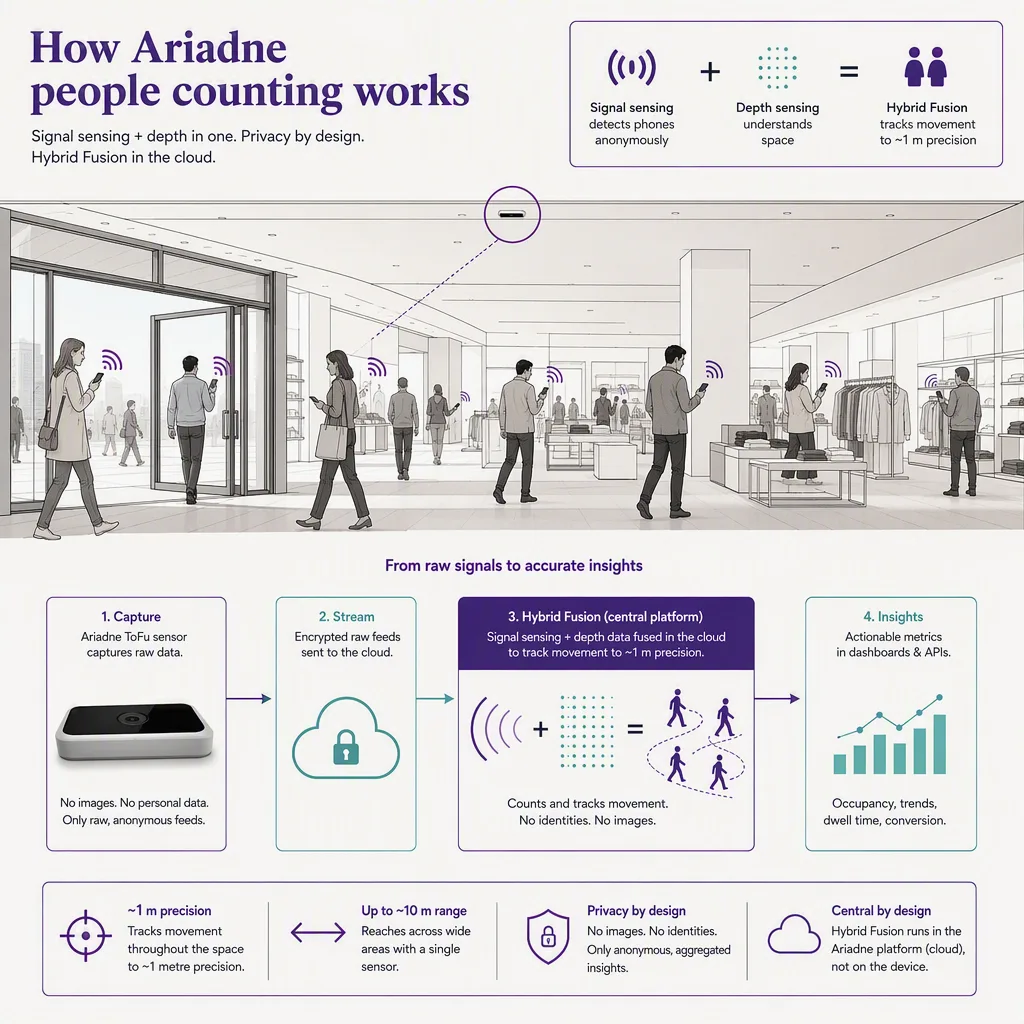
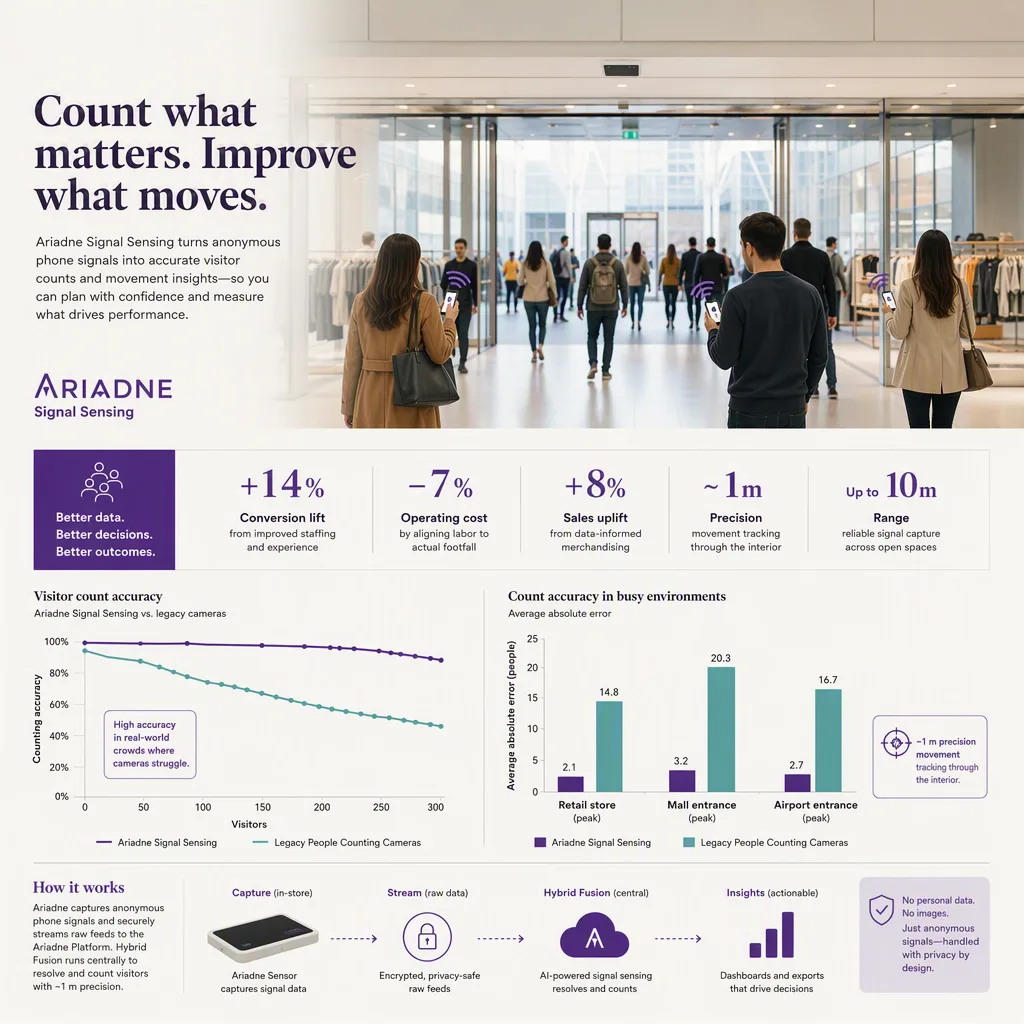
Ariadne measures mall journeys as anonymous trajectories across the whole property: entrance counts, corridor flow, per-zone dwell, penetration, and cross-visitation, with no cameras and no identifiers involved. For the method that turns those trajectories into decisions, start at the pillar, customer journey mapping; for the demand curves that staffing and events planning hang on, day-of-week footfall.
---


