
A coworking operator sells access, not seats. A member pays for the right to turn up and use the space, and the whole business model rests on the bet that not everyone turns up at once. Sell two hundred hot-desk memberships against a hundred and twenty desks and you make money, right up until the Tuesday morning everyone arrives and there is nowhere to sit. Sell too cautiously and you leave money on the floor, literally, in the form of empty desks you could have sold against. The operator is constantly pricing a probability, and most are doing it on a hunch.
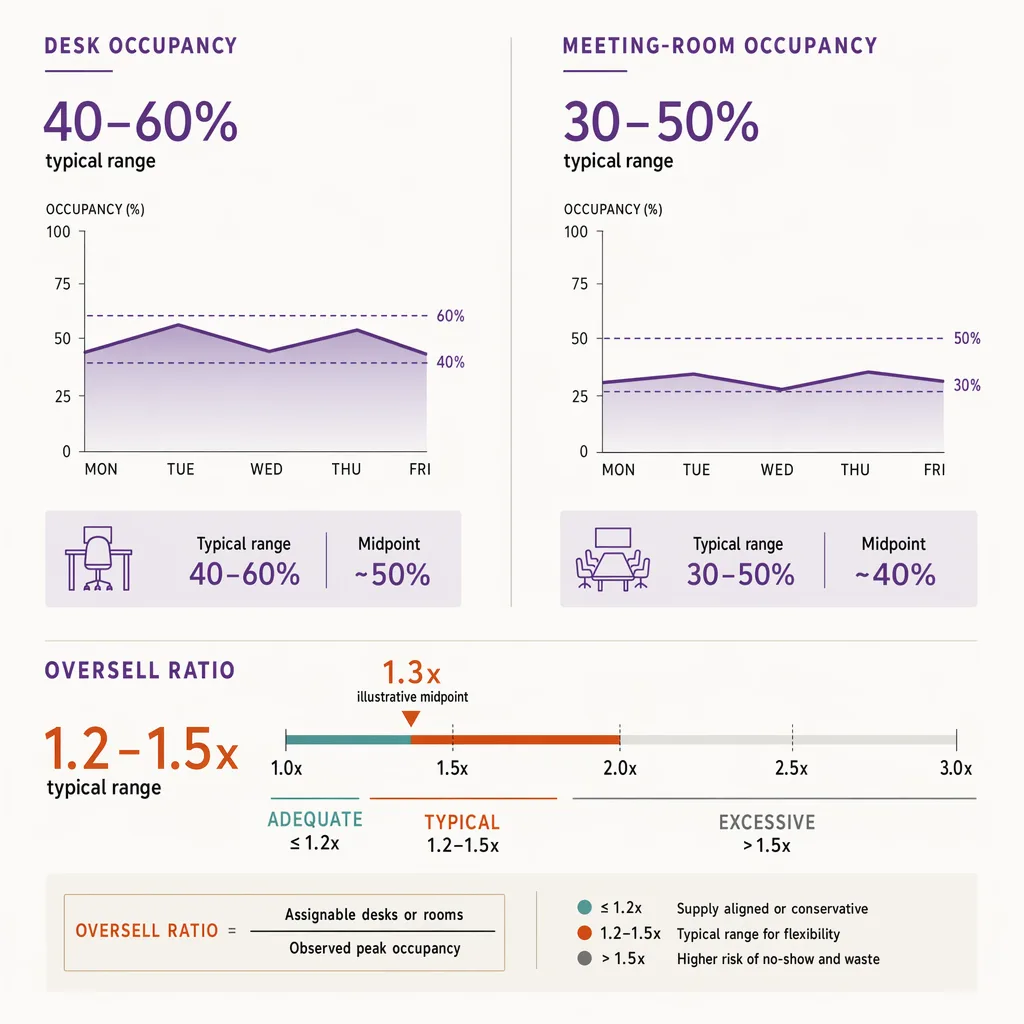
The data they have does not help much. Badge swipes show who walked into the building. They say nothing about whether those people sat at a hot desk, camped in a dedicated suite, or spent the day cycling through meeting rooms. They cannot tell whether the community floor that takes up valuable square metres is full at lunchtime or dead all week. Occupancy counting fills that gap by measuring how the space is actually used, by zone and by hour. This guide is about the coworking version of that problem: hot desks, meeting rooms, members, and the pricing decisions that follow.
What does occupancy data do for a coworking space?
Coworking economics turn on how fully the space is used, and badge swipes only show who entered the building, not which floors, hot desks, and meeting rooms filled up. Occupancy counting measures real use by zone and hour, so an operator can right-size memberships, price peak desks, and see whether a community floor earns its footprint. Counting at thresholds without a camera gives members hard occupancy numbers for their own teams while keeping the space free of surveillance.
The difference from generic office occupancy is the business model. An employer measuring its own floor wants to plan its own headcount. A coworking operator is selling the same square metre repeatedly to people who come and go on their own schedule, so the question is not "how many of my staff are in" but "how full is the thing I am selling, and to whom should I sell more of it."
The coworking-specific pain point: you sell flexible access, so you never know how full the space really is
Flexibility is the product and the problem at once. Because members are not assigned to fixed seats and turn up when they like, the operator never has a reliable read on real occupancy. The membership count is not it: a hot-desk member might come in three times a week or three times a month, and the operator is guessing at the blend. The booking system is not it either, because it only captures the rooms people reserved, not the desks they dropped into or the lounge they worked from all afternoon.
That uncertainty bleeds into every commercial decision. How many more hot-desk memberships can this floor absorb before Tuesdays get ugly? Should peak-time access cost more than off-peak? Is the dedicated-desk area, which earns the most per square metre, actually full, or is it half-empty and ripe for conversion? Could the meeting rooms be sold harder, or are they already the constraint? Without occupancy data by zone, the operator answers these by feel, and the feel is usually wrong in the direction of leaving capacity unsold or overselling into a complaint.
The cost of guessing wrong is asymmetric, which is what makes it so uncomfortable to manage. Underselling is invisible: empty desks generate no complaint, so an operator can leave money on the floor for months without anyone raising it. Overselling is loud and immediate: the one busy Tuesday when members cannot find a seat produces churn risk, bad reviews, and a community-manager scramble, all from a single bad morning. Because the pain of overselling is sharp and the pain of underselling is silent, most operators drift toward caution and quietly forgo revenue, which is precisely the bias that measured occupancy corrects by showing how much genuine headroom exists before the bad Tuesday actually arrives.
Zone occupancy: hot desks, dedicated areas, and meeting rooms
The unit that matters in coworking is the zone, because each zone is a different product with a different price. Counting at the thresholds of each area, the open hot-desk floor, the dedicated-desk suites, the meeting-room corridor, the lounge or community space, gives an occupancy curve per zone rather than one number for the building.
That separation is what makes the data commercial. The hot-desk floor's curve shows how close it runs to capacity at peak and how much headroom exists to sell into. The dedicated area's curve shows whether the highest-yield space is actually used or quietly underperforming. The meeting rooms reveal whether reported bookings translate into real occupancy, since a room booked and abandoned looks full on the calendar and empty in the count. A live occupancy read on the hot-desk floor can even feed a member app, so people can see whether it is worth coming in or working from home that morning, which is a genuine member-facing feature rather than just an operator dashboard.
The dedicated-desk curve deserves particular attention because it is usually the highest-yield space in the building and the most likely to be quietly wrong. A dedicated desk is sold as a member's own, so the operator assumes it is "used," but a count of the suite shows how many of those paid desks are actually occupied on a given day. If a block of dedicated desks is consistently empty, the operator is either holding inventory a churned member never released, or maintaining a premium product that is not earning its footprint and could convert to higher-turning hot desks or meeting space. That is a revenue decision worth real money per square metre, and it is invisible to a booking system that only ever recorded the original sale.
Peak-hour data for pricing and capacity
Coworking demand is sharply peaked, and the peaks are where the money and the complaints both live. Occupancy by hour shows the real shape: the mid-week, mid-morning crunch when the hot-desk floor fills, the Friday afternoon when it empties, the lunchtime spike in the community space. Once that shape is measured rather than guessed, two decisions get easier.
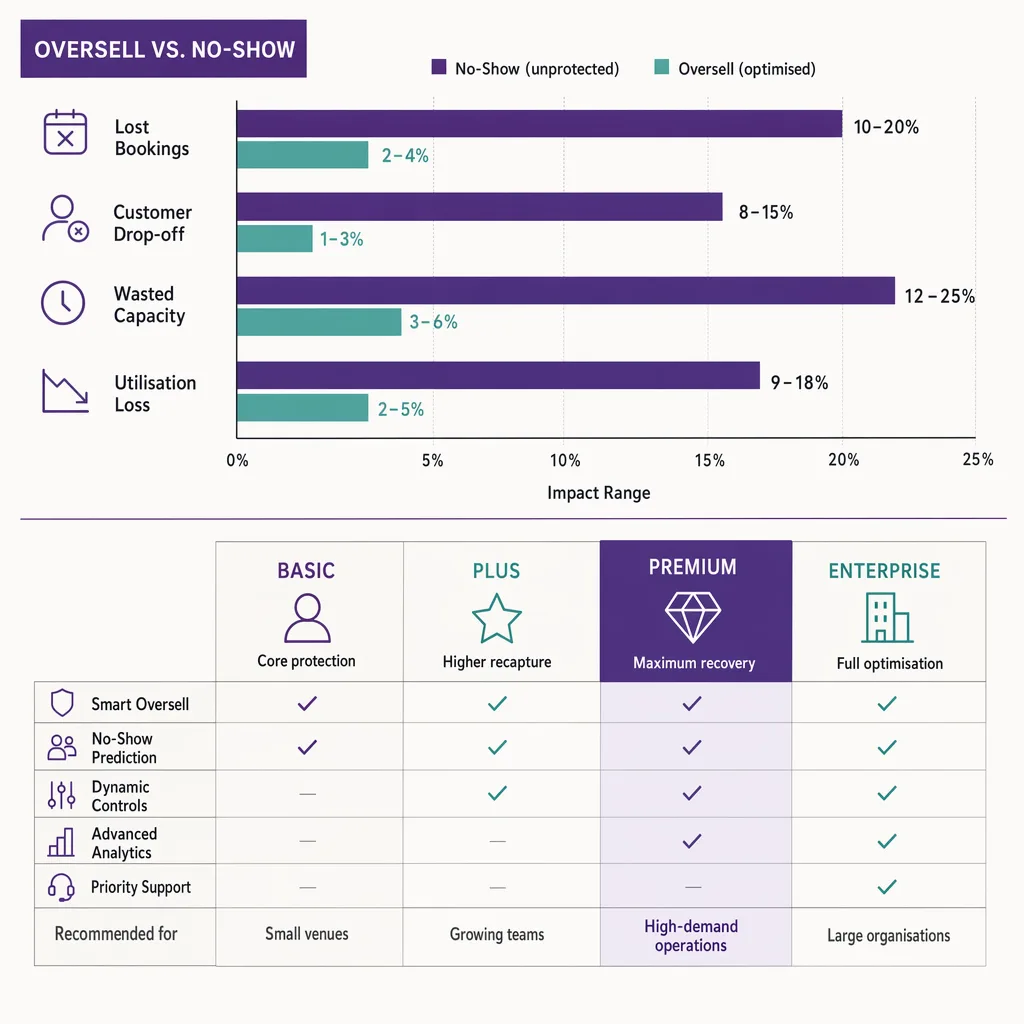
The first is pricing. If peak access is the scarce thing, it can be priced as such, with a cheaper off-peak or part-time tier that fills the troughs without crowding the peak. The second is the oversell ratio: knowing how many members actually show up against how many you have sold tells you how much further you can safely sell the same desks. That is the core coworking arbitrage, and it is far less of a gamble when you have a measured no-show pattern instead of an optimistic assumption. The general discipline of turning a demand curve into action is the same as in any people-counting deployment; the coworking twist is that the curve directly sets your pricing tiers.
How an operator actually uses the numbers
The realistic user is the general manager or operations lead of a site, sometimes a regional manager across several. They are not staring at a live floor count; they are making a handful of recurring decisions, and the occupancy data is the input to each. Weekly, they watch the peak-day curve against the membership they have sold, which is the early-warning line for the bad Tuesday: when peak occupancy starts brushing capacity on the busiest days, it is time to slow hot-desk sales on that floor or open the relief valve of an off-peak tier rather than keep selling into a complaint. Monthly, they look at the dedicated-area and meeting-room utilization to decide what to convert, push, or reprice. At renewal and expansion, they bring the measured utilization curve to the landlord or the board, because a membership headcount hides the no-show rate and a utilization curve does not.
The member-facing live count is the under-rated piece of this. An operator who exposes "the Shoreditch floor is at 70% right now" in the member app is not just adding a feature; they are smoothing their own peak. Members who can see the floor is full will work from home or shift their day, which flattens the very crunch that drives complaints, and it does so using a count that identifies no one. That is a rare case where the privacy-preserving measurement and the commercial outcome point the same way.
Why members and operators both prefer camera-free counting
A coworking space is somebody's office, and the people in it are paying customers, often founders and professionals who care a lot about not being watched. A camera over the hot-desk floor would be a hard sell to members and a worse one to the privacy-conscious teams an operator most wants to attract. The counting has to be invisible and non-intrusive, or it undermines the product.
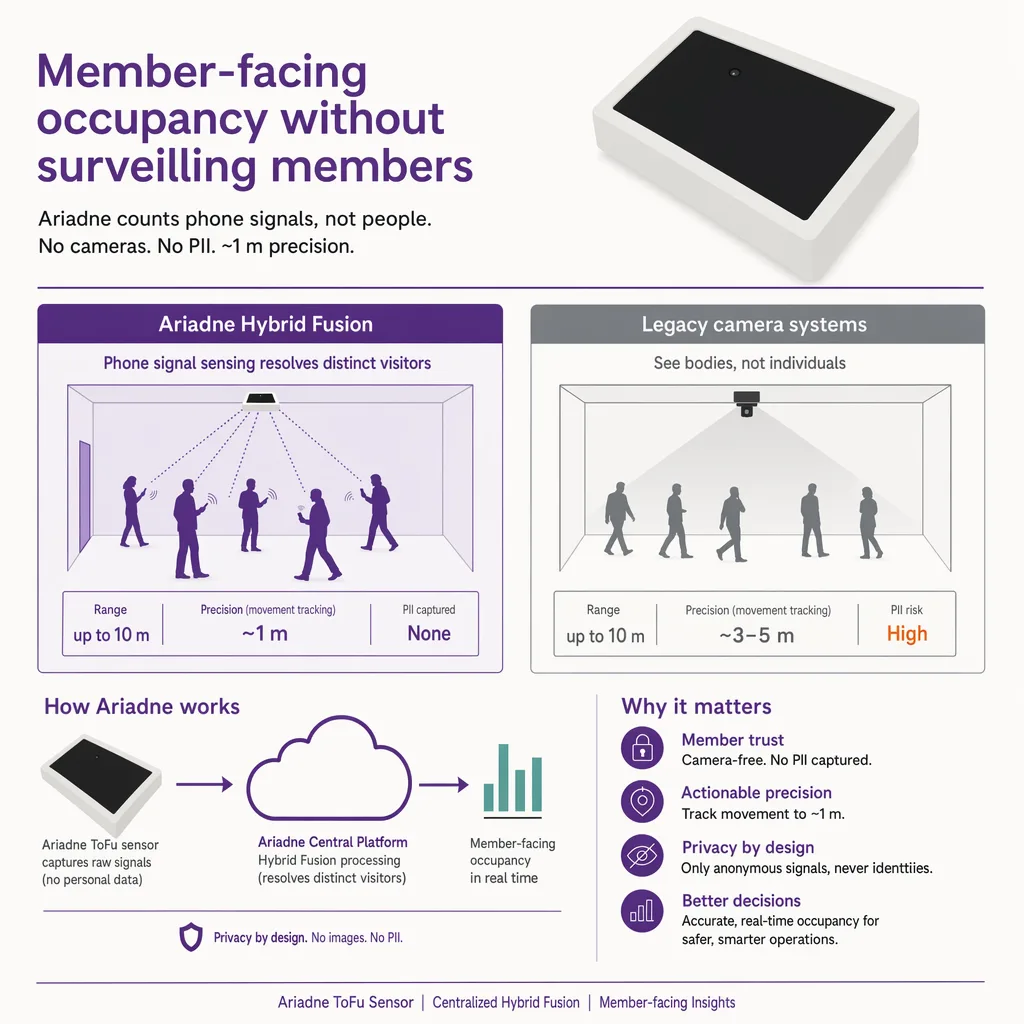
Ariadne measures this with Hybrid Fusion, its patented camera-free method. Time-of-Flight depth sensing counts every visitor at the entrances, capturing geometry rather than images, while patented phone signal sensing follows movement through the interior, detecting the signals a phone emits even in airplane mode, and tracks that movement to about one-metre precision. The sensor streams both feeds to Ariadne, where Hybrid Fusion combines them into one trajectory per visit and computes counts, dwell, and paths. The streams carry no identifier: no MAC address, no device ID, no biometric data, and no camera is involved. Identifiers are stored only when a visitor explicitly opts in, which keeps the method GDPR-friendly and outside biometric territory.
The upshot is that the operator gets accurate occupancy by zone without putting a camera anywhere near a member, and without holding any record of who was where. That is the kind of camera-free occupancy counting a coworking space can put in its building without a difficult member conversation, and the same property lets an operator offer member companies hard occupancy numbers for their own dedicated suites without ever surveilling the people in them. The hardware is a discreet unit at each threshold; how the door sensor works explains why it captures geometry rather than images.
The member-company angle is worth drawing out, because it turns a cost into a sellable service. A growing team renting a dedicated suite faces its own version of the office-occupancy question: are we using the space we pay for, and do we need more or less of it. An operator who can hand that team a clean occupancy curve for their own suite, with no images and no record of which individual sat where, is offering something genuinely useful at renewal time, and is doing it with the same sensors already measuring the building. A camera-based system could not be offered this way, because no member company wants its own people filmed, which is exactly why the camera-free property is commercial rather than merely compliant.
From counts to action: layout, expansion, and membership tiers
Once occupancy is measured by zone and hour, the operating decisions follow. Layout is the first: if the community lounge is dead all week while the hot-desk floor overflows, the floor plan is wrong and the data says so, which justifies converting low-yield space into the desks members actually fight over. Expansion is the second: an operator opening a second location, or arguing to a landlord for more floors, makes a far stronger case with a measured utilization curve than with a membership headcount that hides the no-show rate.
Membership tiers are where it all comes together. The peak curve sets the case for peak and off-peak pricing. The dedicated-area occupancy sets whether to add or convert suites. The meeting-room utilization sets whether rooms are an upsell or a bottleneck. None of this is the same exercise as an employer measuring its own office occupancy to plan headcount; it is a pricing and product exercise, and occupancy data by zone is the input that turns it from guesswork into a model.
FAQ
How is this different from measuring occupancy in a normal office?
A normal office measures its own staff to plan headcount and desks. A coworking operator sells flexible access to many members and needs to know how full each sellable zone is, by hour, to price tiers and set how hard to oversell the space. The measurement is similar; the decisions it feeds are commercial rather than internal.
Can it tell me which members are in the space?
No, and that is deliberate. A camera-free counter measures occupancy by zone and time without identifying anyone, so it tells you how full the hot-desk floor or a meeting suite is, not who is sitting there. Member identity stays with your access and membership systems.
Does it work for meeting rooms as well as open desks?
Yes. Counting at the threshold of a meeting room gives real occupancy, which often differs from the booking calendar because rooms get booked and then left empty. That gap is exactly the thing operators want to see.
Will counting work without putting cameras in the space?
Yes. The method uses depth sensing and phone-signal sensing rather than cameras, so it captures no images and no identity, which is usually the only kind of counting members will accept in a space they pay to work in.
How does occupancy data help me set the oversell ratio?
By giving you a measured no-show pattern. If your busiest day peaks well below capacity even though you have sold more memberships than desks, the data shows real headroom to sell further; if peak occupancy is brushing capacity, it shows you are close to the limit. That turns the oversell ratio from an optimistic guess into a number you adjust against the curve.
Can I give member companies occupancy data for their own suites?
Yes, and it is a useful renewal-time service. Because the counting records no images and no identifier, an operator can hand a member team a clean occupancy curve for the suite they rent, helping them right-size their own space, without ever surveilling the individuals working in it.
---


