
Wer eine Website betreibt, kennt die Absprungrate: den Anteil der Besucher, die auf einer Seite landen und wieder gehen, ohne etwas zu tun. Sie ist eine der ersten Zahlen, die ein Marketer prüft, denn eine hohe Absprungrate zeigt, dass die Seite genau in dem Moment versagt hat, auf den es am meisten ankam, in den ersten Sekunden. Der stationäre Handel hat dasselbe Versagen, und bis vor Kurzem hatte er keinen Namen dafür. Ein Kunde tritt ein, macht zwei Schritte, spürt, dass dies nicht das ist, was er wollte, oder erkennt nicht, wo es weitergeht, und dreht um. Nichts wurde gekauft, nichts wurde angeschaut, und ein Conversion-Bericht würde diesen Besuch neben einen Kunden einordnen, der zwanzig Minuten verbrachte und mit leeren Händen ging. Das sind nicht dieselben Ereignisse, und sie gleichzusetzen verdeckt ein Problem, das Sie beheben könnten.
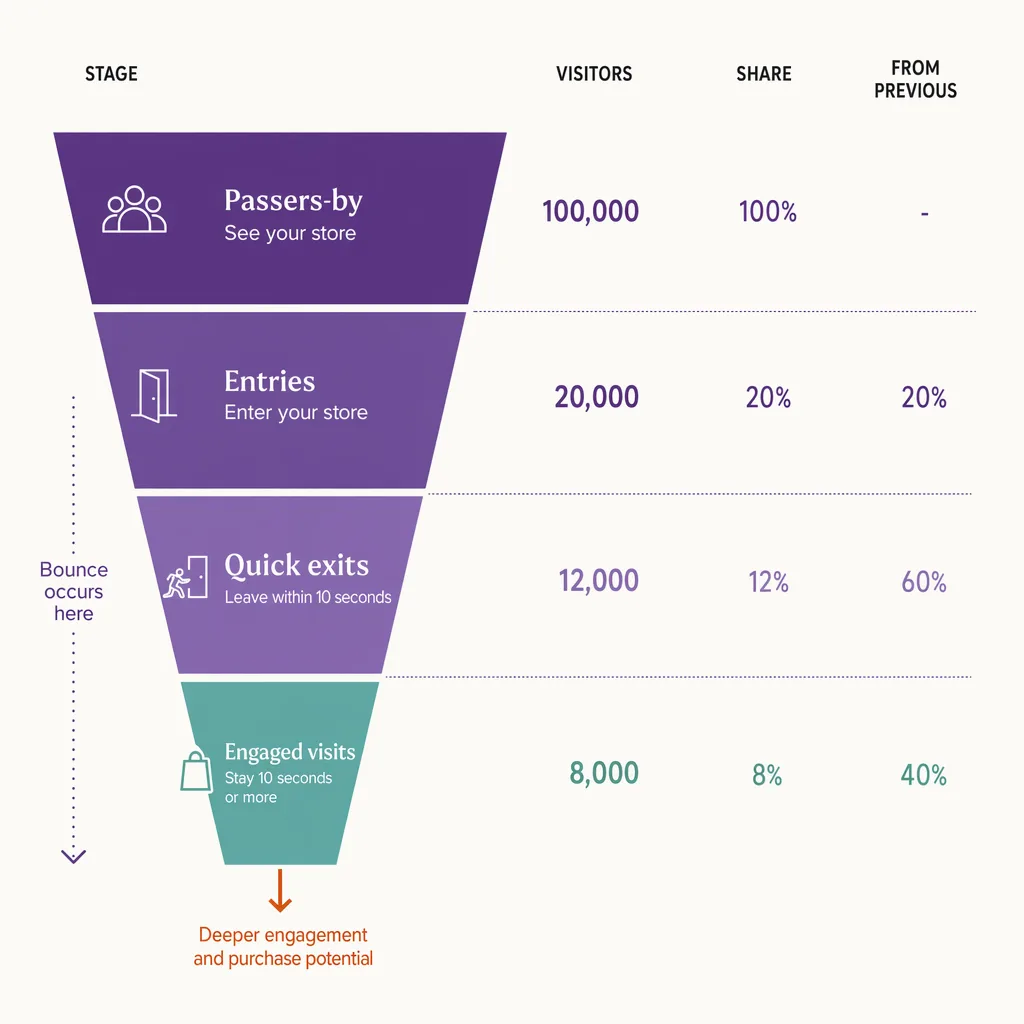
Dieser Beitrag überträgt die Absprungrate auf den Store: was sie bedeutet, wie man einen "Absprung" definiert, wenn es keine Seite zum Laden gibt, warum sie ein anderes Versagen ist als eine niedrige Conversion oder eine niedrige Erfassungsrate, und was am Ladeneingang zu ändern ist, wenn die Zahl hoch ist. Es handelt sich um einen definierten Näherungswert, nicht um einen Branchenstandard mit einem einzig wahren Wert. Der Großteil der Arbeit liegt also darin, eine Definition festzulegen, die Sie konsistent messen können, und dann danach zu handeln.
Was ist die Absprungrate für einen stationären Store?
Aus der Web-Analyse entlehnt, ist die Absprungrate eines stationären Stores der Anteil der Besucher, die eintreten und schnell wieder gehen, ohne sich zu engagieren, etwa ohne die Eingangszone zu verlassen oder länger als eine kurze Schwelle zu bleiben. Es ist das Store-Äquivalent zu einem Website-Besuch, der in Sekunden landet und wieder verschwindet. Es ist nicht dasselbe wie eine niedrige Conversion: Ein Absprung ist ein Besuch, der nie richtig begann, während ein Besuch ohne Kauf durchaus ausgiebig gestöbert haben kann. Die Absprungrate separat zu beobachten weist auf Reibung am Eingang, einen verwirrenden ersten Eindruck oder ein Problem in der Dekompressionszone hin, das eine Conversion-Zahl allein verbergen würde.
Der Wert dieser Kennzahl liegt darin, dass sie den allerersten Teil des Besuchs isoliert. Die Conversion sagt Ihnen, was über den gesamten Besuch hinweg geschah. Die Absprungrate sagt Ihnen, ob der Besuch überhaupt begann. Wenn beide schwach sind, wissen Sie, wo Sie zuerst suchen müssen, denn ein Kunde, der nie über die Tür hinauskam, hätte nie konvertiert, egal wie gut das Angebot hinten im Laden war.
Wie man einen "Absprung" im Store definiert: Distanz hinter dem Eingang und Verweildauer-Schwellen
Online wird ein Absprung durch fehlende Interaktion definiert: kein zweiter Seitenaufruf, kein Klick, kein Scrollen über eine festgelegte Tiefe hinaus. Im Store brauchen Sie ein physisches Äquivalent, und es gibt zwei praktische Wege, die Grenze zu ziehen.
Der erste ist die Distanz. Sie definieren eine Eingangszone, den Bereich, den ein Kunde in den ersten Schritten durchquert, und werten einen Besuch als Absprung, wenn die Person diesen Bereich nie in Richtung Ladeninneres verlässt. Das entspricht sauber der Web-Idee eines einzelnen Seitenaufrufs: Sie kamen an und gingen nie tiefer.
Der zweite ist die Zeit. Sie legen eine kurze Verweildauer-Schwelle fest, und jeder Besuch, der kürzer ist, gilt als Absprung, nach der Logik, dass sich niemand in acht oder zehn Sekunden mit einem Store beschäftigt. Das entspricht der Web-Idee einer Sitzung, die in Sekunden endet.
Den meisten Stores ist am besten gedient, wenn sie beides kombinieren: Ein Absprung ist ein Besuch, der weder die Eingangszone passiert noch die Verweildauer-Schwelle überschreitet. Das schützt vor Grenzfällen, etwa einem Kunden, der nur knapp über die Schwellenlinie tritt, um ein Schild zu lesen, und dann geht, oder einem, der nahe der Tür stehen bleibt und auf sein Handy schaut, bevor er tief in den Laden geht. Die genauen Zahlen, wie viele Meter und wie viele Sekunden, sind konfigurierbar und sollten auf das Layout Ihres Stores abgestimmt werden, nicht von anderen übernommen. Die Eingangszone eines großflächigen Stores ist tiefer als die einer Boutique, und eine Kategorie mit überlegten Kaufentscheidungen verträgt eine längere Anfangspause als eine für den schnellen Griff. Behandeln Sie jede konkrete Schwelle als Ausgangspunkt, den Sie feinjustieren, nicht als Standard, den Sie erben.
Zwei Leitplanken halten die Definition sauber. Bewegungen von Personal und Lieferdiensten sollten ausgeschlossen werden, damit sie die Rate weder aufblähen noch drücken. Und die Schwelle muss fixiert bleiben, sobald sie festgelegt ist, denn der ganze Sinn der Kennzahl ist der Vergleich derselben Definition über Tage und Stores hinweg. Eine Absprungrate, die im Januar das eine und im März etwas anderes bedeutet, misst nichts.
Absprungrate vs. Conversion Rate vs. Erfassungsrate: drei verschiedene Fehlerarten
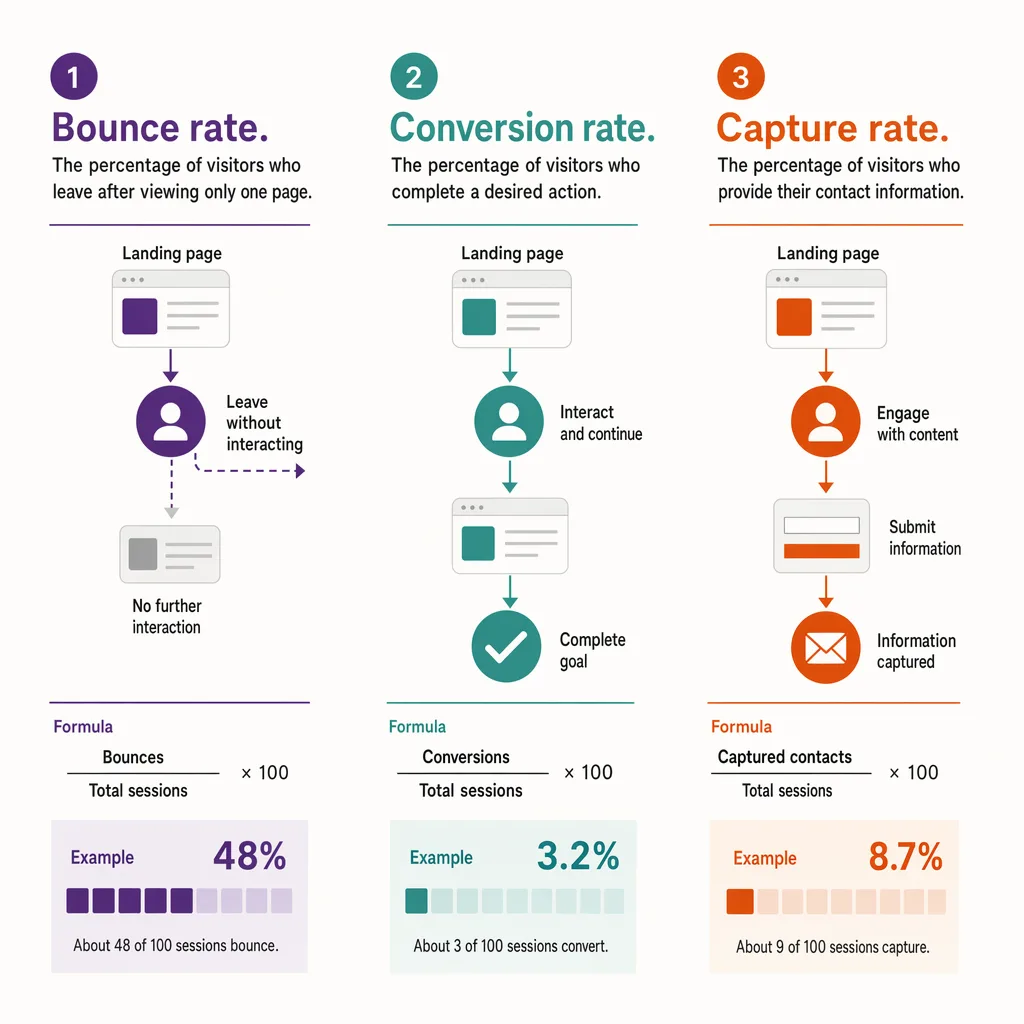
Absprungrate, Conversion und Erfassungsrate werden oft zu einem "der Store läuft nicht gut" verschwommen, aber jede benennt ein eigenes Versagen an einem eigenen Punkt des Besuchs. Sie nebeneinander zu lesen sagt Ihnen, wo Sie eingreifen müssen.
| Kennzahl | Was sie misst | Das Versagen, auf das sie hinweist | Wo es passiert |
|---|---|---|---|
| Erfassungsrate | Passanten, die eintreten, als Anteil der Vorbeigehenden am Storefront | Schaufenster, Beschilderung oder Fassade zieht die Menschen nicht vom Gehweg herein | Draußen, am Storefront |
| Absprungrate | Besucher, die eintreten und schnell ohne Engagement gehen, als Anteil der Eintritte | Das Eingangserlebnis stößt ab oder verwirrt in den ersten Sekunden | Direkt drinnen, in der Eingangszone |
| Conversion Rate | Käufer als Anteil der Besucher | Angebot, Preis, Service oder Sortiment hat ein Stöbern nicht abgeschlossen | Über den gesamten Store hinweg |
Die Reihenfolge ist wichtig, denn die Fehlerarten sind sequenziell. Die Erfassungsrate entscheidet, ob ein Passant zum Besucher wird. Die Absprungrate entscheidet, ob dieser Besucher lange genug bleibt, um zum Stöberer zu werden. Die Conversion entscheidet, ob dieser Stöberer zum Käufer wird. Ein Store kann den ersten Test bestehen und am zweiten scheitern, oder die ersten beiden bestehen und am dritten scheitern, und jede Kombination weist woanders hin. Hohe Erfassung bei hoher Absprungrate bedeutet, dass das Schaufenster funktioniert, aber das Innere die Menschen abstößt, sobald sie die Schwelle überschreiten. Niedrige Erfassung bei niedriger Absprungrate bedeutet, dass wenige hereinkommen, aber diejenigen, die es tun, sich auf den Besuch einlassen. Das können Sie nicht aus einer einzelnen Conversion-Zahl ablesen, weshalb die Absprungrate genau ihren Platz neben den Zahlen verdient, die Sie bereits verfolgen. Für die Kennzahl Käufer-pro-Besucher und wie man sie berechnet, siehe die Conversion-Rate-Formel.
Was eine hohe Store-Absprungrate verursacht: die Eingangszone, der erste Eindruck und die Dekompressionszone
Wenn die Absprungrate hoch ist, liegt die Ursache fast immer in den ersten Metern, und der häufigste Übeltäter ist die Dekompressionszone. Das ist der Übergangsbereich direkt hinter der Tür, in dem sich ein Kunde vom Tempo und Licht der Straße auf das Ladeninnere umstellt. In diesen ersten Schritten kauft er nicht wirklich ein, er orientiert sich. Händler wissen seit Langem, dass sie in dieser Zone kein wichtiges Produkt oder keine Entscheidung platzieren sollten, weil Kunden sie dort nicht wahrnehmen. Wer die Dekompressionszone falsch gestaltet, indem er sie zustellt, Sichtlinien blockiert oder eine Entscheidung zu früh erzwingt, produziert Absprünge: Menschen, die nicht schnell einen Grund erkennen, tiefer zu gehen, drehen um. Die Mechanik dieses Übergangsbereichs lohnt sich für sich genommen zu verstehen; siehe die Dekompressionszone.
Auch andere Absprungtreiber häufen sich vorne. Ein blockierter oder enger Eingang, der die Menschen das Gefühl gibt, geschleust zu werden. Ein erster Eindruck, der den Store falsch wiedergibt, sodass der Kunde, den das Schaufenster hereingezogen hat, ein Inneres vorfindet, das dem Versprechen nicht entspricht, und geht. Schlechte Sichtlinien, sodass ein Besucher keinen klaren Weg oder Grund erkennt, hineinzugehen. Oder schlicht ein Store, der von der Schwelle aus überfüllt wirkt, was die Menschen wieder hinausdrängt, bevor sie sich festlegen. Der gemeinsame Nenner ist, dass all dies geschieht, bevor das Stöbern beginnt, weshalb es sich als Absprung und nicht als verlorene Conversion zeigt. Als Kontext dazu, wie lange Besucher tatsächlich bleiben, wenn sie sich einmal festgelegt haben, setzt der Kontext zur Verweildauer die Bandbreiten, gegen die eine Absprungschwelle kurz wirkt.
Sie senken: was am Ladeneingang zu ändern ist und wie man es testet
Eine hohe Absprungrate zu senken dreht sich meist um die ersten zehn Sekunden und die ersten zehn Meter. Die Maßnahmen, die tendenziell helfen:
- Räumen Sie die Dekompressionszone frei. Halten Sie den Bereich direkt hinter der Tür offen, mit starken Sichtlinien in den Store und nichts, das eine Entscheidung verlangt. Geben Sie dem Kunden ein offensichtliches Ziel, auf das er zugehen kann.
- Bringen Sie das Innere mit dem Schaufenster in Einklang. Wenn der Storefront das eine verspricht und der Eingang etwas anderes liefert, korrigiert der Kunde den Fehler, indem er geht. Bringen Sie den ersten Eindruck mit dem in Einklang, was ihn hereingezogen hat.
- Öffnen Sie die Sichtlinien. Ein Besucher, der ein interessantes Möbel, eine Kategorie oder eine klare Route tiefer in den Store sehen kann, hat einen Grund, weiterzugehen. Wer eine Wand oder eine Warteschlange sieht, hat ihn nicht.
- Erleichtern Sie den physischen Zutritt. Verbreitern Sie eine eingeengte Tür, entfernen Sie Unrat von der Schwelle und stellen Sie sicher, dass der Eingang von außen nicht verstopft wirkt.
Die wichtige Disziplin ist, diese Maßnahmen einzeln zu testen, statt die ganze Front auf einmal umzugestalten. Weil ein Absprung am Eingang definiert ist, reagiert er schnell auf Änderungen am Eingang, was ihn zu einer guten Kennzahl für Vorher-nachher-Tests macht. Legen Sie Ihre Absprungdefinition fest, erfassen Sie eine Baseline über einen repräsentativen Zeitraum, nehmen Sie eine Änderung vor und vergleichen Sie danach dieselbe Definition über einen vergleichbaren Zeitraum. Zu beobachten, wohin Besucher im Store tatsächlich gelangen, über eine Store-Heatmap, sagt Ihnen, ob eine Änderung mehr Menschen über die Eingangszone hinausgebracht oder den Engpass nur ein paar Schritte nach hinten verschoben hat.
Schnelle Austritte genau messen: Eintrittszählungen plus Verweildauer in der ersten Zone ohne Kameras
Eine Store-Absprungrate braucht zwei Messungen, die die Kasse Ihnen nicht liefern kann: eine genaue Zählung aller Eintretenden und, pro Besuch, ob dieser die Eingangszone passiert oder die Verweildauer-Schwelle überschritten hat. Das bedeutet, Eintritte zu zählen und Belegung und Verweildauer in einer definierten ersten Zone auszulesen, ohne jemanden zu identifizieren und ohne eine Kamera, die die Tür beobachtet.
Ariadne misst dies mit Hybrid Fusion, der patentierten kamerafreien Methode. Time-of-Flight-Tiefensensorik zählt an den Eingängen jeden Besucher und erfasst Geometrie statt Bilder, während die patentierte Signalerfassung die Bewegung im Innenraum verfolgt und die Signale erkennt, die ein Telefon aussendet, selbst im Flugmodus, und diese Bewegung auf etwa einen Meter genau auflöst. Der Sensor streamt beide Datenströme an Ariadne, wo Hybrid Fusion sie zu einer Trajektorie pro Besuch zusammenführt und Zählwerte, Verweildauer und Wege berechnet. Die Datenströme tragen keine Identifikatoren: keine MAC-Adresse, keine Geräte-ID, keine biometrischen Daten, und es ist keine Kamera beteiligt. Identifikatoren werden nur gespeichert, wenn ein Besucher ausdrücklich zustimmt, was die Methode datenschutzfreundlich und außerhalb des biometrischen Bereichs hält.
Auf die Absprungfrage bezogen liefert das die beiden Dinge, die die Kennzahl braucht. Die Time-of-Flight-Zählung an der Tür ist geräteunabhängig, sodass der Nenner (alle Eintretenden) vollständig ist und nicht eine Stichprobe von Kunden, die zufällig ein erkennbares Handy trugen. Und die Innenraum-Erfassung klärt, ob ein Besuch die Eingangszone passiert hat und wie lange er dauerte, was einen Absprung von einem Stöbern unterscheidet. Weil die Definition eine Zone und eine Schwelle statt eines Gesichts ist, können Sie schnelle Austritte im großen Maßstab messen, ohne je zu wissen, wer jemand war. Für das umfassendere Retail-Bild, in das dies einfließt, siehe Analyse für stationäre Stores.
Weitere Beiträge
FAQ
Was ist die Absprungrate eines stationären Stores?
Es ist der Anteil der Besucher, die einen Store betreten und schnell wieder gehen, ohne sich zu engagieren, entlehnt aus der gleichnamigen Web-Analyse-Kennzahl. Ein Besuch gilt als Absprung, wenn er eine definierte Eingangszone nicht passiert oder nicht über eine kurze Verweildauer-Schwelle hinaus dauert. Sie weist auf Versagen ganz am Anfang des Besuchs hin, bevor das Stöbern beginnt.
Wie unterscheidet sich die Store-Absprungrate von der Conversion Rate?
Die Conversion Rate ist Käufer als Anteil aller Besucher, gemessen über den gesamten Besuch. Die Absprungrate ist der Anteil der Besucher, deren Besuch nie richtig begann. Ein Kunde kann nach zwanzig Minuten Stöbern nicht konvertieren; das ist ein Conversion-Problem, kein Absprung. Die Absprungrate isoliert die Kunden, die am Eingang umgedreht sind.
Was ist eine gute Absprungrate für einen Store?
Es gibt keinen universellen Wert, denn eine Store-Absprungrate ist ein Näherungswert, den Sie mit einer Distanz- und einer Zeitschwelle definieren, abgestimmt auf Ihr eigenes Layout. Worauf es ankommt, ist, sie konsistent zu definieren und zu verfolgen, ob sie nach Änderungen am Ladeneingang sinkt, nicht Ihre Zahl mit der eines anderen zu vergleichen, die anders definiert ist.
Was verursacht eine hohe Store-Absprungrate?
Meist etwas in den ersten Metern: eine zugestellte oder blockierte Dekompressionszone, ein erster Eindruck, der nicht dem entspricht, was das Schaufenster versprach, schlechte Sichtlinien in den Store oder ein Eingang, der verstopft wirkt. All dies stößt einen Kunden ab oder verwirrt ihn, bevor das Stöbern beginnt, weshalb es als Absprung und nicht als verlorene Conversion erscheint.
Brauche ich Kameras, um die Store-Absprungrate zu messen?
Nein. Ariadne zählt mit Hybrid Fusion: Time-of-Flight-Tiefenerfassung plus patentierte Handysignal-Erfassung, nie Kameras. Time-of-Flight erfasst Geometrie statt Bilder, und die Signal-Erfassung erfasst standardmäßig keine MAC-Adresse, sodass die Messung ohne Video, ohne Gesichter und ohne biometrische Daten auskommt.
---


