
Wenn ein Einkaufszentrum den Besitzer wechselt und die Schlagzeile lautet, der Käufer habe einen Aufschlag für einen "defensiven" Cashflow gezahlt, ist der Ankermieter fast immer ein Supermarkt. Das lebensmittelverankerte Zentrum ist still und leise zu dem Format geworden, nach dem institutionelle Käufer zuerst greifen, und der Grund ist nicht Glanz. Es ist, dass die Menschen weiter Lebensmittel kaufen, wenn sie fast alles andere nicht mehr kaufen. Dieses eine Verhalten verändert, wie sich die Besucherfrequenz verhält, wie die Mietverträge bepreist werden und wie ein Vermieter die Zahlen an der Tür lesen sollte.
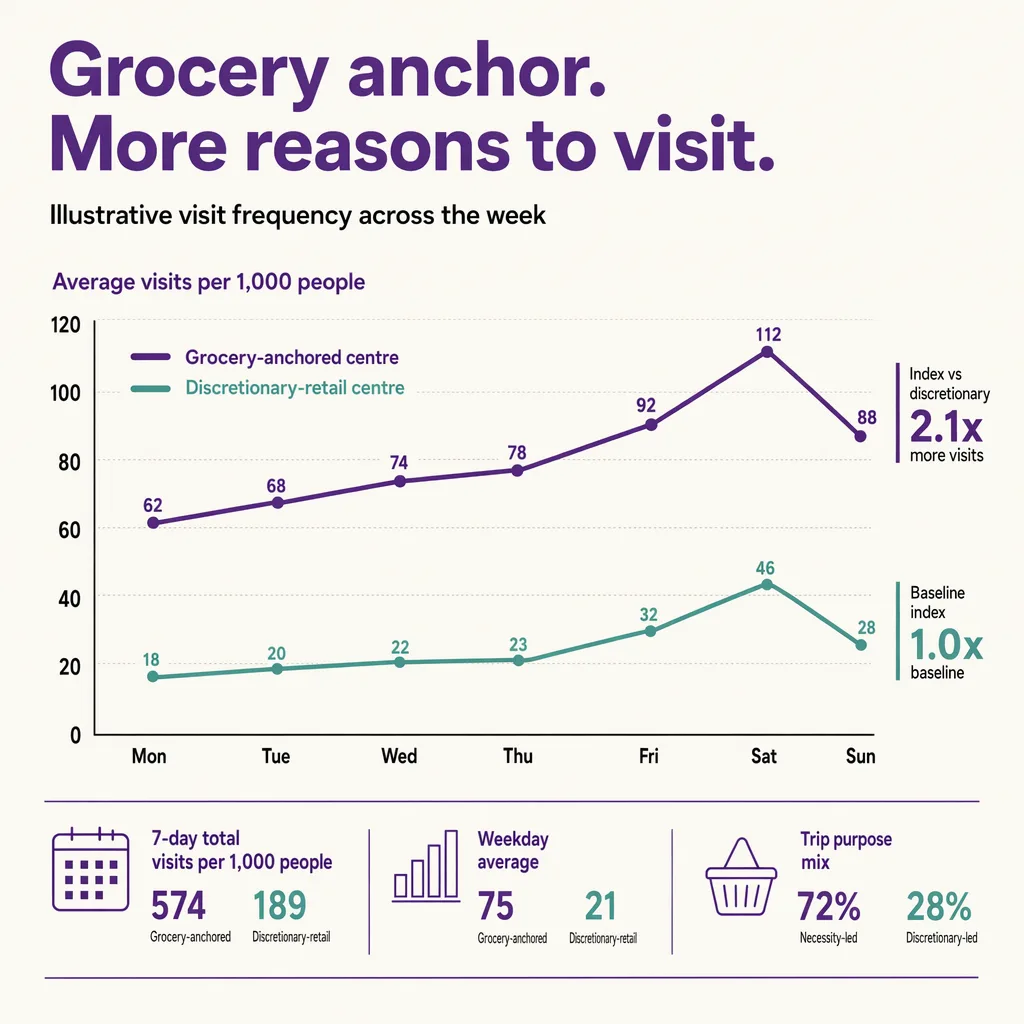
In diesem Beitrag geht es um genau diesen Zentrumstyp: Was ein Zentrum lebensmittelverankert macht, warum sich das Frequenzmuster von der Anziehungskraft eines Kaufhauses unterscheidet und was ein Vermieter über die Sogwirkung eines Lebensmittel-Ankers tatsächlich belegen kann. Wir setzen voraus, dass Sie bereits wissen, was ein Ankermieter ist; der Fokus liegt hier auf dem Lebensmittelformat und seinem eigenständigen Frequenzprofil.
Was ist ein lebensmittelverankertes Einkaufszentrum?
Ein lebensmittelverankertes Einkaufszentrum ist eine Handelsimmobilie, deren wichtigster Zugpferd ein Supermarkt oder Hypermarkt ist, nicht ein Kaufhaus. Der Lebensmittelhändler zieht häufige, bedarfsgetriebene Besuche an (Haushalte kaufen oft wöchentlich oder häufiger ein), was eine stetigere und rezessionsresistentere Besucherfrequenz erzeugt als der Einzelhandel mit Wahlkonsum. Investoren bevorzugen das Format wegen dieses defensiven Cashflows: Im Abschwung kaufen die Menschen weiter Lebensmittel. Die Inline-Mieter rund um den Lebensmittelhändler, die Apotheke, die Reinigung und das Quick-Service-Angebot, leben von dieser wiederkehrenden Frequenz.
Das entscheidende Wort ist wiederkehrend. Ein regionales Einkaufszentrum mit einem Kaufhaus als Anker verkauft Anlässe: einen Mantel, ein Geschenk, einen Samstagsbummel. Ein Lebensmittelzentrum verkauft die Woche. Dieser Unterschied wirkt auf alles andere aus, wie die Immobilie abschneidet, und lohnt daher eine genaue Betrachtung, bevor man sich ansieht, warum Kapital das Format mag.
Wie sich die Lebensmittelfrequenz von der Anziehung eines Kaufhauses unterscheidet
Drei Dinge trennen die Lebensmittelfrequenz von der Frequenz, die ein Mode- oder Kaufhaus-Anker erzeugt, und jedes davon zeigt sich anders an der Tür.
Häufigkeit
Ein Lebensmittel-Anker ist ein hochfrequenter Zugpferd. Derselbe Haushalt kommt mehrmals im Monat zurück, manchmal mehrmals pro Woche, weil der Weg eine Besorgung ist und kein Ausflug. Ein Kaufhaus-Anker ist ein niederfrequenter Zugpferd mit hoher Überlegung: Der Besuch ist geplant, zeitlich verteilt und an einen Bedarf oder Anlass gebunden. Für den Vermieter bedeutet das: Die Gesamtfrequenz eines Lebensmittelzentrums baut sich aus einem kleineren Einzugsgebiet auf, das häufiger kommt, während die eines regionalen Zentrums sich aus einem breiteren Einzugsgebiet aufbaut, das seltener kommt. Beide können ähnliche Jahresbesuchszahlen erreichen und sich Woche für Woche völlig anders verhalten.
Bedarf statt Wahlkonsum
Lebensmittel sind Bedarfshandel. Wenn die Budgets enger werden, trifft es zuerst die Wahlkonsum-Kategorien, Bekleidung, Haushaltswaren, Elektronik, und die Frequenz zu einem Wahlkonsum-Anker gibt mit ihnen nach. Die Nachfrage nach Lebensmitteln ist weitaus stabiler. Diese Stabilität ist die gesamte Investmentthese, und sie ist messbar: Die wöchentliche Besuchszahl eines Lebensmittelzentrums hält im Abschwung eine flachere Linie als die eines Wahlkonsum-Zentrums. Die Besucherfrequenz ist nicht immun gegen eine Rezession, aber sie biegt sich weniger.
Verweildauer
Lebensmittelbesuche sind kürzer und zweckgerichteter. Wer für den Wocheneinkauf gekommen ist, will nicht verweilen, sodass die Verweildauer pro Besuch tendenziell niedriger ausfällt als in einem freizeitorientierten Zentrum, in dem es gerade darum geht zu bleiben. Das ist keine Schwäche, sondern eine andere Währung. Ein Lebensmittelzentrum monetarisiert Häufigkeit, nicht Verweildauer. Ein Lebensmittelzentrum allein an der Verweildauer gegen ein Freizeitzentrum zu messen, würde es als leistungsschwach kennzeichnen, obwohl es genau das tut, wofür das Format gebaut ist. Wie diese Benchmarks je nach Zentrum variieren, zeigen die Benchmarks zur Verweildauer.
Die drei Merkmale verstärken einander. Häufigkeit ohne Bedarf wäre eine Gewohnheit, die in dem Moment bricht, in dem die Budgets enger werden; Bedarf ohne Häufigkeit wäre eine gelegentliche Besorgung statt einer Routine. Es ist die Kombination, ein benötigter Einkauf, der oft getätigt wird, die die flache, wiederholbare Frequenzlinie erzeugt, für die das Format geschätzt wird. Die kurze Verweildauer ist die natürliche Folge: Ein Weg, der alle paar Tage gemacht wird, ist ein effizient gemachter Weg. Ein Vermieter, der das Format versteht, liest alle drei zusammen, statt eines davon isoliert zu beurteilen.
Warum Investoren das Format defensiv nennen
Das Etikett "defensiv" ist das Wort eines Investors für einen Cashflow, der hält, wenn die Wirtschaft es nicht tut. Ein lebensmittelverankertes Zentrum verdient es sich aus zwei Gründen. Der erste ist die oben beschriebene Nachfragestabilität: Lebensmittel werden in guten wie in schlechten Jahren gekauft. Der zweite ist die Mietvertragsstruktur. Ein Lebensmittelhändler unterzeichnet in der Regel einen langen Mietvertrag und behandelt den Standort als Kerninfrastruktur für den eigenen Betrieb, nicht als optionale Wette, sodass der Anker kaum kurzfristig schließt. Lange Ankerlaufzeiten plus stabile Nachfrage ergeben genau die Art von planbarem Einkommensstrom, den Pensionsfonds und Core-Immobilienfonds halten sollen.
Dies ist die weit verbreitete Sicht unter Investoren im Gewerbeimmobilienbereich, keine gemessene Erkenntnis von Ariadne, und man sollte es klar aussprechen, statt es aufzuhübschen. Das Format ist nicht risikofrei. Ein Lebensmittelhändler kann weiterhin von Discountern oder von der Verlagerung der Lebensmittelausgaben ins Internet unter Druck gesetzt werden, und ein Zentrum, das zu stark von einem einzigen Lebensmittelhändler abhängt, trägt dasselbe Klumpenrisiko wie jede Immobilie mit nur einem Anker. Der defensive Fall ist ein relativer: Die Lebensmittelfrequenz biegt sich weniger als die Wahlkonsum-Frequenz, nicht dass sie sich nie biegt. Dies ist auch Teil der breiteren Bewegung weg von Kaufhaus-Ankern, die seit 2020 neu geformt hat, welche Zentren Investoren besitzen wollen.
Man sollte auch genau sein, was "defensiv" verspricht und was nicht. Es ist eine Aussage über Volatilität, nicht über Wachstum. Ein Lebensmittelzentrum liefert kaum den Aufwärtspotenzial, das ein gut getimtes regionales Einkaufszentrum in einem starken Konsumzyklus bieten kann, weil Bedarfsausgaben nicht so ansteigen wie Wahlkonsum, wenn das Vertrauen zurückkehrt. Investoren, die das Format kaufen, tauschen dieses Aufwärtspotenzial gegen eine ruhigere Fahrt: stetigere Auslastung, geringeres Wiedervermietungsrisiko beim Anker und eine Einkommenslinie, die in einem schlechten Jahr nicht abstürzt. Für einen Käufer, dessen Mandat Kapitalerhalt statt aggressiven Wachstums ist, ist dieser Tausch der ganze Reiz, und deshalb wechselt das Format tendenziell zu engeren Renditen den Besitzer als der Wahlkonsum-Handel. Der Aufschlag, den ein Käufer zahlt, ist praktisch der Preis der geringeren Volatilität, und er hält nur so lange, wie sich die zugrunde liegende Besucherfrequenz weiter defensiv verhält. Das ist die Annahme, die ein umsichtiger Eigentümer laufend prüft, statt sie blind zu glauben.
Der Inline-Mix, der rund um einen Lebensmittelhändler gedeiht
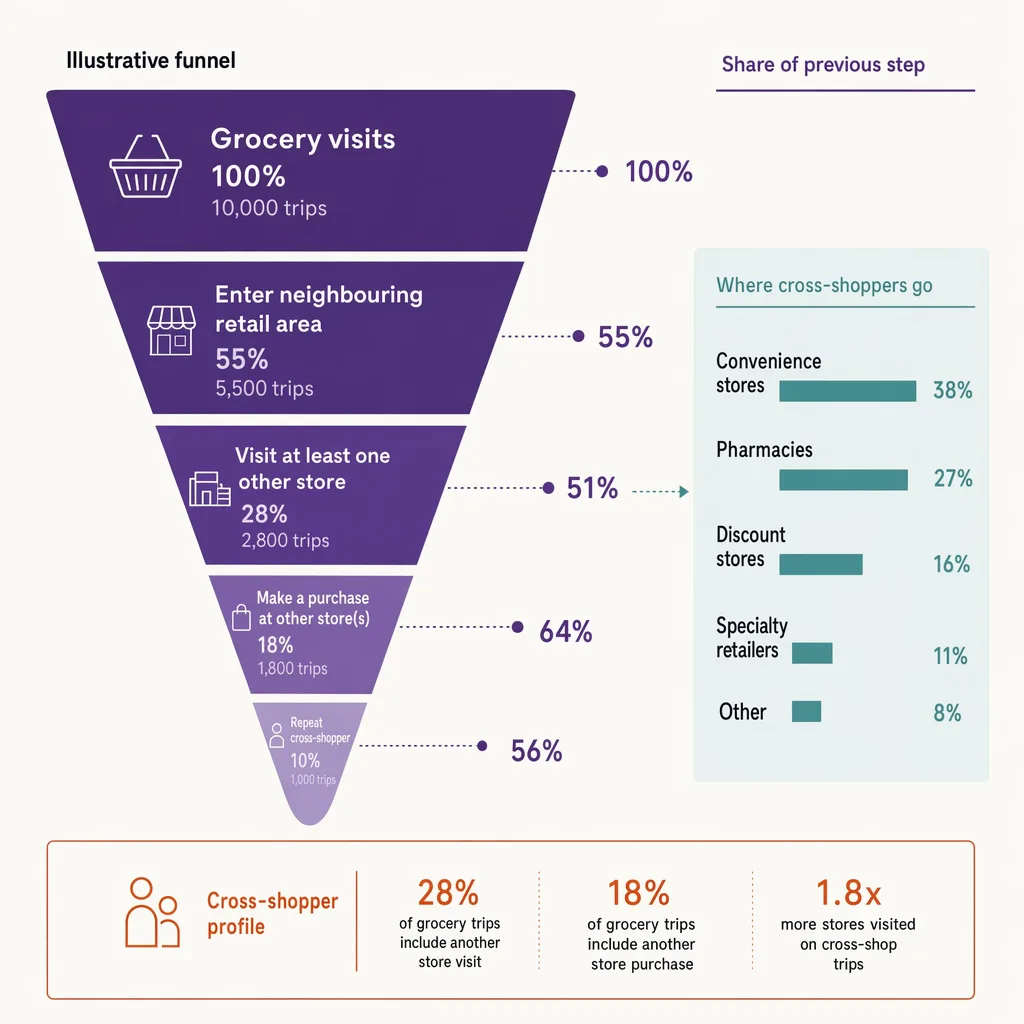
Die Mieter, die neben einem Supermarkt gut abschneiden, sind jene, die dieselbe Besorgung mitnehmen. Wer bereits für den wöchentlichen Lebensmitteleinkauf parkt, nimmt die angrenzenden Stopps mit, wenn sie bequem sind: eine Apotheke, eine Bankfiliale oder einen Geldautomaten, eine Reinigung, ein Nagelstudio, einen schnellen Kaffee, einen Imbiss für den Abend. Das sind Convenience- und Servicemieter, kein Zielhandel. Sie versuchen nicht, ihre eigene Kundschaft anzuziehen; sie wandeln im Vorbeigehen einen Teil der Kundschaft des Lebensmittelhändlers um.
Diese Abhängigkeit ist die gesamte Ökonomie des Inline-Mieters in einem Lebensmittelzentrum, und deshalb ist Co-Tenancy hier ebenso wichtig wie in einem Einkaufszentrum. Fällt die Frequenz des Lebensmittelhändlers, spüren es die Convenience-Mieter sofort, weil sie von Anfang an keine eigene Sogwirkung erzeugt haben. Ein Vermieter, der den Inline-Mietvertragsbestand kalkuliert, kalkuliert in Wahrheit die anhaltende Sogwirkung des Lebensmittelhändlers, was die einzige Zahl ist, die am genauesten zu beobachten ist.
Es gibt einen zweiten Grund, warum der Mix eng und Convenience-getrieben bleibt, statt in den Zielhandel auszuufern. Fläche rund um einen Lebensmittelhändler wird gegen eine Besucherfrequenz bepreist, die der Mieter nicht selbst schaffen muss, sodass die Einheiten gerade deshalb einen Mietaufschlag pro Quadratmeter verlangen, weil die Frequenz bereits da ist. Ein Mieter, der sein eigenes Publikum aufbauen muss, gewinnt wenig aus dieser Nachbarschaft und würde lieber anderswo weniger zahlen. Ein Mieter, der vorbeiziehende Besorgungsfrequenz umwandelt, zahlt für die Position auf. Mit der Zeit wählt dies den Mietvertragsbestand von selbst in Richtung der Convenience- und Servicekategorien, die zum Format passen, was mit ein Grund ist, warum Lebensmittelzentren über Märkte hinweg tendenziell ähnlich aussehen, selbst wenn sich die Marken der Lebensmittelhändler unterscheiden.
Wo das Lebensmittelzentrum unter den Zentrumsformaten steht
Lebensmittelzentren sind meist eine Sprosse auf einer breiteren Leiter von Handelsformaten, und sie dort einzuordnen macht klar, warum sich ihre Besucherfrequenz so liest, wie sie es tut. Ein Nachbarschaftszentrum oder Nahversorgungszentrum ist klein bis mittelgroß, bedient ein lokales Einzugsgebiet und ist um routinemäßigen, bedarfsgetriebenen Einkauf herum gebaut. Das ist die natürliche Heimat des Lebensmittel-Ankers: ein Einzugsgebiet, das in der Nähe wohnt und oft zurückkommt. Ein regionales Einkaufszentrum ist deutlich größer, zieht aus einem breiteren Umkreis und ist um anlassgetriebenen Vergleichseinkauf hinter einem Kaufhaus- oder Großflächen-Anker herum gebaut.
Die Unterscheidung ist nicht akademisch, denn sie verändert, wie eine gesunde Frequenzzahl aussieht. Ein Nahversorgungszentrum mit Lebensmittel-Anker, das bescheidene Spitzentagswerte, aber eine hohe Besuchshäufigkeit erreicht, schneidet genau so ab, wie es konzipiert ist. Es gegen die reinen Besuchszahlen eines regionalen Zentrums zu lesen, würde es untertreiben, weil die beiden Formate unterschiedliche Verhaltensweisen monetarisieren: Häufigkeit im einen, Verweildauer und Warenkorbgröße im anderen. Ein Vermieter, der ein Lebensmittelzentrum gegen das falsche Format benchmarkt, zieht aus einer vollkommen gesunden Frequenz den falschen Schluss. Das Format muss zur Vergleichsgröße passen, bevor irgendeine Zahl etwas bedeutet.
Lebensmittelverankerung taucht zunehmend auch in größeren Zentren auf, nicht nur in eigenständigen Nahversorgungsimmobilien. Da Vollsortiment-Kaufhäuser regionale Einkaufszentren verlassen haben, haben einige Vermieter einen Supermarkt in einen Teil der früheren Ankerfläche eingebracht, um die Häufigkeits- und Bedarfsfrequenz wieder einzuführen, die ein Wahlkonsum-Anker nicht mehr liefert. Das ist ein Strang der breiteren Umbaugeschichte, die sich seit 2020 durch den Einzelhandel zieht, und es bedeutet, dass das lebensmittelverankerte Frequenzmuster nun in Immobilien auftaucht, die vor einem Jahrzehnt nie einen Lebensmittelhändler beherbergt hätten.
Was Frequenzdaten einem Vermieter eines Lebensmittelzentrums belegen
Weil ein Lebensmittelzentrum von Häufigkeit und Stabilität lebt, sind die Kennzahlen, die seine Gesundheit belegen, Häufigkeits- und Stabilitätskennzahlen, nicht die Spitzentagswerte, denen ein Freizeitzentrum nachjagt. Ein Vermieter, der die Frequenz des Zentrums messen kann, kann die Fragen beantworten, die den Vermögenswert tatsächlich bepreisen:
- Besuchshäufigkeit. Wie oft kommt das Einzugsgebiet zurück? Steigende Häufigkeit ist das klarste Zeichen dafür, dass sich der Anker als Standard-Lebensmittelhändler des Haushalts festsetzt. Fallende Häufigkeit ist ein Frühwarnsignal, dass ein Wettbewerber Wege abzieht, lange bevor es sich im Umsatz des Lebensmittelhändlers zeigt.
- Wiederkehrend versus einmalig. Ein Zentrum, das von einer loyalen Wiederkehrer-Basis lebt, ist verteidigungsfähiger als eines, das von einmaligen Besuchen getragen wird. Die Aufteilung sagt dem Vermieter, wie treu die Frequenz wirklich ist.
- Spitzenzeiten im Lebensmittelbereich. Die Lebensmittelfrequenz ballt sich, an Werktagen am frühen Abend, an Wochenenden am Vormittag, und wer das Muster kennt, kann als Vermieter den Service in den Gemeinschaftsflächen planen und die Convenience-Einheiten nach der Frequenz bepreisen, die sie tatsächlich sehen werden.
- Überlauf zu den Inline-Mietern. Die Zahl, die den Inline-Mietvertragsbestand kalkuliert: Wie viel der Kundschaft des Lebensmittelhändlers erreicht tatsächlich die Apotheke und den Kaffeestopp. Ist der Überlauf dünn, sind die Inline-Mieten riskanter, als es die Verträge vermuten lassen.
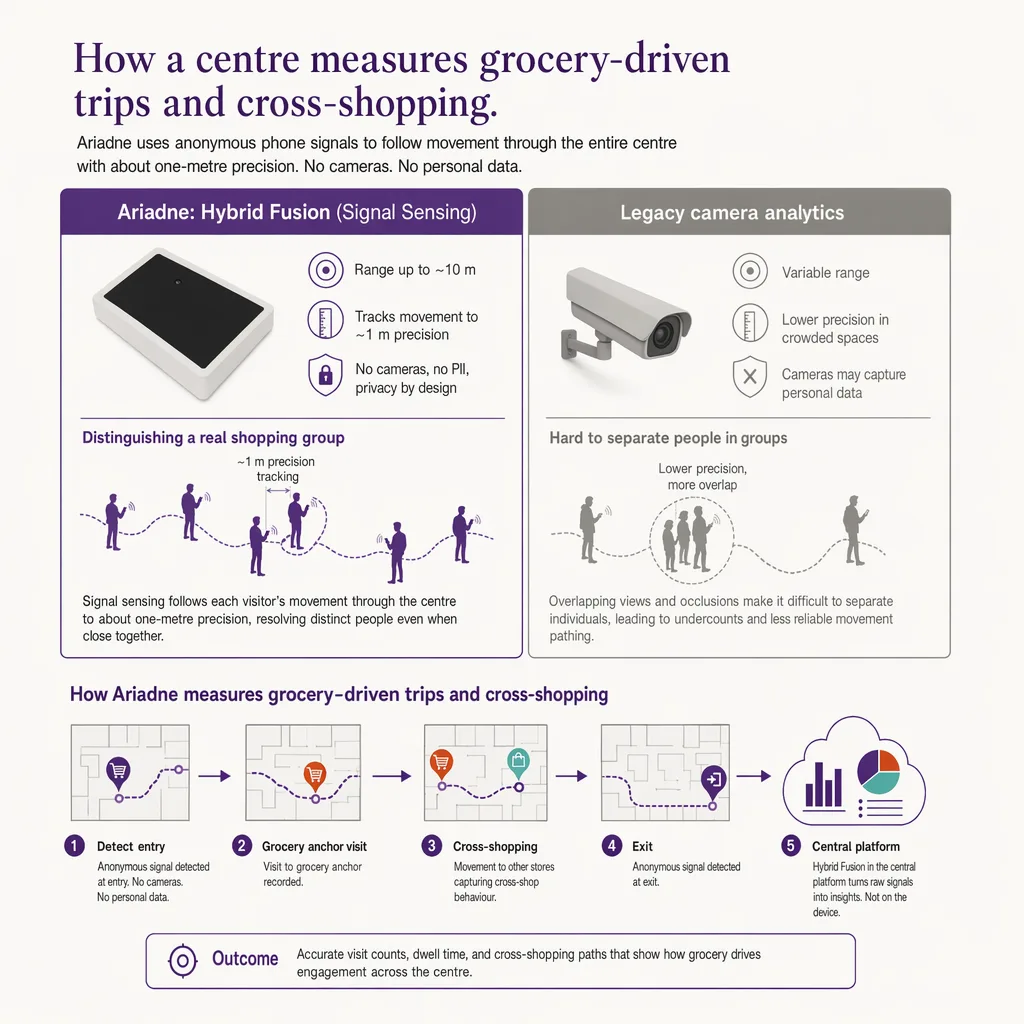
Keine dieser Zahlen ist allein aus den Umsatzzahlen des Lebensmittelhändlers ersichtlich, die der Vermieter meist nicht einmal vollständig erhält. Sie stammen aus der Messung der eigenen Frequenz des Zentrums. Das ist die ehrliche Verbindung zu dem, was Ariadne tut: die Eintritte am Zentrum zu messen und, wo ein Vermieter Details auf Mieterebene möchte, an einzelnen Einheiten, sodass Häufigkeit, Wiederkehrrate und Überlauf direkt gelesen statt abgeleitet werden. Die Arbeit rund um die Analytics für Einkaufszentren dreht sich genau um diese Fragen, und die zugrunde liegende Messung ist unter Personenzählung abgedeckt.
Es geht nicht darum, einem Lebensmittelgeschäft ein Dashboard aufzuschrauben. Es geht darum, dass der Wertfall des Lebensmittelformats, defensiv, frequenzgetrieben, überlaufabhängig, eine Reihe von Frequenzaussagen ist, und Frequenzaussagen sind belegbar statt bloß angenommen. Ein Vermieter, der einem Käufer oder Kreditgeber zeigen kann, dass die Häufigkeit die letzte Schwächephase durchgehalten hat, dass die Wiederkehrer-Basis real ist und dass der Überlauf zu den Inline-Einheiten gesund ist, führt den defensiven Fall aus Belegen. Ein Vermieter, der ihn nur behaupten kann, bittet den Markt, dem Ruf des Formats auf Vertrauen zu folgen. In einer Zeit, in der die Bewertungen im Einzelhandel hart auf die Probe gestellt wurden, ist der Unterschied zwischen einer belegten und einer angenommenen Zahl beim Verkauf oder bei der Refinanzierung bares Geld wert.
FAQ
Was macht ein Einkaufszentrum lebensmittelverankert?
Sein wichtigstes Frequenz-Zugpferd ist ein Supermarkt oder Hypermarkt, kein Kaufhaus oder Großflächen-Bekleidungshändler. Der Lebensmittelhändler ist der Mieter, von dem die restliche Frequenz des Zentrums abhängt, und der Inline-Mix ist um Convenience-Stopps herum gebaut, die die Lebensmittelbesorgung mitnehmen.
Warum bevorzugen Investoren lebensmittelverankerte Zentren?
Weil Lebensmittel Bedarfshandel sind, halten sich ihre Besucherfrequenz und ihr Mieteinkommen im Abschwung besser als der Wahlkonsum-Handel. Diese relative Stabilität, gepaart mit langen Ankermietverträgen, erzeugt den planbaren Cashflow, den Core-Immobilieninvestoren wollen. Es ist die weit verbreitete Investorensicht, keine Garantie: Die Lebensmittelfrequenz biegt sich in einer Rezession weniger, sie hört nicht auf, sich zu biegen.
Wie unterscheidet sich die Lebensmittelfrequenz von der Frequenz eines Einkaufszentrums?
Die Lebensmittelfrequenz ist hochfrequent, bedarfsgetrieben und kürzer in der Verweildauer: ein kleineres Einzugsgebiet, das für einen zweckgerichteten Weg oft zurückkommt. Ein kaufhausverankertes Einkaufszentrum zieht ein breiteres Einzugsgebiet seltener für längere, anlassgetriebene Besuche an. Beide können ähnliche Jahreswerte erreichen und sich Woche für Woche völlig anders verhalten.
Hängen Inline-Mieter in einem Lebensmittelzentrum vom Anker ab?
Stark. Convenience- und Servicemieter wie Apotheken, Reinigungen und Quick-Service-Angebote wandeln einen Anteil der Kundschaft des Lebensmittelhändlers um, statt ihre eigene anzuziehen. Fällt die Frequenz des Lebensmittelhändlers, spüren es diese Mieter sofort, weshalb Co-Tenancy-Schutz und Frequenzüberwachung hier ebenso wichtig sind wie in einem Einkaufszentrum.
Welche Frequenzkennzahlen sind für ein lebensmittelverankertes Zentrum am wichtigsten?
Besuchshäufigkeit, die Aufteilung zwischen wiederkehrend und einmalig, die Spitzenzeiten im Lebensmittelbereich und der Überlauf vom Anker zu den Inline-Einheiten. Diese Häufigkeits- und Stabilitätskennzahlen belegen den defensiven Fall des Formats weit besser als die Spitzentagswerte, die ein freizeitorientiertes Zentrum verfolgt, und sie stammen aus der Messung der eigenen Frequenz des Zentrums statt aus dem Umsatz des Lebensmittelhändlers.
---


