
Suchen Sie nach einem kostenlosen Personenzähler, finden Sie echte, nützliche Werkzeuge: eine Zähl-App auf Ihrem Handy, einen handgehaltenen Handzähler, eine einfache Lichtschranke über einem Türdurchgang. Für ein Schulfest, eine einmalige Veranstaltung oder ein grobes Gefühl dafür, wie voll ein Samstag war, erledigen sie die Aufgabe und kosten nichts. Das Problem ist nicht, dass kostenlose Tools schlecht sind. Es ist, dass "kostenlos" still begrenzt, wofür die Zählung verwendet werden kann, und viele Unternehmen entdecken die Grenze erst, nachdem eine Personal- oder Mietentscheidung auf einer Zahl getroffen wurde, die sie nicht tragen konnte. Dieser Beitrag ist fair dazu, was kostenlose Zähler wirklich leisten, ehrlich dazu, wo sie scheitern, und klar dazu, ab welchem Punkt die Zählung das Geld wert ist. Die entscheidende Frage ist nicht kostenlos vs. kostenpflichtig; sie lautet, was die Zählung der Entscheidung wert ist, die sie stützt.
Sind kostenlose Personenzähler genau genug für den geschäftlichen Einsatz?
Kostenlose Personenzähler, meist eine Handy-App, ein Handzähler oder eine einfache Lichtschranke, können eine einmalige Frage beantworten wie "wie viele Personen kamen heute ungefähr durch". Sie tun sich schwer mit dem, worauf eine Geschäftsentscheidung beruht: Gruppen zu trennen, eine Zählung bei schwachem Licht zu halten, durchgehend über viele Türen zu laufen und Daten zu erzeugen, die Sie prüfen können. Ein kostenloses Tool hat keine Installation, kein SLA und keine verifizierte Genauigkeit an Ihrem Standort. Kostenpflichtige Systeme rechtfertigen ihre Kosten, wenn die Zählung Personal-, Miet- oder Sicherheitsentscheidungen steuert, wo eine falsche Zahl teuer ist. Die eigentliche Frage ist nicht kostenlos vs. kostenpflichtig, sondern was die Zählung der Entscheidung wert ist, die sie stützt, und eine Zählung, die nie eine Tabellenkalkulation verlässt, ist zur Verteidigung sehr wenig wert.
Was kostenlose Personenzähler wirklich sind
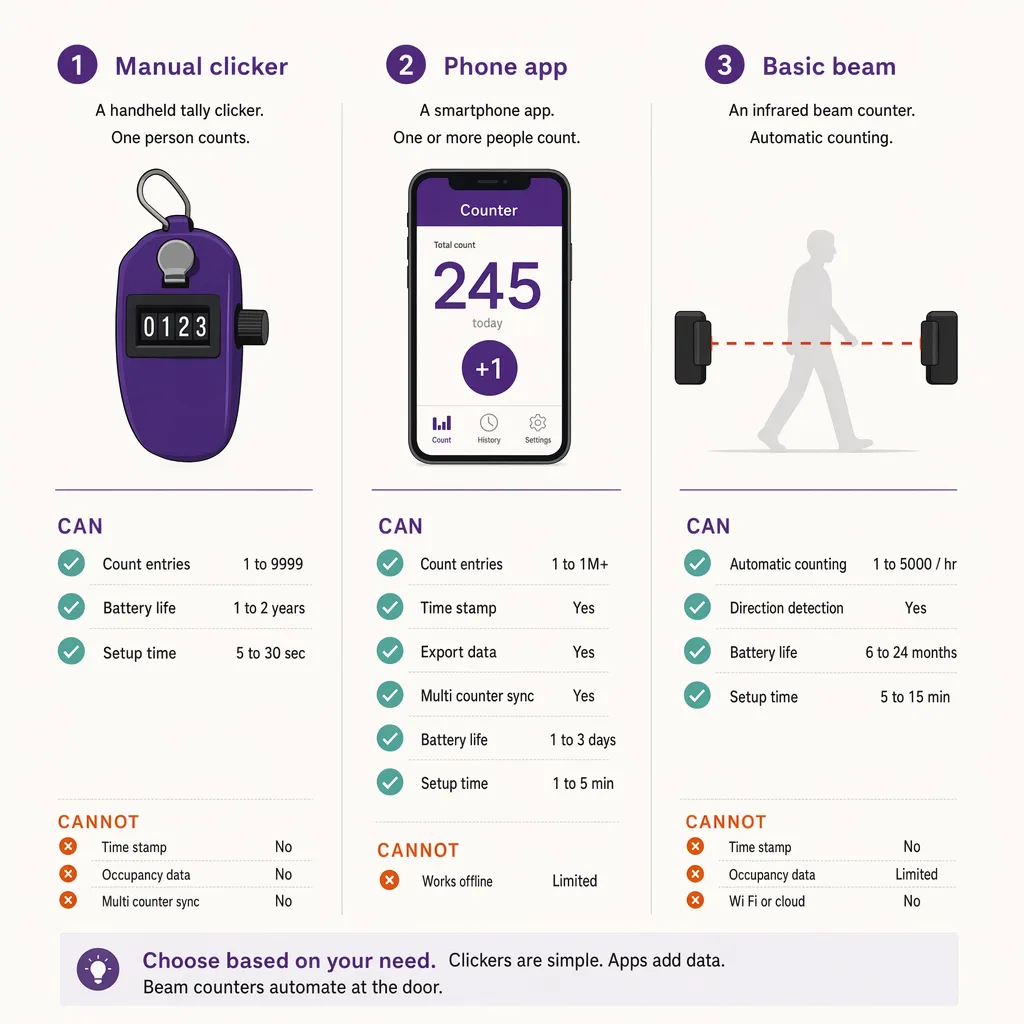
Drei Werkzeuge machen fast jeden kostenlosen Personenzähler aus, und es lohnt sich, genau zu sein, was jedes wirklich leistet, denn sie sind nicht gleichwertig.
Ein manueller Handzähler, der handgehaltene Zähler, ist das ehrlichste der drei. Eine Person steht an der Tür und drückt für jeden Eintritt einen Knopf. Innerhalb der Grenzen menschlicher Aufmerksamkeit ist er genau, und er braucht überhaupt keinen Aufbau. Seine Grenze ist offensichtlich: Er zählt, solange jemand bereit ist, dort zu stehen und konzentriert zu bleiben, an einer Tür, und er erzeugt eine einzelne Zahl statt einer Zeitreihe.
Eine Handy-Zähl-App ist dieselbe Idee in Software. Sie ersetzt den Zähler durch einen Bildschirm, fügt manchmal einen laufenden Zeitstempel hinzu und lässt Sie die Summe per E-Mail versenden. Sie erbt die Stärken des Handzählers und dessen Grenze: immer noch eine Person, eine Tür, immer noch nur so gut wie deren Aufmerksamkeit.
Eine einfache Lichtschranke ist der erste Schritt in die Automatisierung. Ein Infrarotstrahl über einem Türdurchgang erhöht eine Zählung bei jeder Unterbrechung. Sie läuft unbeaufsichtigt und rund um die Uhr, was ein echter Fortschritt gegenüber dem Handzähler ist, und für einen einzelnen schmalen Eingang mit geringem Verkehr kann sie ausreichen. Ihre Grenzen sind strukturell und keine Frage des Aufwands, und sie sind Thema des nächsten Abschnitts.
Keines davon ist ein Betrug oder eine Falle. Jedes ist eine vernünftige Antwort auf eine kleine Frage. Der Fehlermodus ist, sie für eine große zu verwenden.
Wo kostenlose Tools scheitern
Kostenlose Zähler scheitern an vorhersehbaren Stellen, und die Ausfälle sind wichtig, weil sie sich genau dort häufen, wo Geschäftsentscheidungen leben.
Gruppen sind die erste. Zwei Personen, die nebeneinander hineingehen, unterbrechen eine Lichtschranke einmal, und ein beschäftigter menschlicher Handzähler übersieht unter Last die zweite Person. Gruppen zu unterzählen ist kein Rundungsfehler; an einem Eingang eines Einkaufszentrums oder an einem Bahnhof ist es der Unterschied zwischen einer plausiblen Zahl und einer falschen.
Schwaches Licht und Umgebung sind die zweite. Eine Lichtschranke kann bei starkem Sonnenlicht, Schatten oder einer breiten Öffnung, wo Personen außerhalb ihrer Linie vorbeigehen, fehlauslösen. Ein menschlicher Zähler ermüdet und driftet nach einer Stunde. Keiner hält eine stabile Zählung über die Bedingungen, die ein realer Standort ihm zumutet.
Mehrere Türen sind die dritte. Ein einzelner Handzähler oder eine Lichtschranke zählt eine Öffnung. Ein Standort mit mehreren Eingängen braucht mehrere Geräte und eine Möglichkeit, sie zu einer Gesamtsumme abzugleichen, was genau die Koordination ist, die ein kostenloses Tool nicht bietet. Sie können ein Gebäude mit vier Eingängen nicht mit dem Handzähler zählen und der Summe vertrauen.
Kontinuierliche Daten sind die vierte. Eine Geschäftsentscheidung braucht üblicherweise eine Zählung über die Zeit, Stunde für Stunde, Tag für Tag, Woche für Woche, keine einzelne Zahl am Tagesende. Kostenlose Tools erzeugen die Zahl; sie erzeugen nicht den Trend, und im Trend liegt der Wert.
Der Prüfpfad ist der fünfte und der am meisten unterschätzte. Eine Zahl, die Sie nicht nachverfolgen, verifizieren oder reproduzieren können, ist eine Zahl, hinter die sich bei einer Mietprüfung oder einer Sicherheitsuntersuchung niemand stellt. Eine Handzähler-Summe hat keine Herkunft, und wenn die Zählung verteidigt werden muss, ist dieses Fehlen disqualifizierend. Es gibt auch kein SLA: Ein kostenloses Tool, das ausfällt, ein leeres Handy, eine falsch ausgerichtete Lichtschranke, ein Zähler, der sich krankgemeldet hat, fällt still aus, und niemand ist in der Pflicht, es zu reparieren. Für eine Samstagsschätzung ist das in Ordnung; für eine Zahl, auf der eine Entscheidung beruht, ist es ein Risiko. Um zu sehen, wie eine ernsthafte Zählung gegen die Bodenwahrheit verifiziert und nicht auf Vertrauen genommen wird, legt die Methodik des Vor-Ort-Genauigkeitstests dar, wie das gemacht wird, und Grundlagen der Personenzählung behandelt die Grundlagen, die ein kostenloses Tool überspringt.
Kostenlos vs. kostenpflichtig im Überblick
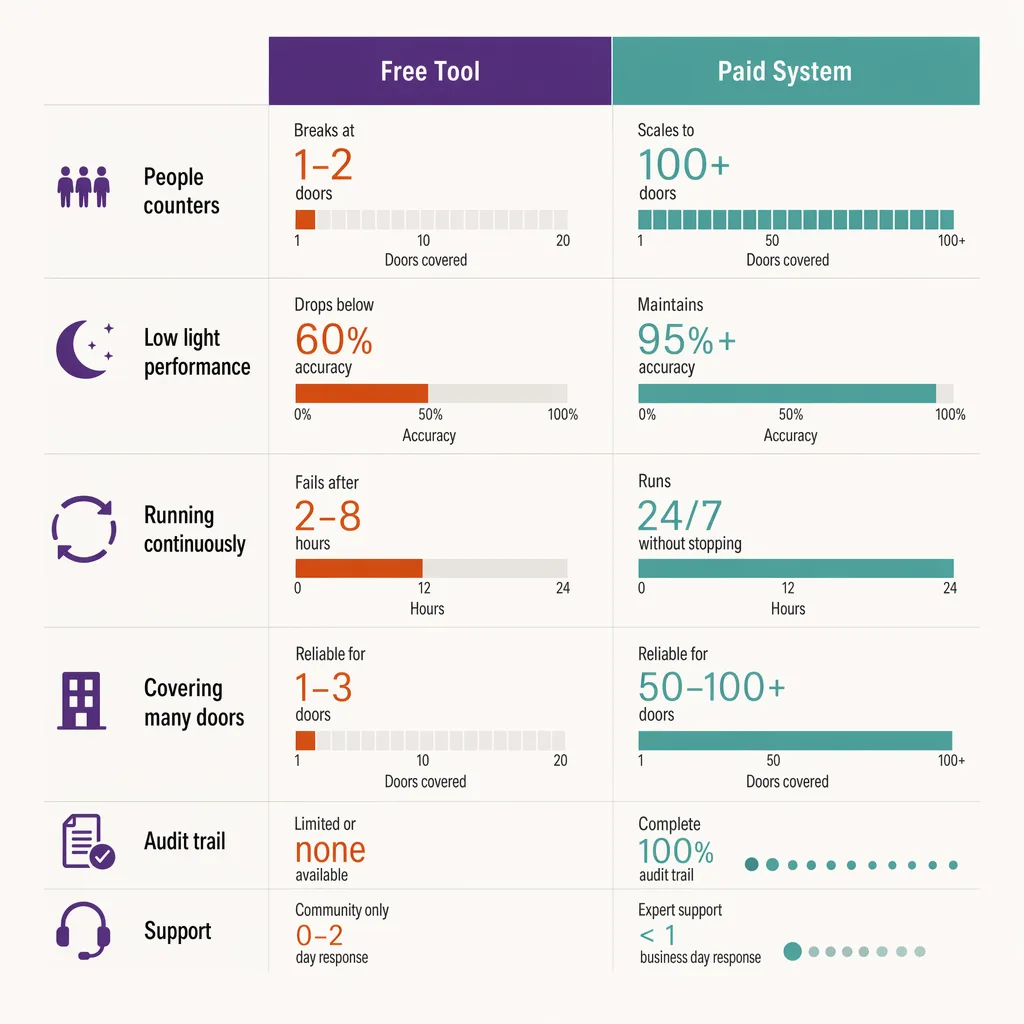
Die Tabelle stellt die beiden nebeneinander bei den Fähigkeiten, die entscheiden, ob eine Zählung eine Geschäftsentscheidung tragen kann. Es ist keine Herabsetzung kostenloser Tools; es ist eine Karte, wo ihre Grenze liegt.
| Fähigkeit | Kostenloses Tool (Handzähler, App, einfache Lichtschranke) | Kostenpflichtiges System |
|---|---|---|
| Trennt Gruppen | Schlecht; übersieht nebeneinander stehende Eintritte unter Last | Dafür ausgelegt, vor Ort verifiziert |
| Funktioniert bei schwachem Licht und breiten Öffnungen | Unzuverlässig; driftet oder fehlauslöst | Bewältigt wechselndes Licht und Türgeometrie |
| Läuft durchgehend, unbeaufsichtigt | Nur die Lichtschranke, und nur an einer schmalen Tür | Ja, rund um die Uhr über den gesamten Bestand |
| Deckt viele Türen als eine Summe ab | Nein; jedes Gerät steht für sich | Ja, zu einer Zahl abgeglichen |
| Verifizierte Genauigkeit an Ihrem Standort | Keine | Gegen eine Bodenwahrheit-Zählung prüfbar |
| Prüfpfad, den Sie verteidigen können | Keiner | Nachverfolgbare, reproduzierbare Aufzeichnungen |
| Support und SLA | Keiner | Vertraglich zugesicherte Reaktion und Überwachung |
| Was es über Besucher aufzeichnet | Nur eine Zählung, aber ohne definierte Methode | Definierte Methode, ausgewiesene Datenschutzhaltung |
Wann sich die Zählung lohnt zu bezahlen
Ein kostenpflichtiges System rechtfertigt seine Kosten in dem Moment, in dem die Zählung eine Entscheidung steuert, bei der eine falsche Zahl teuer ist. Vier Fälle kehren wieder.
Personaleinsatz ist der klarste. Die Schichtplanung nach einem Besucherstrom-Muster funktioniert nur, wenn das Muster real ist; die Schätzung eines Handzählers zum stündlichen Verkehr plant die falschen Leute zu den falschen Stunden ein, und die Personalkosten dessen übertreffen jedes Abonnement bei weitem. Vermietung und Mietprüfungen sind der zweite: Ein Vermieter oder Mieter, der die Miete über den Besucherstrom verhandelt, braucht eine Zahl mit Herkunft, weil die Gegenseite sie prüfen wird, und eine Handzähler-Summe übersteht diese Prüfung nicht. Belegungssicherheit ist der dritte, wo eine Unter- oder Überzählung eine Compliance- und Haftungsfrage ist, keine Nettigkeit. Konversionsrate im Handel ist der vierte: Umsatz durch eine unzuverlässige Zählung zu teilen erzeugt eine unzuverlässige Konversionsrate, die dann jede darauf aufbauende Entscheidung fehlleitet.
Was die kostenpflichtige Stufe kauft, jenseits einer größeren Zahl, sind drei Dinge, die ein kostenloses Tool strukturell nicht geben kann: Genauigkeit, die Sie an Ihren eigenen Türen verifizieren können, eine kontinuierliche Aufzeichnung, die Sie prüfen können, und eine definierte Methode mit einer ausgewiesenen Datenschutzhaltung, sodass Sie wissen, was über Besucher erfasst wird und was nicht. Die Kosten dafür sind real und es lohnt sich, sie ehrlich zu bemessen statt zu raten; was ein kostenpflichtiger Personenzähler über fünf Jahre kostet schlüsselt den Gesamtwert auf, und der ROI eines kostenpflichtigen Systems ist das Gegenstück, was die verifizierte Zählung einbringt gegen das, was sie kostet. Wenn Sie benannte Produkte auf der kostenpflichtigen Stufe abwägen, stellt kostenpflichtige Systeme im Vergleich sie nebeneinander.
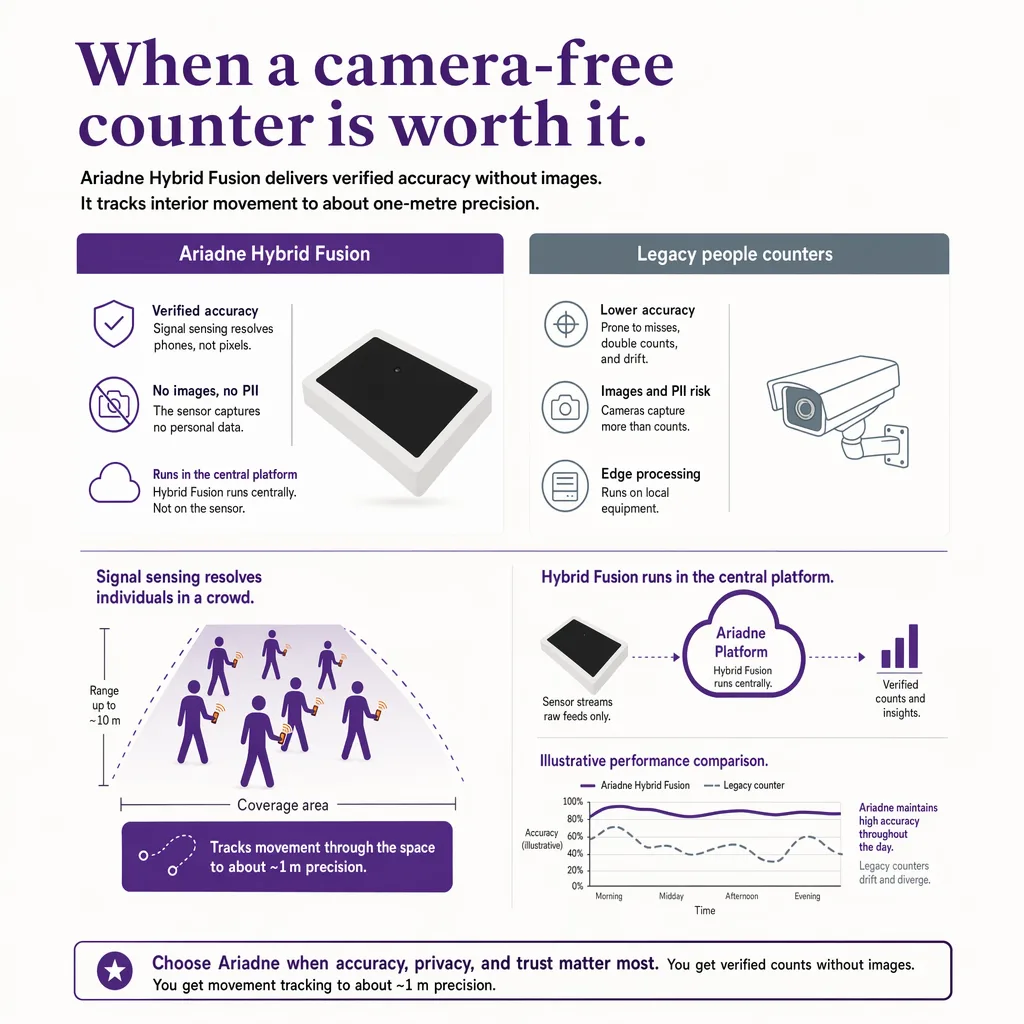
Ariadne liegt auf der kostenpflichtigen Stufe als eine kamerafreie Option, und es lohnt sich, konkret zu sein, was "was es über Besucher aufzeichnet" für eine Methode bedeutet, statt es abstrakt zu lassen.
Ariadne misst dies mit Hybrid Fusion, der patentierten kamerafreien Methode. Time-of-Flight-Tiefensensorik zählt an den Eingängen jeden Besucher und erfasst Geometrie statt Bilder, während die patentierte Signalerfassung die Bewegung im Innenraum verfolgt und die Signale erkennt, die ein Telefon aussendet, selbst im Flugmodus, und diese Bewegung auf etwa einen Meter genau auflöst. Der Sensor streamt beide Datenströme an Ariadne, wo Hybrid Fusion sie zu einer Trajektorie pro Besuch zusammenführt und Zählwerte, Verweildauer und Wege berechnet. Die Datenströme tragen keine Identifikatoren: keine MAC-Adresse, keine Geräte-ID, keine biometrischen Daten, und es ist keine Kamera beteiligt. Identifikatoren werden nur gespeichert, wenn ein Besucher ausdrücklich zustimmt, was die Methode datenschutzfreundlich und außerhalb des biometrischen Bereichs hält.
Für ein Unternehmen, das zwischen einer kostenlosen Schätzung und einem verifizierten System wählt, ist das die praktische Unterscheidung: Ein kostenloser Handzähler gibt Ihnen eine Zahl ohne Methode dahinter, während eine kostenpflichtige Methode genau angibt, was sie misst und was sie nicht erfasst, was der Zählung erlaubt, standzuhalten, wenn eine Entscheidung auf ihr beruht. Sehen Sie sich Ariadnes Personenzählung an, um zu erfahren, was die kamerafreie Methode abdeckt.
FAQ
Sind kostenlose Personenzähler genau?
Für eine grobe, einmalige Schätzung an einer einzelnen Tür kann ein Handzähler oder eine App innerhalb der Grenzen menschlicher Aufmerksamkeit einigermaßen genau sein. Sie verlieren an Genauigkeit bei Gruppen, bei schlechtem Licht und über lange Zeiträume, und eine einfache Lichtschranke unterzählt nebeneinander stehende Eintritte. Keiner bietet Genauigkeit, die Sie an Ihrem eigenen Standort gegen eine Bodenwahrheit-Zählung verifizieren können.
Was kann ein kostenloser Personenzähler wirklich leisten?
Eine kleine, einmalige Frage beantworten: wie viele Personen kamen heute ungefähr durch eine Tür. Ein Handzähler oder eine App braucht eine anwesende Person; eine einfache Lichtschranke läuft unbeaufsichtigt an einer schmalen Öffnung. Alle erzeugen eine einzelne Zahl statt eines kontinuierlichen, vergleichbaren Trends.
Wann lohnt es sich, für einen Personenzähler zu bezahlen?
Wenn die Zählung eine Entscheidung steuert, bei der Falschliegen teuer ist: Personaleinsatz nach einem Besucherstrom-Muster, Verhandeln der Miete über den Besucherstrom, Einhalten eines Belegungssicherheitslimits oder Berechnen der Konversionsrate im Handel. In diesen Fällen übersteigt der Wert einer verteidigbaren Zahl die Kosten des Systems bei weitem.
Brauche ich Kameras, um Personen genau zu zählen?
Nein. Ariadne zählt mit Hybrid Fusion: Time-of-Flight-Tiefenerfassung plus patentierte Handysignal-Erfassung, niemals Kameras. Time-of-Flight erfasst Geometrie statt Bilder, und die Signal-Erfassung erfasst standardmäßig keine MAC-Adresse, sodass die Messung kein Video, keine Gesichter und keine biometrischen Daten umfasst.
Was ist der eigentliche Unterschied zwischen kostenlos und kostenpflichtig?
Nicht die Zählung selbst, sondern was hinter ihr steht: Ein kostenpflichtiges System fügt verifizierte Genauigkeit an Ihrem Standort, eine kontinuierliche prüfbare Aufzeichnung, Support mit einem SLA und eine definierte Methode mit einer ausgewiesenen Datenschutzhaltung hinzu. Ein kostenloses Tool gibt eine Zahl ohne all das, was begrenzt, wofür die Zahl sicher verwendet werden kann.


