
Zwei Arten, einen Personenzähler zu montieren
Die meisten Personenzähler landen an einem von zwei Orten: entweder an der Decke über dem Eingang verschraubt oder direkt im Türrahmen fixiert. Von außen sieht das Bild ähnlich aus. Die Installationskosten, die Genauigkeit, die Sie zurückbekommen, und was an einem belebten Samstag passiert, sehen überhaupt nicht ähnlich aus. Dies ist ein Beschaffungstext für alle, die über die Hardware entscheiden: eine Leitung für Einzelhandelsbetrieb, eine Facility-Verantwortliche, eine Stadt-Analystin oder jeden, der die Installationsrechnung für einen Rollout zur Personenzählung über mehrere Standorte hinweg abzeichnet.
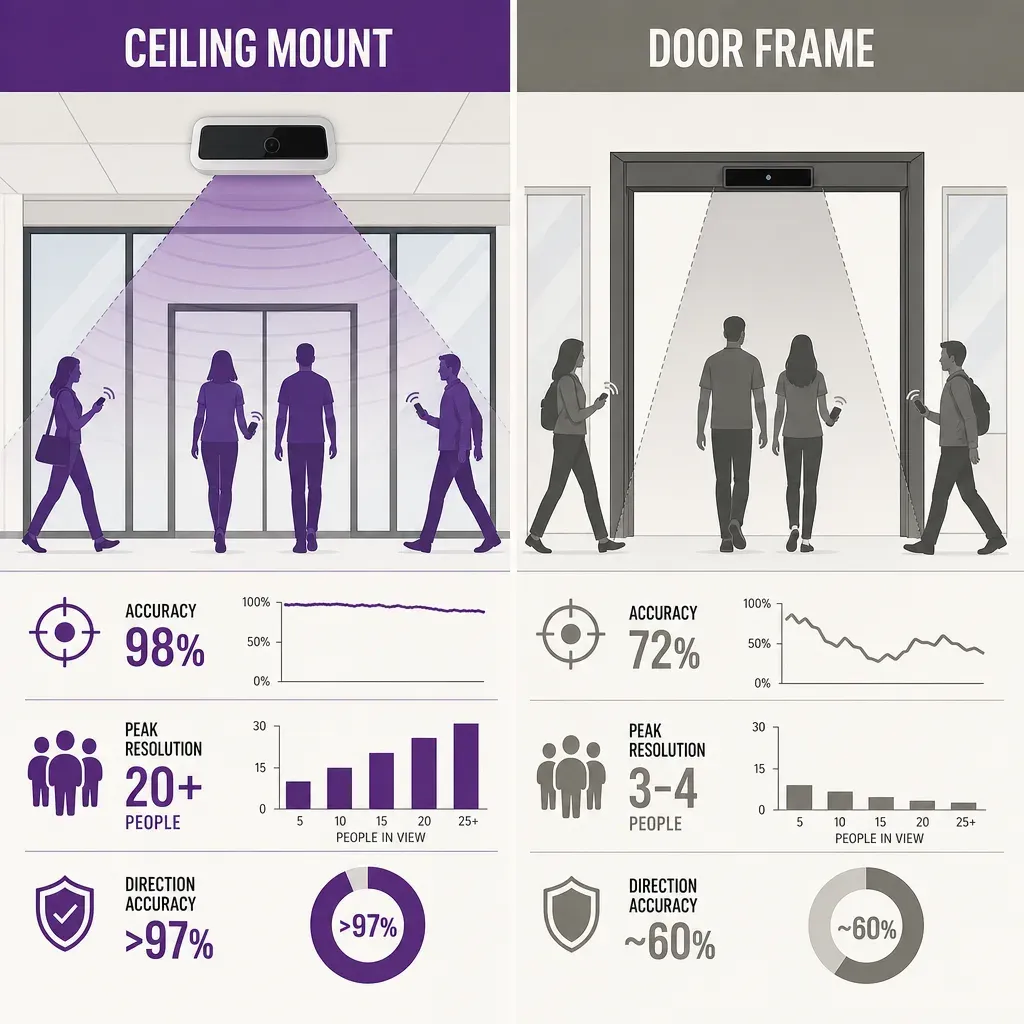
Die Kurzfassung: Ein deckenmontierter Zähler blickt von oben auf den Eingang und liest Geometrie. Ein Türrahmenzähler sitzt auf Augenhöhe an der Zarge des Eingangs und liest waagerecht über die Schwelle. Beide können im richtigen Raum gut zählen. Keiner ist universell besser. Die richtige Wahl hängt vom vorhandenen Eingang, von der möglichen Verkabelung und davon ab, wie viel eine verpasste Zählung kostet.
Sichtlinien-Geometrie: was jede Montageart tatsächlich sieht
Deckenmontage: ein Blick von oben auf die Schwelle
Ein deckenmontierter Sensor sitzt auf der Untersicht, drei bis vier Meter über dem Boden des Eingangs, und blickt senkrecht nach unten. Mit einem Time-of-Flight-Tiefensensor liest er eine Höhenkarte von allem, was darunter durchgeht. Ein erwachsener Fußgänger ist ein hoher Fleck, der sich in Gehgeschwindigkeit bewegt. Ein Kind ist ein niedrigerer Fleck in einem anderen Tempo. Ein Einkaufswagen mit einem Kind darin liest sich als zwei verschiedene Höhen, gestapelt auf demselben Grundriss. Zwei Erwachsene, die Schulter an Schulter gehen, belegen unter dem Sensor zwei benachbarte Grundrisse, die der Sensor als zwei Personen erkennt, nicht als eine.
Die Geometrie von oben ist die Eigenschaft, die die Deckenmontage zur Standardwahl für Eingänge mit hohem Durchsatz macht. Da der Sensor Höhe liest und nicht Silhouette, verwechselt er Elternteil und Kind nicht zu einer Person und verliert keinen zweiten Besucher, der dicht hinter einem ersten geht. Die Tiefenkarte trennt sie in drei Dimensionen.
Türrahmen: ein horizontaler Strahl an der Schwelle
Ein Türrahmenzähler sitzt seitlich am Eingang, ungefähr auf Brust- oder Schulterhöhe. Die meisten Türrahmenzähler arbeiten mit einem horizontalen Sensorstrahl, oft einem Stereopaar oder einer Lichtschranke, der auslöst, sobald etwas die Schwelle von einer Seite zur anderen kreuzt. Manche nutzen eine kleine, aus einer Kamera abgeleitete Silhouette von der Seite, andere eine einfache Infrarot-Lichtschranke, die nur eine Durchquerung registriert.
Die horizontale Sensorik funktioniert an einem schmalen Einzelflügel-Eingang gut, an dem Menschen einzeln, in einer Reihe und mit klaren Lücken eintreten. Die Geometrie wird unfreundlich, sobald dieses Muster bricht: zwei Erwachsene nebeneinander durch eine breite Öffnung, ein Paar Hand in Hand, eine Gruppe als Pulk, jemand mit Kinderwagen, ein Rollstuhlfahrer mit einer Begleitperson knapp dahinter. Von der Seite sind das schwer zu trennende Fälle. Von oben nicht.
Verdeckung und Gruppenerfassung
Verdeckung ist der technische Begriff dafür, dass eine Person eine andere für den Sensor verdeckt. Sie ist die größte Einzelquelle für Zählfehler in der Personenzählung, und genau hier macht die Wahl der Montage den größten Unterschied.
- Deckenmontage handhabt Verdeckung gut. Von oben belegen zwei Personen, die nebeneinander gehen, in der Tiefenkarte zwei deutlich verschiedene Grundrisse. Ein kleines Kind neben einem Elternteil erscheint als eigene, niedrigere Form, nicht als Kleidungsstück am Erwachsenen. Eine Gruppe von vier, die zusammen eintritt, löst sich in vier einzelne Höhenflecken auf, weil jede Person ihren eigenen Grundriss in das Sichtfeld trägt.
- Der Türrahmen ist verdeckungsempfindlicher. Ein horizontaler Strahl oder ein Stereopaar sieht die Personen, die ihm am nächsten sind. Die zweite Person knapp hinter der ersten ist teilweise vom ersten Körper verdeckt, und ein Seitenstrahl kann ein Paar, das eng zusammen geht, als eine einzelne Durchquerung lesen. Gruppeneintritte sind der härteste Fall: Eine vierköpfige Familie, die zusammen durchgeht, kann je nach Geometrie und Timing als eins, zwei oder drei registriert werden.
An einem ruhigen Eingang, an dem die Menschen anstehen und einzeln eintreten, fällt der Unterschied nicht auf. An einem belebten Einzelhandels- oder Verkehrsknotenpunkt, an dem Gruppen, Kinderwagen, Einkaufswagen und Nebeneinandergehen die Regel sind, zeigt sich der Unterschied jede Minute jeder Stoßzeit.
Abdeckung mehrerer Eingänge
Reale Eingänge haben oft mehr als eine Türfläche. Eine zweiflügelige Schaufensterfront, ein dreiflügeliger Einkaufszentrumseingang, eine breite Hotellobby mit zwei Seitentüren neben einer Haupttür. Wie viele Geräte ein Eingang braucht, hängt von der Montageart und von der Breite ab, die jeder Sensor erfassen kann.
Deckenmontage über einem breiten Eingang
Ein deckenmontierter Time-of-Flight-Sensor bei drei bis vier Metern Höhe deckt typischerweise eine Zählzone von etwa zweieinhalb bis vier Metern Breite ab, abhängig vom Sichtfeld des einzelnen Sensors und von der Montagehöhe. Ein breiter Dreiflügel-Eingang braucht häufig mehr als ein Gerät, so angeordnet, dass die Sichtfelder ohne Lücken aneinander anschließen. Die Kosten skalieren mit der Anzahl der Geräte, die Zählzone bleibt jedoch durchgehend: Wer die Linie überquert, wird einmal gezählt, unabhängig davon, durch welchen Flügel er kam.
Türrahmen an mehreren Flügeln
Türrahmenzähler skalieren pro Flügel. Ein Zweiflügel-Eingang braucht zwei Geräte, ein Dreiflügel-Eingang drei. Das ist manchmal einfacher zu spezifizieren, erzeugt aber einen anderen Fehlertyp: Die Grenze zwischen zwei Flügeln wird unklar. Eine Besucherin, die diagonal über den Eingang läuft, links eintritt und rechts austritt, kann als zwei Ereignisse auf getrennten Zählern oder als ein Ereignis von keinem registriert werden. Zählungen müssen nachgelagert entdoppelt werden, was das Genauigkeitsproblem in die Analytik-Schicht verschiebt.
Verkabelungskosten gegen Kosten verpasster Zählungen
Auf der Installationsrechnung wirken Türrahmenzähler oft günstiger. Ein Gerät auf Brusthöhe braucht eine kurze Kabelführung zu einer nahen Steckdose, und ein Ausbau-Team kann es üblicherweise ohne Gerüst oder Hebebühne montieren. Eine Deckenmontage über einer drei Meter hohen Untersicht braucht eine Höhenarbeitsfreigabe, einen längeren Kabelzug durch die Decke und häufig einen Power-over-Ethernet-Abgang aus einem Kommunikationsschrank statt einer Wandsteckdose.
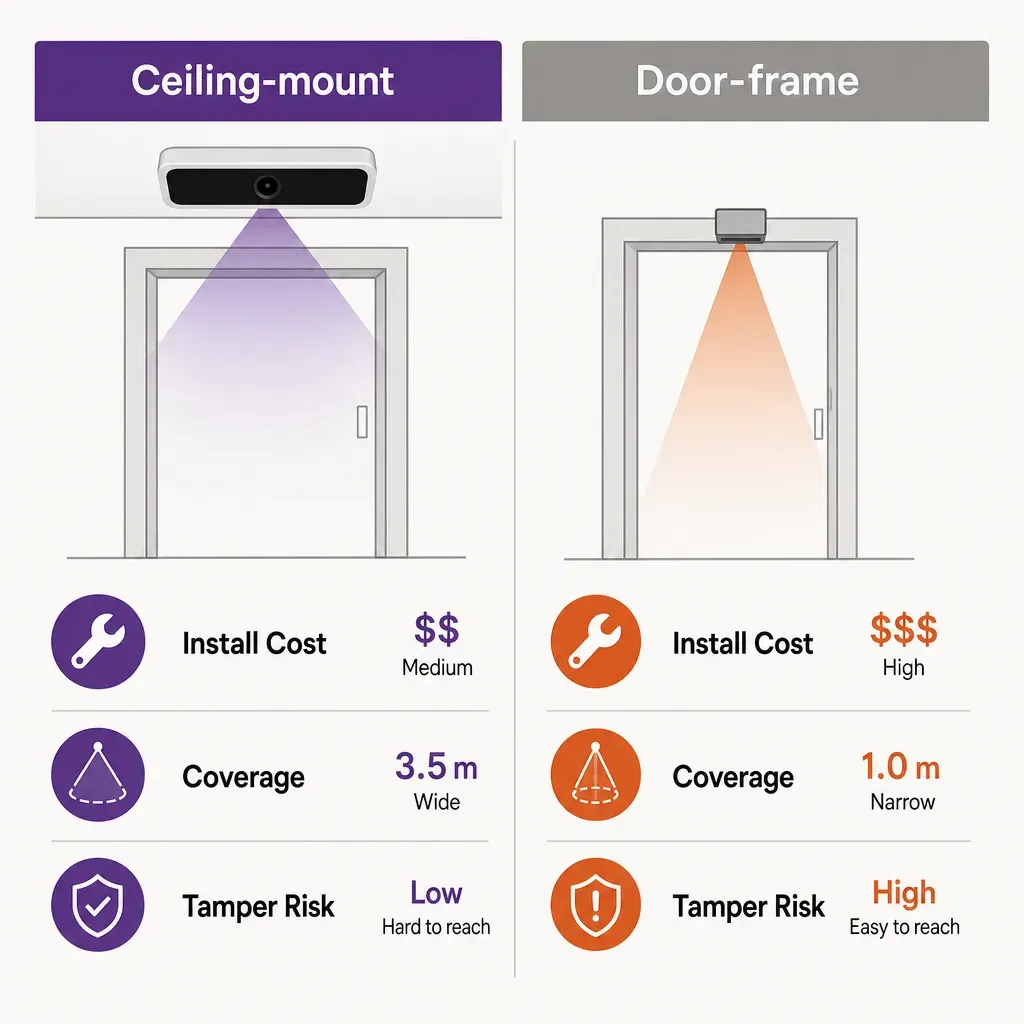
Ehrlich gesagt liegt die anfängliche Installationsrechnung für einen deckenmontierten Zähler an den meisten Eingängen spürbar höher als für einen Türrahmenzähler. Wie groß der Abstand ist, hängt vom Gebäude ab: Eine Schaufensterfront mit einem freiliegenden Versorgungskanal über der Tür ist günstig zu verkabeln; ein denkmalgeschütztes Gebäude oder eine geschlossene Decke ohne nahegelegene Datenleitung nicht. Pauschalzahlen sollten skeptisch behandelt werden. Holen Sie eine Aufnahme für Ihr eigenes Gebäude ein.
Die Kosten, die die Installationsrechnung nicht ausweist, sind die Kosten verpasster Zählungen. Angenommen, ein belebter Wochenendeingang bewegt 8.000 Besucher am Tag und ein Türrahmenzähler verpasst durch Verdeckung 4 Prozent davon (eine plausible Spanne, keine Garantie und vollständig abhängig vom Eingang). Das sind 320 verpasste Besuche am Tag. Über ein Jahr, an einem einzigen Eingang, sind das sechsstellige Zählfehler. Wenn diese Zählung in Conversion Rates, Personalmodelle, Mietverhandlungen oder Kapazitätsberichte einfließt, verschwindet die Installationsersparnis gegen die Kosten, das Geschäft mit den falschen Zahlen zu führen. Ein genaueres Zählsystem ist über einen Fünf-Jahres-Horizont manchmal das günstigere, selbst wenn seine Installationsrechnung am Tag eins höher ist.
Die ehrliche Einordnung ist ein Tausch, kein Urteil: Türrahmen ist günstiger einzubauen, Deckenmontage ist genauer, wo Menschen in Gruppen eintreten. An einem ruhigen Eingang gewinnt die günstigere Installation auf den Gesamtkosten. An einem belebten oder gruppenlastigen Eingang gewinnt meist der genaue Zähler.
Überlegungen zur Nachrüstung
Die meisten Zählerinstallationen sind Nachrüstungen in einem bestehenden Gebäude, oft ein Ladenausbau, der über Nacht ablaufen muss. Die Nachrüstung läuft für jede Montageart anders.
- Nachrüstung Deckenmontage. Braucht Zugang zur Decke, eine Route für das Kabel vom Gerät zu einem Netzwerkanschluss und eine Stromquelle. In einem typischen Einzelhandelsgeschäft mit Unterhangdecke ist das meistens in einem kurzen Abendtermin machbar. In einem denkmalgeschützten Gebäude, unter einem Glasvordach oder an einer polierten Betondecke nicht, und eine andere Montage kann die einzige realistische Option sein. Klären Sie Deckenart und nächsten Kommunikationsschrank vor der Spezifikation.
- Nachrüstung Türrahmen. Schonender für das Gebäude. Das Gerät wird an der bestehenden Zarge fixiert und kann üblicherweise eine nahe Wandsteckdose mitnutzen. Die ästhetische Frage ist, ob ein Gerät auf Brusthöhe am Eingang in der Markenumgebung akzeptabel ist. In einem hochwertigen Einzelhandels- oder Gastronomieumfeld ist ein kleines Gerät auf der Untersicht außerhalb der Blickachse oft willkommener als ein sichtbares am Türrahmen.
- Netzwerk und Strom. Beide Montagearten profitieren von Power over Ethernet, weil es Strom und Daten auf ein Kabel reduziert und sauber durch Deckenhohlräume läuft. Wo PoE schwierig ist, kann ein batteriebetriebener Türrahmenzähler passen, mit dem Wartungsaufwand, den Batterien bedeuten. Diese Entscheidung steht neben einem breiteren Tausch zwischen PoE und Batterie, der ein eigenes Gespräch verdient.
- Ästhetik und Freigabe. Vermieter, denkmalrechtliche Freigaben und Markenteams reden mit, was auf eine kundennahe Fassade darf. Ein bündig in die Decke gesetztes Gerät ist oft akzeptabler als ein sichtbares am Türrahmen. Klären Sie das mit Facility- und Designteams ab, bevor Hardware bestellt wird.
Praktische Beschaffungsleitlinie
Wer Zähler für ein Portfolio von Standorten spezifiziert, trifft selten eine Montageentscheidung für alles. Es ist eine Regel pro Eingang. Ein brauchbarer Ausgangsrahmen:
- Standard: Deckenmontage für jeden Eingang mit hohem Volumen. Sieht der Eingang regelmäßig Gruppen, Kinderwagen, Familien oder Verkehr Schulter an Schulter, zahlt sich die Geometrie von oben auf der Zählgenauigkeit aus. Das deckt die meisten Einkaufszentrumseingänge, Verkehrsknoten, belebte Flagship-Stores und großen öffentlichen Gebäude ab.
- Türrahmen erwägen bei einzeleintretendem Verkehr und niedrigem Volumen. Wo Besucher einzeln und mit klaren Lücken eintreten, ist Verdeckung selten und die seitliche Lesung genau. Seiteneingänge, Personaleingänge und kleine Fachgeschäfte fallen oft in diese Kategorie.
- Decke vor Festlegung prüfen. Eine denkmalgeschützte Fassade, ein Glasvordach oder eine Betonuntersicht kann die Deckenmontage an einem konkreten Eingang ausschließen, unabhängig von der Präferenz. Statt anzunehmen, eine Vor-Ort-Aufnahme einholen.
- Pro Zone spezifizieren, nicht pro Tür. An einem breiten Eingang fragen Sie den Anbieter, wie viele Geräte die Zählzone ohne Lücken abdecken und wie das System eine Besucherin entdoppelt, die durch mehr als ein Sichtfeld läuft. Eine klare, einzige Antwort pro Eingang ist das, was Sie kaufen.
- Fragen, was in der Stoßzeit passiert. Ein Sensor, der bei 200 Besuchern pro Stunde sauber liest, kann bei 2.000 Schwierigkeiten haben. Verlangen Sie Genauigkeitsangaben gezielt für die Spitzenbedingungen des Eingangs, nicht für eine ruhige Testumgebung.
- Die Datenschutzhaltung beachten. Tiefensensorik von oben liest Geometrie statt Bilder, was das System aus personenbezogenen Daten heraushält. Seitlich montierte Geräte, die Silhouetten aus einer kleinen Kamera ableiten, brauchen einen genaueren Blick darauf, was erfasst und gespeichert wird.
Wie Ariadne montiert und zählt
Ariadne misst dies mit Hybrid Fusion, der patentierten kamerafreien Methode. Time-of-Flight-Tiefensensorik zählt an den Eingängen jeden Besucher und erfasst Geometrie statt Bilder, während die patentierte Signalerfassung die Bewegung im Innenraum verfolgt und die Signale erkennt, die ein Telefon aussendet, selbst im Flugmodus. Der Sensor streamt beide Datenströme an Ariadne, wo Hybrid Fusion sie zu einer Trajektorie pro Besuch zusammenführt und Zählwerte, Verweildauer und Wege berechnet. Die Datenströme tragen keine Identifikatoren: keine MAC-Adresse, keine Geräte-ID, keine biometrischen Daten, und es ist keine Kamera beteiligt. Identifikatoren werden nur gespeichert, wenn ein Besucher ausdrücklich zustimmt, was die Methode datenschutzfreundlich und außerhalb des biometrischen Bereichs hält.
In der Praxis kommt die Eingangszählung von einem Time-of-Flight-Tiefensensor, der an der Decke über dem Eingang sitzt und auf die Schwelle blickt. Ein Gerät deckt den typischen Einzelhandels- oder Büroeingang von einer Untersicht in drei bis vier Metern ab; breitere Eingänge werden durch zusätzliche Geräte abgedeckt, so angeordnet, dass die Sichtfelder aneinander anschließen. Dieselbe Sensorarchitektur sitzt in Installationen für Verkehr, Kultur und Stadt. Das Hardware-Programm, einschließlich der deckenmontierten Time-of-Flight-Geräte und der ergänzenden Signalerfassungs-Sensoren für den Innenraum, ist im Ariadne-Sensorportfolio zu finden, und die Messmethode ist auf der Seite So funktioniert es im Detail beschrieben.
FAQ
Sind deckenmontierte Zähler immer genauer als Türrahmenzähler?
Nicht immer, aber meist an belebten Eingängen. Der Vorteil der Deckenmontage ist die Tiefen-Geometrie von oben, die Personen trennt, die als Gruppe eintreten, und Verdeckung gut verkraftet. An einem ruhigen Eingang, an dem Besucher einzeln und mit klaren Lücken kommen, kann ein Türrahmenzähler genauso genau sein. Die Genauigkeitslücke öffnet sich an belebten Türen mit Gruppen, Kinderwagen und Verkehr Schulter an Schulter, und dort sitzen die meisten Kosten verpasster Zählungen.
Wie groß ist der typische Unterschied bei den Installationskosten?
Türrahmenzähler kosten in der Installation in der Regel weniger, weil sie auf Brusthöhe sitzen und einen kürzeren Kabelweg ohne Höhenarbeitsausstattung brauchen. Die Deckenmontage braucht typischerweise einen längeren Kabelzug, einen Power-over-Ethernet-Abgang und Zugang in drei bis vier Metern Höhe, was Arbeit hinzufügt. Konkrete Zahlen hängen stark vom Gebäude und davon ab, ob am Eingang ein Kommunikationspunkt vorhanden ist; Pauschalangaben sollten skeptisch behandelt und durch ein Angebot pro Standort ersetzt werden.
Setzt Ariadne am Eingang eine Kamera ein?
Nein. Ariadne zählt mit Hybrid Fusion: Time-of-Flight-Tiefensensorik plus patentierte Signalerfassung, nie mit Kameras. Time-of-Flight erfasst Geometrie statt Bilder, und die Signalerfassung erfasst standardmäßig keine MAC-Adresse, sodass die Messung ohne Video, ohne Gesichter und ohne biometrische Daten auskommt.
Wie viele Deckenmontagegeräte brauche ich für einen breiten Eingang mit mehreren Türen?
Genug, um die volle Breite der Zählzone ohne Lücken abzudecken. Eine einzelne Time-of-Flight-Einheit in drei bis vier Metern liest typischerweise eine Zählzone von etwa zweieinhalb bis vier Metern Breite, abhängig vom Sichtfeld des Sensors. Ein breiter Eingang mit drei Türflügeln braucht häufig mehr als ein Gerät. Klären Sie Breite der Zählzone und Montagehöhe mit dem Anbieter für Ihren konkreten Eingang, bevor Hardware bestellt wird.


