
Axis Communications ist ein Netzwerkkamera-Unternehmen, und seine Personenzählung läuft über diese Kamera. Die eigene Analytik von Axis hat Besucher über den AXIS People Counter gezählt, den die öffentliche Dokumentation nun als durch AXIS Object Analytics ersetzt positioniert, neben einem eigenen AXIS 3D People Counter, der auf Stereo-Erfassung setzt. Es gibt zudem Drittanbieter-Anwendungen zur Personenzählung, die auf der ACAP-Plattform aufsetzen und auf Axis-Kameras laufen. Das sind eigenständige Produkte, getrennt von der eigenen Analytik von Axis, und es lohnt sich, sie beim Vergleich auseinanderzuhalten: Eine ACAP-App ist die Software eines Partners, die auf Axis-Hardware läuft, kein Axis-Zählprodukt.
Auf allen diesen Wegen wird die Zählung von einer Netzwerkkamera erzeugt. Dieser Beitrag richtet sich an Käufer, die das gegen eine Methode ganz ohne Kamera abwägen. Er legt dar, was sich ändert, wenn das Objektiv aus der Zählung genommen wird, und wo Ariadne passt. Vergleiche stützen sich auf öffentliche Dokumentation; es besteht keine Kundenbeziehung und es ist keine Herabsetzung beabsichtigt.
Was ist eine Alternative zu einem Axis People Counter?
Eine Alternative zu einem kamerabasierten Axis People Counter ist ein System, das Zählwerte erfasst, ohne Bilder aufzunehmen. Ariadne nutzt Hybrid Fusion: Time-of-Flight-Tiefenerfassung an Eingängen erfasst Geometrie statt Bilder, und patentierte Signalerfassung per Mobiltelefon verfolgt die Bewegung im Inneren, zusammengeführt in der Plattform. Standardmäßig wird keine MAC-Adresse erfasst, keine Geräte-ID, keine biometrischen Daten, und es ist keine Kamera beteiligt. Die Wahl läuft oft darauf hinaus, ob Sie einen Zähler wollen, der auf Ihrem Kamerabestand läuft, oder eine kamerafreie Methode mit einem leichteren Fußabdruck bei der Datenschutzdokumentation. Prüfen Sie jedes Detail der Axis-Personenzählung anhand der aktuellen Produkt- und ACAP-Dokumentation, bevor Sie vergleichen, und überprüfen Sie die Genauigkeit an Ihrem eigenen Standort.
Um Axis gerecht zu werden: Die öffentlichen Materialien beschreiben die Zählausgabe als numerisch, erzeugt auf der Kamera. Der Kontrast, auf den man sich stützen sollte, ist also nicht die Behauptung, Axis identifiziere Menschen. Er ist einfacher und ehrlicher als das: Die eine Methode hat weiterhin eine Kamera an der Tür, die andere gar keine Kamera. Alles Folgende ergibt sich aus diesem einen Unterschied.
Zählen auf einer Netzwerkkamera vs. Zählen ohne eine
Wenn der Zählsensor eine Netzwerkkamera ist, erben Sie den Status der Kamera in Ihrer Compliance-Welt, selbst wenn die Analytik immer nur eine Zahl ausgibt. Das Gerät beobachtet Menschen optisch, und darauf reagieren Videoüberwachungsregeln, Speicherrichtlinien und Folgenabschätzungen. Ein kamerafreier Zähler vermeidet das nicht dadurch, dass er das Bild sorgfältiger verarbeitet, sondern dadurch, dass er nie eines bildet.
Hier ist, was die beiden Ansätze bedeuten, nebeneinander und in klaren Worten:
- Das Doppelleben der Kamera. Eine Netzwerkkamera, die zählt, kann in der Regel auch aufzeichnen. Diese Flexibilität ist ein echter Vorteil, wenn Sie Zählung und Überwachung aus einem Gerät wollen. Sie ist eine Belastung, wenn Sie in diesem Raum ausdrücklich keine Kamera wollen, denn die Fähigkeit allein kann genügen, um Videoüberwachungshinweise und Betriebsratsprüfungen auszulösen.
- Speicherung und Filmmaterial. Selbst wenn die Zählung das Einzige ist, was gespeichert wird, muss eine Kameraplattform eine klare Position dazu haben, ob Einzelbilder gepuffert oder aufgezeichnet werden, wie lange und wer darauf zugreifen kann. Eine Methode aus Tiefe und Signal bildet kein Bild, sodass es keine Frage zu Filmmaterial zu beantworten gibt.
- Umfang der DSFA. Eine Abschätzung für kamerabasierte Zählung muss die Bilderfassung und das Identifizierungspotenzial berücksichtigen, besonders dort, wo dieselbe Hardware zum Aufzeichnen umgewidmet werden könnte. Eine Methode, die kein Bild und keine Kennung erfasst, hält diesen Umfang enger.
- Verarbeitung auf der Kamera entfernt das Objektiv nicht. Dass Axis angibt, die Zählung laufe auf der Kamera und gebe Zahlen aus, ist ein echter Privacy-by-Design-Punkt zu seinen Gunsten, und das sollte anerkannt werden. Es ändert nichts daran, dass der Sensor eine Kamera ist, und das ist der Umstand, auf den Ihre Hinweispflichten, Speicherpflichten und Betriebsratspflichten reagieren.
Wenn Ihr Grund, eine Axis-Alternative zu suchen, darin besteht, dass Sie im gezählten Raum überhaupt keine Kamera wollen, geht es bei nichts davon darum, dass Axis etwas falsch macht. Es geht um die Erfassungskategorie. Zur zugrunde liegenden Einordnung siehe was ein Zähler über Besucher erfasst und kamerafreie Personenzählung.
Axis-Personenzählung vs. Ariadne im Überblick
Jede Axis-Zelle spiegelt die öffentliche Produkt- und ACAP-Dokumentation in der veröffentlichten Fassung wider; prüfen Sie die aktuelle Version auf der Website des Anbieters und halten Sie die eigene Analytik von Axis von Drittanbieter-ACAP-Apps getrennt. Die Spalte von Ariadne zeigt seine kanonische Ausrichtung. Die Genauigkeit bleibt für beide eine am eigenen Standort zu prüfende Zelle.
| Axis | Axis-Personenzählung | Ariadne |
|---|---|---|
| Erfassungsmethode | Netzwerkkamera-Analytik: AXIS People Counter (wird durch AXIS Object Analytics ersetzt) und AXIS 3D People Counter (Stereo); Drittanbieter-ACAP-Zähl-Apps laufen ebenfalls auf Axis-Kameras | Kamerafreie Hybrid Fusion: Time-of-Flight-Tiefe an Eingängen plus patentierte Signalerfassung per Mobiltelefon im Inneren, in der Plattform zusammengeführt |
| Kamera / Bilder beteiligt | Ja, eine Netzwerkkamera ist der Sensor | Keine Kamera; die Tiefenerfassung erfasst Geometrie, keine Bilder |
| Was erfasst wird | Axis gibt eine numerische Zählausgabe auf der Kamera an; prüfen Sie das aktuelle Verhalten und jede ACAP-App separat anhand der öffentlichen Dokumentation | Standardmäßig keine MAC-Adresse, keine Geräte-ID, keine biometrischen Daten, kein Bild |
| Dokumentationsaufwand | Kamerabasiert: die optische Natur des Geräts bringt typischerweise Videoüberwachungshinweise, Speicherung und breiteren DSFA-Umfang mit sich, selbst wenn die Ausgabe numerisch ist | Kein Bild erfasst, daher kein Videomaterial anzukündigen oder zu speichern; engerer DSFA-Umfang |
| Am Standort geprüfte Genauigkeit | An Ihrem eigenen Standort prüfen | An Ihrem eigenen Standort prüfen |
Die Tabelle ist eine Checkliste, kein Urteil. Die Zeile, die die beiden Methoden grundsätzlich trennt, ist die Kamera-Zeile. Wenn Sie bereits Axis-Kameras betreiben und die Zählung von ihnen wollen, ist diese gemeinsame Hardware ein Punkt für Axis; wenn Sie keine Kamera an der Zählung wollen, ist sie der Grund, sich eine kamerafreie Methode anzusehen.
Wie Ariadne kamerafrei zählt
Die kamerafreie Aussage bedeutet nur dann etwas, wenn die Methode tatsächlich kein Bild bildet, hier also genau, wie es funktioniert.
Ariadne misst dies mit Hybrid Fusion, der patentierten kamerafreien Methode. Time-of-Flight-Tiefensensorik zählt an den Eingängen jeden Besucher und erfasst Geometrie statt Bilder, während die patentierte Signalerfassung die Bewegung im Innenraum verfolgt und die Signale erkennt, die ein Telefon aussendet, selbst im Flugmodus, und diese Bewegung auf etwa einen Meter genau auflöst. Der Sensor streamt beide Datenströme an Ariadne, wo Hybrid Fusion sie zu einer Trajektorie pro Besuch zusammenführt und Zählwerte, Verweildauer und Wege berechnet. Die Datenströme tragen keine Identifikatoren: keine MAC-Adresse, keine Geräte-ID, keine biometrischen Daten, und es ist keine Kamera beteiligt. Identifikatoren werden nur gespeichert, wenn ein Besucher ausdrücklich zustimmt, was die Methode datenschutzfreundlich und außerhalb des biometrischen Bereichs hält.
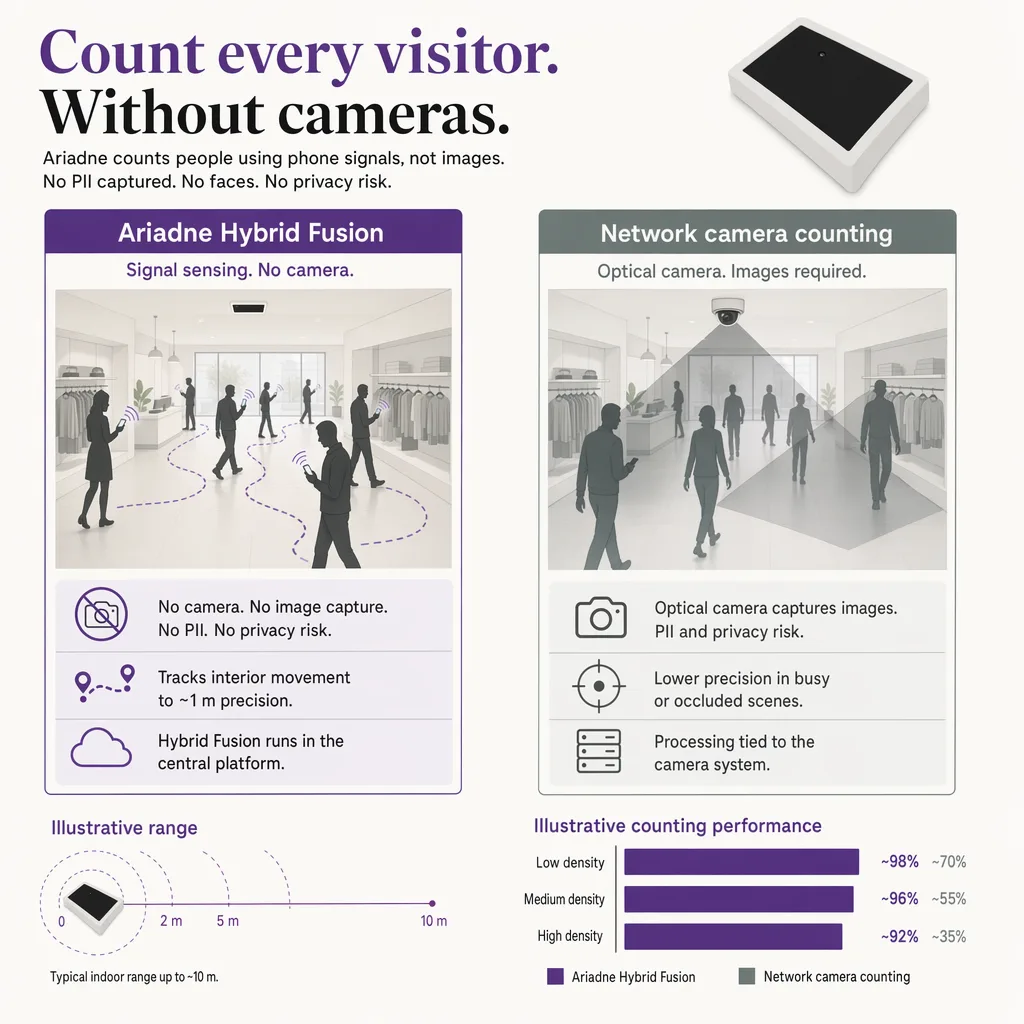
Zwei Dinge folgen daraus für einen Käufer. Am Sensor werden keine personenbezogenen Daten erfasst: Die Tiefen- und Signalströme führen standardmäßig keine MAC-Adresse, keine Geräte-ID und keine biometrischen Daten, sodass keine personenbezogenen Daten erhoben werden, die später anonymisiert werden müssten. Und weil keine biometrische Identifizierung oder Kategorisierung stattfindet, liegt die Methode außerhalb der biometrischen Kategorien, die Anhang III der EU-KI-Verordnung als hochriskant einstuft. Zur regulatorischen Einordnung siehe wo die Zählung unter der EU-KI-Verordnung steht; für die breitere Auswahl den Systemvergleich und Ariadnes kamerafreie Zählung.
Wie Sie beide fair testen
Ein kamerabasierter Zähler und ein kamerafreier sollten an derselben Tür mit demselben Maßstab beurteilt werden. Der Maßstab ist eine manuelle Referenzzählung, kein Datenblatt.
Wählen Sie einen repräsentativen Eingang, idealerweise einen belebten, mit den Gruppen und Lichtverhältnissen, die schwaches Zählen offenlegen. Betreiben Sie jeden Kandidaten über einen definierten Zeitraum und zählen Sie für eine Stichprobe von Stunden dieselbe Tür von Hand oder gegen eine überprüfte Referenz. Vergleichen Sie die Zahl des Systems mit Ihrer manuellen Zahl für diese Stunden, und Sie haben die Genauigkeit an Ihrem Verkehr gemessen. Dies für sowohl die kamerabasierte als auch die kamerafreie Option zu tun, an demselben Eingang, macht aus "welche ist genauer" statt einer Diskussion eine Messung. Um den Test richtig aufzusetzen, siehe Genauigkeit am Standort prüfen.
Die Kosten gehören in dieselbe Übung. Wenn Sie bereits Axis-Kameras besitzen, mag die Zählung auf ihnen vorab günstiger aussehen, während eine kamerafreie Methode die Positionen für Installation und Datenschutzdokumentation verändern kann. Wägen Sie das Gesamtbild ab statt den Anschaffungspreis, und falls ein kostenloses oder Test-Tool auf Ihrer Liste steht, siehe kostenlose vs. kostenpflichtige Personenzähler dazu, was jede Stufe tatsächlich liefert.
FAQ
Brauche ich Kameras, um Menschen zu zählen?
Nein. Ariadne zählt mit Hybrid Fusion: Time-of-Flight-Tiefenerfassung plus patentierte Signalerfassung per Mobiltelefon, nie mit Kameras. Time-of-Flight erfasst Geometrie statt Bilder, und die Signalerfassung erfasst standardmäßig keine MAC-Adresse, sodass die Messung ohne Video, ohne Gesichter und ohne biometrische Daten auskommt.
Identifiziert Axis Menschen, wenn es zählt?
Die öffentliche Dokumentation von Axis beschreibt seine Zählung als numerische Ausgabe, erzeugt auf der Kamera. Der ehrliche Kontrast dreht sich also nicht um Identifizierung; er ist, dass Axis mit einer Kamera zählt und Ariadne ganz ohne Kamera. Prüfen Sie das aktuelle Verhalten jedes Axis-Produkts und jeder Drittanbieter-ACAP-App anhand der öffentlichen Dokumentation.
Wenn Axis auf der Kamera zählt, warum ist die Kamera dann für die Compliance weiterhin von Bedeutung?
Weil der Sensor eine optische Kamera ist, und darauf reagieren Videoüberwachungshinweise, Speicherregeln und Betriebsratsprüfungen, ob Filmmaterial gespeichert wird oder nicht. Eine rein numerische Ausgabe, die auf der Kamera berechnet wird, ist ein echter Privacy-by-Design-Punkt, aber sie entfernt nicht das Objektiv, das diese Pflichten eröffnet.
Kann ich meine vorhandenen Axis-Kameras behalten und einfach Ariadne hinzufügen?
Ariadne ist ein eigenständiges kamerafreies System mit eigener Hardware; es läuft nicht auf Ihren Kameras. Wenn das Ziel ist, ohne eine Kamera im Raum zu zählen, ist diese Trennung genau der Punkt. Wenn Sie ausdrücklich die Zählung von den Kameras wollen, die Sie bereits besitzen, spricht das dafür, beim kamerabasierten Weg zu bleiben.
Wie vergleiche ich einen Axis People Counter fair mit Ariadne?
Vergleichen Sie anhand dessen, was jedes System erfasst, des Dokumentationsaufwands, der aus der Erfassungsmethode folgt, der Installation und Kosten angesichts etwaiger bereits vorhandener Kameras und der an Ihrem eigenen Standort geprüften Genauigkeit. Halten Sie die eigene Analytik von Axis getrennt von Drittanbieter-ACAP-Apps, stützen Sie jede Axis-Aussage auf die aktuelle öffentliche Dokumentation und halten Sie beide an dieselbe manuelle Referenzzählung an einem Eingang.


