
Eine Flughafen-Lounge verkauft vor allem eines: eine ruhigere Version des Flughafens. Das ganze Versprechen ist Raum, Ruhe und ein Sitzplatz, um den man nicht kämpfen muss. In dem Moment also, in dem eine Lounge über den Komfort hinaus überfüllt ist, liefert sie das Produkt nicht mehr, für das ihre Mitglieder und ihre Verträge bezahlt haben. Auslastungssteuerung ist die Art, wie ein Betreiber dieses Versprechen schützt: zu wissen, wie voll die Lounge ist, gemessen am Punkt, an dem es aufhört, sich ruhig anzufühlen, und diesen Punkt näherkommen zu sehen, bevor die Gäste es tun.
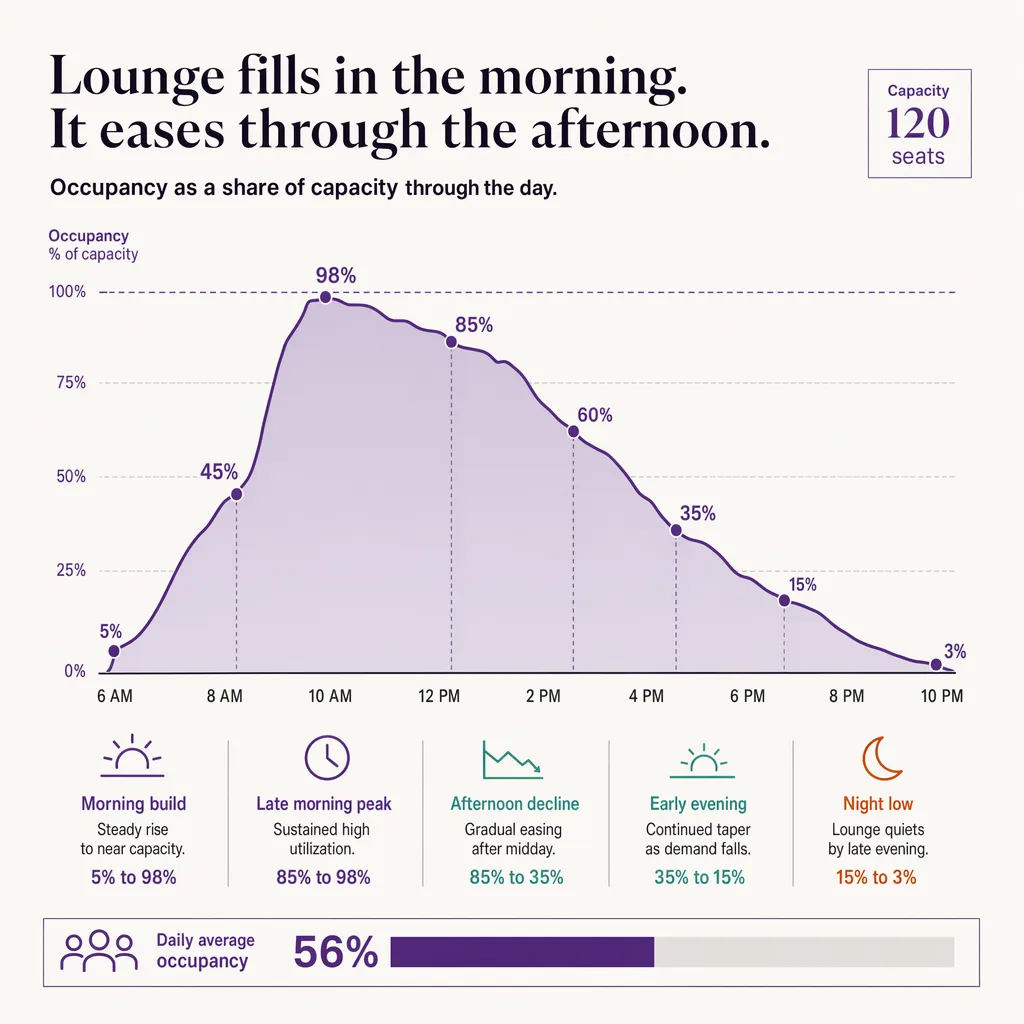
Kein aktiver Beitrag im Flughafen-Cluster behandelt die Lounge, und es ist ein anderes Problem als der terminalweite Fluss, den die Säule zum Zählen von Passagieren beschreibt. Eine Lounge ist ein begrenzter, zugangskontrollierter, komfortsensibler Raum, in dem die entscheidende Zahl nicht der Durchsatz ist, sondern wie viele Gäste gerade drinnen sind, relativ zu einer Schwelle. Dieser Beitrag behandelt genau das: warum Lounges bei Abflugwellen überfüllen und nicht nach der Uhr, was eine Komfortkapazitäts-Schwelle ist und wie sie das Erlebnis schützt, und welche Zugangs-, Personal- und Dimensionierungsentscheidungen Live-Auslastungsdaten stützen.
Wie überwachen und steuern Flughäfen die Lounge-Auslastung?
Flughäfen und Lounge-Betreiber verfolgen, wie viele Gäste in der Lounge sind, gemessen an einer Komfortkapazitäts-Schwelle, sodass sie eine aufkommende Überfüllung sehen können, bevor die Gäste sie spüren. Die Auslastung steigt und fällt mit den Abflugwellen: Ein Bündel von Abflügen füllt die Lounge, dann leert sie sich wieder. Die Live-Auslastung gegen diese Schwelle stützt mehrere Entscheidungen, vom vorübergehenden Aussetzen des Walk-in-Zugangs über das Öffnen von Überlaufplätzen bis zum Besetzen des Speise- und Getränkeservice zur Spitze. Die über die Zeit gemessene Auslastung sagt dem Betreiber auch, ob die Lounge für den Verkehr, den sie bedient, richtig dimensioniert ist und ob eine Änderung der Zugangsregeln die Überfüllung tatsächlich entschärft hat.
Warum Lounges bei Abflugwellen überfüllen, nicht nach der Uhr
Eine Lounge füllt sich nicht gleichmäßig über den Tag. Sie füllt sich in Wellen, und die Wellen werden vom Abflugplan gesetzt, nicht von der Uhrzeit an der Wand. Wenn ein Bündel berechtigter Flüge im selben Zeitfenster boarden soll, kommen ihre Passagiere gemeinsam in der Lounge an, die Auslastung schnellt Richtung Kapazität, und dann klärt sich die Welle wieder, wenn Boarding-Aufrufe alle zu den Gates ziehen. Eine Stunde später kann die Lounge halb leer sein, bis die nächste Welle sich aufbaut.
Das ist dasselbe Ankunftskurven-Problem, das Warteschlangen und Gates im ganzen Terminal prägt, gesehen in einem begrenzten Raum. Es bedeutet, dass eine Lounge, die komfortabel für ihre durchschnittliche Auslastung dimensioniert ist, in der Spitze einer Welle trotzdem stark überfüllt, weil der Durchschnitt den Ansturm verbirgt. Es bedeutet auch, dass die tägliche Auslastungskurve eine wiedererkennbare Gestalt hat, die sich wiederholt: Dieselben Wellen überfüllen die Lounge an denselben Tagen, und die schwachen Phasen fallen in dieselben Lücken. Die Auslastung über die Zeit zu messen, bringt diese Gestalt zum Vorschein, sodass ein Betreiber die überfüllten Wellen vorwegnehmen kann, statt jeden Tag von ihnen überrascht zu werden.
Die praktische Folge ist, dass Personal- und Zugangsentscheidungen der Welle folgen müssen, nicht der Uhr. Den Speise- und Getränkeservice zu planen oder den Walk-in-Zugang nach einem festen Stundenplan zu begrenzen, wird immer leicht daneben liegen, weil die Überfüllung dem darunterliegenden Flugplan folgt. Die Auslastungskurve ist das, was die Antwort auf die tatsächliche Welle ausrichtet.
Auslastung gegen Komfortkapazität: die Schwelle, die das Erlebnis schützt
Eine Lounge hat ein brandschutzrechtliches Maximum, aber diese Zahl ist nicht die, nach der der Betrieb steuern sollte. Die entscheidende Zahl ist die Komfortkapazitäts-Schwelle: die Auslastung, oberhalb derer die Lounge aufhört, sich wie eine Lounge anzufühlen. Jenseits dieses Punktes werden die Sitzplätze knapp, das Buffet staut sich, der Lärmpegel steigt, und die Ruhe, die das gesamte Produkt ausmacht, verschwindet lange bevor das gesetzliche Maximum erreicht ist.
Nach einer Komfortschwelle statt nach einer Brandschutzgrenze zu steuern, ändert die Betriebshaltung von reaktiv zu vorbeugend. Statt zu warten, bis die Lounge sichtbar überfüllt ist, beobachtet der Betreiber, wie die Live-Auslastung Richtung Schwelle steigt, und handelt, während sie näher kommt: einen zweiten Sitzbereich öffnen, den Service anpassen oder im Extremfall Walk-in-Zutritte aussetzen, damit die bereits drinnen befindlichen Gäste das versprochene Erlebnis behalten. Die Schwelle ist eine Entscheidungslinie, und die Live-Auslastung gegen sie ist das Signal, das ein vages Gefühl, dass "die Lounge voll wirkt", in einen konkreten, belegbaren Auslöser verwandelt.
Das Setzen der Schwelle ist selbst ein datengestütztes Urteil. Beobachtet man die Auslastung gegen Gästefeedback und beobachtete Überfüllung über mehrere Wochen, wird das Niveau deutlich, bei dem das Erlebnis nachlässt. Dieses Niveau ist selten das Brandschutzmaximum, und es kann je nach Zone innerhalb der Lounge unterschiedlich sein, da ein Essbereich und ein ruhiger Arbeitsbereich bei unterschiedlichen Dichten überfüllen.
Was Auslastungsdaten stützen: Zugang, Überlauf, Service und Dimensionierung
Live- und historische Auslastungsdaten speisen eine Reihe konkreter Betriebsentscheidungen, jede an die Schwelle gebunden.
- Zugangskontrolle. Wenn sich die Auslastung der Komfortschwelle nähert, kann der Betreiber den Walk-in- oder Pay-in-Zugang vorübergehend aussetzen und dabei zugesagte Gäste weiter bedienen, was das Erlebnis für Mitglieder und Vertragsfluggesellschaften schützt, ohne jemanden dauerhaft abzuweisen.
- Überlaufplätze. Ein gemessenes Näherkommen an die Schwelle ist der Auslöser, einen zweiten Bereich oder Überlaufraum zu öffnen, bevor die Hauptfläche unangenehm wird, nicht danach.
- Personal für Speisen und Getränke. Der Service sollte zur Spitze der Welle besetzt werden, nicht zum Tagesdurchschnitt. Die Auslastungskurve zeigt, wann die Spitzen fallen, sodass der Service vor einer überfüllten Welle hochgefahren und in den Lücken zurückgefahren werden kann. Das ist dieselbe Personaleinsatzplanung nach Bedarf-Logik, die das weitere Terminal nutzt, angewandt in der Lounge.
- Dimensionierungs- und Layout-Entscheidungen. Über Monate beantworten Auslastungsdaten die strategische Frage: Ist die Lounge für den Verkehr, den sie bedient, richtig dimensioniert? Anhaltende Überfüllung in den Spitzen spricht für mehr Raum oder strengere Zugangsregeln; durchgängig niedrige Auslastung spricht für das Gegenteil. Dieselben Daten bestätigen, ob eine Änderung tatsächlich gewirkt hat, denn Sie können die Überfüllung vor und nach einer Zugangsregel- oder Layout-Änderung gegen dieselbe Schwelle vergleichen.
Die Lounge ist ein Auslastungsproblem eines begrenzten Raums auf eine Weise, die sie mit dem Konzept der Verweildauer am Gate verbindet, wo sich ein definierter Raum nach dem Flugplan füllt und leert. Der Unterschied ist, dass die Lounge zugangsgesteuert und komfortsensibel ist, sodass Überfüllung das Gästeerlebnis und die Lounge-Verträge direkt trifft, was die Bedeutung erhöht, die Auslastung richtig hinzubekommen.
Lounge-Auslastung und der kommerzielle Fall
Auslastung ist nicht nur eine Erlebniskennzahl; sie ist eine kommerzielle. Viele Lounges arbeiten mit Verträgen, in denen Fluggesellschaften oder Kartenprogramme pro zugelassenem Gast zahlen, und die Lounge belegt Fläche, die ein Flughafen sonst kommerziell vermieten könnte. Beides macht Auslastungsdaten zu einer finanziellen Eingangsgröße, nicht nur zu einer operativen.
Auf der Vertragsseite zeigt die Auslastung über die Zeit, wie stark jeder Zugangskanal die Lounge tatsächlich nutzt, was die Beweisgrundlage für das Verhandeln von Konditionen je Gast und von Kapazitätszusagen ist. Auf der Flächenseite lautet die Frage, ob die Lounge ihre Fläche verdient. Eine Lounge, die in den Spitzen stark überfüllt, aber einen Großteil des Tages nahezu leer steht, nutzt viel teure Fläche bei niedriger Durchschnittsauslastung, und Auslastungsdaten sind das, was diese Spannung ehrlich zutage fördert. Das verbindet die Lounge mit der breiteren Frage der nicht-luftverkehrsbezogenen Erlöse und wie ein Flughafen das Meiste aus seiner kommerziellen Fläche herausholt, wo eine Lounge mit Einzelhandel und Gastronomie um dieselben Quadratmeter konkurriert.
Nichts davon spricht dafür, die Lounge vollzustopfen. Es spricht für Dimensionierung und Zugangsregeln, die zum Verkehr passen, sodass der Raum in den Spitzen sein Erlebnis liefert und die übrige Zeit nicht wild unterausgelastet ist. Auslastungsdaten sind das, was einem Betreiber erlaubt, beide Ziele zugleich zu halten, statt eines blind gegen das andere einzutauschen.
Wie Ariadne eine Lounge misst
Eine Lounge ist ein privater, komfortsensibler Raum, sodass die Messmethode ebenso wichtig ist wie die Zahlen. Kameras sind das falsche Werkzeug für einen Raum, dessen Gäste gerade zum Entspannen da sind, und ein Großteil des Werts einer Lounge würde untergraben, indem man Menschen unter Videoüberwachung stellt. Ariadne misst die Lounge-Auslastung ohne all das.
Ariadne misst dies mit Hybrid Fusion, der patentierten kamerafreien Methode. Time-of-Flight-Tiefensensorik zählt an den Eingängen jeden Besucher und erfasst Geometrie statt Bilder, während die patentierte Signalerfassung die Bewegung im Innenraum verfolgt und die Signale erkennt, die ein Telefon aussendet, selbst im Flugmodus, und diese Bewegung auf etwa einen Meter genau auflöst. Der Sensor streamt beide Datenströme an Ariadne, wo Hybrid Fusion sie zu einer Trajektorie pro Besuch zusammenführt und Zählwerte, Verweildauer und Wege berechnet. Die Datenströme tragen keine Identifikatoren: keine MAC-Adresse, keine Geräte-ID, keine biometrischen Daten, und es ist keine Kamera beteiligt. Identifikatoren werden nur gespeichert, wenn ein Besucher ausdrücklich zustimmt, was die Methode datenschutzfreundlich und außerhalb des biometrischen Bereichs hält.
Für eine Lounge liefert das Zählen an den Eingängen die Live-Auslastung, Gäste hinein minus Gäste hinaus, gegen die Komfortschwelle, ohne Video und ohne im Raum erfasste personenbezogene Daten. Weil die Fusion zentral in der Ariadne-Plattform stattfindet, erhält der Betreiber sowohl die Live-Zahl für die tagesaktuellen Zugangs- und Serviceentscheidungen als auch die historische Kurve für die Dimensionierungs- und Vertragsfragen. Für das weitere Terminal-Bild siehe Flughafenanalyse, und für die Zählmethode selbst Auslastung messen.
FAQ
Wie überwachen Flughäfen die Lounge-Auslastung in Echtzeit?
Indem sie Gäste an den Lounge-Eingängen hinein und hinaus zählen, sodass die Live-Auslastung die laufende Differenz ist. Diese Zahl wird gegen eine Komfortkapazitäts-Schwelle statt gegen das Brandschutzmaximum gesteuert, sodass der Betreiber eine aufkommende Überfüllung sehen und handeln kann, bevor die Gäste sie spüren.
Warum ist eine Flughafen-Lounge zu manchen Zeiten überfüllt und zu anderen nicht?
Weil sie sich bei Abflugwellen füllt, nicht nach der Uhr. Wenn ein Bündel berechtigter Abflüge im selben Zeitfenster boardet, kommen ihre Passagiere gemeinsam in der Lounge an und die Auslastung schnellt hoch, dann klärt sie sich wieder, wenn das Boarding alle zu den Gates zieht. Die überfüllten Phasen folgen dem Abflugplan, weshalb sie sich bei denselben Wellen wiederholen.
Was ist eine Komfortkapazitäts-Schwelle?
Es ist das Auslastungsniveau, oberhalb dessen die Lounge aufhört, sich ruhig anzufühlen, bei dem Sitzplätze knapp werden und sich der Service staut, erreicht lange vor dem gesetzlichen Maximum. Nach dieser Schwelle zu steuern, lässt einen Betreiber Überlaufplätze öffnen oder den Walk-in-Zugang aussetzen, während die Auslastung darauf zusteigt, statt zu warten, bis die Lounge sichtbar überfüllt ist.
Braucht man Kameras, um die Lounge-Auslastung zu messen?
Nein. Ariadne zählt mit Hybrid Fusion: Time-of-Flight-Tiefenmessung plus patentierte Mobilfunksignal-Erfassung, niemals Kameras. Time-of-Flight erfasst Geometrie statt Bilder, und die Signalerfassung erfasst standardmäßig keine MAC-Adresse, sodass die Messung kein Video, keine Gesichter und keine biometrischen Daten umfasst. Das zählt am meisten in einem privaten Raum wie einer Lounge, in den Gäste zum Entspannen kommen.
Wie helfen Auslastungsdaten bei der Entscheidung, ob eine Lounge die richtige Größe hat?
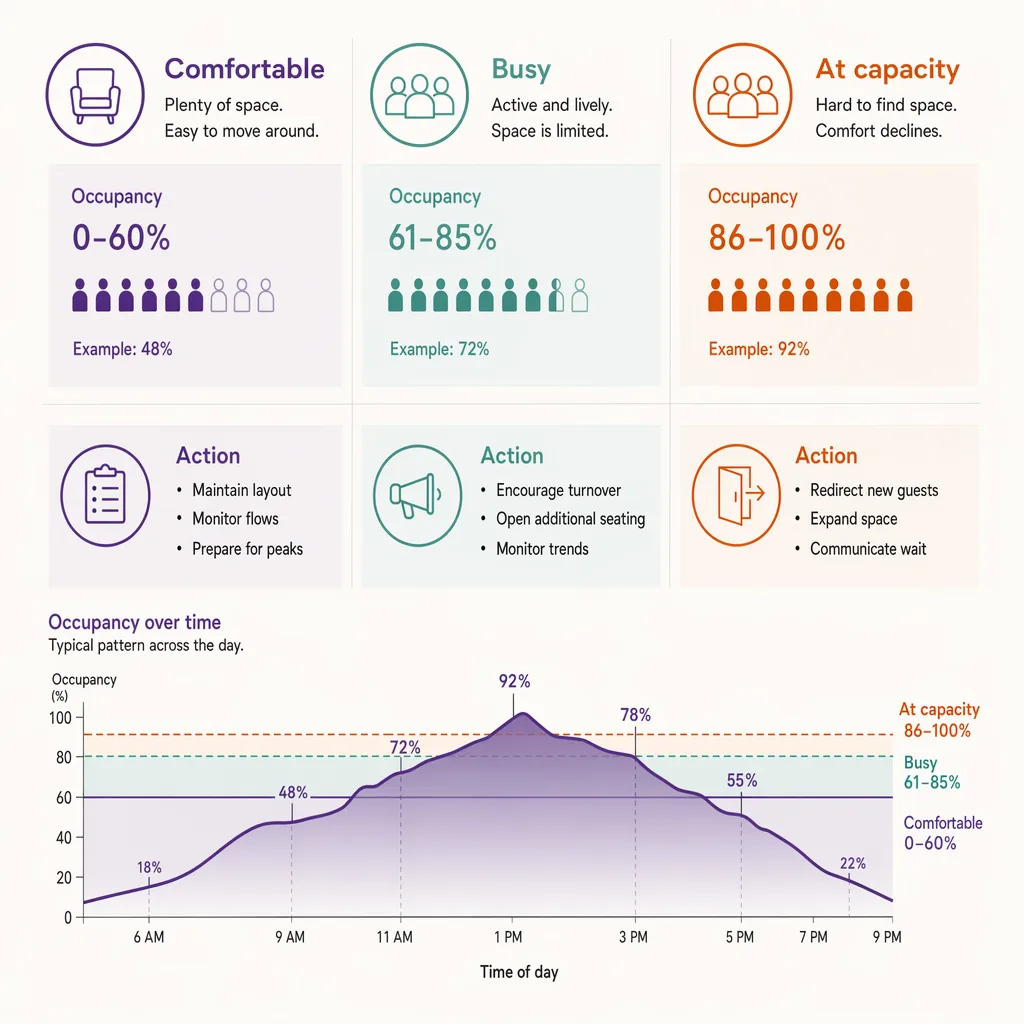
Über Monate gemessene Auslastung zeigt, ob die Lounge in den Spitzen über ihre Komfortschwelle hinaus überfüllt oder den Großteil des Tages unterausgelastet ist. Anhaltende Spitzenüberfüllung spricht für mehr Raum oder strengere Zugangsregeln; durchgängig niedrige Auslastung spricht für das Gegenteil. Dieselben Daten bestätigen, ob eine Zugangsregel- oder Layout-Änderung die Überfüllung tatsächlich entschärft hat.


