
Zwei Einkaufszentren können vom Parkplatz aus identisch aussehen und dennoch auf völlig unterschiedlichen Fundamenten ruhen. Das eine besitzt das Geschäft, das die Menge anzieht. Das andere leiht es sich vom Nachbarn. Für diese zweite Konstellation gibt es in der Handelsimmobilien-Branche einen Begriff: den Schatten-Ankermieter. Er ist einer der nützlichsten und zugleich am wenigsten verstandenen Bausteine der Besucherfrequenz eines Zentrums, denn das Geschäft, das die eigentliche Arbeit leistet, liegt vollständig außerhalb des Mietvertrags, und der Vermieter, der davon profitiert, hat keinen Vertrag, keine Mietbeziehung und kein Mitspracherecht darüber, ob es bleibt.
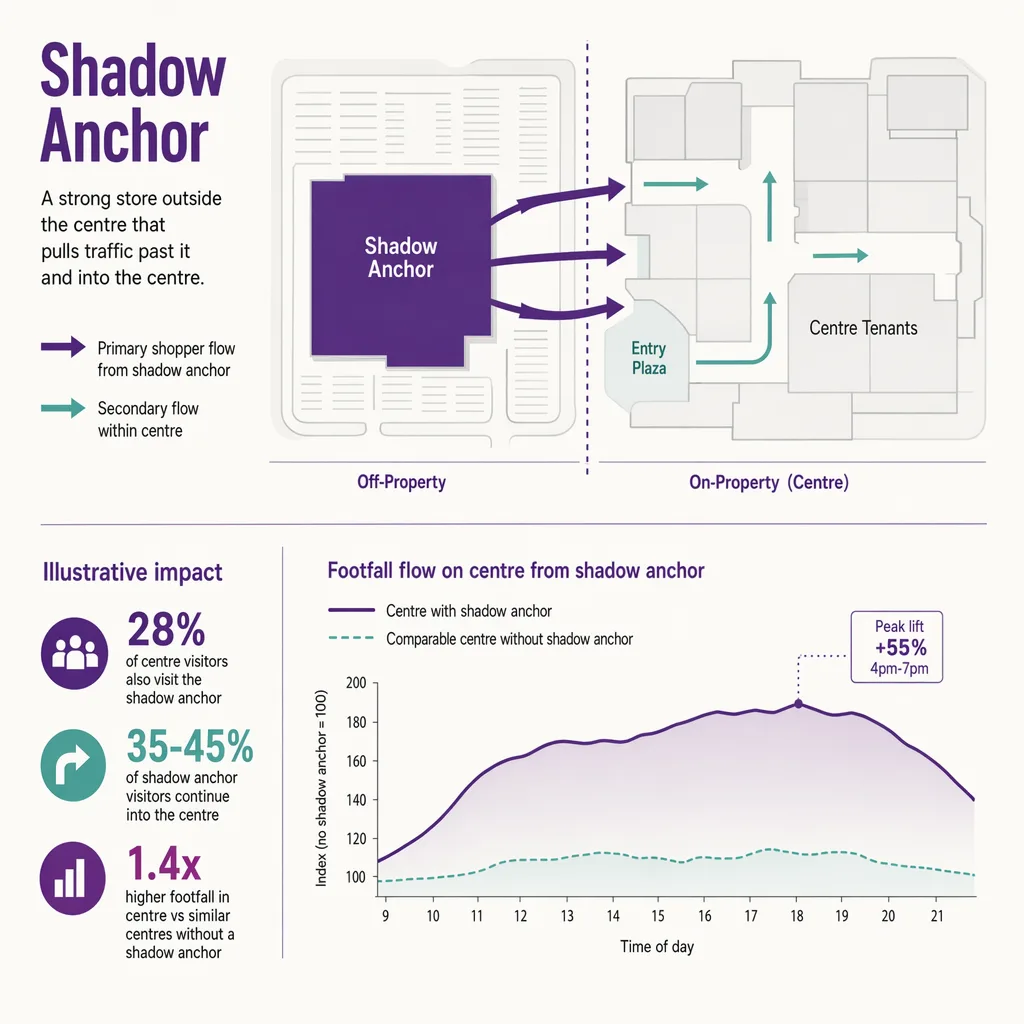
In diesem Beitrag geht es genau um diese Konstellation. Nicht darum, was ein Ankermieter allgemein ist, sondern darum, was passiert, wenn der Ankermieter, der Ihre Frequenz erzeugt, nicht Ihnen gehört. Wo Schatten-Ankermieter auftreten, warum ein Vermieter bewusst um einen herum plant und welches Risiko frei Haus mit der Frequenz kommt.
Was ist ein Schatten-Ankermieter?
Ein Schatten-Ankermieter ist ein großes Geschäft, das Besucherfrequenz zu einem benachbarten Einkaufszentrum lenkt, ohne Teil des Mietvertrags dieses Zentrums zu sein. Ein freistehender Verbrauchermarkt, ein Warenlager-Club oder ein Fachmarkt nebenan kann dieselbe Menge anziehen wie ein eigener Ankermieter, sodass die angrenzenden Inline-Mieter von einer Besucherfrequenz profitieren, für deren Anziehung sie nichts bezahlt haben. Der Haken: Der Vermieter hat keinerlei mietvertragliche Kontrolle über einen Schatten-Ankermieter. Schließt oder verlagert dieser sich, verliert das Zentrum seine Zugkraft, ohne Co-Tenancy-Regelung und ohne Mitsprache bei der Entscheidung.
Das Wort Schatten leistet hier präzise Arbeit. Das Geschäft wirft seine Besucherfrequenz über eine Grenze, innerhalb derer es selbst nicht liegt. Eine Kundin fährt zum Verbrauchermarkt, parkt, kauft Lebensmittel und betritt dann das kleine Zentrum daneben, um ein Rezept einzulösen oder einen Snack zu holen. Das Zentrum hat einen Besuch abgeschöpft, den es nie selbst erzeugt hat. An einem guten Tag kommt das nahezu kostenloser Besucherfrequenz gleich. Die Frage, die der Rest dieses Beitrags durcharbeitet, lautet, was an einem schlechten Tag geschieht, wenn das Geschäft, das nie in Ihrem Mietvertrag stand, sich zum Gehen entscheidet.
Schatten-Ankermieter vs. eigener Ankermieter vs. Junior-Ankermieter: die Frage des Besitzes
Am klarsten lässt sich ein Schatten-Ankermieter einordnen, indem man ihn den beiden Ankermieter-Typen gegenüberstellt, über die ein Vermieter tatsächlich Kontrolle hat.
Ein eigener Ankermieter ist der klassische Fall: Der eigene Ankermieter ist ein großes Geschäft, das vom Vermieter des Zentrums selbst gemietet wird, Fläche innerhalb des Zentrums belegt und durch einen Mietvertrag mit Mietkonditionen, fester Laufzeit und für beide Seiten durchsetzbaren Pflichten gebunden ist. Der Vermieter hat ihn gewählt, verhandelt und kann auf ihn einwirken.
Ein Junior-Ankermieter ist eine kleinere Ausprägung derselben Beziehung. Er erzeugt eigene Frequenz, belegt weniger Fläche als ein vollwertiger Ankermieter und liegt dennoch innerhalb des Mietvertrags. Dieselbe Besitzlogik, kleinere Fläche.
Ein Schatten-Ankermieter durchbricht das Muster genau in der Dimension, die am meisten zählt. Er ist nicht kleiner. Er ist nicht schwächer. Er kann der einzige größte Frequenztreiber im gesamten Einzugsgebiet sein. Was ihm fehlt, ist der Mietvertrag. Der Unterschied betrifft nicht Größe oder Zugkraft, sondern Besitz und Kontrolle. Ein eigener Ankermieter ist ein Geschäft, mit dem der Vermieter einen Vertrag hält. Ein Schatten-Ankermieter ist ein Geschäft, mit dem der Vermieter nichts hält, das auf Land steht, das dem Vermieter nicht gehört, und das Frequenz erzeugt, deren Fortbestand der Vermieter nicht erzwingen kann.
Dieser eine Unterschied, Mietvertrag vorhanden oder nicht, macht einen Schatten-Ankermieter zugleich zur Strategie und zum Risiko.
Wo Schatten-Ankermieter auftreten
Schatten-Ankermieter treten gehäuft in einigen wenigen, vorhersehbaren Konstellationen auf, und es hilft, sie sich bildlich vorzustellen.
Fachmarktzentren und Streckenlagen sind die klassische Heimat. Ein überregionaler Fachmarkt-Einzelhändler oder Warenlager-Club errichtet ein großes freistehendes Geschäft auf dem eigenen Grundstück, und ein Entwickler baut eine Zeile kleinerer Geschäfte auf dem angrenzenden Grundstück, um den Überlauf aufzufangen. Es handelt sich um zwei getrennte Liegenschaften mit getrennten Eigentümern. Die Zeile bewirtschaftet faktisch die Frequenz des Fachmarkts, ohne dafür einen Cent zu zahlen.
Lebensmittelnaher Einzelhandel ist ein weiterer Fall. Ein Supermarkt auf einem eigenen Grundstück zieht häufige, bedarfsgetriebene Besuche an, und der kleine Einzelhandel daneben lebt von diesen wiederkehrenden Fahrten. Der Lebensmittelhändler steht nicht im Mietvertrag der Zeile, aber seine Kunden laufen die Zeile mehrmals pro Woche ab.
Das Muster zeigt sich auch rund um Verkehrsknotenpunkte und Destinations-Einzelhandel, überall dort, wo eine große eigenständige Zugkraft neben kleinerer vermieteter Fläche liegt, die den Überlauf auffangen kann. Was sie alle verbindet, ist die Grundstücksgrenze: Der Frequenzmotor und die Mieter, die von ihm abhängen, gehören verschiedenen Eigentümern.
Die Konstellation ist oft ein Bruchstück der Geschichte und kein Plan. Ein Fachmarkt-Einzelhändler wählt aus eigenen Gründen einen Standort, ein Entwickler bemerkt die Frequenz, die dieser Standort erzeugen wird, und daneben entsteht eine Zeile, um das aufzufangen, was der Fachmarkt nicht halten kann. Keine der Parteien wollte eine Schatten-Ankermieter-Beziehung aufbauen. Sie entstand aus zwei unabhängigen Entscheidungen, die zufällig nebeneinander lagen. Diese zufällige Eigenschaft lohnt festzuhalten, denn sie erinnert daran, dass die Konstellation nie verhandelt wurde. Niemand aus der Zeile saß je mit dem Fachmarkt an einem Tisch und einigte sich auf irgendetwas. Die Frequenz fließt aufgrund der Geografie, und Geografie kann sich ändern.
Der Vorteil: geringere Mietkosten, organischer Überlauf
Vermieter stolpern nicht zufällig in Schatten-Ankermieter hinein. Viele planen bewusst um sie herum, weil die Konstellation echte Vorteile gegenüber der Vermietung eines eigenen vollwertigen Ankermieters hat.
Der erste sind die Kosten. Einen eigenen Ankermieter anzuziehen ist teuer. Ankermieter stehen am unteren Ende der Mietstruktur und zahlen weit weniger pro Quadratmeter als Inline-Geschäfte, die die kleineren Mieter faktisch subventionieren. Dieser Handel ist die gesamte Logik der Mietökonomie von Ankermietern: Der Vermieter gibt dem Ankermieter günstige Fläche im Tausch gegen die Frequenz, die er bringt. Ein Schatten-Ankermieter liefert eine ähnliche Zugkraft, ohne dass der Vermieter diesen Niedrigmieter überhaupt auf der Mietaufstellung trägt. Die Zugkraft liegt nebenan, bezahlt von jemand anderem, und jeder Quadratmeter des eigenen Zentrums kann zu Inline-Konditionen vermietet werden.
Der zweite ist der organische Überlauf. Wenn der Schatten-Ankermieter gut zum Inline-Mix passt, kommt die Frequenz bereits in Kauflaune an. Eine Kundin, die einen Verbrauchermarkt mit einer freien Stunde verlässt, ist ein guter Kandidat für das Café, die Apotheke oder den Handy-Reparaturdienst daneben. Das Zentrum fängt diese Absicht ein, ohne die Fahrt erzeugt zu haben.
Für einen Entwickler kann die Rechnung attraktiv sein: ein kleineres Gebäude, kein Ankermieter, den man umwerben muss, und eine fertige Frequenzquelle an der Grenze. Auf dem Papier sieht es aus wie der Frequenzvorteil eines Ankermieters ohne dessen Kosten. Das Wort auf dem Papier ist das verräterische Detail.
Der Nachteil: kein Co-Tenancy-Schutz, keine Kontrolle über eine Schließung
Alles, was einen Schatten-Ankermieter günstig macht, macht ihn zugleich fragil, und die Fragilität ist strukturell bedingt, nicht Pech.
Beginnen wir mit Co-Tenancy. Wenn ein Zentrum seinen eigenen Ankermieter vermietet, enthalten seine Inline-Verträge in der Regel eine Co-Tenancy-Klausel: Geht der benannte Ankermieter dunkel, können Inline-Mieter ihre Miete auf einen Prozentsatz des Umsatzes senken oder in manchen Fällen aussteigen. Diese Klausel ist ein Stoßdämpfer. Sie gibt dem Vermieter einen Anreiz, schnell nachzubesetzen, und gibt den Mietern eine definierte Abhilfe, solange die Ankerfläche leer steht.
Ein Schatten-Ankermieter hat keine solche Klausel, weil es keinen Mietvertrag gibt, in den man sie schreiben könnte. Der Frequenzmotor ist in keiner Vereinbarung ein benannter Mieter. Schließt also ein Schatten-Ankermieter, haben die Inline-Mieter, die von ihm abhingen, keinen vertraglichen Notausgang gegen genau diesen Verlust, und beim Vermieter wird keine Pflicht ausgelöst, und es gibt keinen Vertragspartner, an den er sich wenden könnte. Die Frequenz hört einfach auf, und die Mietkonditionen laufen weiter, als hätte sich nichts geändert, was genau das Problem ist.
Dann ist da die Kontrolle. Wenn ein eigener Ankermieter signalisiert, dass er aussteigen will, hat der Vermieter Optionen: nachverhandeln, die Laufzeit auslösen, einen Ersatz aufstellen, das Playbook zum Ankermieter-Ersatz abarbeiten, das genau für diesen Moment existiert. Ein Schatten-Ankermieter gibt dem Vermieter keinen dieser Hebel. Die Entscheidung zu schließen, zu verlagern oder zu verkleinern liegt vollständig bei einem Unternehmen, mit dem der Vermieter keine Beziehung hat, getroffen aus Gründen, die mit dem benachbarten Zentrum nichts zu tun haben. Der Vermieter erfährt es auf demselben Weg wie die Öffentlichkeit, und bis dahin fließt die Frequenz bereits ab.
Ehrlich formuliert ist ein Schatten-Ankermieter also ein Vorteil, den der Vermieter genießt, aber nicht besitzt. Er funktioniert hervorragend, bis er es nicht mehr tut, und der Vermieter hat keine Frühwarnung und keine Abhilfe, wenn er aufhört. Zu verstehen, was passiert, wenn ein Ankermieter geht, ist für ein Zentrum mit Schatten-Ankermieter doppelt wichtig, denn es steht demselben Frequenzeinbruch gegenüber, mit weniger Werkzeugen, um ihn zu steuern.
Wie sich geliehene Besucherfrequenz quantifizieren lässt, bevor man in der Nähe unterschreibt
Wenn Sie als Vermieter einen Standort bewerten, der sich auf einen Schatten-Ankermieter stützt, oder als Mieter eine Inline-Fläche abwägen, die auf geliehener Besucherfrequenz bepreist ist, muss das Risiko nicht abstrakt bleiben. Sie können messen, wie viel der Frequenz tatsächlich geliehen ist und wie stark Sie exponiert sind, falls die Quelle verschwindet.
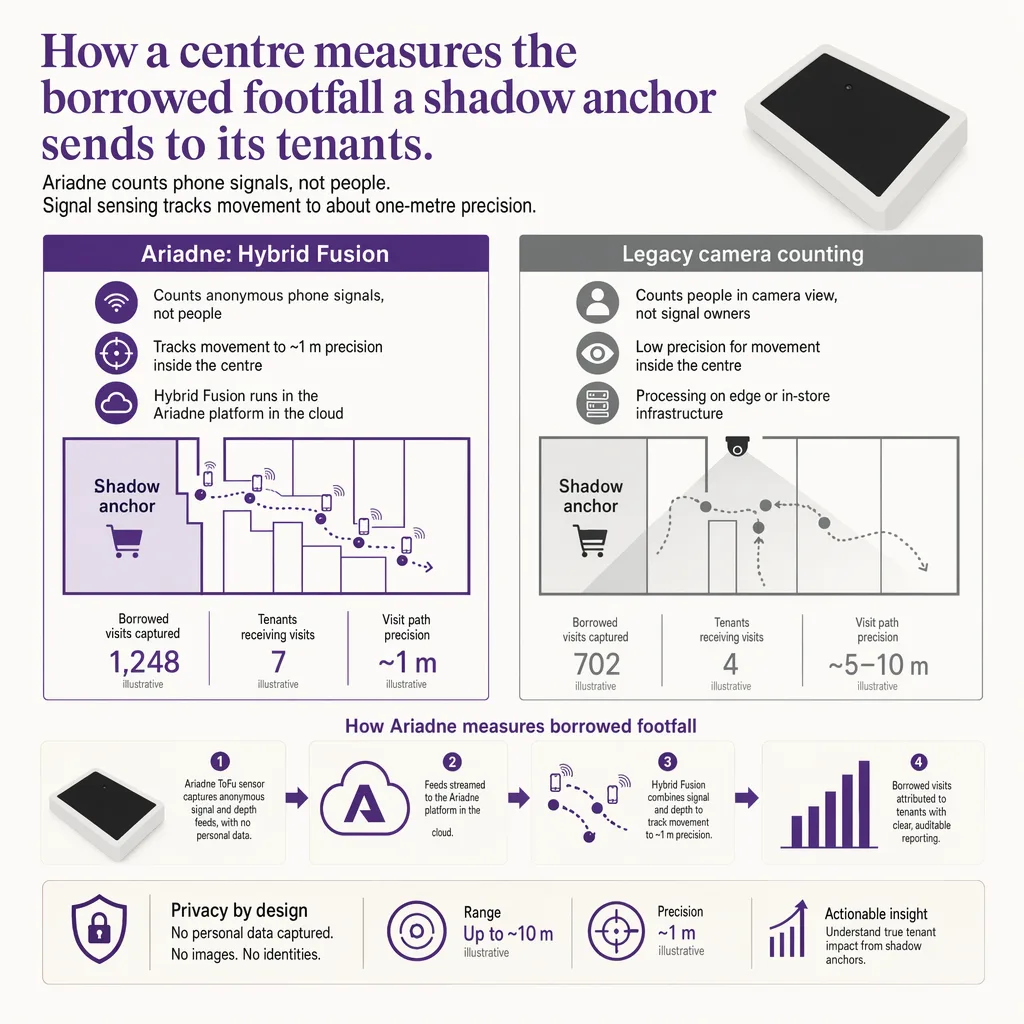
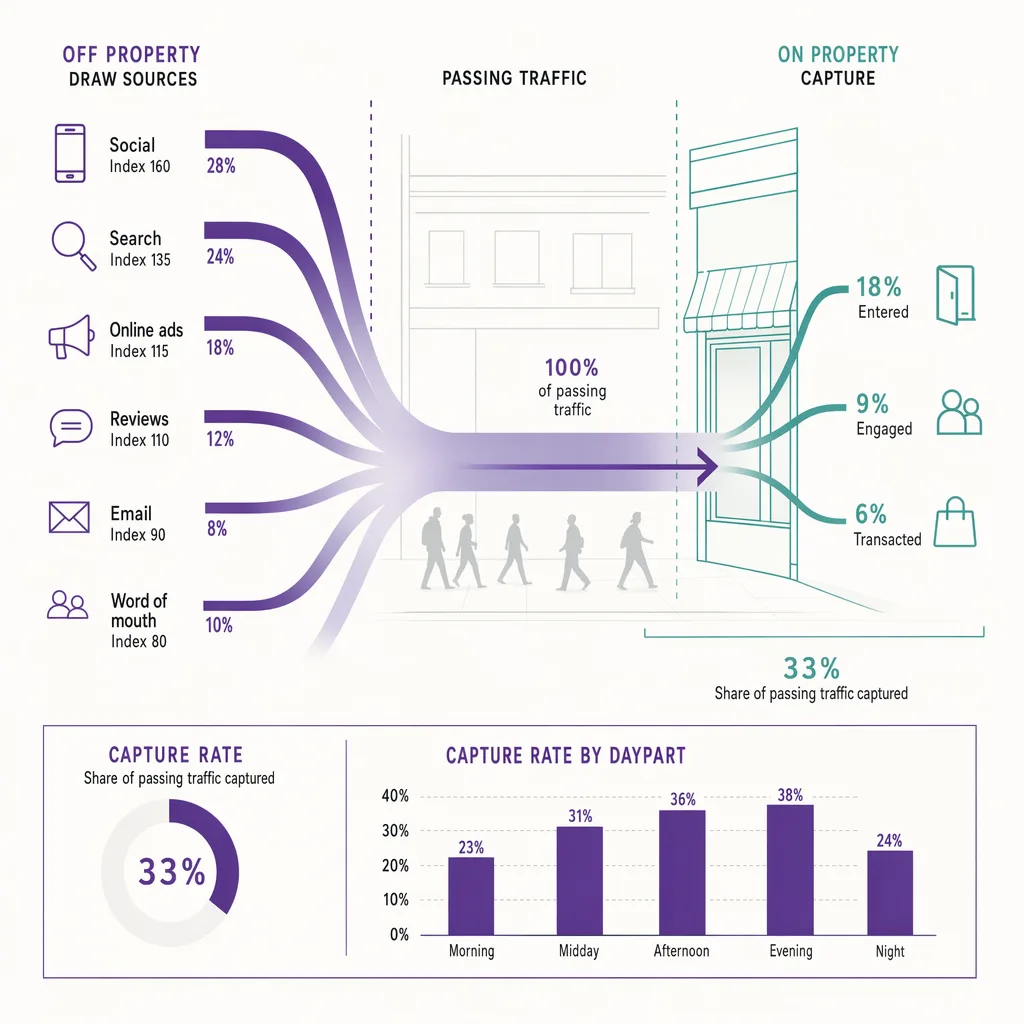
Die Messfrage ist konkret: Von den Menschen, die Ihr Zentrum oder Ihre Einheit betreten, wie viele kamen wegen des Schatten-Ankermieters nebenan, und wie viele wären ohnehin gekommen? Das ist eine Überlauf-Frage, und Überlauf ist messbar. Indem Sie die Eintritte an Ihren eigenen Türen zählen und betrachten, wie sie sich relativ zu den Spitzenzeiten und Tagesabschnitten des Schatten-Ankermieters bewegen, können Sie den Anteil Ihrer Besucherfrequenz schätzen, der auf der Zugkraft des Nachbarn beruht statt auf Ihrer eigenen. Es ist der Unterschied zwischen dem Zählen von Autos auf einem gemeinsamen Parkplatz und dem Zählen derer, die tatsächlich durch Ihre Tür gegangen sind, ein Unterschied, über den es sich lohnt, mehr zu lesen unter messen, wer wirklich hereinkam.
Diese Zahl verändert Entscheidungen. Ist ein großer Anteil Ihrer Frequenz geliehen, wird die Gesundheit des Schatten-Ankermieters zu Ihrem Risiko, und Sie können die Miete entsprechend bepreisen, die Exponierung dimensionieren oder eine Absicherung planen. Ist der Großteil Ihrer Besucherfrequenz Ihre eigene, ist der Schatten-Ankermieter ein Bonus statt einer Abhängigkeit, und Sie können seinen eventuellen Verlust als beherrschbaren Rückgang statt als Abbruchkante behandeln. So oder so entscheiden Sie auf Basis eines gemessenen Anteils statt einer hoffnungsvollen Annahme.
Es gibt hierbei auch eine zeitliche Dimension. Geliehene Frequenz kommt selten gleichmäßig über den Tag verteilt an. Ein Lebensmittel-Schatten-Ankermieter treibt Spitzen am frühen Abend und am Wochenende; ein Warenlager-Club neigt zu Wochenend-Großeinkäufen; ein Bau- und Heimwerker-Fachmarkt zieht projektgetriebene Besuche an, die sich an Samstagen und Feiertagen häufen. Ist Ihr Inline-Mix auf einen anderen Rhythmus abgestimmt als die Spitzen des Schatten-Ankermieters, zieht ein Teil dieser geliehenen Frequenz zu Zeiten vorbei, die Ihre Mieter nicht in Umsatz umwandeln können. Eintritte nach Tagesabschnitt statt als einzelnen Tageswert zu messen zeigt, ob der Überlauf tatsächlich dann eintrifft, wenn Ihre Geschäfte positioniert sind, ihn abzuschöpfen, oder ob er zu Zeiten vorbeiströmt, die nicht helfen. Ein Vermieter, der die Form der geliehenen Frequenz kennt, nicht nur ihre Größe, kann passend dazu vermieten.
Ariadne misst dies mit Hybrid Fusion, der patentierten kamerafreien Methode. Time-of-Flight-Tiefensensorik zählt an den Eingängen jeden Besucher und erfasst Geometrie statt Bilder, während die patentierte Signalerfassung die Bewegung im Innenraum verfolgt und die Signale erkennt, die ein Telefon aussendet, selbst im Flugmodus, und diese Bewegung auf etwa einen Meter genau auflöst. Der Sensor streamt beide Datenströme an Ariadne, wo Hybrid Fusion sie zu einer Trajektorie pro Besuch zusammenführt und Zählwerte, Verweildauer und Wege berechnet. Die Datenströme tragen keine Identifikatoren: keine MAC-Adresse, keine Geräte-ID, keine biometrischen Daten, und es ist keine Kamera beteiligt. Identifikatoren werden nur gespeichert, wenn ein Besucher ausdrücklich zustimmt, was die Methode datenschutzfreundlich und außerhalb des biometrischen Bereichs hält.
Für ein Zentrum mit Schatten-Ankermieter sind Besucherfrequenz-Daten auf Eintrittsebene an den eigenen Türen das Nächste zu einem Frühwarnsystem, das Sie aufbauen können, da Sie keine mietvertragliche Einsicht in das Geschäft haben, von dem Sie abhängen. Beginnt die geliehene Frequenz nachzulassen, zeigen es Ihre eigenen Türzählungen, bevor es irgendeine öffentliche Ankündigung tut. Das ist das praktische Argument für Messung an einem Standort, an dem Ihnen die Mieter gehören, aber nicht der Frequenzmotor. Wenn Sie sehen möchten, wie Frequenzmessung auf Zentrumsebene in dieses Bild passt, geht unsere Arbeit zu Analytik für Einkaufszentren genauer darauf ein.
FAQ
Was ist ein Schatten-Ankermieter?
Ein Schatten-Ankermieter ist ein großes Geschäft, das Besucherfrequenz zu einem nahegelegenen Einkaufszentrum lenkt, ohne Teil des Mietvertrags dieses Zentrums zu sein. Ein freistehender Verbrauchermarkt oder Fachmarkt nebenan zieht die Menge an, und die angrenzenden Inline-Mieter profitieren vom Überlauf, obwohl der Vermieter keine Mietbeziehung und keine mietvertragliche Kontrolle über das Geschäft hat, das ihn erzeugt.
Was ist der Unterschied zwischen einem Schatten-Ankermieter und einem regulären Ankermieter?
Besitz und Kontrolle. Ein regulärer, eigener Ankermieter ist ein Geschäft, das der Vermieter des Zentrums mietet, mit Mietkonditionen, fester Laufzeit und durchsetzbaren Pflichten. Ein Schatten-Ankermieter liegt auf einer separaten Liegenschaft, die dem Vermieter nicht gehört, sodass er die Frequenz eines Ankermieters ohne jede mietvertragliche Kontrolle liefert. Schließt er, hat der Vermieter kein Mitspracherecht und keine vertragliche Abhilfe.
Sind Schatten-Ankermieter gut oder schlecht für ein Einkaufszentrum?
Beides. Der Vorteil ist real: eine große Frequenzzugkraft ohne die Kosten, einen Niedrigmieter auf der Mietaufstellung zu tragen, plus organischer Überlauf von Kunden, die bereits in Kauflaune sind. Der Nachteil ist strukturell: kein Co-Tenancy-Schutz, keine Frühwarnung und keine Kontrolle, falls der Schatten-Ankermieter beschließt, zu schließen oder umzuziehen.
Erhalten Inline-Mieter neben einem Schatten-Ankermieter Co-Tenancy-Schutz?
Nicht gegenüber dem Schatten-Ankermieter selbst. Co-Tenancy-Klauseln benennen bestimmte gemietete Ankermieter innerhalb des Zentrums. Da ein Schatten-Ankermieter in niemandes Mietvertrag Mieter ist, gibt es nichts zu benennen, sodass Inline-Verträge keine definierte Abhilfe enthalten, die an sein Dunkelgehen geknüpft ist.
Wie kann ein Vermieter messen, wie viel Frequenz ein Schatten-Ankermieter liefert?
Indem er die Eintritte an den eigenen Türen des Zentrums zählt und analysiert, wie sich diese Besucherfrequenz relativ zu den Spitzenzeiten und Tagesabschnitten des Schatten-Ankermieters bewegt. Das offenbart den Anteil der Besuche, die auf der Zugkraft des Nachbarn beruhen, gegenüber der eigenen Zugkraft des Zentrums, wodurch ein Vermieter die Abhängigkeit dimensionieren und das Risiko bepreisen kann, statt es anzunehmen.
---


