
Scoring beats impressions
Counting vendors are evaluated on demos, and demos reward presentation quality rather than measurement quality. A weighted scorecard, agreed before the first meeting, fixes that: it forces the team to decide what actually matters, it makes disagreements explicit while they are still cheap, and it leaves a record that explains the award afterwards. Public buyers must do this anyway; private buyers get most of the benefit for an afternoon of work.
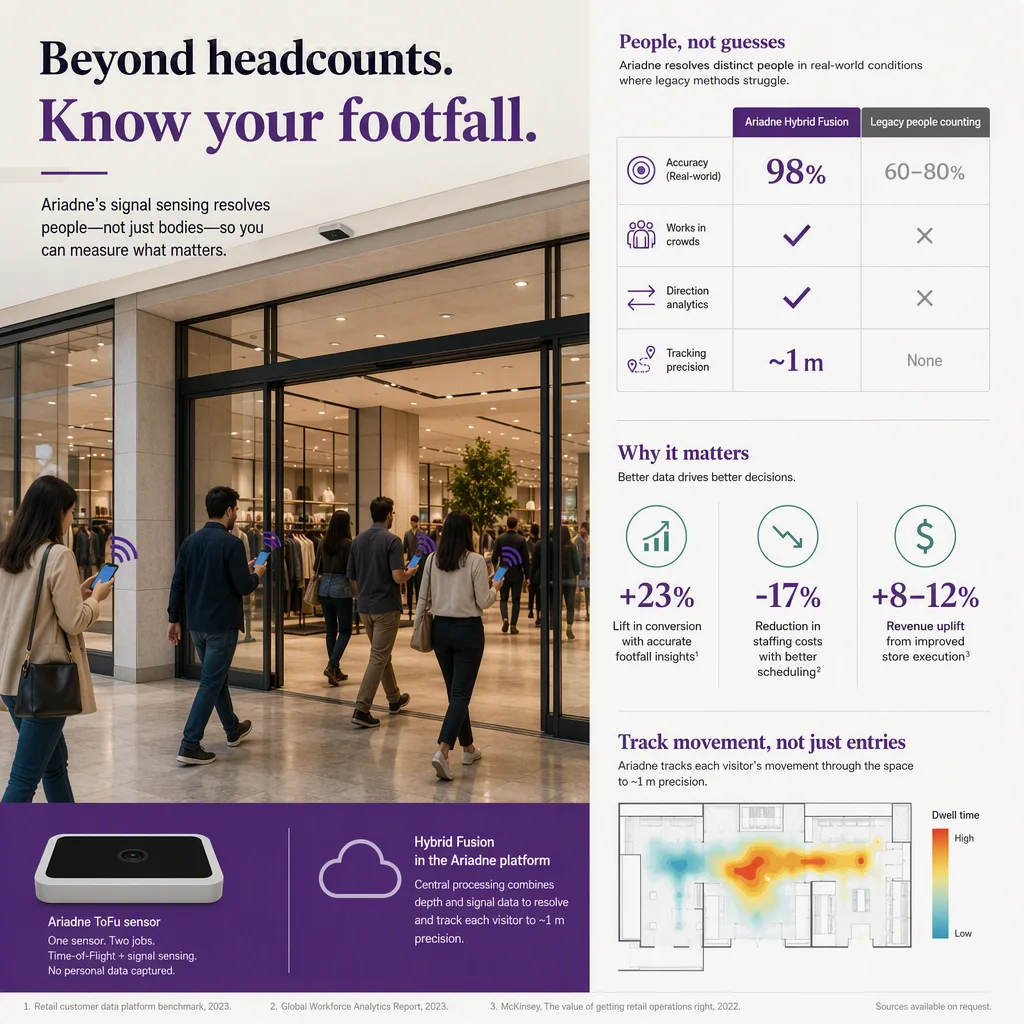
How should you evaluate people counting vendors?
Score every candidate on the same weighted criteria, with evidence attached to each score rather than opinion. Five families cover the decision: measurement quality (verified accuracy, not claimed), privacy architecture (what the system captures, structurally), integration fit (does the data reach your systems), service and lifecycle (maintenance, response, calibration, end of term), and five-year total cost per covered door. Weight them to your context before you see any bids, because weighting them afterwards is how preference disguises itself as analysis.
A workable weighting
For a typical multi-site retail or public deployment, a defensible starting point: measurement quality 30, privacy architecture 20, integration 20, service and lifecycle 15, five-year cost 15. Move the weights deliberately, not casually: a works-council-sensitive workplace or a public body may put privacy at 30; a data-team-led buyer may lift integration; a capital-constrained buyer may lift cost, as long as the comparison is genuinely five-year and per covered door rather than per unit.
What evidence counts under each family
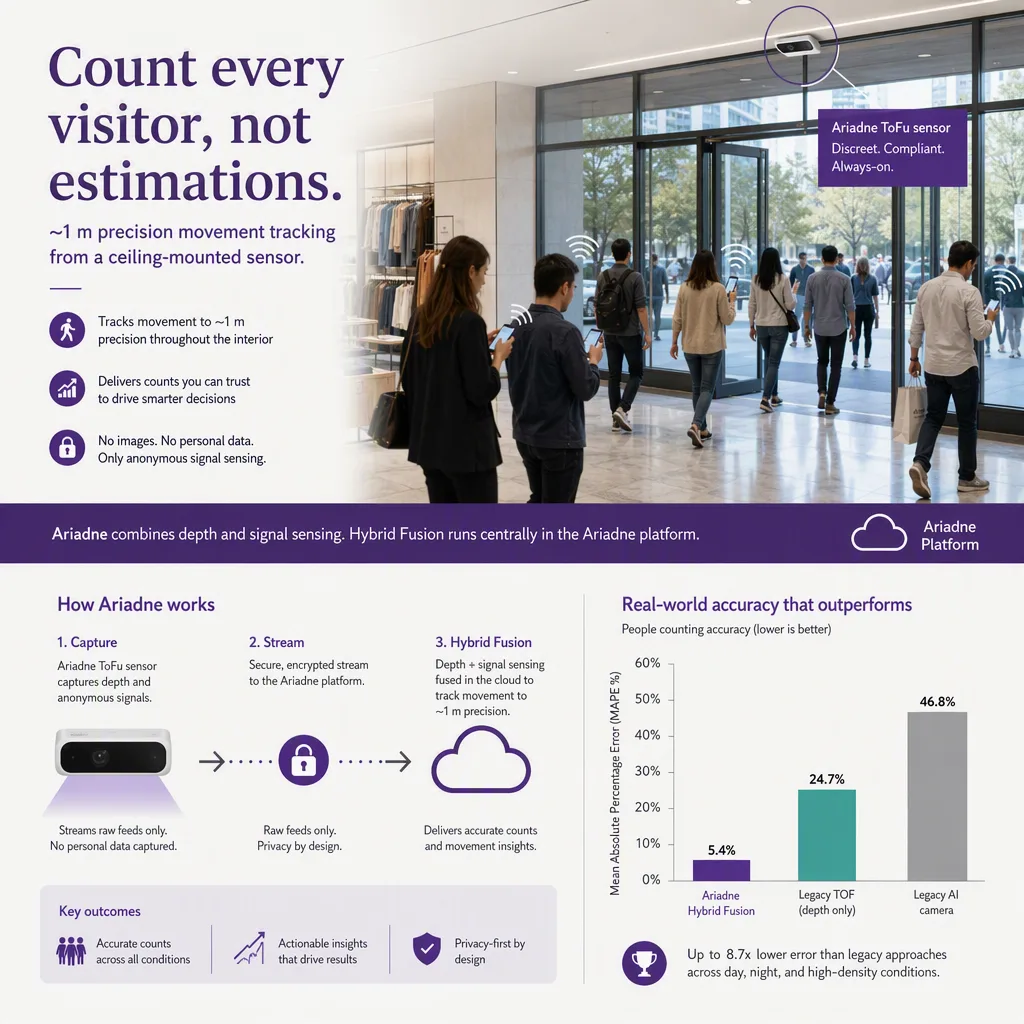
Measurement quality. A pilot result on your own site, scored against the written method in accuracy test methodology. Datasheet figures score zero; that is the point.
Privacy architecture. What the sensor can physically capture, in writing: images or geometry, identifiers or none, where processing happens, what retention applies. Supporting assessment material is a scoring input, per the DPIA template and, in the US, the state-law posture in CCPA for retail analytics and BIPA and people counting.
Integration. Documented API access to your own data, export formats, and named integrations with the systems you actually run: integration requirements, including workforce systems per WFM integration.
Service and lifecycle. Response times, calibration cadence, firmware policy, and ownership at end of term: maintenance and SLA.
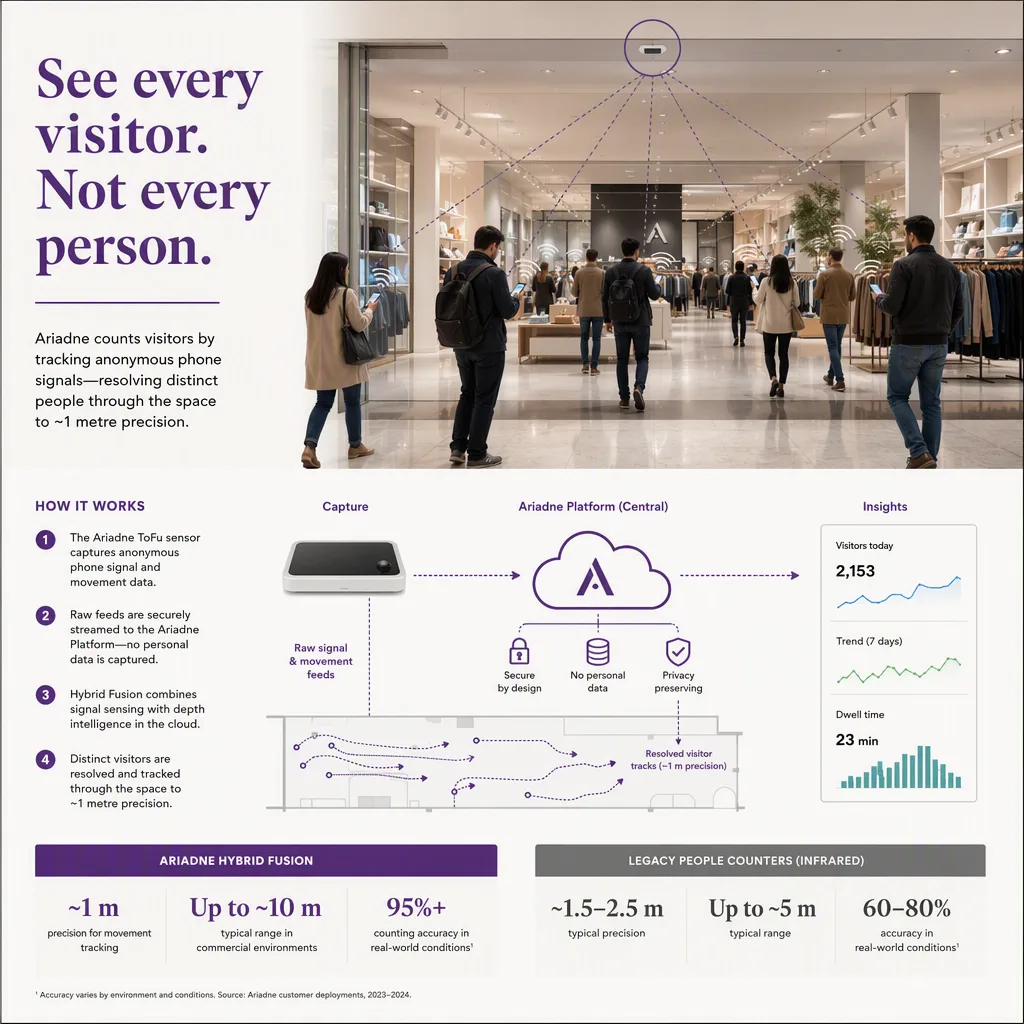
Cost. Five-year total including install, subscription, and support, per covered door, from the TCO model.
Run the pilot before you finish scoring
Scores on measurement quality are guesses until a pilot fills them in, which is why the sequence that works is shortlist on paper, pilot the top two, then complete the scorecard with real numbers. The playbook for running that pilot so it produces evidence rather than a pleasant experience is in pilot to contract, building on the pilot project guide. Ariadne expects to be scored this way, and the camera-free architecture is a claim you can verify in the privacy column rather than take on trust.
# Program 3, Cluster 5 (Procurement / specs / RFP) EN drafts: Part B (rows 249-251)
Status: EN drafts for review. Not pushed to CMS. No images, no DE yet.
Author: Govarthan.
---


