
The demo is cheap; the product is not
Every large venue with a development team eventually considers building navigation in-house, and the prototype makes the case seductively: a floor plan, an open-source routing library, a blue dot, two sprints. The demo works. The gap between that demo and a product visitors rely on is where build-vs-buy is actually decided, and it is mostly invisible from the demo stage.
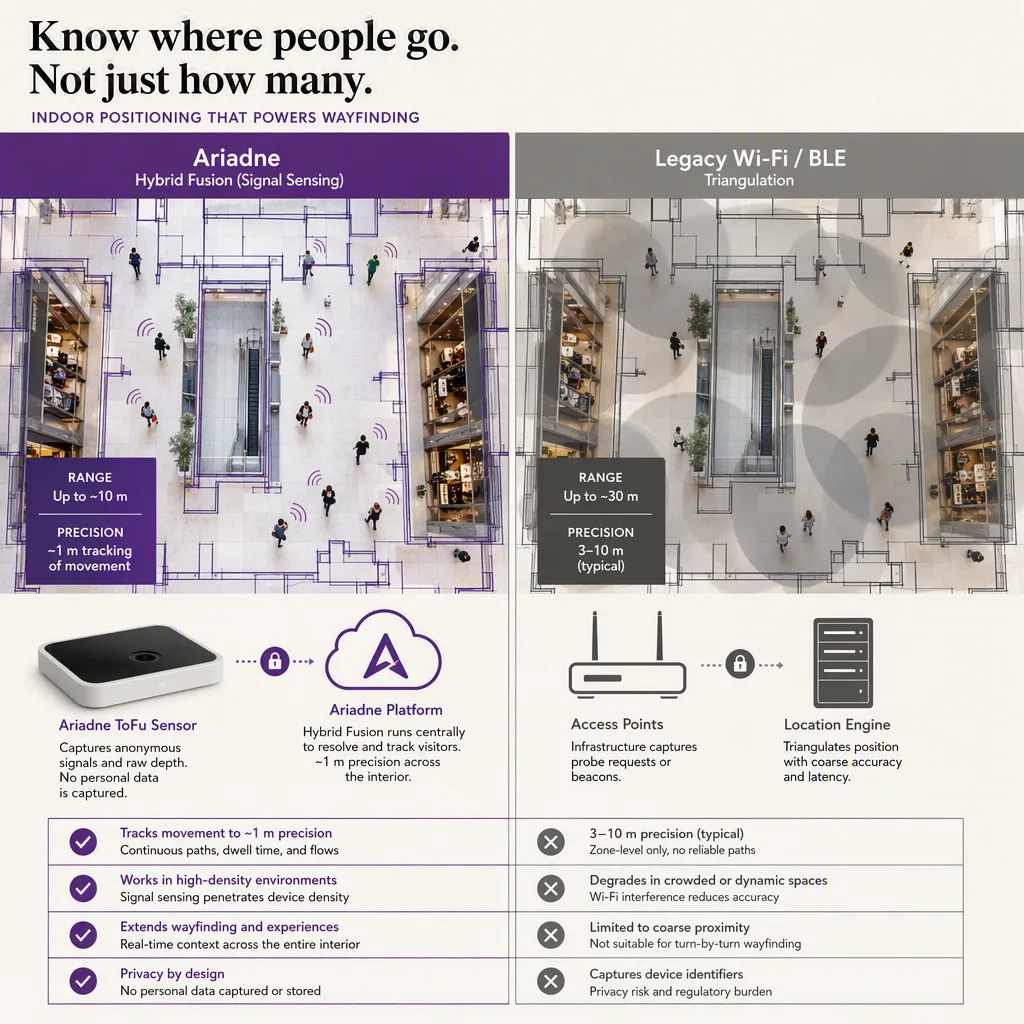
Should you build or buy indoor navigation?
Buy the platform, own the map and the integrations, unless navigation is your product. The components that look hard (route calculation) are solved library problems; the components that look easy are the product: map production and its update workflow, positioning that works on every phone generation and in every radio environment, multi-surface delivery (web, app, kiosk, signage) from one source, accessibility routing, analytics, and the operational grind of keeping all of it true as the building changes. Those are platform economics: a vendor amortizes them across hundreds of venues; an in-house team pays them alone, forever.
The cost lines the prototype hides
- Map production and freshness. Turning architectural drawings into routable, semantically tagged maps is skilled work, and buildings change monthly. The update workflow is the product's beating heart, fed by BIM pipelines where models exist and by map data standards for everything else.
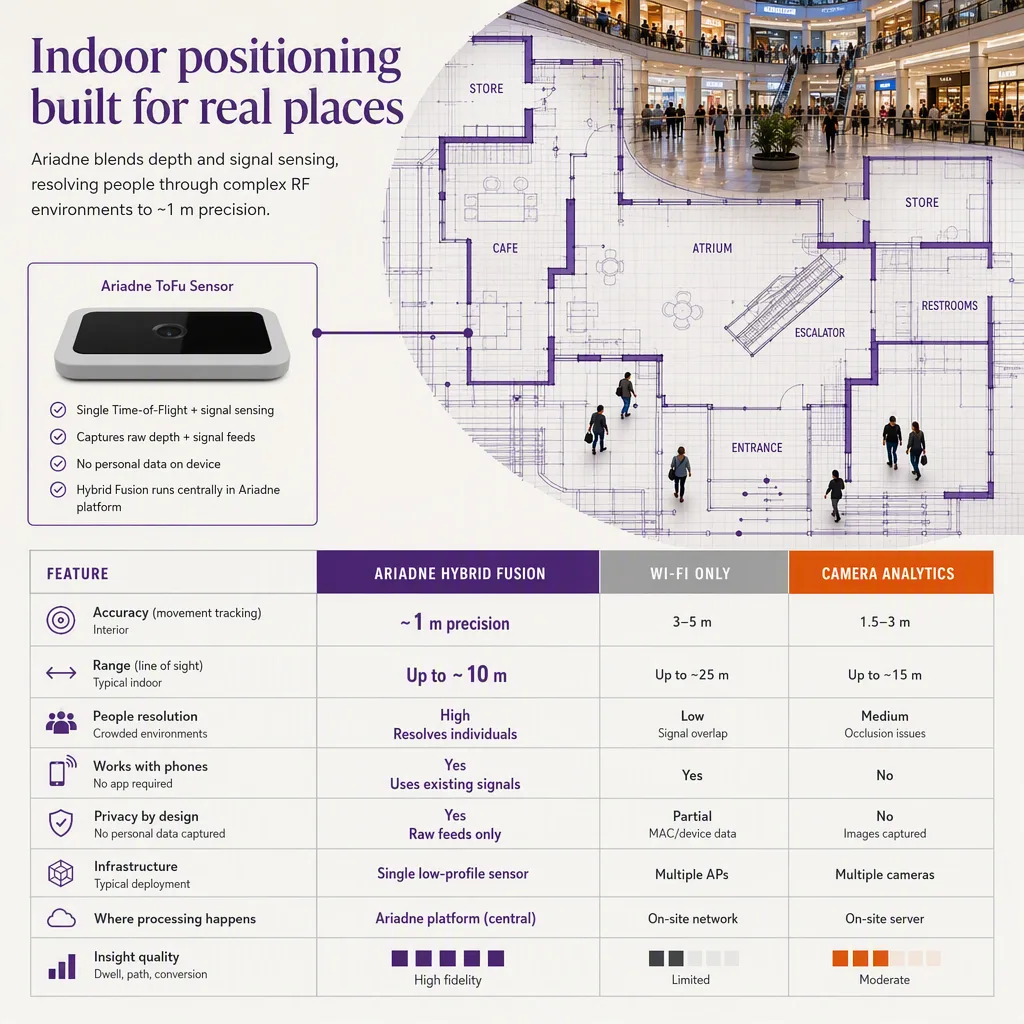
- Positioning reality. The blue dot that worked in the atrium fails by the loading dock; every phone model behaves differently; the technology trade-offs demand ongoing engineering, not a one-time choice.
- Surface sprawl. Visitors arrive via web links, kiosks, and screens, not just the app; each surface is a build, and consistency across them is a discipline.
- The long tail. Accessibility modes, multi-language, event overlays, multi-floor routing, analytics: individually small, collectively the roadmap that eats the team.
What to keep in-house
The map's institutional knowledge (what rooms are called, what changes when), the integrations into your own systems (appointments, bookings, boarding data), and the analytics consumption. That split, platform underneath, venue knowledge on top, is where total cost of ownership lands lowest, the same TCO logic as any counting-system purchase.
Where Ariadne fits
Ariadne is the buy side of this argument, offered honestly: floor plans in, guidance out across every surface, positioning and updates as the platform's problem rather than yours, with the measurement layer included, per the indoor navigation pillar. The RFP discipline for comparing vendors, ours included, is the same as for any measurement purchase: verify on your own site before you sign.
# Program 3, Cluster 4 (Indoor navigation verticals) EN drafts: Part C (rows 241-244)
Status: EN drafts for review. Not pushed to CMS. No images, no DE yet.
Author: Govarthan.
---


