
The app nobody downloads, and the navigation everybody needs
Every mall operator has sat through the pitch for a branded super-app, and every honest one has seen the install numbers afterwards. Visitors do not download an app to find a shoe store; the need is real but episodic, and episodic needs lose the home-screen fight. Mall navigation succeeds when it stops meaning "our app" and starts meaning "routes available wherever the visitor already is": the web, the directory kiosk, the parking ticket, and yes, the app, for the loyalty minority who want it.

Do shopping mall navigation apps work?
As standalone downloads, rarely: install friction exceeds the episodic need. As a capability embedded across surfaces, yes. The high-usage pattern is web-first routing (a shareable link from the mall website or a shop's page straight to a route), kiosk-to-phone handoff (scan a code on the directory kiosk, take the route with you), parking memory (the single most loved feature in visitor testing: where is my car), and event or deal-led routes (the offer includes the path to it). The branded app then serves the frequent-visitor minority, where loyalty programs already earn their install.
The features that earn usage
Parking-to-store and store-to-parking, because the parking structure is where mall wayfinding genuinely fails (parking-to-destination navigation is the deep dive). Multi-stop planning for errand missions (the tailor, the pharmacy, the supermarket, in walking order). Step-free routing for prams and wheelchairs, per accessible wayfinding routes. And live "what is near me now" tied to the visitor's actual position rather than a static you-are-here.
What the operator gets out of it
Navigation queries are demand data: what visitors search for and fail to find is a leasing signal (searched-for categories with no tenant), and the routes people take versus the routes suggested reveal corridor problems that the mall journey analysis can quantify. Deal-led routing gives marketing a measurable lever: an offer with a route has a footfall outcome, attributable with the same methods as any in-mall campaign measurement.
Where Ariadne fits
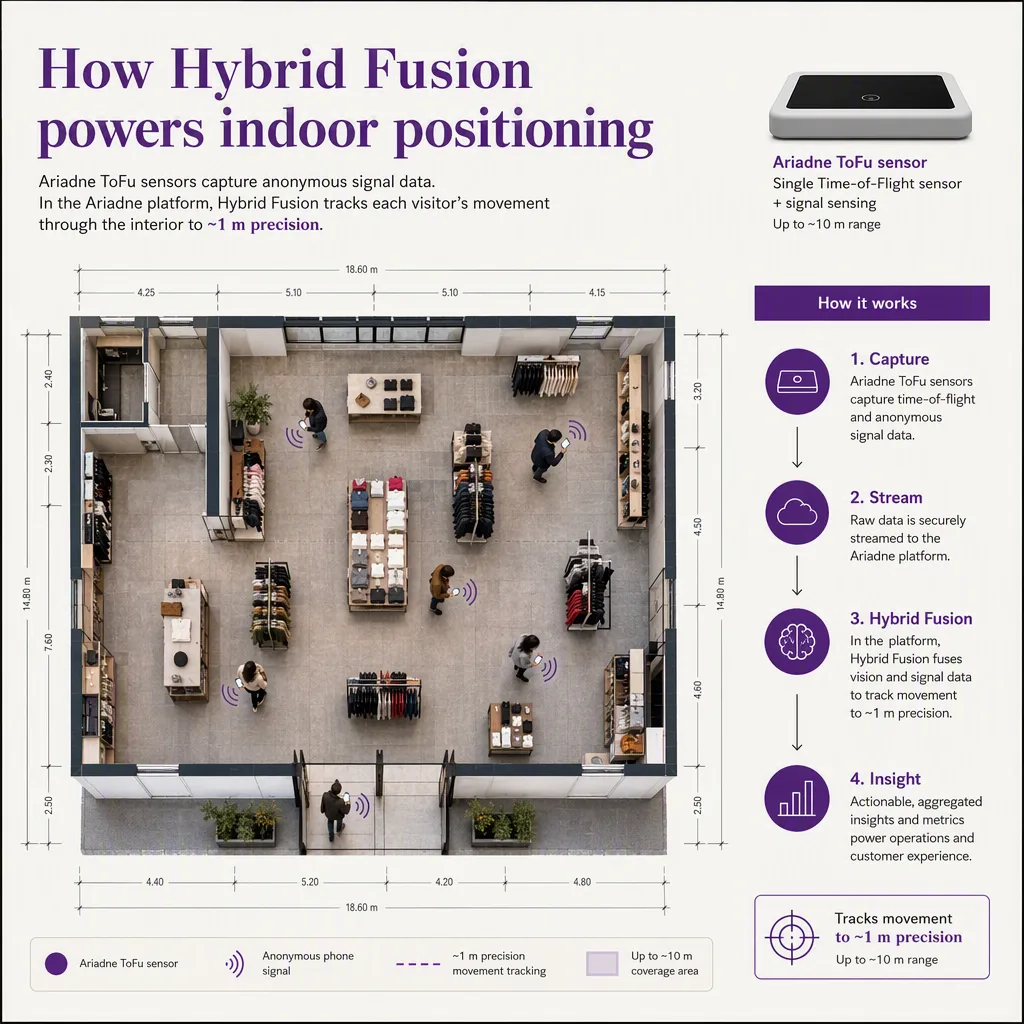
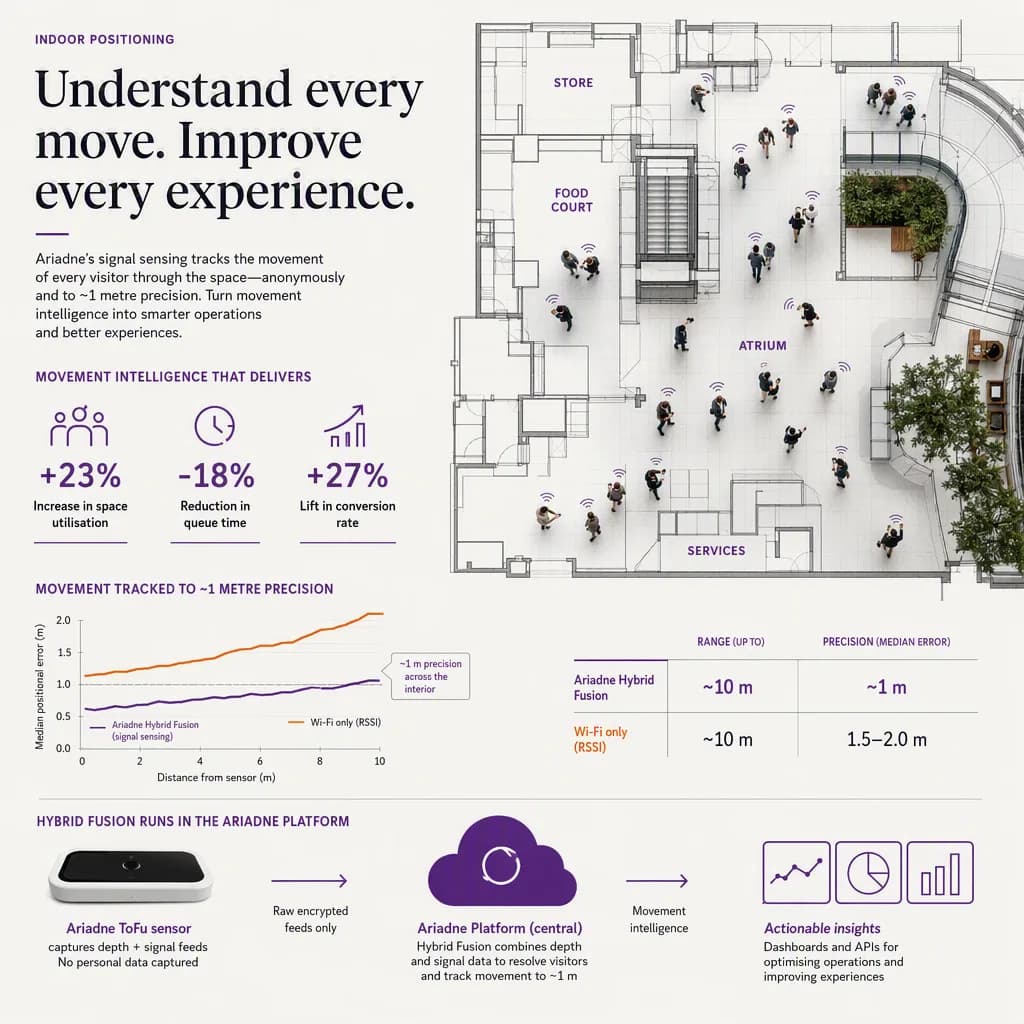
Ariadne's wayfinding runs across app, web, kiosks, and digital signage from one floor-plan source, on privacy-first positioning, and centres in Frankfurt and Stuttgart already run its footfall and wayfinding stack together, using anchor-to-anchor routes layered with dwell data. That pairing is the point: the same platform that routes visitors measures whether the routing, the kiosks, and the campaigns actually moved anyone. Platform context in the indoor navigation pillar.
# Program 3, Cluster 4 (Indoor navigation verticals) EN drafts: Part B (rows 237-240)
Status: EN drafts for review. Not pushed to CMS. No images, no DE yet.
Author: Govarthan.
---


