
Eine Apotheke betreibt zwei Geschäfte durch eine Tür. Das eine ist die Rezeptur, wo Menschen Rezepte abholen, warten und manchmal ein vertrauliches Wort mit dem Apotheker brauchen. Das andere ist die Verkaufsfläche, wo dieselbe Tür Menschen einlässt, die Hautpflege, Vitamine und das margenstarke Frontsortiment kaufen. Die beiden konkurrieren um dasselbe Thekenpersonal, und Kassendaten, auf die die meisten Apotheken schauen, sehen nur die Transaktionen, nicht die Menschen, die hereinkamen und ohne Kauf wieder gingen.
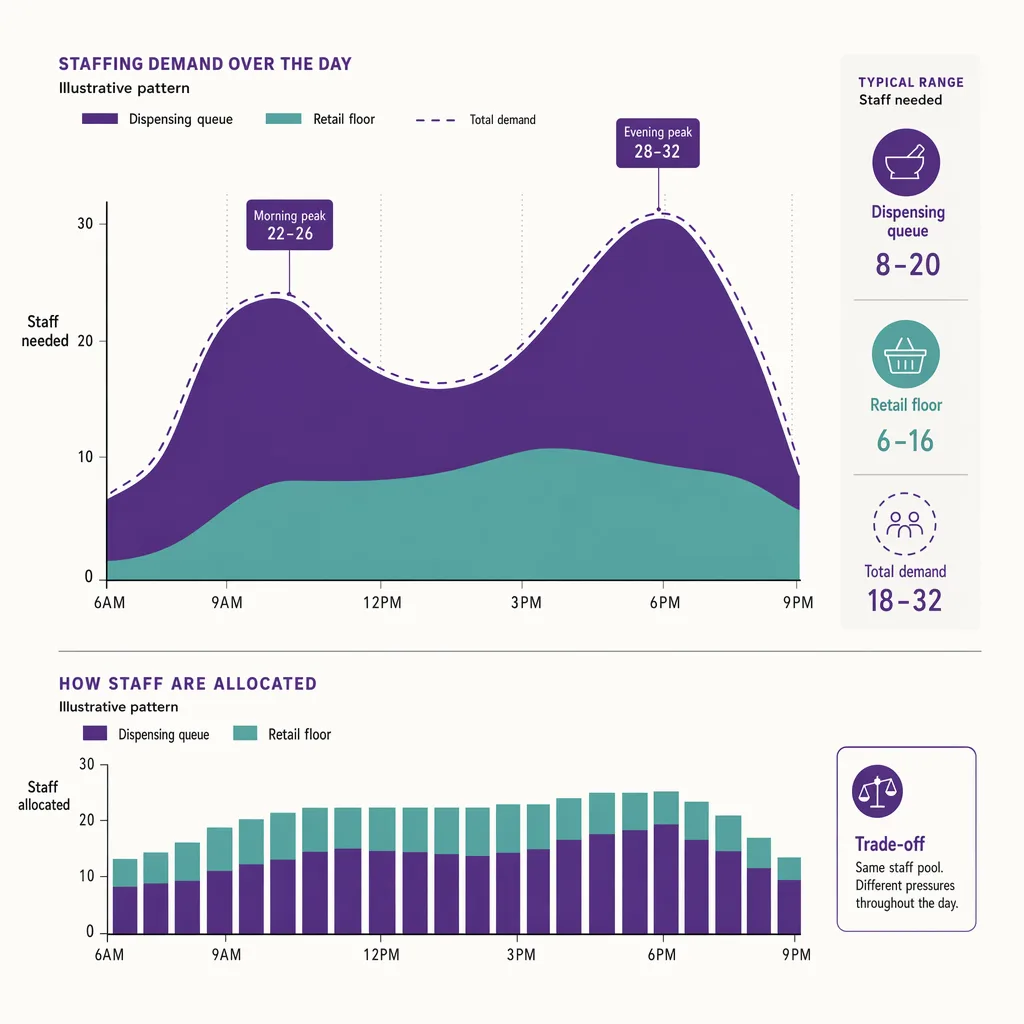
Besucherzählung trennt Eintritte von Transaktionen. Diese eine Aufteilung sagt Ihnen, wie viele browsende Kunden mit leeren Händen hinausgehen, wie die Rezeptschlange über den Tag steigt und fällt und ob ein ruhiger Nachmittag geringe Besucherfrequenz oder geringe Konversion ist. Dieser Leitfaden behandelt, warum gerade eine Apotheke von der Zählung profitiert, wie man Rezeptbesuche gegen browsende Kunden liest und wie man die Theke nach der Schlange statt nach der Uhr besetzt, ohne eine Kamera in die Nähe des Beratungsbereichs zu bringen.
Warum die Besucherfrequenz in einer Apotheke zählen?
Eine Apotheke bedient zwei Besucherströme aus einer Tür: Menschen, die ein Rezept abholen, und Menschen, die die Handelsregale durchstöbern. Besucherzählung trennt die Gesamteintritte von den Kassentransaktionen, sodass Sie sehen können, wie viele browsende Kunden ohne Kauf hinausgehen und wie die Rezeptschlange über den Tag steigt und fällt. Das sagt Ihnen, wann Sie eine zweite Person an die Theke stellen, welche Frontsortiment-Aktionen tatsächlich Menschen anziehen und ob ein ruhiger Nachmittag geringe Besucherfrequenz oder geringe Konversion ist.
Der Rest dieses Leitfadens nimmt diese Aufteilung auseinander: Rezept gegenüber Handel, Besucherfrequenz gegenüber Warenkorb und die Personalentscheidung, die aus beidem folgt.
Der Schmerzpunkt der Apotheke: Rezeptschlange und Verkaufsfläche konkurrieren um dasselbe Personal
Der schwierige Teil beim Betrieb einer Apotheke ist, dass die Nachfrage nach den beiden Funktionen nicht im Gleichschritt eintrifft. Eine Welle von Rezeptabholungen kann mittags landen oder nachdem die Vormittagssprechstunde der örtlichen Praxis sich geleert hat, genau dann, wenn ein Mitarbeiter auf die Fläche gegangen ist, um aufzufüllen oder einen Handelskunden zu bedienen. Die Rezeptschlange wird länger, das Warten fällt auf, und der browsende Kunde, der eine schnelle Antwort brauchte, gibt auf und geht.
Kassendaten verbergen das vollständig. Eine schwache Kassenstunde liest sich gleich, ob der Laden leer war oder voller Menschen, die das Team nicht bedienen konnte. Sie können Unterbesetzung nicht von geringer Nachfrage unterscheiden, was bedeutet, dass Sie keines von beidem mit Zuversicht beheben können. Eintritte gegen Transaktionen zu zählen macht den Unterschied sichtbar: Sind die Eintritte hoch und die Transaktionen flach, ist das Problem nicht die Besucherfrequenz, es ist die Konversion oder die Servicegeschwindigkeit. Das ist dieselbe Logik hinter jedem ernsthaften Retail-Analytics-Programm für Filialbetreiber, angewandt auf ein Format, in dem die Schlange und die Fläche in entgegengesetzte Richtungen ziehen.
Es gibt einen strukturellen Grund, warum die beiden Ströme kollidieren. Die Abgabe ist keine sofortige Transaktion. Ein abgegebenes Rezept muss geprüft, kommissioniert, etikettiert und oft geklärt werden, sodass ein einzelner Rezeptkunde einen Apotheker mehrere Minuten binden kann, während sich drei Handelskunden an derselben Theke dahinter aufreihen. In einer kleinen Apotheke sind dieselben ein oder zwei Personen hinter der Theke die Rezeptur, die Kasse und die Quelle der Medikamentenberatung, nach der ein browsender Kunde fragt. Wenn die Nachfrage nach allen dreien zusammen landet, gibt etwas nach, und was meist nachgibt, ist der Handelsverkauf, weil die regulierte Arbeit zuerst kommen muss. Der Betreiber sieht diesen verlorenen Verkauf nirgendwo, weil er nie eine Kasse erreicht hat.
Rezeptbesuche von browsenden Kunden trennen
Das Nützlichste, was eine Apotheke mit Zähldaten tun kann, ist, nicht mehr alle Eintritte als eine Zahl zu behandeln. Eine Türzählung ist ein Anfang, aber der operative Wert kommt daraus, den Mix zu verstehen.
Einen Teil dieses Mixes können Sie aus Zeitpunkt und Zonierung ableiten. Rezeptgetriebener Verkehr neigt dazu, sich um die Zeiten zu ballen, zu denen örtliche Rezepte ausgestellt werden, und um die Rezepttheke; Handels-Browsing verteilt sich über den Tag und über die Regale. Eine Apotheke, die an eine Arztpraxis angeschlossen oder in ihrer Nähe ist, sieht eine erkennbare Welle, nachdem die Vormittagssprechstunde sich leert, und wieder am späten Nachmittag, während eine Innenstadtapotheke mit hoher Kundenfrequenz ein flacheres, handelsgetriebenes Muster mit darübergelegten Rezeptspitzen sieht. Den Rezepturbereich getrennt von der allgemeinen Fläche zu zählen, wo der Grundriss es erlaubt, schärft das Bild. Der Punkt ist nicht, irgendjemanden zu identifizieren, es ist, ungefähr zu wissen, wie viel des heutigen Verkehrs für die Theke und wie viel für die Regale kam, denn die beiden brauchen unterschiedliches Personal an unterschiedlichen Orten.
Im Alltag ist das, was einem Apothekenleiter erlaubt, zwei Beschwerden zu trennen, die identisch klingen. "Es war Chaos heute Morgen" kann bedeuten, dass die Rezeptur unter einer Rezeptwelle nach der Sprechstunde begraben war, oder es kann bedeuten, dass sich die Verkaufsfläche mit browsenden Kunden füllte, die niemand bedienen konnte, weil das Team an der Rezeptur war. Diese brauchen entgegengesetzte Reaktionen: Die erste will einen zweiten Rezepturkollegen oder ein gestaffeltes Zeitfenster für die Rezeptbereitschaft, die zweite will jemanden, der auf die Fläche freigestellt wird. Ohne die Aufteilung reagiert der Leiter auf die Version, die das lauteste Teammitglied gemeldet hat.
Das ist ein Zählproblem im Kleinformat mit eigenen Eigenheiten, nah an dem, das in Personenzählung im Kleinformat-Einzelhandel behandelt wird, aber mit der zusätzlichen Komplikation, dass einer Ihrer beiden Kundenströme für einen regulierten Dienst ansteht, während der andere frei ist zu stöbern und wieder zu gehen.
Konversion im Frontsortiment: Besucherfrequenz vs. Warenkorb und die Aktionen, die sie bewegen
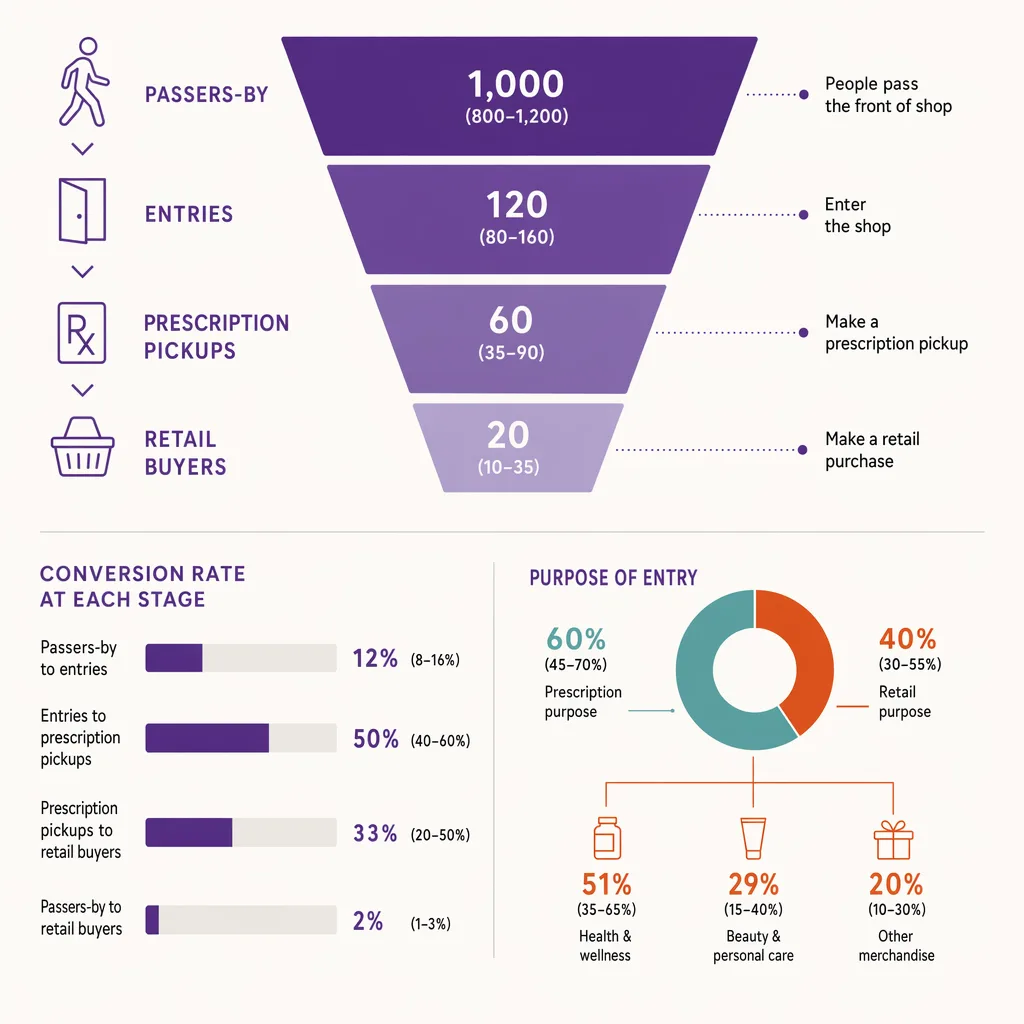
Die Handelsseite einer Apotheke steht und fällt mit der Conversion Rate, dem Anteil der Menschen, die hereinkommen und tatsächlich etwas im Frontsortiment kaufen. Ohne eine Besucherzahl können Sie sie gar nicht berechnen; Sie haben nur Transaktionen, die Ihnen sagen, was verkauft wurde, nicht was möglich war.
Mit Eintritten und Transaktionen nebeneinander wird die Konversion zu einer Zahl, die Sie bewegen und messen können. Die Methode ist die standardmäßige, dargelegt in Conversion Rate berechnen: Transaktionen geteilt durch Eintritte über dasselbe Zeitfenster. Die apothekenspezifische Nutzung ist, zu prüfen, ob eine Frontsortiment-Aktion tatsächlich Menschen anzieht oder nur Menschen rabattiert, die ohnehin gekauft hätten. Eine Schaufenster- oder Regalkopf-Aktion sollte sich als mehr Eintritte, mehr Konversion oder beides zeigen. Bewegt sie keines von beidem, kostet sie Marge, ohne Besucherfrequenz zu bringen. Die Zählung ist, was Sie die beiden auseinanderhalten lässt, statt anzunehmen, die Aktion habe gewirkt, weil sich die Woche voll anfühlte.
Die Apothekenkonversion hat eine Feinheit, die der Einzweckhandel nicht hat. Ein großer Anteil der Eintritte sind Rezeptabholer, die nicht die Absicht hatten, etwas im Frontsortiment zu kaufen, sodass eine rohe filialweite Conversion Rate immer niedrig aussieht und leicht als scheiternde Verkaufsfläche fehlgedeutet wird. Der ehrlichere Blick ist der Trend über die Zeit auf einem konsistenten Maß, und, wo der Grundriss getrennte Rezeptur- und Flächenzählungen erlaubt, die Konversion gemessen gegen die Menschen, die tatsächlich den Handelsbereich betraten, statt gegen alle, die durch die Tür kamen. Ein Leiter, der diese sauberere Zahl verfolgt, kann die reale Wirkung einer Planogramm-Änderung, eines saisonalen Regalkopfs oder einer Personal-Ansprache bei der Rezeptübergabe ("Während Sie warten, wir haben ein Angebot bei ...") sehen, von denen keine in einer Umsatzzahl auftauchen würde, die mit dem Rezeptvolumen schwankt.
Die Rezeptübergabe ist selbst der apothekenspezifischste Konversionshebel, den es gibt. Der Moment, in dem ein Kunde auf ein Rezept wartet, ist die eine Zeit, in der Sie seine Aufmerksamkeit und ein paar gebundene Minuten haben, und ein gut platziertes Angebot oder eine passende Ansprache ist der Unterschied, ob dieses Warten tote Zeit oder ein Verkauf ist. Die Rezeptschlange zu zählen sagt Ihnen, wann diese gebundenen Minuten in großer Zahl auftreten, was der Zeitpunkt ist, für den die Ansprache das Personal wert ist.
An der Tür zählen, nicht über dem Beratungsbereich
Apotheken verarbeiten Gesundheitsinformationen, und ein wachsender Anteil der Apothekenarbeit findet in einem privaten oder halbprivaten Beratungsraum statt: Impfungen, Medikationsanalysen, vertrauliche Gespräche. Eine Kamera irgendwo in der Nähe dieses Raums ist das falsche Instrument, sowohl ethisch als auch aus datenschutzrechtlicher Sicht. Die Zählung muss an der Schwelle stattfinden, indem sie Eintritte und Austritte misst, und nirgendwo in der Nähe, wo ein Patient seine Gesundheit bespricht. Das ist der zentrale Grund, warum eine Apotheke zu kamerafreier Zählung statt zu einem bildbasierten System greifen sollte.
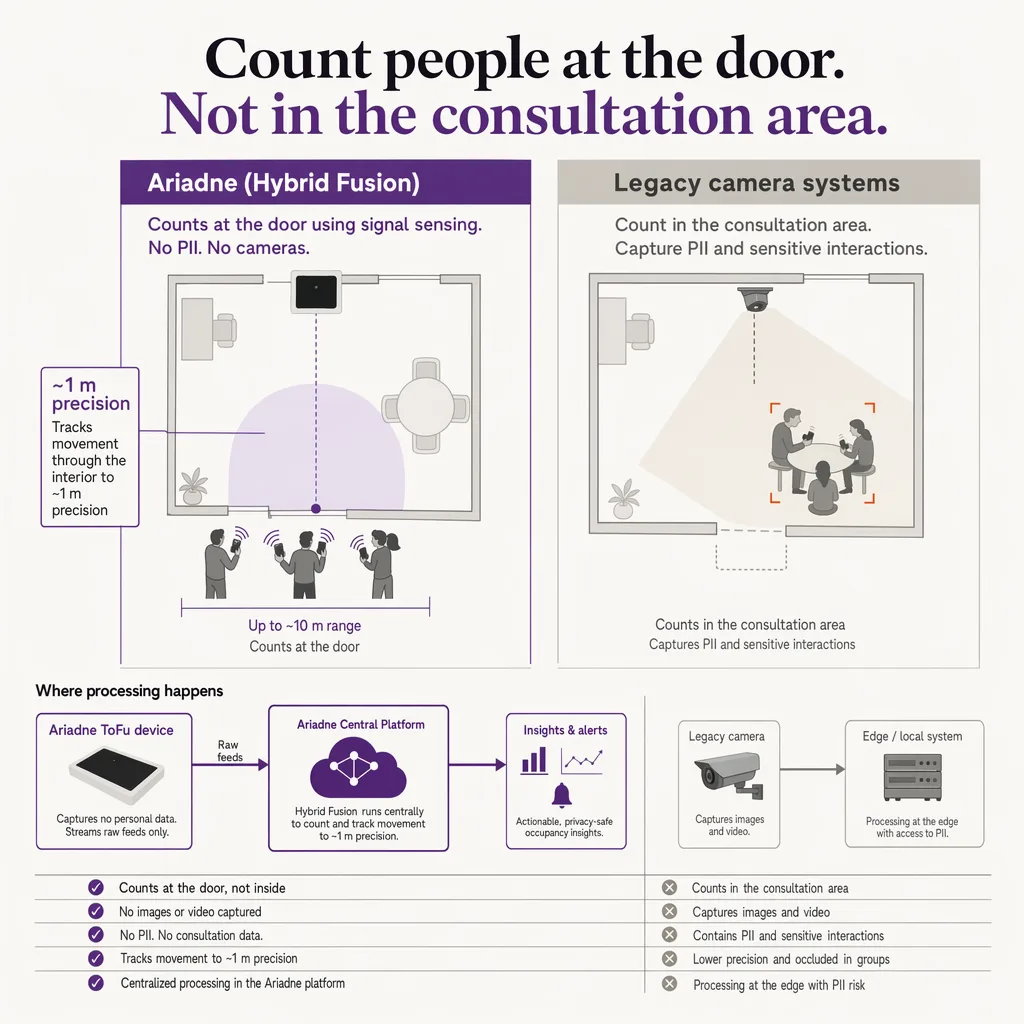
Ariadne misst dies mit Hybrid Fusion, der patentierten kamerafreien Methode. Time-of-Flight-Tiefensensorik zählt an den Eingängen jeden Besucher und erfasst Geometrie statt Bilder, während die patentierte Signalerfassung die Bewegung im Innenraum verfolgt und die Signale erkennt, die ein Telefon aussendet, selbst im Flugmodus, und diese Bewegung auf etwa einen Meter genau auflöst. Der Sensor streamt beide Datenströme an Ariadne, wo Hybrid Fusion sie zu einer Trajektorie pro Besuch zusammenführt und Zählwerte, Verweildauer und Wege berechnet. Die Datenströme tragen keine Identifikatoren: keine MAC-Adresse, keine Geräte-ID, keine biometrischen Daten, und es ist keine Kamera beteiligt. Identifikatoren werden nur gespeichert, wenn ein Besucher ausdrücklich zustimmt, was die Methode datenschutzfreundlich und außerhalb des biometrischen Bereichs hält.
Weil die Methode kein Bild und keine Kennung erfasst, gibt es keine Aufzeichnung darüber, wer die Beratung besuchte, kein Filmmaterial der Rezeptur und nichts Persönliches, das später zu sichern oder herauszugeben wäre. Die Zählung beantwortet die operative Frage, wie viele Menschen, wann und ungefähr wo, ohne den gesundheitssensiblen Boden zu berühren, der Kameras in diesem Umfeld zum Ausschlusskriterium macht. Wichtig: Das ist keine nachträgliche Anonymisierung von Daten: An der Tür werden von vornherein keine personenbezogenen Daten erhoben.
Die Theke nach der Schlange besetzen, nicht nach der Uhr
Die Entscheidung, in die all das mündet, ist der Personaleinsatz. Ein Apotheken-Dienstplan, der nach der Uhr aufgebaut ist, immer zwei, drei mittags, unterstellt eine Nachfrageform, die der realen vielleicht nicht entspricht. Die Verkehrskurve aus der Zählung zeigt die tatsächlichen Spitzen: wann die Rezeptschlange sich aufbaut, wann sich die Verkaufsfläche füllt und entscheidend wann die beiden zusammenfallen und Sie an beiden Orten gleichzeitig Deckung brauchen.
Das Personal an diese Kurve anzupassen ist dieselbe Disziplin der Besetzung nach der Kundenfrequenz, die im ganzen Einzelhandel angewandt wird, aber der Einsatz ist schärfer, weil eine Ihrer Schlangen für Medikamente ist. Eine zweite Person an der Rezepttheke für die vierzig Minuten, in denen die Schlange tatsächlich ihren Höhepunkt hat, tut mehr für das Patientenerlebnis, und für die Handelskonversion, die Sie verlieren, während das Team gebunden ist, als eine zusätzliche Schicht gleichmäßig über einen flachen Tag verteilt.
Dieselben Daten stützen den Fall, den ein Apothekenleiter nach oben vertreten muss. Apothekenpersonal ist knapp budgetiert, und eine Bitte um einen zusätzlichen Rezepturkollegen oder eine längere Überlappung zur Schichtmitte trifft meist auf die Antwort, der Tag sei "nicht so voll". Eine Verkehrskurve, die eine scharfe, wiederholbare Welle nach der Sprechstunde zeigt, an der der aktuelle Dienstplan eine Person zu knapp landet, ist ein konkretes Argument, dass das Personalmuster, nicht die Kopfzahl, das Problem ist. Sie kann auch den umgekehrten Ruf begründen: Deckung aus einer wirklich toten Strecke zu kürzen und in die Spitze zu verschieben, was nichts kostet und weit leichter freizugeben ist als eine Nettoerhöhung. Für einen Mehrfilialbetreiber zeigt der Vergleich der Kurven über die Filialen, welche eine Spitze teilen, die von einem fliegenden Rezepturkollegen gedeckt werden könnte, und welche Spitzen zu weit im Tag auseinanderliegen, um geteilt zu werden, was die Art Entscheidung ist, die sonst nach einem Gefühl getroffen wird, welche Filiale "am vollsten wirkt".
Apothekendienste und der Terminkalender
Ein wachsender Anteil der Apothekenarbeit sind gebuchte oder Walk-in-Klinikdienste: Impfungen, Blutdruckkontrollen, Medikationsanalysen, Beratungen bei kleineren Beschwerden. Diese ziehen einen Mitarbeiter für die Dauer des Termins ganz von der Theke ab, was jede bereits beschriebene Personalspannung verschärft. Die Zählung kann den Terminkalender nicht sehen, aber neben ihm gelesen, zeigt die Besucherkurve, ob ein Klinik-Slot in die vollste Thekenstunde des Ladens gelegt wurde, was genau die Zeit ist, in der Sie es sich am wenigsten leisten können, einen Apotheker an den Beratungsraum zu verlieren. Wiederkehrende Dienst-Slots in die gemessenen Täler zu verschieben, statt in die angenommenen, schützt sowohl die Rezeptschlange als auch die Verkaufsfläche während der echten Spitzen. Die Zählung ist die Eingabe, die "wann sind wir ruhig genug, um die Grippeschutzsprechstunde durchzuführen" von einer Vermutung in eine Planungsregel verwandelt.
FAQ
Zeichnet die Besucherzählung in der Apotheke Patienten oder Gesundheitsinformationen auf?
Nein. Kamerafreie Zählung misst, wie viele Menschen die Tür passieren, nicht wer sie sind oder warum sie kamen. Sie erfasst kein Bild, keine Kennung und keine Gesundheitsinformation, und sie ist am Eingang platziert, nie über einem Beratungs- oder Rezepturbereich. An der Tür werden von vornherein keine personenbezogenen Daten erhoben.
Wie trennt die Zählung Rezeptbesuche von Handelskunden?
Sie identifiziert keine Einzelpersonen. Sie leitet den Mix aus dem Zeitpunkt und aus der getrennten Zählung des Rezepturbereichs von der allgemeinen Fläche ab, wo der Grundriss es erlaubt. Das reicht, um ungefähr zu wissen, wie viel des Tagesverkehrs für die Theke gegenüber den Regalen kam, was den Personaleinsatz treibt.
Warum ist die Besucherfrequenz besser als Kassendaten für eine Apotheke?
Kassendaten zeigen nur Transaktionen, sodass eine ruhige Stunde gleich aussieht, ob der Laden leer war oder voller Menschen, die das Team nicht bedienen konnte. Die Besucherzählung zählt jeden, der hereinkam, sodass Sie die Konversion berechnen und geringe Nachfrage von Unterbesetzung oder langsamem Service unterscheiden können.
Kann die Zählung mir sagen, ob eine Frontsortiment-Aktion funktioniert hat?
Ja. Eine Aktion, die funktioniert, sollte Eintritte, Konversion oder beides über ein vergleichbares Zeitfenster heben. Bewegen sich Besucherfrequenz und Konversion nicht, hat die Aktion bestehende Käufer rabattiert, ohne neue Besucherfrequenz anzuziehen, was die Zählung sichtbar macht und die Annahme nicht.
Wo wird der Zähler in einer Apotheke installiert?
Am Eingang, wo er Menschen hinein und hinaus misst. Er wird bewusst von der Rezeptur und den Beratungsbereichen ferngehalten, sowohl weil dort die datenschutzsensible Aktivität stattfindet als auch weil die operative Frage lautet, wer den Laden betritt, nicht was er an der Theke tut.
Kann eine kleine Einzelstandort-Apotheke das nutzen, oder ist es nur für Ketten?
Ein einzelner Standort profitiert ebenso wie eine Kette, weil das Kernproblem, zwei Kundenströme, die um ein oder zwei Mitarbeiter konkurrieren, in einer kleinen Apotheke am schärfsten ist. Die Daten, die ein einzelner Laden braucht, sind bescheiden: eine genaue Eintrittszählung und, wo der Grundriss es erlaubt, eine getrennte Rezepturzählung. Eine Kette gewinnt den zusätzlichen Wert, Filialen zu vergleichen und fliegende Deckung zu verschieben, aber der Personal- und Konversionsfall steht an einem Standort für sich.
Wie arbeitet die Besucherkurve mit dem Terminkalender für Dienste zusammen?
Der Zähler sieht keine Termine, aber die Verkehrskurve neben dem Buchungskalender gelesen zeigt, ob ein Klinik-Slot in eine volle Thekenstunde gefallen ist. Wiederkehrende Dienste wie Impfungen in die gemessenen ruhigen Strecken zu planen, hält einen Apotheker davon ab, während der echten Rezeptspitze von der Theke abgezogen zu werden.
---


