
Same words, different measurements
Out-of-home and digital advertising share a vocabulary and almost nothing else. An impression online is an ad rendered in a browser or app; an impression out-of-home is an estimated opportunity to see a physical screen. Both are legitimate, but a media plan that adds them as if they were the same unit is adding meters to feet. This post maps the shared metric names to what each side actually measures.
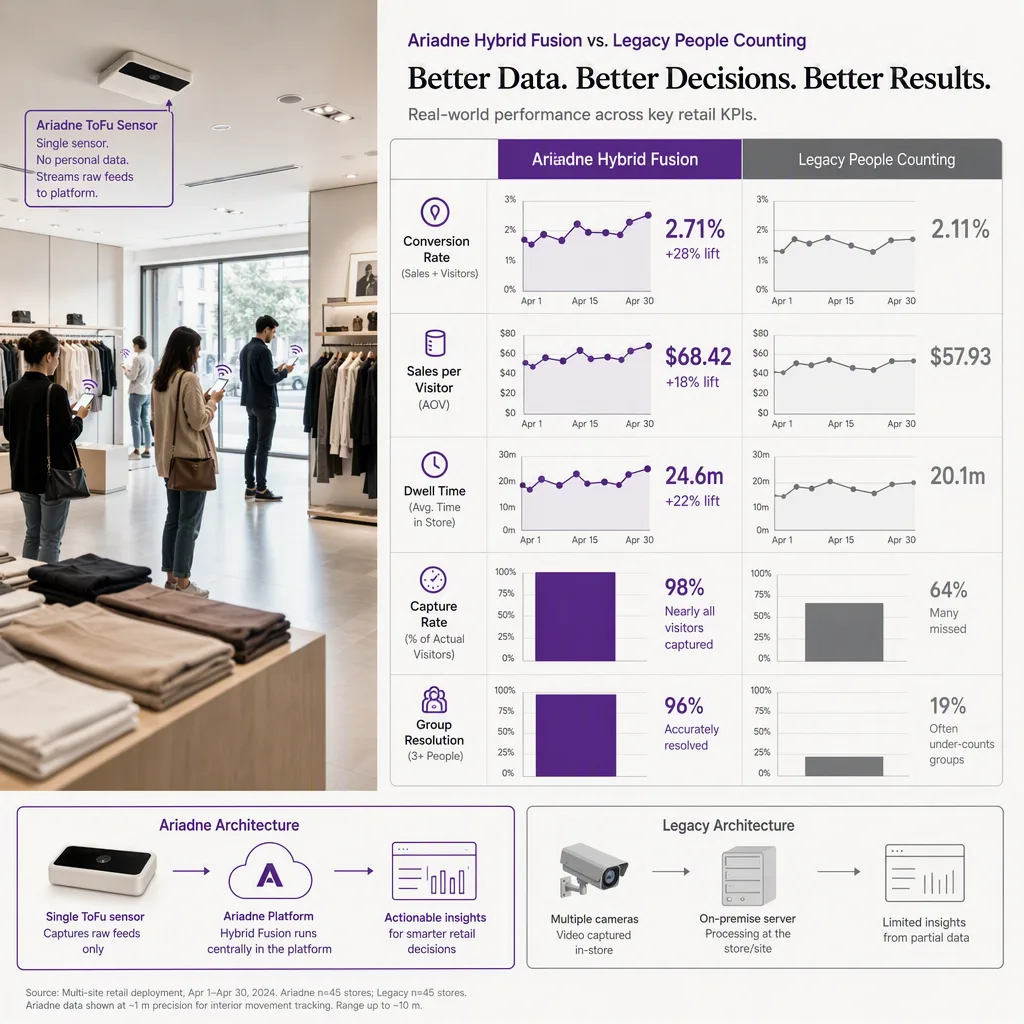
How do OOH measurement standards compare to digital reporting?
Digital reporting counts delivered events per device (renders, viewable renders, clicks, conversions) and identifies audiences through logged-in or cookied identity. OOH reporting estimates audiences for a location: counts of people with an opportunity to see the screen, adjusted to likely-to-see, with demographics modeled from panels or surveys rather than observed per person. Digital's unit is the tracked individual; OOH's unit is the measured place. Neither converts cleanly into the other, and the honest plan reports them side by side rather than summed.
The metric-by-metric map
| Metric | Digital means | OOH means |
|---|---|---|
| Impression | Ad rendered on a device | Estimated opportunity to see a play |
| Viewability | Pixels-in-viewport threshold met | Likely-to-see adjustment on passersby |
| Reach | Unique devices or IDs | Modeled unique people for the location |
| Frequency | Exposures per tracked ID | Modeled average visits times plays |
| Attribution | Click or view tied to a conversion | Visit or sales lift versus a baseline |
Each OOH cell hides a methodology choice, and the methodology is what the standards bodies audit. The current state of those standards is covered in DOOH measurement standards.
Where OOH is actually ahead
Digital's precision comes bundled with identity, and identity is exactly what regulators and platforms keep restricting. OOH never had per-person identity to lose: its measurement was always aggregate, spatial, and anonymous by nature. As digital attribution degrades under privacy pressure, the two sides are converging on OOH's home turf, aggregate measurement of real-world outcomes. Footfall-based attribution (did measured visits rise where and when the campaign ran) applies the same logic to both channels; the method is written up in retail media footfall attribution and demonstrated for a physical campaign in the billboard case study.
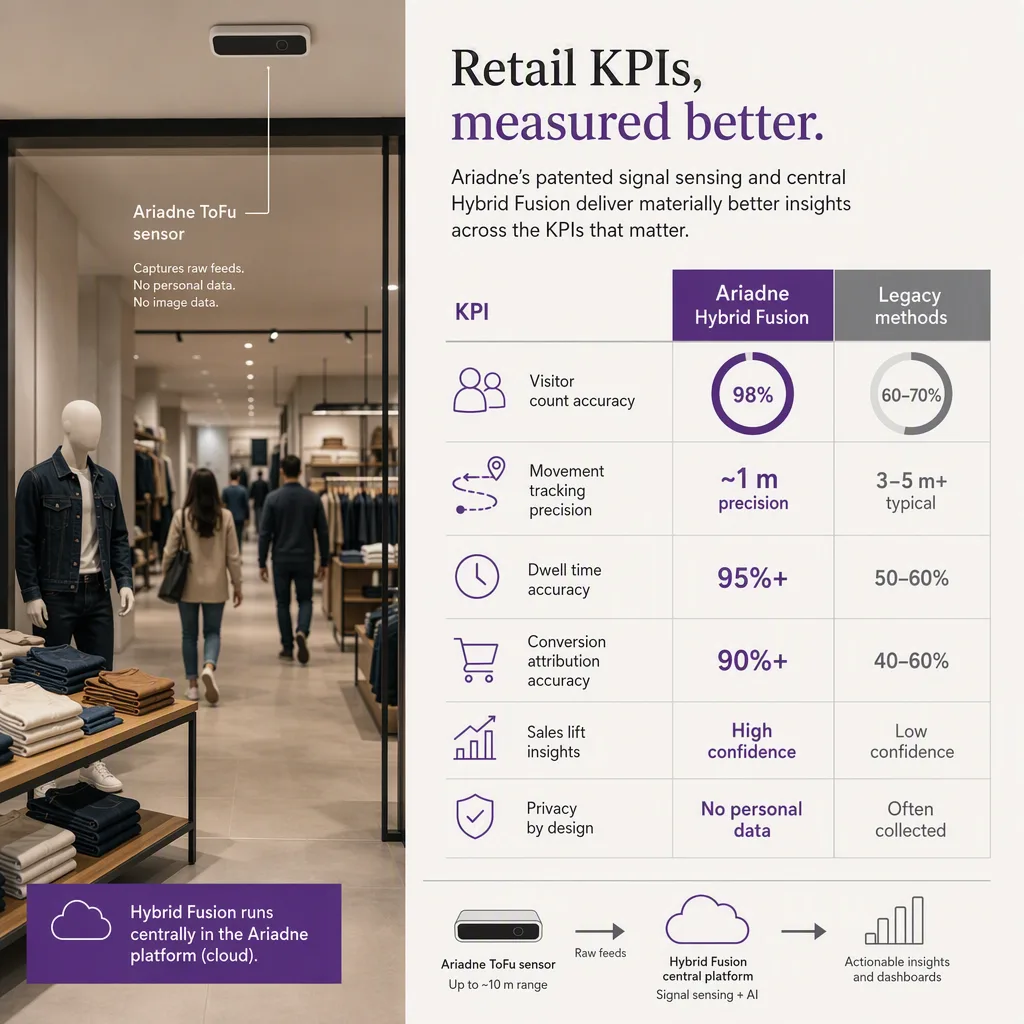
What this means for a venue or advertiser
For advertisers: keep the units separate, ask every OOH vendor where its audience numbers come from, and prefer measured counts over licensed models. For venues: the way to close the reporting-credibility gap with digital is to measure your own audience continuously, at the screen level, without cameras, so the number you sell is a count rather than an estimate. That venue-side measurement is Ariadne's role in this market; how screens are analyzed in practice is covered in analytics for digital signage.
---


