
The funnel is shared; the instruments are not
Online teams live in a fully instrumented funnel: sessions, product views, carts, checkouts, each with a number. Store teams historically had a till and an opinion. The funnel itself is the same in both worlds (arrive, browse, consider, commit), and the fastest way to lift the offline side is to translate the online vocabulary into its measurable floor equivalents, stage by stage.
How does the offline customer journey map to the online one?
Session = store visit (an entry, measured by counting). Product page view = zone visit (a journey entering a category area). Time on page = zone dwell. Add to cart = engagement signal (fitting-room entry in fashion, demo dwell in electronics, settle time in furniture). Checkout = transaction. Bounce = a visit that enters, reaches nothing, and leaves, measurable and covered in physical store bounce rate. Conversion rate = transactions over visits, the formula in retail conversion rate.
The translation table
| Online metric | Store equivalent | Measured by |
|---|---|---|
| Sessions | Visits | Entrance counting |
| Page views | Zone visits | Journey reach per zone |
| Time on page | Zone dwell | Dwell measurement |
| Add to cart | Trial/engagement events | Fitting room, demo, settle dwell |
| Cart abandonment | Engaged non-buyers | Engagement without transaction |
| Bounce rate | In-and-out visits | Short, shallow journeys |
| Conversion | Transactions / visits | Till data over counts |
The point of the table is not novelty; it is shared language. When both teams report the same funnel shape, budget conversations stop being channel wars and start being stage diagnoses.
Where each world is genuinely stronger
Online sees intent detail the floor never will: search terms, wishlists, the exact sequence of comparisons. The store sees what online cannot: the physical trial that decides considered purchases, group shopping dynamics, and the immediacy of walking out with the product. The strategic error is treating either as the degraded version of the other; the funnel stages simply distribute differently by category, which is why channel-economics debates belong at the category level, not the company level.
Making the offline numbers real
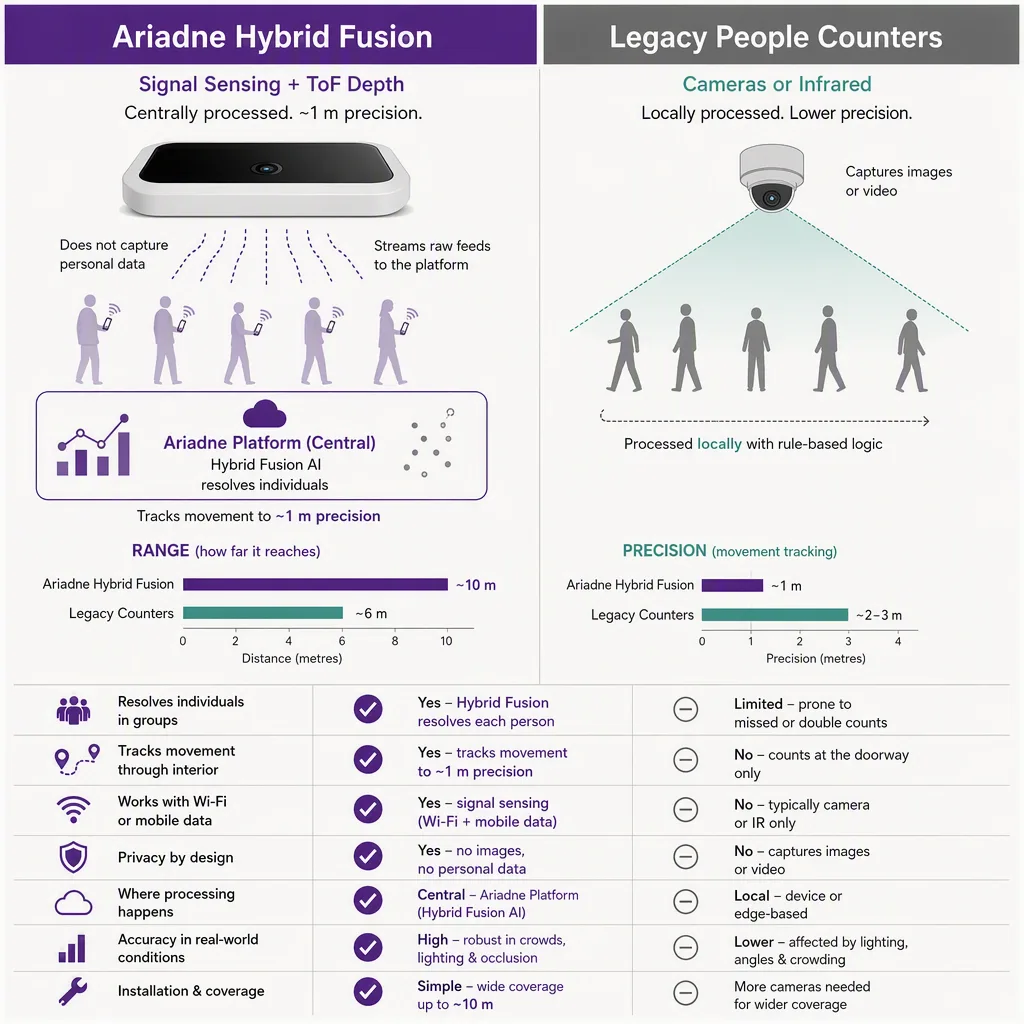
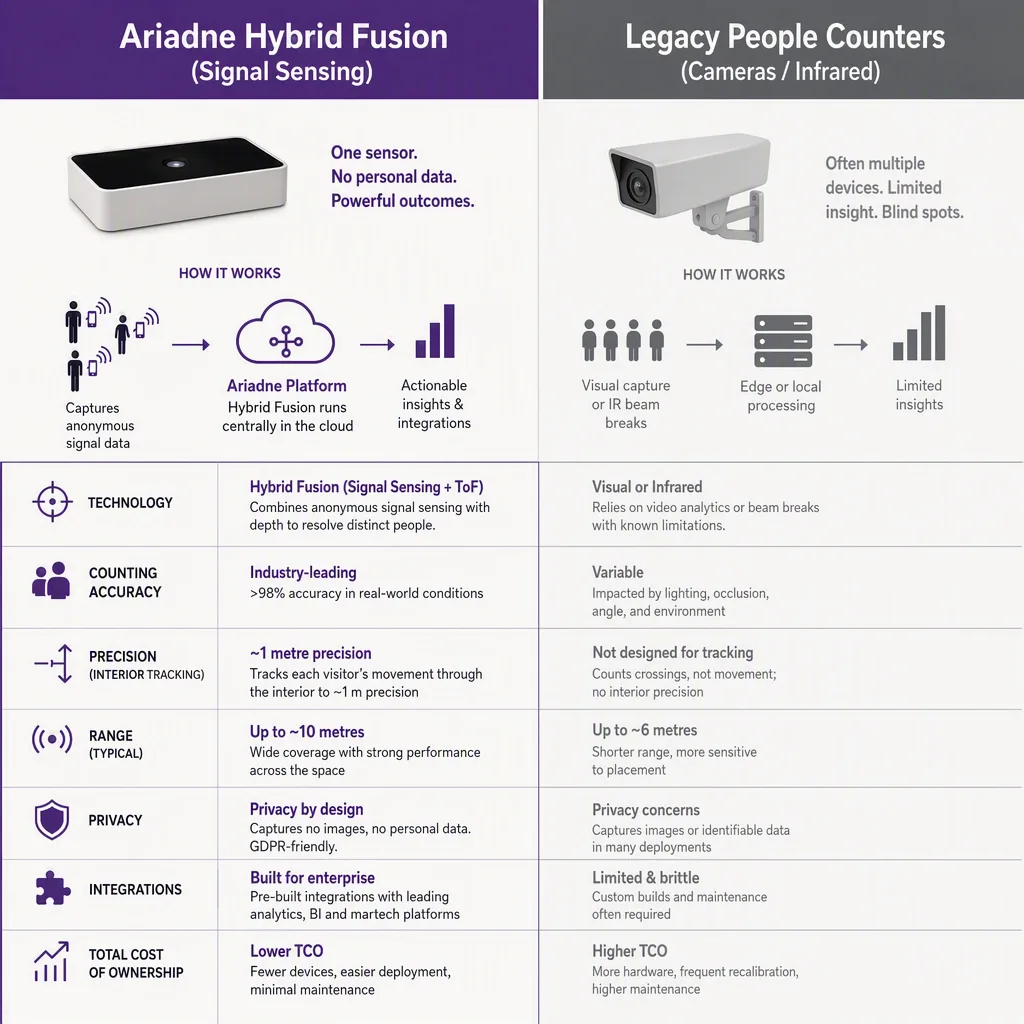
The translation only works if the store-side numbers are measured, not estimated: visits from real counting, zone reach and dwell from real journeys. Ariadne produces exactly that layer, camera-free and anonymous, which is what makes the comparison with online analytics legitimate rather than aspirational. Start with the pillar method (customer journey mapping), then hang the online vocabulary on it; the KPI set to standardize on is in customer journey KPIs.
---


