
The shop floor becomes a media channel
Retail media started as sponsored placements on retailer websites, where every impression was a logged event. Its fastest-growing frontier is the physical store: screens at entrances, aisle ends, checkout queues, and service counters, sold to brands as advertising inventory. The inventory is real and the audience is enviable, shoppers standing meters from the shelf. What lags is measurement: the store is not a browser, and pretending it is produces numbers brands eventually stop believing.
How is in-store retail media measured?
Three layers, from easiest to hardest. Delivery: play logs prove what ran on which screen, the baseline every network provides. Audience: how many people passed and dwelled near the screen while it played, which requires actual measurement in the store rather than extrapolation from transaction counts. Outcome: whether exposed periods and locations produced lift, in sales of the advertised product or in visits to its category zone, versus a clean baseline. Networks that can report all three layers command budgets; networks that stop at play logs compete on price.
The audience layer is the differentiator
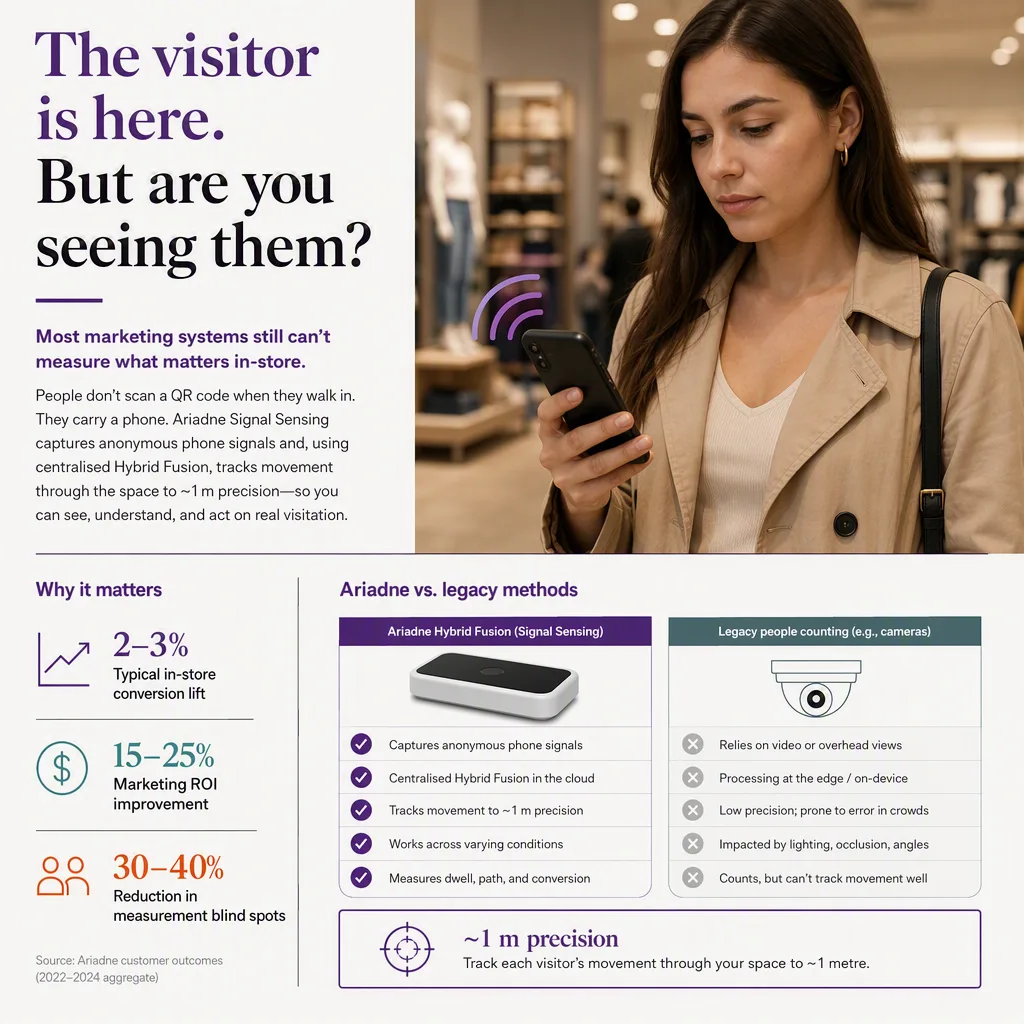
Transaction data tells a retailer who bought, not who walked past a screen without buying, and the second group is the advertising audience. Measuring it means counting presence and dwell at screen locations, hour by hour: entrance screens see everyone but briefly, queue screens see fewer people for much longer. Dwell is the difference between an exposure and a glance, which is why dwell time is the load-bearing signage metric.
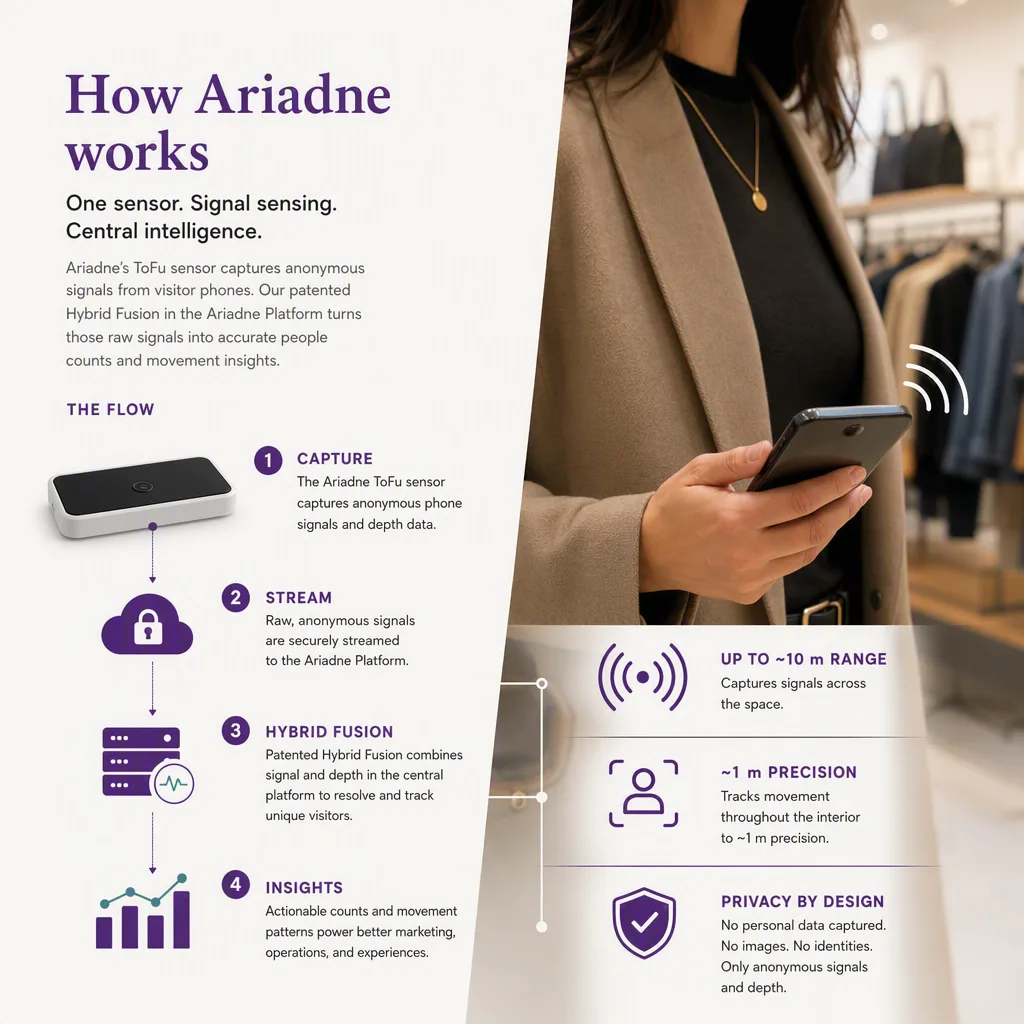
Two constraints shape how this layer gets built. It has to run permanently (a one-off audience study decays as layouts and seasons change), and in Europe especially it has to run without cameras pointed at shoppers, because a media network that requires a biometric-adjacent surveillance layer creates more legal exposure than ad revenue. Camera-free counting and dwell measurement at screen positions is exactly the layer Ariadne provides; the argument for the camera-free constraint is laid out in DOOH without facial recognition.
The outcome layer: lift, honestly
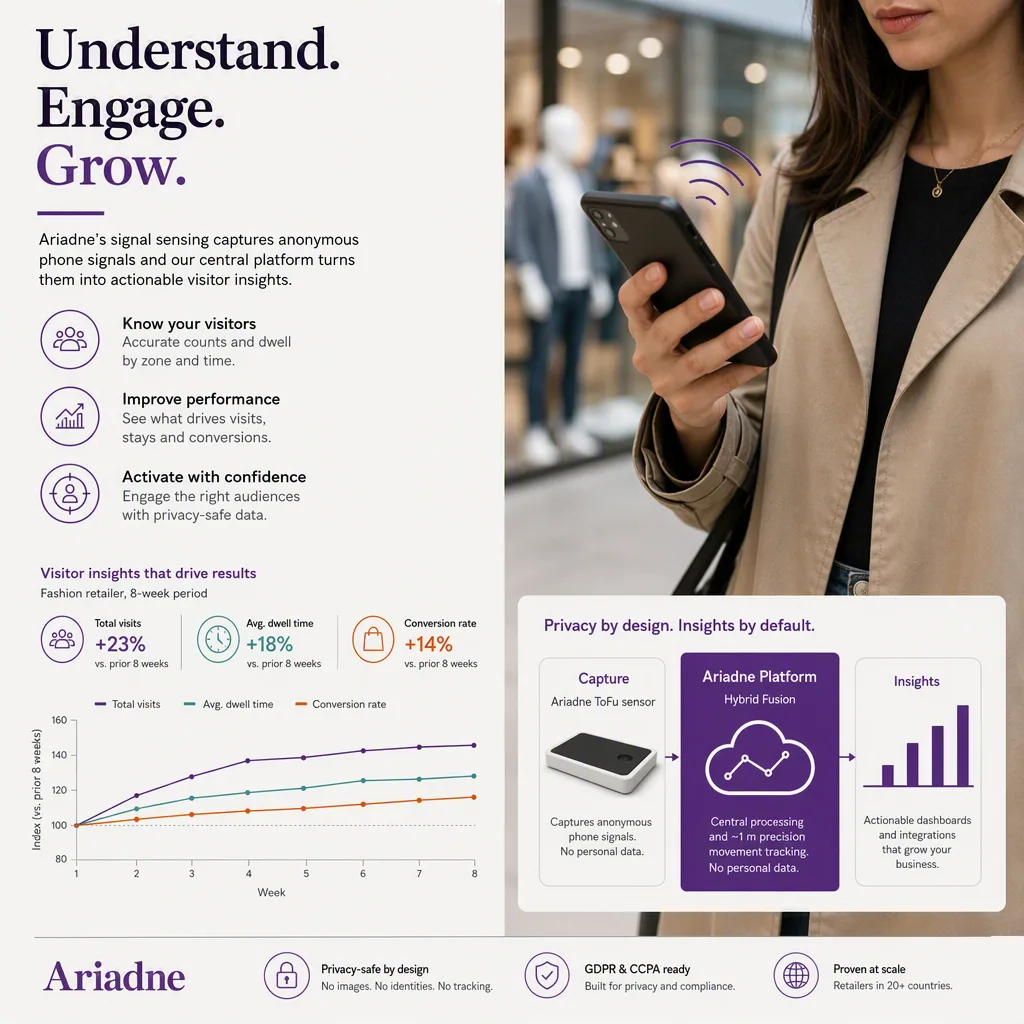
In-store lift measurement borrows the OOH playbook: compare exposed to unexposed, by time (campaign weeks versus baseline weeks) or by place (stores or zones with the campaign versus matched ones without). Category-zone visits, measured by the same counting layer, respond faster than sales and catch effects that never reach the till. The general method is described in retail media footfall attribution.
What to build first
A retailer standing up in-store media should sequence it: play logs from day one, permanent audience measurement at every screen position before rate-card negotiations, lift methodology agreed with the first anchor brands rather than retrofitted. The screen-level analytics foundation is covered in analytics for digital signage, and the standards context in DOOH measurement standards.
---


