
Programmatic braucht die Zahlen des Standorts
Programmatic DOOH versprach digitales Einkaufen für physische Screens, und die Maschinerie existiert: DSPs bieten, SSPs offerieren, Deals klären in Millisekunden. Was die Maschinerie antreibt, sind Daten über die physische Welt, und diese Daten müssen vom Standort kommen. Ein Standort mit gemessener Frequenz hat drei unterscheidbare Produkte für die Pipes; ein Standort ohne steuert eine Vermutung bei und nimmt den Preis, den die Vermutung erzielt.
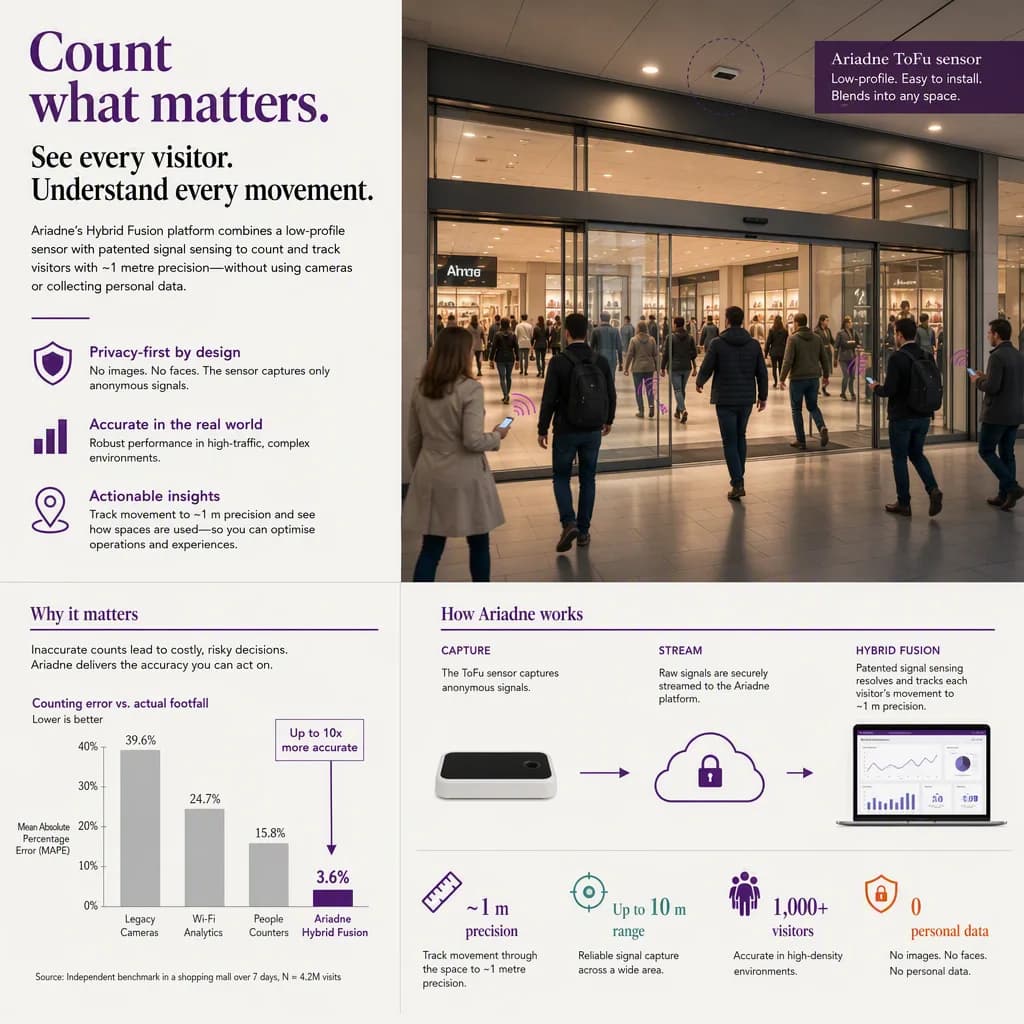
Wie erreichen Frequenzdaten eine DSP?
Drei Wege, mit steigender Reife. Audience-Pakete: Audience-Werte pro Screen und Tageszeit, an das Inventar eines SSP angehängt, nach Plan aktualisiert; sie setzen die Basispreise. Trigger: nahezu echtzeitfähige Bedingungen (aktuelle Frequenz über Schwelle, Schlange bildet sich, Zone ausgelastet), per API verfügbar, damit Buchungen dann aktivieren, wenn die Audience wirklich da ist. Reporting-Feeds: Lieferdaten nach der Kampagne in derselben Granularität wie die Buchung, damit sich das DSP-Reporting mit der Standortmessung abgleichen lässt. Die meisten Standorte beginnen mit Paketen und wachsen zu Triggern.
Audience-Pakete: das Basisprodukt
Das Paket ist die strukturierte Antwort auf "wer ist wann hier": Passanten und Verweildauer pro Screen-Position, nach Tageszeit und Wochentag aufgeteilt, so häufig aktualisiert, dass Saisonalität sichtbar wird. Zwei Eigenschaften machen ein Paket verkäuflich. Es muss aus Messung stammen statt aus einem lizenzierten Modell (Einkäufer diskontieren modellierte Audiences; den Unterschied behandelt die DOOH-Audience-Messung), und es muss konstruktionsbedingt aggregiert sein: Zählungen und Durchschnitte, nie etwas, das einem Personendatensatz ähnelt.
Trigger: den Moment verkaufen
Das programmatic-native Produkt ist konditionales Inventar: dieser Screen, wenn der Korridor heiß läuft; die Foodcourt-Screens, wenn sich Mittagsschlangen bilden. Trigger brauchen einen Live-Datenpfad von der Zählschicht zu einer API, die SSP oder DSP abfragen oder abonnieren können, mit Latenz in Minuten, nicht Tagen. Sie monetarisieren genau das, was physische Standorte wertvoll macht: Anwesenheit, die man zeitlich treffen kann. Sie sind die natürliche Fortsetzung der Attributionsarbeit aus der programmatischen DOOH-Attribution.
Die Datenschutzlinie, die halten muss
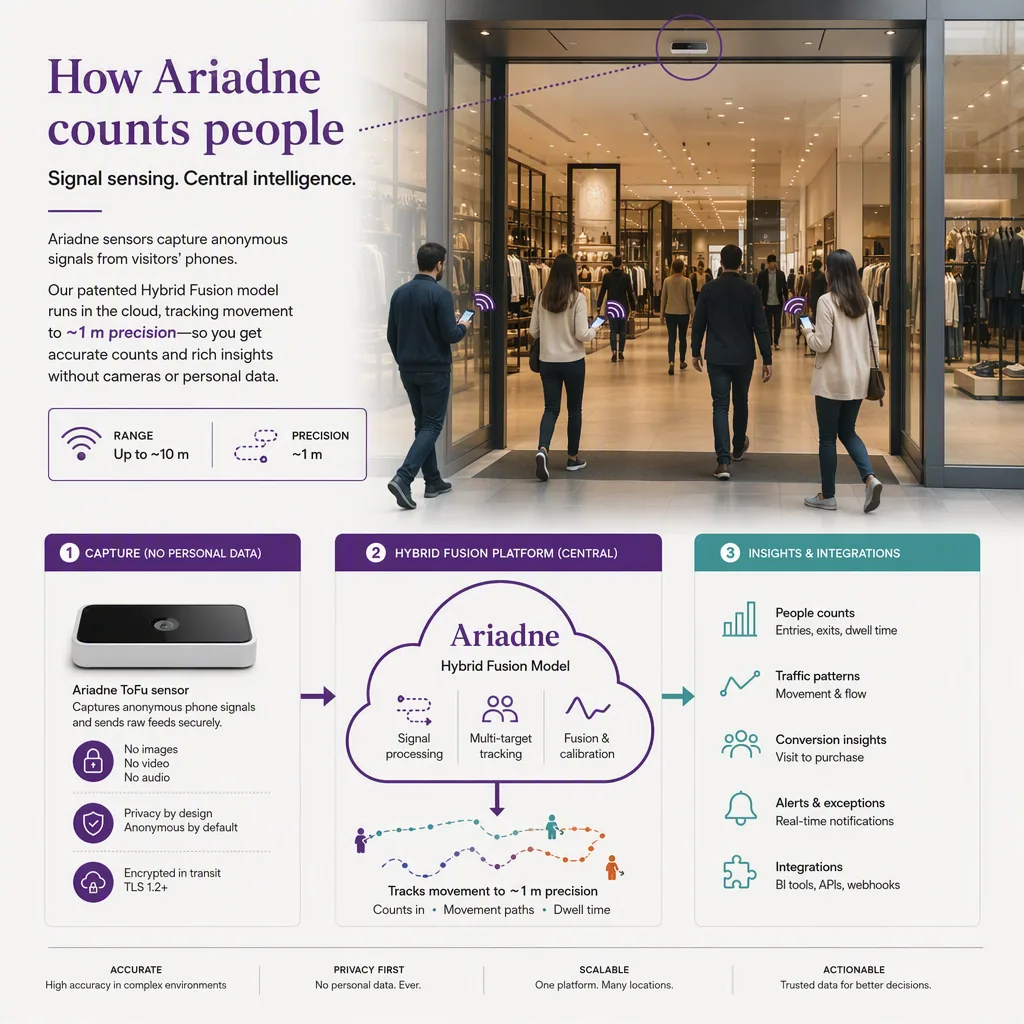
Der Instinkt der digitalen Ad-Tech ist das Datum pro Nutzer, und jedes Integrationsgespräch driftet irgendwann dorthin: Geräte-IDs, Retargeting-Pools, Kontaktgraphen. Die Antwort des Standorts muss strukturell sein, nicht vertraglich. Ariadnes Messung trägt an keiner Stelle Identifikatoren (keine MAC-Adressen, keine Geräte-IDs, keine Bilder), also sind die darauf gebauten Feeds aggregiert, weil die zugrunde liegenden Daten aggregiert sind; es gibt nichts Personenbezogenes zu verlieren, zu verkaufen oder herauszugeben. Diese Eigenschaft, vollständig argumentiert in DOOH ohne Gesichtserkennung, erlaubt einem europäischen Standort die Teilnahme an Programmatic, ohne das Einwilligungsproblem der digitalen Welt zu importieren.
Baureihenfolge für einen Standort
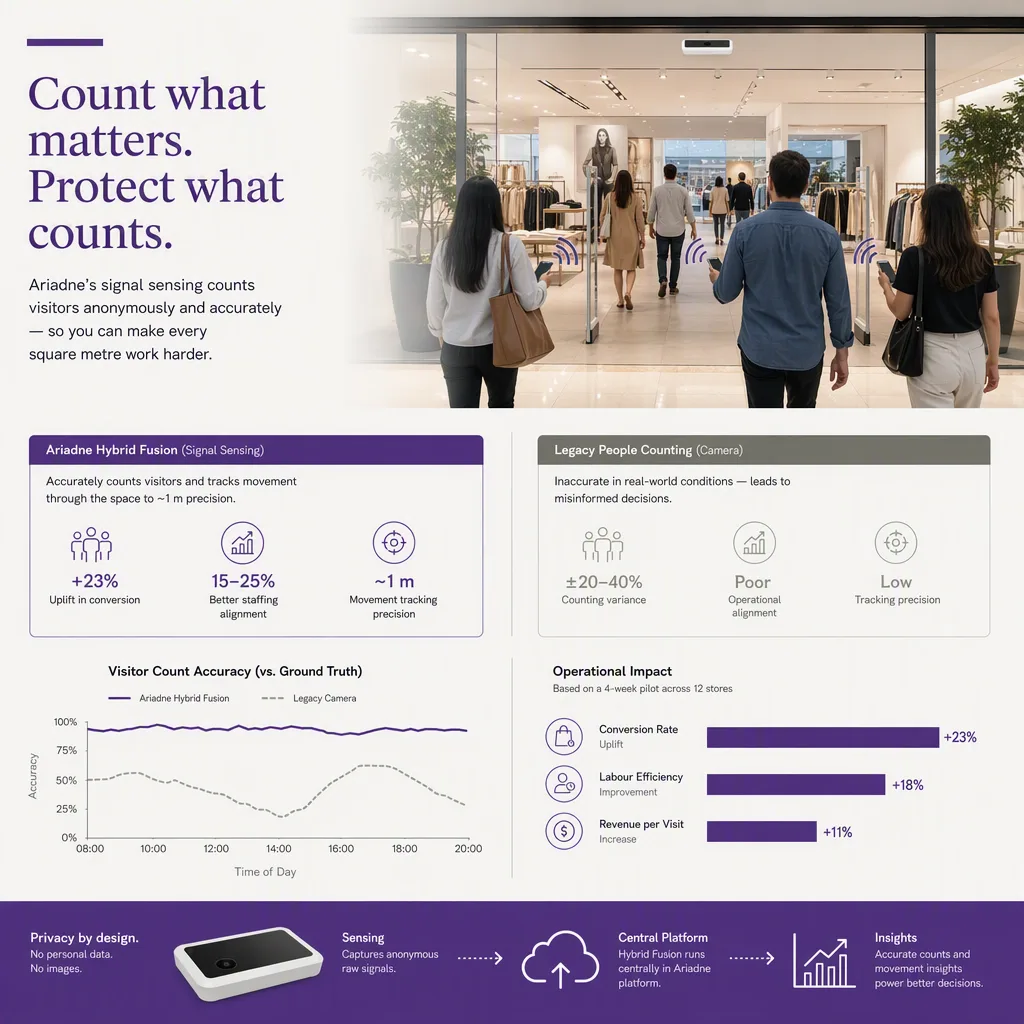
Erst Messung, an jeder Screen-Position, kontinuierlich. Dann Pakete, sobald eine volle Saison Baseline existiert. Dann Trigger, wo die Frequenz des Standorts genug variiert, um Momente zu verkaufen. Reporting-Feeds durchgehend, in der Granularität der Buchung. Die Messstandards, an denen sich diese Feeds messen lassen, sammelt der Beitrag zu DOOH-Messstandards.


