
Fashion has the longest in-store journey in retail
A grocery run is a list with legs. A fashion visit is a sequence of decisions: notice, enter, browse, touch, try, decide, and every stage can end the visit. That length is fashion's opportunity and its curse: more stages mean more places to win a shopper and more places to lose one. This post walks the journey stage by stage, with the measurable leak at each one.
What are the stages of a fashion store customer journey?
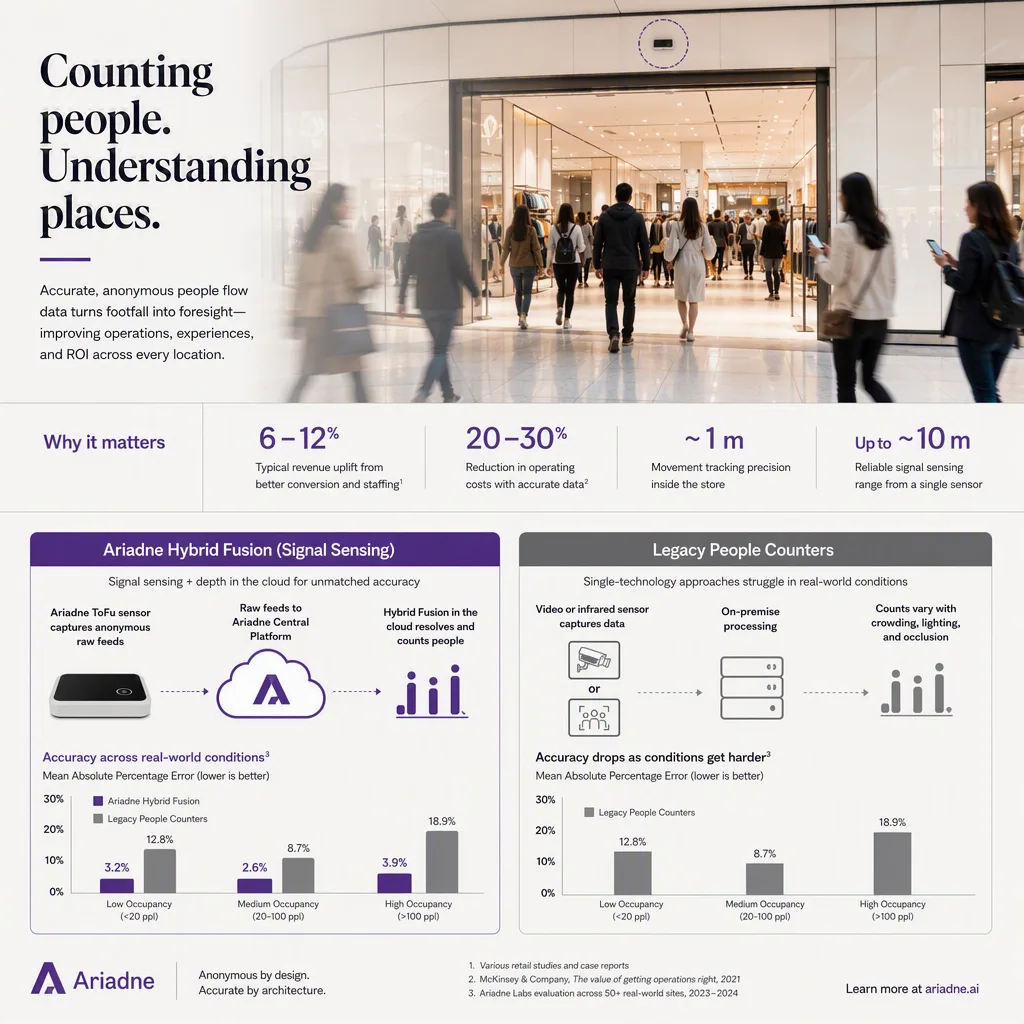
Six, in practice: attraction (window and entrance), orientation (the first meters inside), browse (racks and tables, where touch begins), engagement (carrying items, consulting a mirror or an associate), trial (the fitting room, fashion's single most decisive stage), and resolution (purchase, deferral, or exit). Each stage has a measurable pass-through rate, and the product of those rates is the store's conversion.
Attraction and orientation: the first leak
The window earns the entry; the entrance zone then wastes or invests it. Shoppers entering from the street are still adjusting and walk straight past whatever stands in the first meters, the mechanic covered in the retail decompression zone. The measurable here is capture rate (passersby who enter) and the entrance flow split: which way shoppers turn, and whether the new-season statement actually sits on that path. Retail capture rate covers the first number.
Browse and engagement: where fashion is decided by touch
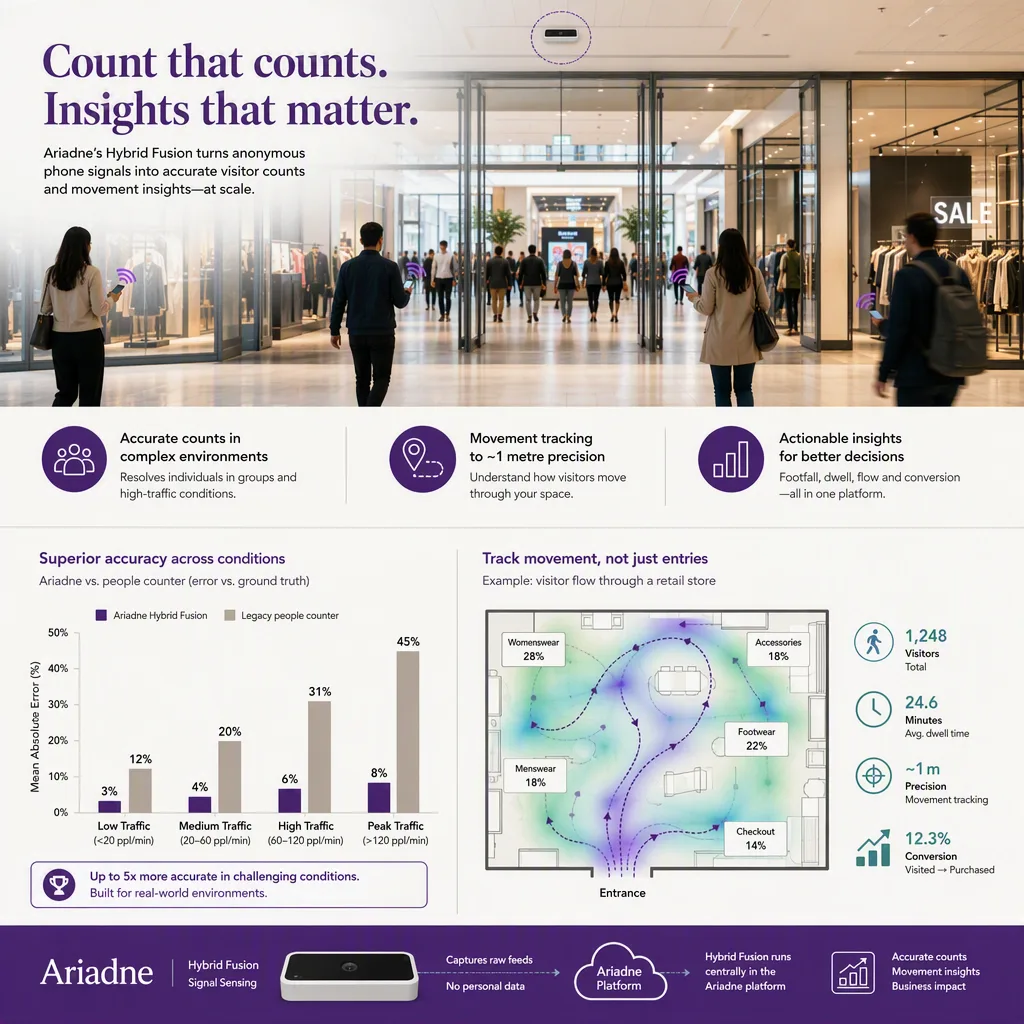
Fashion shoppers buy with their hands; a rack that gets touched outperforms a wall that gets seen. The browse stage is measured as zone reach (which product areas a journey actually enters) and dwell per zone; the engagement stage shows up as slowed paths and mirror visits. The detailed funnel arithmetic for this stage, product-area turn-in and onward rates, is already worked through in the in-store fashion funnel, and the store-wide movement picture in shopper flow.
Trial: the fitting room decides the visit
No stage predicts purchase like the fitting room: a shopper who tries is a different commercial event from one who browses. Two existing deep dives carry this stage, try-on rate in fashion and fitting room utilization; the journey view adds the connection, which paths lead shoppers to the fitting room, and which zones feed it almost nothing. A high-traffic zone that never sends anyone to trial is decoration.
Resolution: the till and the walk-out
The final split is purchase versus exit, and the useful diagnosis is which stage the exiting journeys stalled at: never touched (assortment or layout problem), touched but never tried (fitting-room friction), tried but never bought (fit, price, or queue). Store-level conversion math is in the retail conversion rate formula.
Measuring the whole journey without cameras
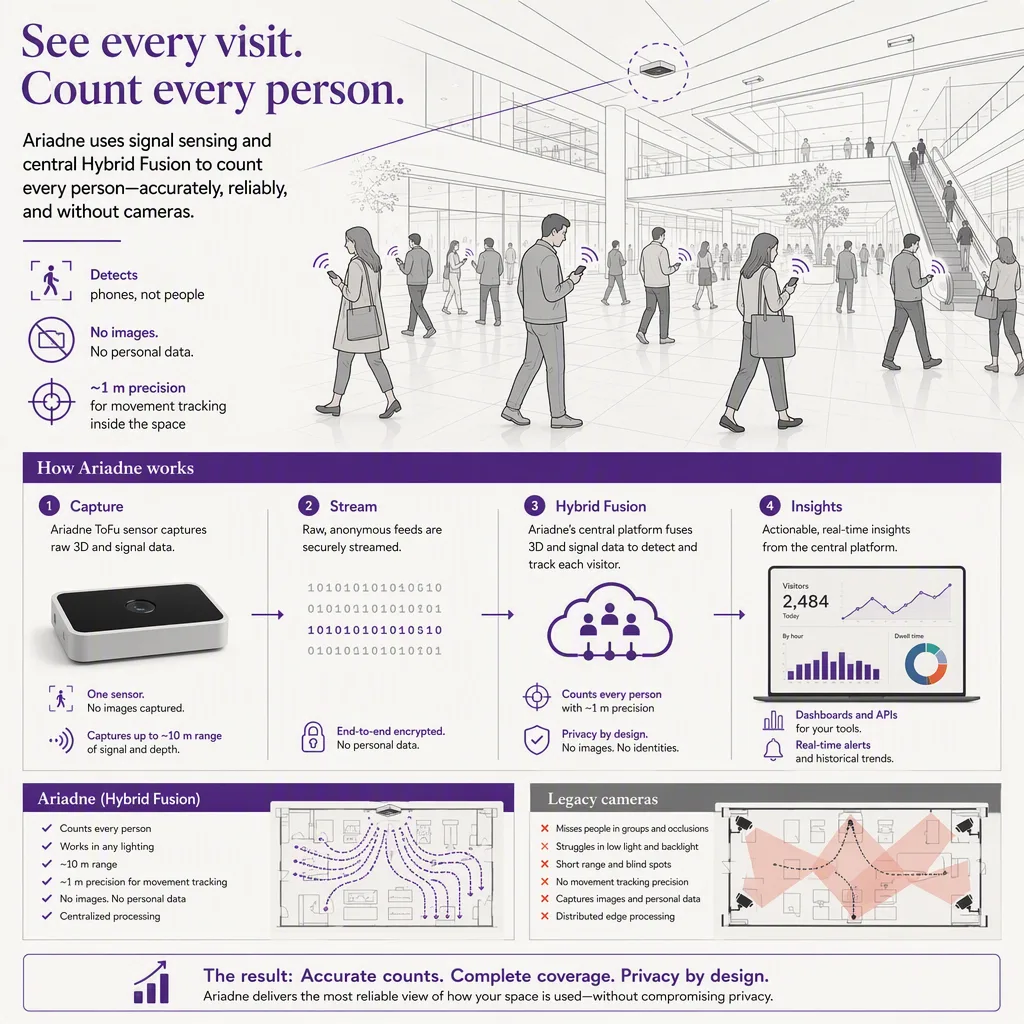
Every stage above is measurable as counts, paths, and dwell: entries, zone reach, fitting-room approach, till-queue joins. Ariadne measures that sequence camera-free, as anonymous trajectories rather than footage, so the journey analysis never touches a face or an identity. The counting-specific view for this vertical is in people counting for fashion stores, and the general method for turning journeys into a map is the pillar, customer journey mapping.
---


