
In Europe, the privacy question is a scored criterion
European public tenders for counting technology differ from their US equivalents in one decisive way: data protection is not a legal footnote handled after award, it is a technical requirement inside the evaluation, often carrying real weight in the score. A bid that answers it with a policy commitment loses to a bid that answers it with an architecture. That single difference shapes everything about how these tenders should be written and answered.
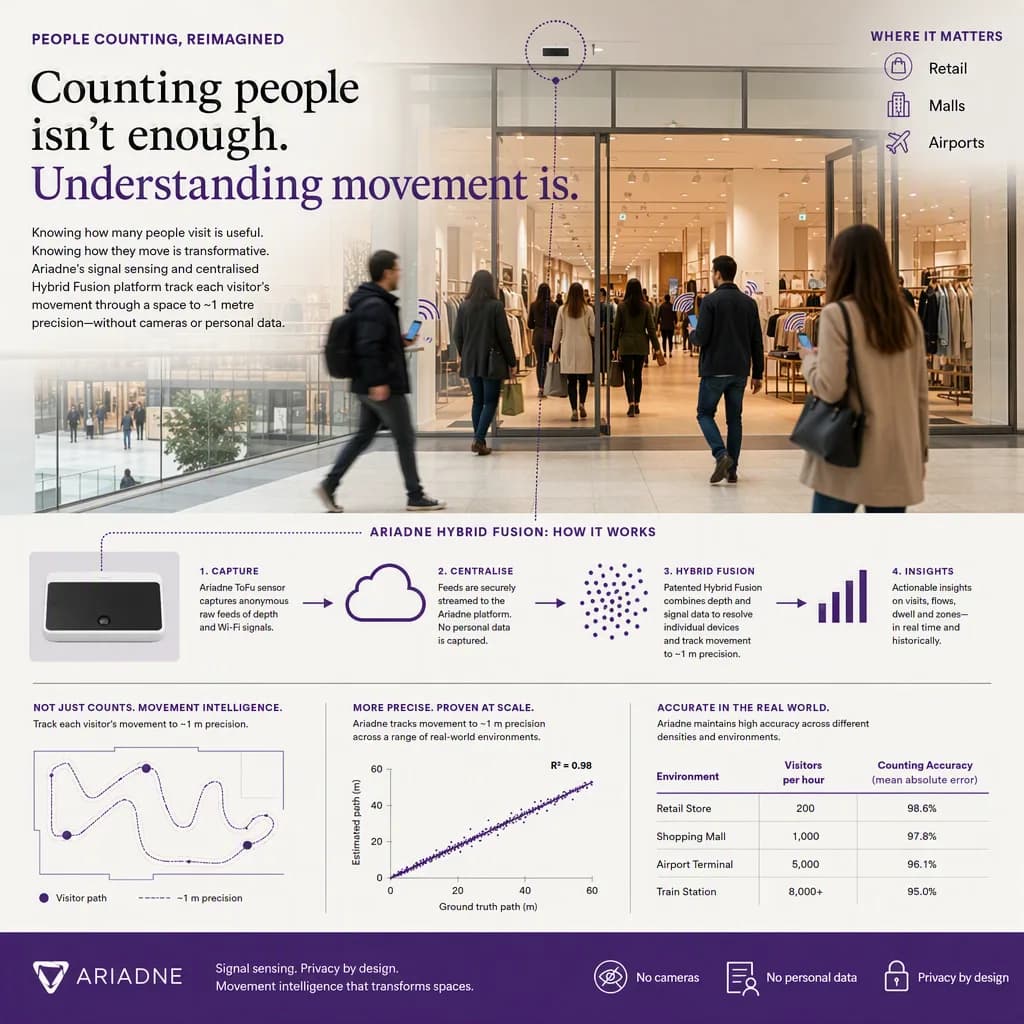
What do EU tenders ask about people counting?
Consistently: what data the sensor captures, whether any of it constitutes personal data, where processing and storage happen, what the legal basis is, whether a data protection impact assessment is required, how long data is retained, who the processors are, and what happens to the data at contract end. Alongside that sit the same operational requirements as anywhere: verified accuracy, coverage, integration, maintenance. The privacy block is where bids genuinely differentiate, because most sensor architectures answer it awkwardly and a few answer it cleanly.
How the process is structured (without the statute names)
Above a spend threshold, tenders are published Europe-wide and the process is formal: criteria fixed in advance, questions answered to all bidders simultaneously, award to the most economically advantageous tender rather than automatically to the lowest price, and a standstill period in which unsuccessful bidders may challenge. Below that threshold, national and municipal rules apply and are lighter but still competitive. The practical consequence for buyers: quality criteria only count if you wrote them down before bids arrived. The practical consequence for bidders: the specification is the whole game, and clarification questions are the only legitimate way to influence it.
The DACH specifics that catch vendors out
German, Austrian, and Swiss buyers add a layer that trips unprepared bidders: works-council consultation. In workplaces, a counting deployment touches co-determination, so a solution that cannot demonstrate it does not measure individual employees creates an internal negotiation the buyer may not be willing to run. Municipal buyers additionally tend to require German-language documentation and, frequently, EU-region data processing as a stated requirement rather than a preference; the residency question is covered in data residency for retail analytics, and the assessment paperwork in the DPIA template for people counting.
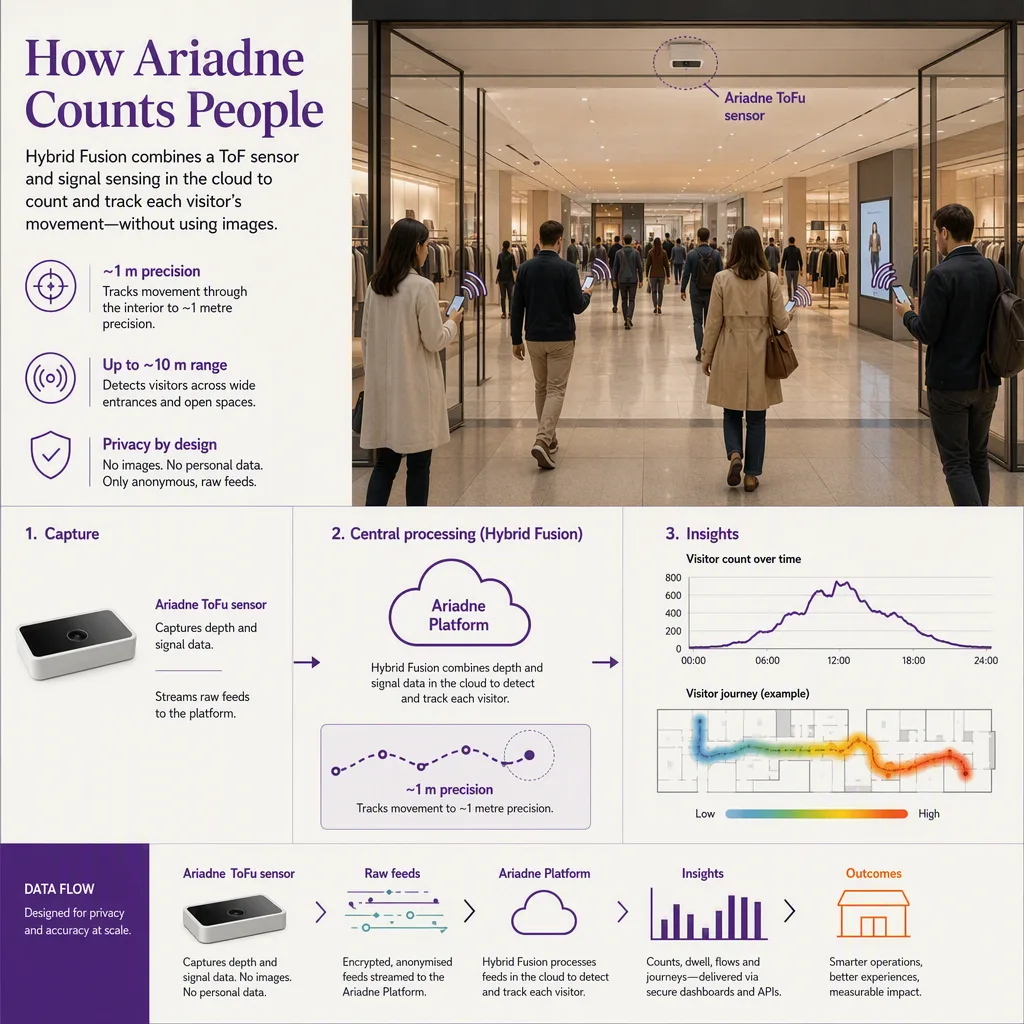
Answering the privacy block credibly
Three answers separate a strong bid. First, state what the sensor physically cannot capture, not what your policy forbids: capability beats commitment in an evaluation. Second, supply the assessment material rather than promising it, since a buyer who receives a ready DPIA input has less work than one who must extract it. Third, be specific about retention and end-of-contract data handling, the questions most bids answer with boilerplate. The GDPR-specific framing of counting is in GDPR and people counting.
Where Ariadne fits
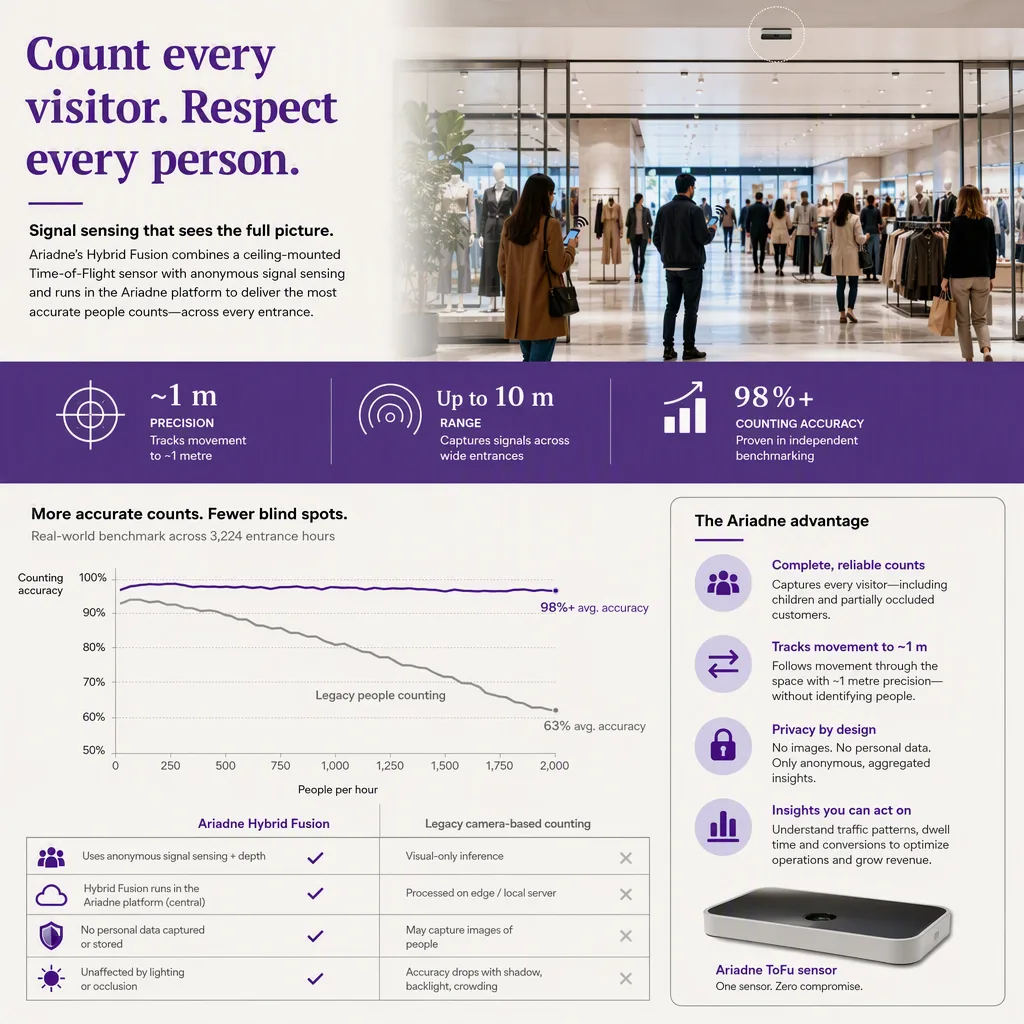
Ariadne measures without cameras and without identifiers, so the answer to "does this process personal data at the sensor" is structural rather than procedural, and the works-council conversation starts from "this cannot measure an individual employee" instead of from a policy. The operational requirements still have to be met on their own merits, and the honest way to prove them is on the buyer's own site: acceptance testing.
---


