
The spec sheet nobody reads until the campaign underdelivers
Every digital-out-of-home buy comes with a technical spec sheet, and most of it gets skimmed. Then the campaign report lands, the delivered numbers do not match the plan, and the explanation turns out to have been on the spec sheet all along. This post decodes the lines that matter, for buyers pricing a campaign and creatives building for the screen.
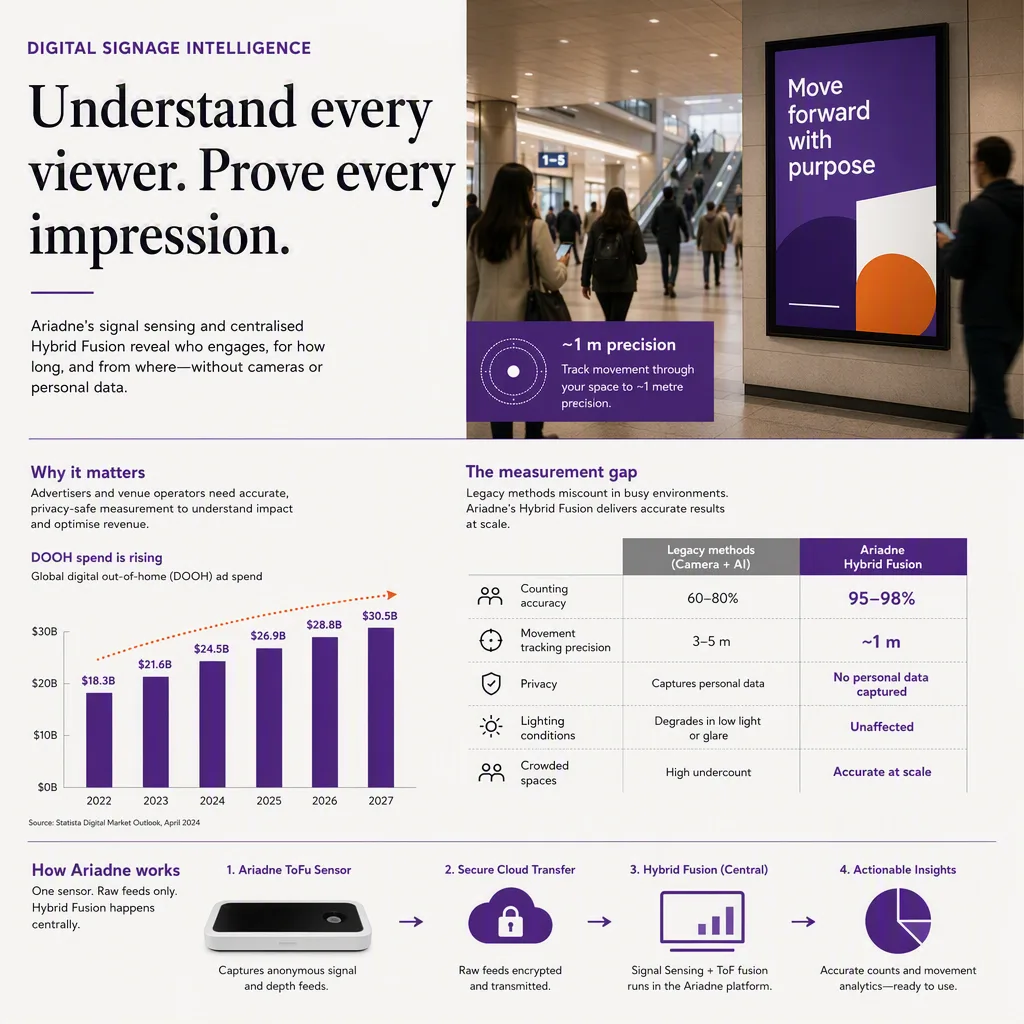
What specs matter most in a DOOH buy?
Four groups decide most outcomes: display specs (resolution, orientation, physical size, and viewing distance, which together set what a creative can legibly say), scheduling specs (loop length, slot length, and share of voice, which set how often the ad actually plays), delivery specs (play logs and proof-of-play reporting, which set what you can verify), and audience specs (how the network counts and multiplies impressions, which sets what an "impression" means on that network). Price sits on top of all four.
Display and creative specs
Resolution and aspect ratio are the obvious lines. The less obvious one is viewing distance: a screen across a concourse supports far less copy than an eye-level panel beside a queue. Networks that publish a recommended word count or minimum type size are doing creatives a favor; where they do not, the working rule is that dwell time near the screen decides how much message fits. A screen next to a waiting area can carry sequential storytelling; a screen over an escalator gets one thought. The measurement side of that difference is covered in digital signage dwell time.
Scheduling specs: where delivered volume is really set
Loop length divided by slot length is the number of advertisers sharing the screen, and share of voice is your slice of it. Two networks quoting the same weekly rate can deliver very different exposure if one runs a short loop and the other a long one. Ask for loop length, slot length, share of voice, and daypart distribution in writing; they are the volume levers, and they are negotiable.
Delivery and proof: play logs
A play log records what played, where, and when. It is the DOOH equivalent of an ad server log and the basis of proof-of-play reporting. What a play log does not record is whether anyone was there. That gap between plays and people is exactly where audience measurement enters, and it is the subject of the companion post on how DOOH audiences are measured.
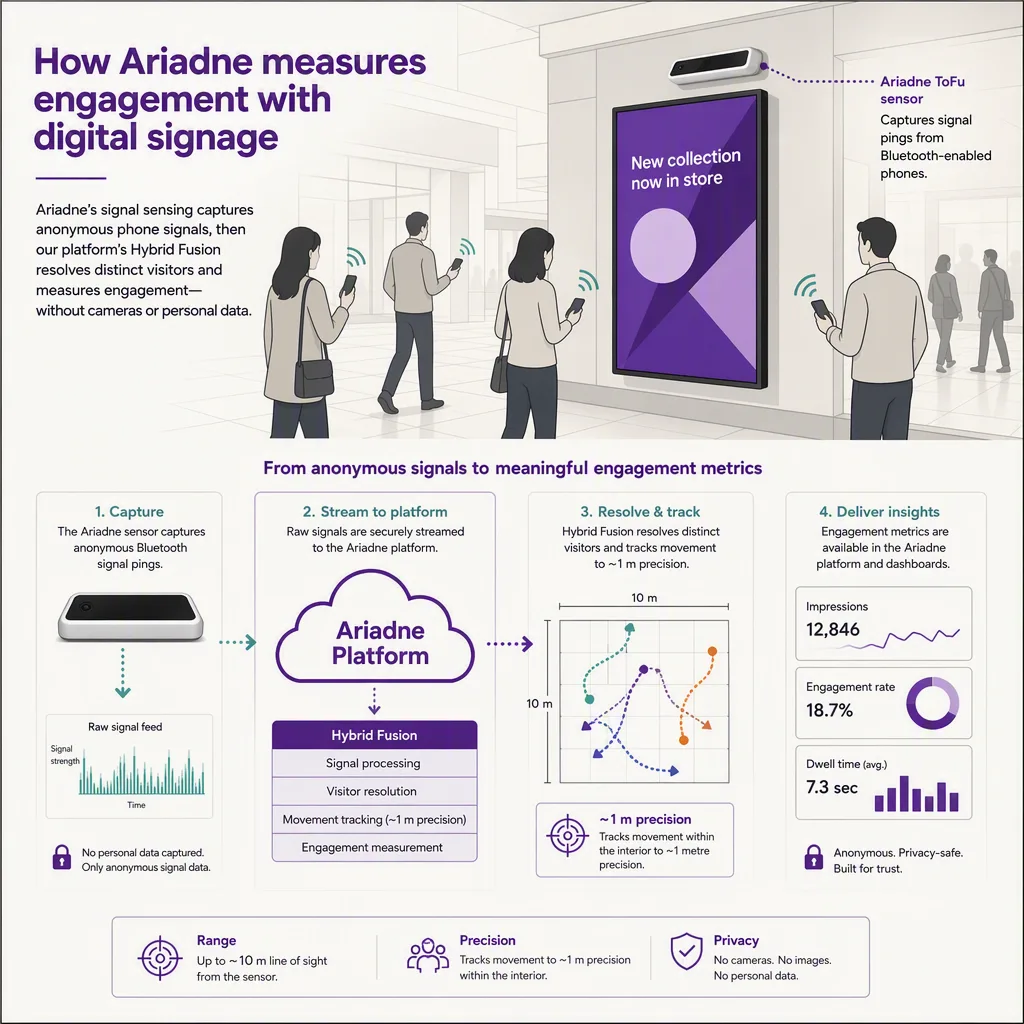
Audience specs: what an impression means here
Networks translate presence into impressions using an audience model: counts of people passing or dwelling near the screen, adjusted for the share likely to notice it. The honest questions are where the counts come from (measured on site, modeled from panels, or licensed from location data), how often they are refreshed, and whether the multiplier is validated by any third party. The standards conversation around those questions, including the bodies that audit them, lives in DOOH measurement standards.
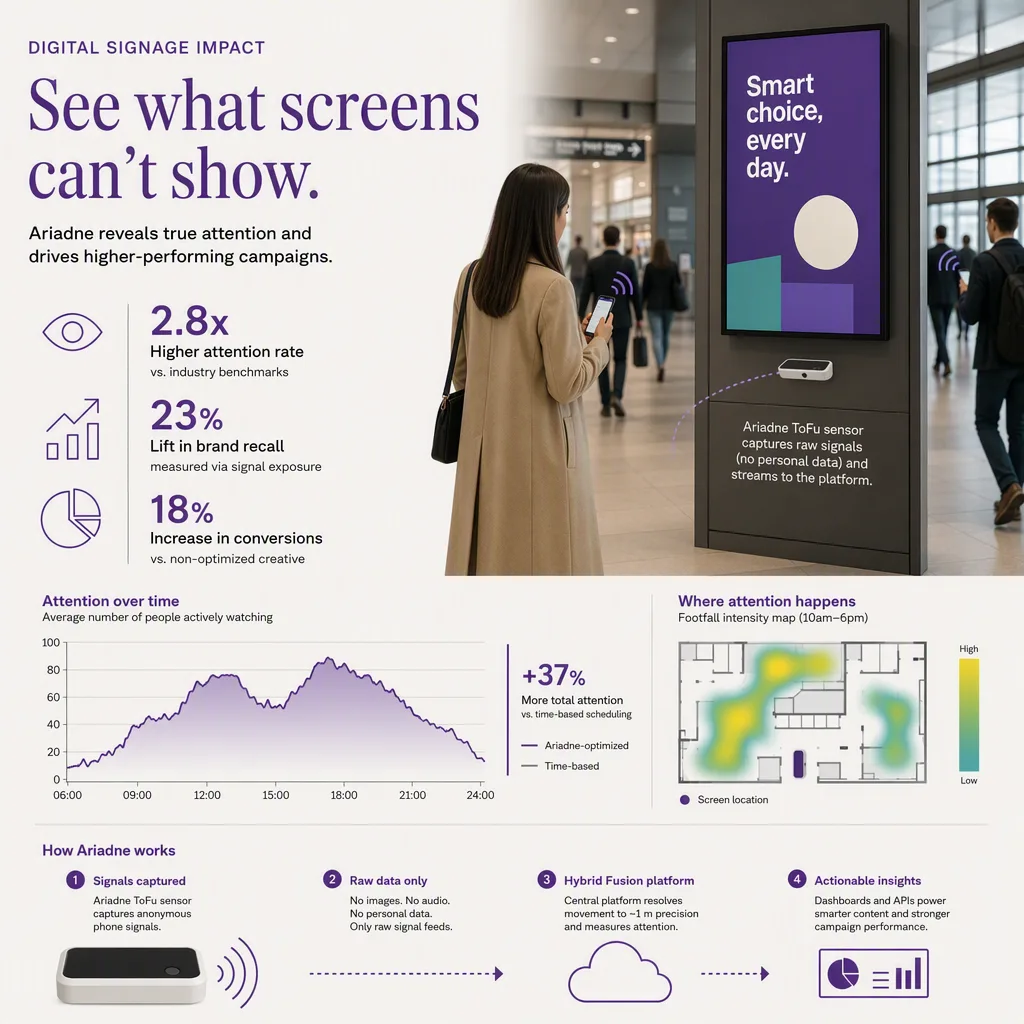
Venues that measure their own traffic hold the strong side of this spec line. A mall, airport, or retailer with independent, camera-free counts of passing and dwelling visitors can state its audience from measurement rather than a licensed model, which is a materially better sales position. That measurement layer is what Ariadne provides to venue owners; the wider privacy argument for doing it without cameras is in DOOH without facial recognition.
---


