
Opportunity is not attention
A DOOH impression is an opportunity to see: a person present near a screen while an ad played. Attention is what advertisers actually want, and the gap between the two is where a growing measurement industry lives. Attention metrics promise to close the gap. They partly do, and understanding which part keeps a media plan honest.
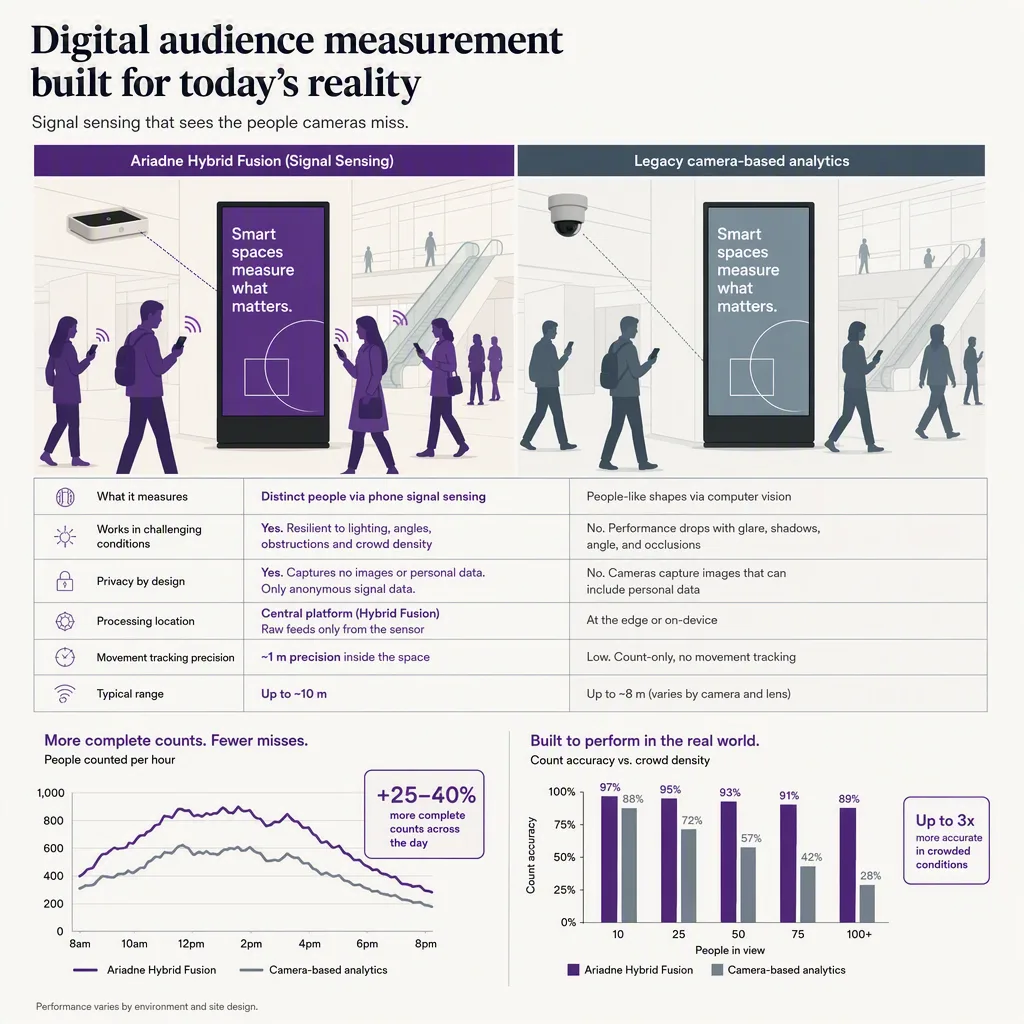
What are attention metrics in DOOH?
Attention metrics estimate the probability and duration of actual notice, typically built from eye-tracking research panels, screen position and size, viewing angle, and the audience's movement context, then applied as adjustments to impression counts. They answer "of the people who could have seen this screen, how many plausibly did, for how long". They are models calibrated on research samples, not per-person observations, and treating an attention-adjusted number as a measurement rather than a modeled estimate is the category's most common overclaim.
What attention models are built from
The research layer is real: eye-tracking studies of how people scan environments produce durable findings (eye-level beats overhead, motion draws gaze, cluttered visual fields suppress notice). The application layer maps those findings onto a specific screen's geometry and context. The context variable that matters most is movement: a person walking briskly past a screen and a person standing in a queue beside it are different attention universes. That difference is not a model input you have to guess; it is measurable, per screen position, as dwell.
Dwell: the measured half of attention
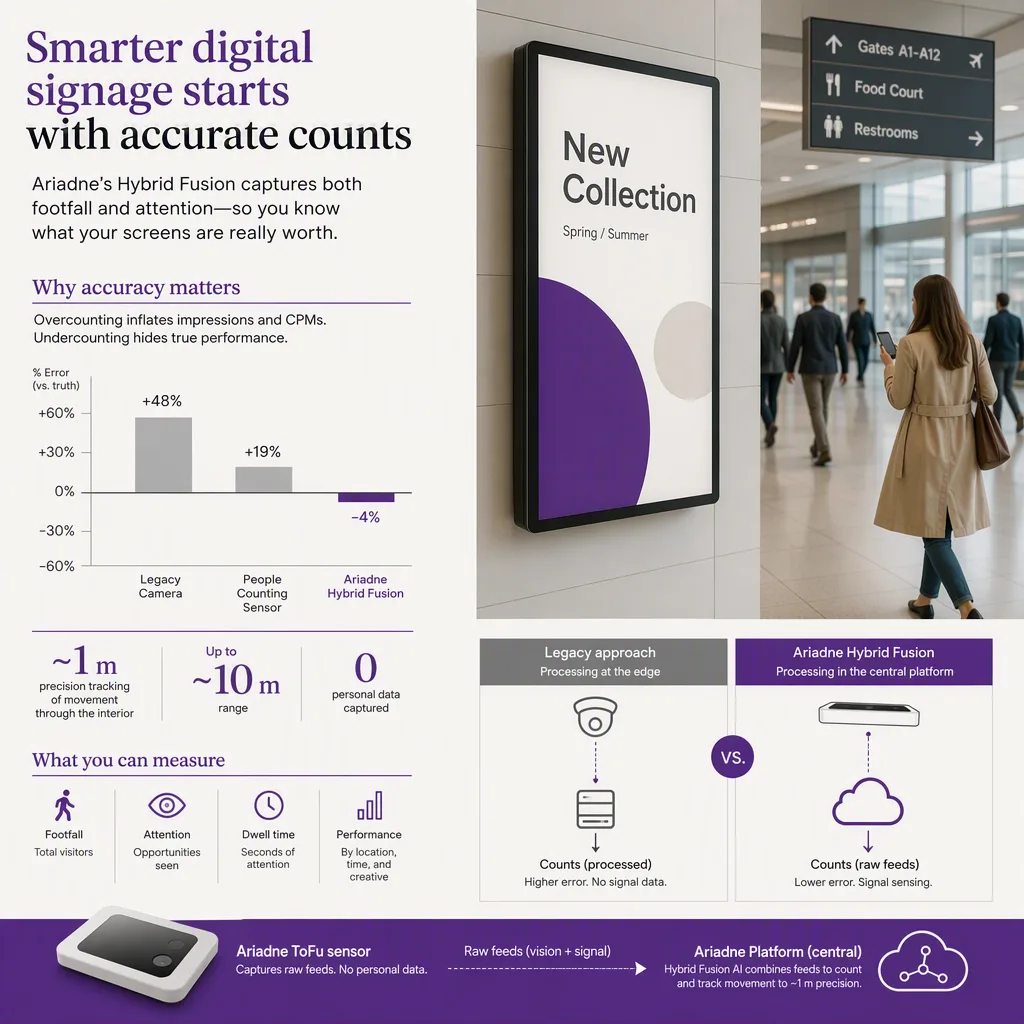
Dwell time is the empirical anchor attention models need. A screen position with a measured average dwell of a few seconds supports one attention assumption; a queue-side position where people demonstrably stand for minutes supports another. Venues that measure dwell continuously at screen positions can ground the attention conversation in observed behavior instead of category averages, which is precisely the measurement layer described in digital signage dwell time. Ariadne provides that layer camera-free: presence and dwell at screen positions, no eye-tracking hardware, no faces, no identity, consistent with the constraint argued in DOOH without facial recognition.
How to use attention metrics without being used by them
Three working rules. First, keep the layers labeled: measured presence, measured dwell, modeled attention, in that order of certainty; a report that blends them into one number has erased its own error bars. Second, use attention adjustments to compare placements within a network (screen A versus screen B), where model biases mostly cancel, rather than to inflate absolute totals. Third, when a vendor quotes an attention figure, ask what it was calibrated on and when; an honest vendor answers immediately. The wider measurement-standards context, including who audits what, is in DOOH measurement standards, and the buying-side view of these numbers in how DOOH audiences are measured.
# Program 3, Cluster 3 (DOOH / in-store retail media) EN drafts: Part B (rows 217-220)
Status: EN drafts for review. Not pushed to CMS. No images, no DE yet.
Author: Govarthan.
---


