
Genauigkeit ist ein Budget, keine Tugend
Zählprojekte behandeln Genauigkeit als einzelne Leiter, auf der höher immer besser und teurer immer sicherer ist. Diese Rahmung verschwendet oben Geld und erzeugt unten Risiko, denn unterschiedliche Entscheidungen tolerieren Fehler sehr unterschiedlich. Eine Trendlinie übersteht Rauschen, das eine Belegungsgrenze ungültig machen würde. Bevor Sie eine Zahl festschreiben, klären Sie, in welcher Stufe Ihr Anwendungsfall tatsächlich liegt, denn die Stufe bestimmt Technologie, Gerätezahl und den größten Teil der Kosten.
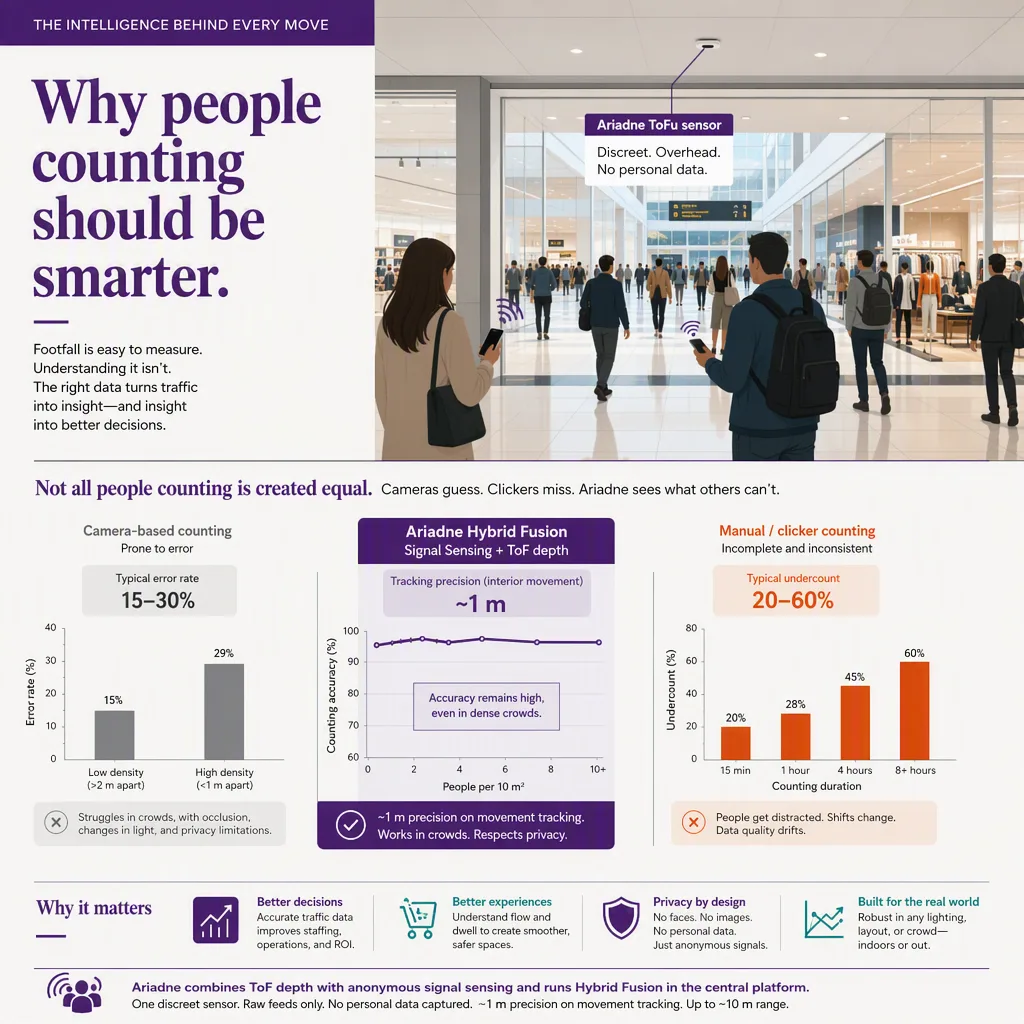
Wie genau muss ein Personenzähler sein?
Es hängt von der Entscheidung ab, die die Zählung speist, und die ehrliche Antwort umfasst vier Stufen. Trend- und Vergleichsarbeit (ist dieser Monat besser als der letzte, welche Filiale ist stärker) toleriert den größten Fehler, sofern er konsistent ist, denn konsistente Verzerrung hebt sich im Vergleich auf. Operative Entscheidungen (Personal an Stundenbedarf) brauchen Verlässlichkeit pro Intervall statt einer guten Tagessumme. Finanzielle und vertragliche Zahlen (Conversion-Reporting, Mieterberichte, Mietverhandlungen, Fördernachweise) brauchen belastbare absolute Genauigkeit mit dokumentiertem Test dahinter. Sicherheits- und Compliance-Zahlen (Belegungsgrenzen, Evakuierungsplanung) brauchen die engste Toleranz plus Richtungsrichtigkeit, denn die Zählung steuert eine Handlung.
Die vier Stufen und was jede verlangt
Stufe 1, Trend und Vergleich. Wichtig ist Stabilität, nicht absolute Wahrheit: dieselbe Tür, Woche für Woche gleich gezählt. Eine konsistente Unterzählung von 4 % ist hier fast harmlos, eine wandernde von 4 % nicht, weshalb Drift-Erkennung mehr zählt als die Kennzahl auf dem Datenblatt. Die Driftfrage ist eine Servicefrage, behandelt in Wartung und SLA.
Stufe 2, operativ. Personal- und Schlangenentscheidungen verbrauchen Stunden- oder Viertelstundenwerte, also ist Genauigkeit pro Intervall die relevante Kennzahl, nicht die Tagessumme, die den meisten Datenblättern schmeichelt. Ein System, das eine schöne Tageszahl liefert und dabei die Stundenform verwürfelt, ist für bedarfsbasierte Personalplanung und Kurzfristprognosen nutzlos.
Stufe 3, finanziell und vertraglich. Wenn Zählwerte in Conversion-Reporting, Mieterabrechnungen oder einem Mietgespräch auftauchen, wird sie irgendwann jemand anfechten, also lautet die Anforderung absolute Genauigkeit mit Aktenlage: ein dokumentierter Vor-Ort-Test, eine bekannte Methode und ein Wiederholungsrhythmus. Die Metrikdefinitionen zählen hier enorm und stehen in Spezifikationen für Personenzählung, der Test selbst in der Methodik zum Genauigkeitstest.
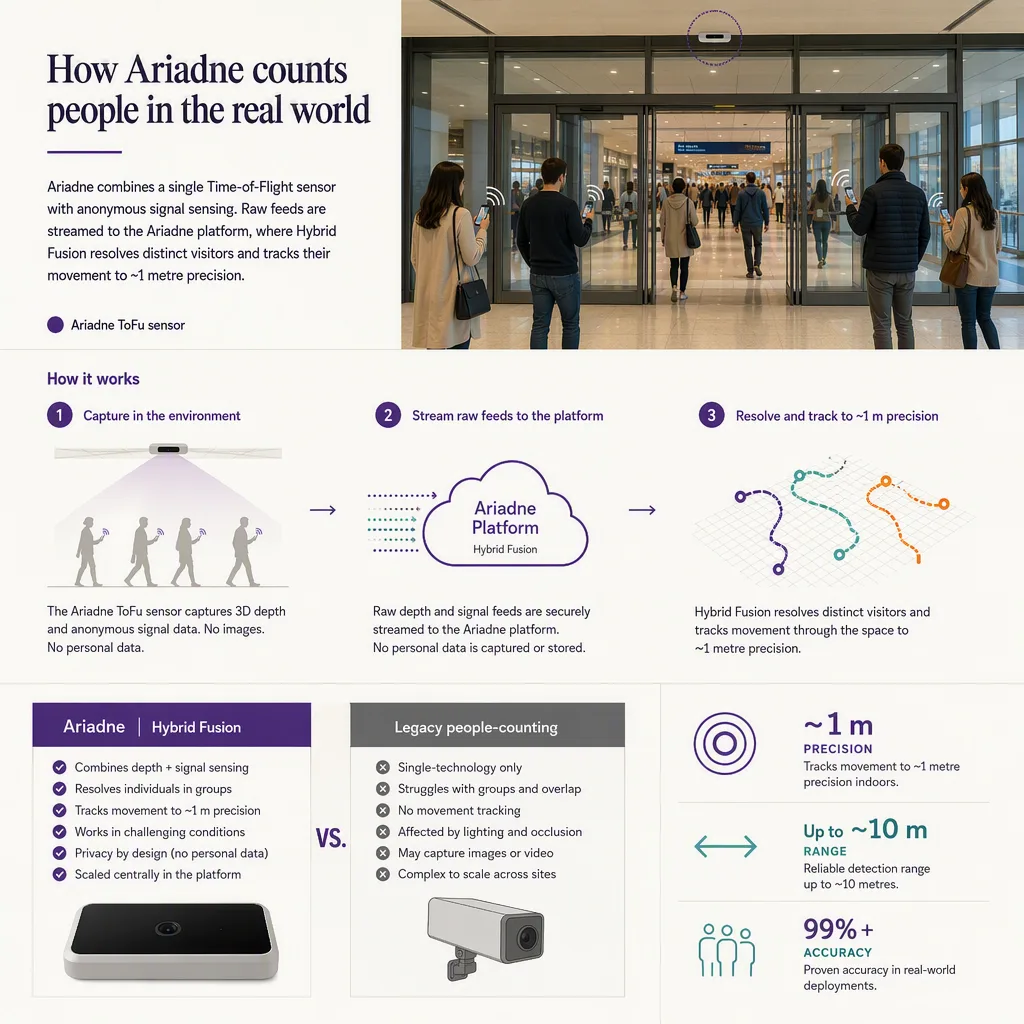
Stufe 4, Sicherheit und Compliance. Eine Belegungsgrenze verwandelt eine Zählung in eine Handlung, also müssen Betrag und Richtung in Echtzeit stimmen, und der Fehlermodus muss sicher sein (ein System, das still aufhört zu zählen, muss sofort erkennbar sein). Diese Stufe rechtfertigt Redundanz, die in Stufe 1 verschwenderisch wäre.
Erst die Stufe festlegen, dann die Zahl
Die praktische Reihenfolge: die Entscheidungen benennen, die die Daten treiben, jede einer Stufe zuordnen, die höchste relevante Stufe nehmen und dann die Genauigkeitsanforderung in den Begriffen dieser Stufe schreiben (Konsistenz, pro Intervall, absolut oder Echtzeit mit Richtung). Dieser Schritt verhindert, dass eine Spezifikation Stufe-4-Strenge für Stufe-1-Reporting verlangt, der häufigste Weg, Zählbudgets aufzublähen, und den umgekehrten Fehler, mit dem Mieterstreitigkeiten beginnen. Beide Seiten des Problems stehen in den Genauigkeitsfaktoren und, für die grundlegende Behandlung der Genauigkeitsfrage selbst, in wie genau Personenzähler sind.
Wo Ariadne einzuordnen ist
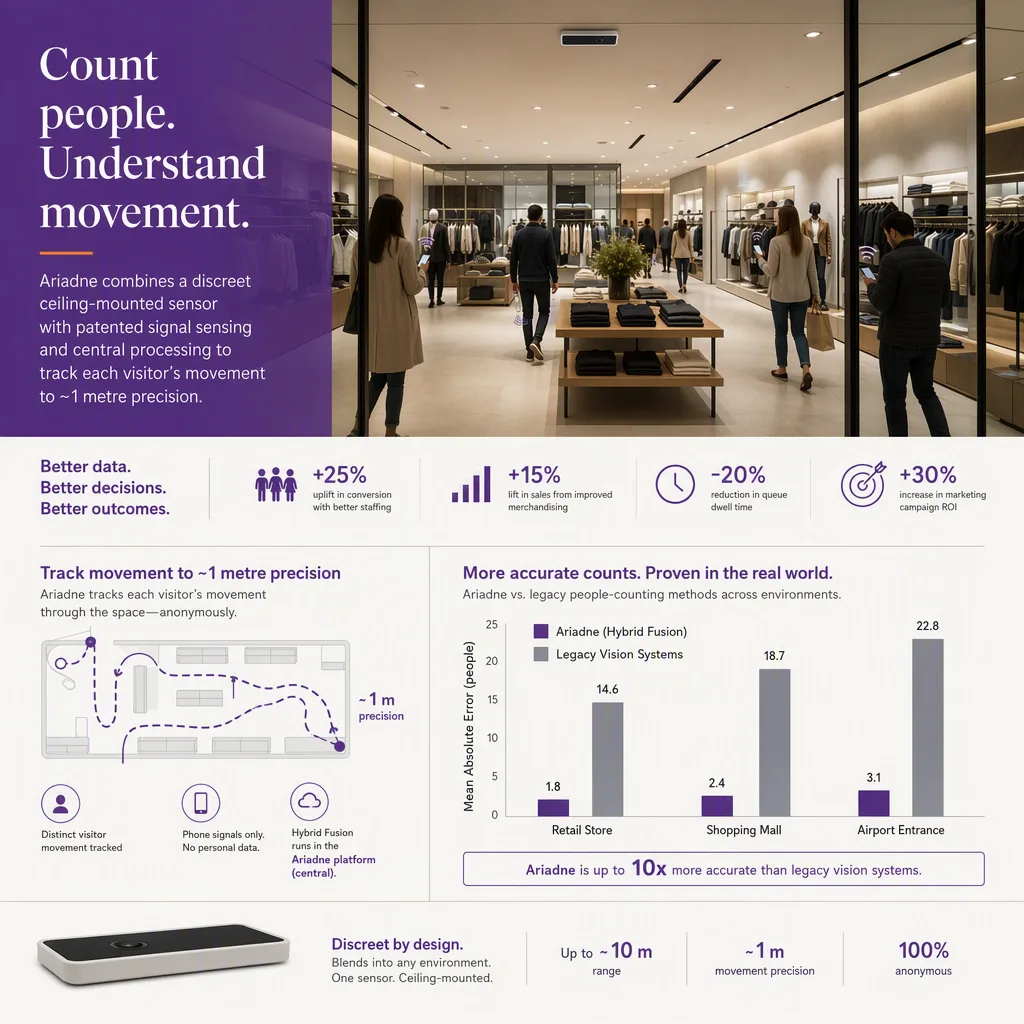
Ariadnes kamerafreie Messung dient allen vier Stufen, und der ehrliche Weg festzustellen, welche Stufe eine Installation an Ihrem Standort erreicht, ist ein dokumentierter Test an Ihren eigenen Türen statt einer Zahl von uns. Speziell zur genauen Besucherzählung, inklusive dessen, was die Behauptung "genau" vor dem Kauf bedeuten sollte, beginnt bei dem Leitfaden zur genauen Besucherzählung.
---


