
Der Gebäudetyp, für den Navigation erfunden wurde
Krankenhäuser sind das schwierigste Wegeleitproblem im Bauwesen: über Jahrzehnte gewachsene Areale, Abteilungen, die umziehen, Besucher, die gestresst ankommen, und Kosten des Verlaufens, die in verpassten Terminslots und unterbrochenen Ärztinnen gemessen werden statt in leichtem Ärger. Wenn Indoor-Navigation irgendwo ihr Budget verdient, dann hier. Die Frage ist, was man kauft, denn das Anbieterfeld reicht von Beschilderungs-Auffrischungen bis zu vollständigen Positionierungsplattformen.
Was leistet ein Indoor-Navigationssystem im Krankenhaus?
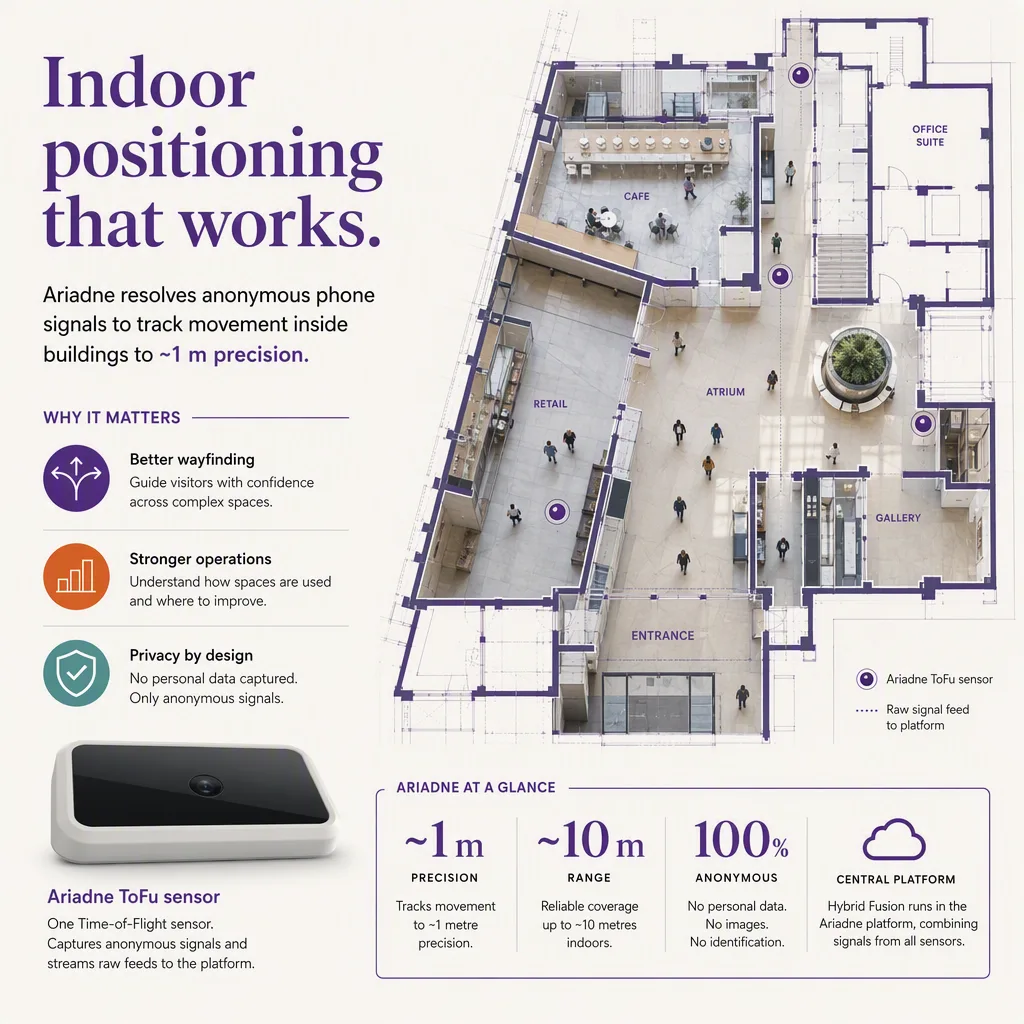
Mindestens: einen Grundriss in Routen verwandeln, die eine Patientin vom Eingang (oder Parkhaus) zu einem benannten Ziel wie Ambulanz, Station oder Diagnostik führen, ausgeliefert über Kioske, die Klinik-Website oder das Telefon. Umfangreichere Systeme ergänzen Live-Positionierung (Blue-Dot-Führung), Terminintegration (die Route kommt mit der Bestätigung), barrierefreie Routenführung für stufenlose Wege und Auswertungen darüber, wo Besucher tatsächlich scheitern. Die klinischen Journey-Muster dazu behandelt ambulante Wegeführung im Krankenhaus.
Was es messbar behebt
Drei Kosten dominieren den Business Case. Verpasste und verspätete Termine durch Navigationsversagen, die Ambulanzen als No-Show- und Verzögerungsraten sehen. Personalunterbrechung: Jeder verlorene Besucher fragt den nächsten Kittel, und Stationstresen an Kreuzungen zahlen eine Daueraufgabe an Wegbeschreibungen. Und Begleitarbeit: Pfortenkräfte und Freiwillige, die Menschen zu Zielen bringen, die eine Route auf dem Telefon erledigt hätte. Ein System, das das reduziert, ist keine Annehmlichkeit, sondern Kapazität.
Die Checkliste für den Einkauf
- Abdeckung von Eingang bis Ziel, inklusive Parkhaus und Shuttle-Haltestellen; eine Route, die in der Lobby beginnt, hat das schwerste Viertel der Journey übersprungen (Navigation vom Parkplatz zum Ziel behandelt diese Etappe).
- Barrierefreie Routen als eigener Modus, nicht als Fußnote: stufenlos, reizarm und mit Begleitung, gemäß barrierefreien Wegeketten.
- Aktualisierungs-Workflow. Abteilungen ziehen um; eine Karte, die der Realität ein Quartal nachläuft, ist schlechter als Beschilderung. Fragen Sie, wer die Karte bearbeitet und wie lange eine Änderung braucht, bis sie jeden Kiosk und jedes Telefon erreicht.
- Optionen ohne Installation. Patientinnen laden für einen Besuch keine App; Weblinks aus Terminbriefen und Kioske tragen die Hauptlast, mit Kiosk-Platzierung nach Flussdaten.
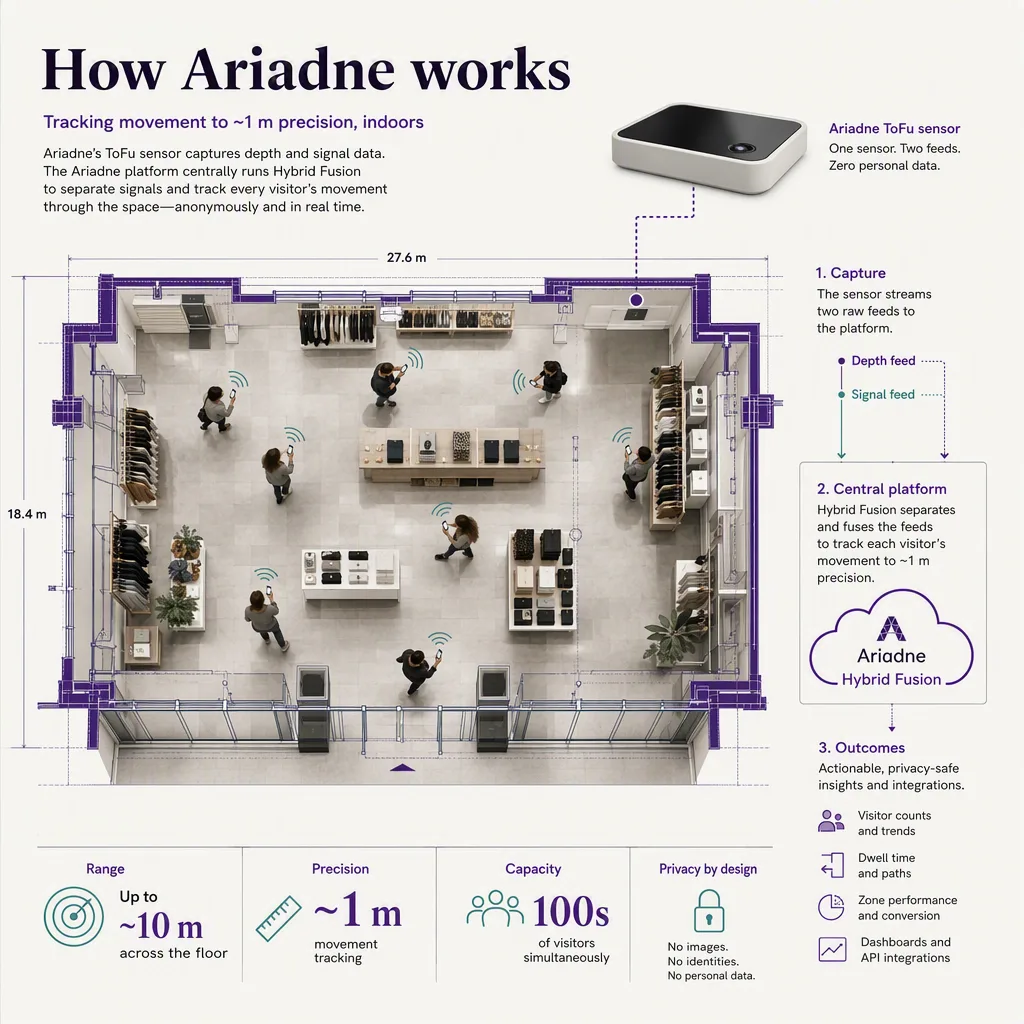
- Ehrlichkeit bei der Infrastruktur. Beacon-Flotten im Krankenhaus bedeuten Batterien, Wartungszugang zu klinischen Bereichen und Hygieneprüfung. Infrastrukturarme Ansätze vermeiden diese Verhandlung komplett; der Trade-off steht in Indoor-Navigation ohne Infrastruktur.
- Datenschutzhaltung. Patientenbewegungen sind per Definition sensibel; Führung muss funktionieren, ohne einen Datensatz darüber aufzubauen, wer in welche Ambulanz ging. Positionierung ohne Identität, der Ansatz aus Datenschutz bei Indoor-Positionierung, hält das Projekt aus der datenschutzrechtlichen Eskalation heraus.
Wo Ariadne einzuordnen ist
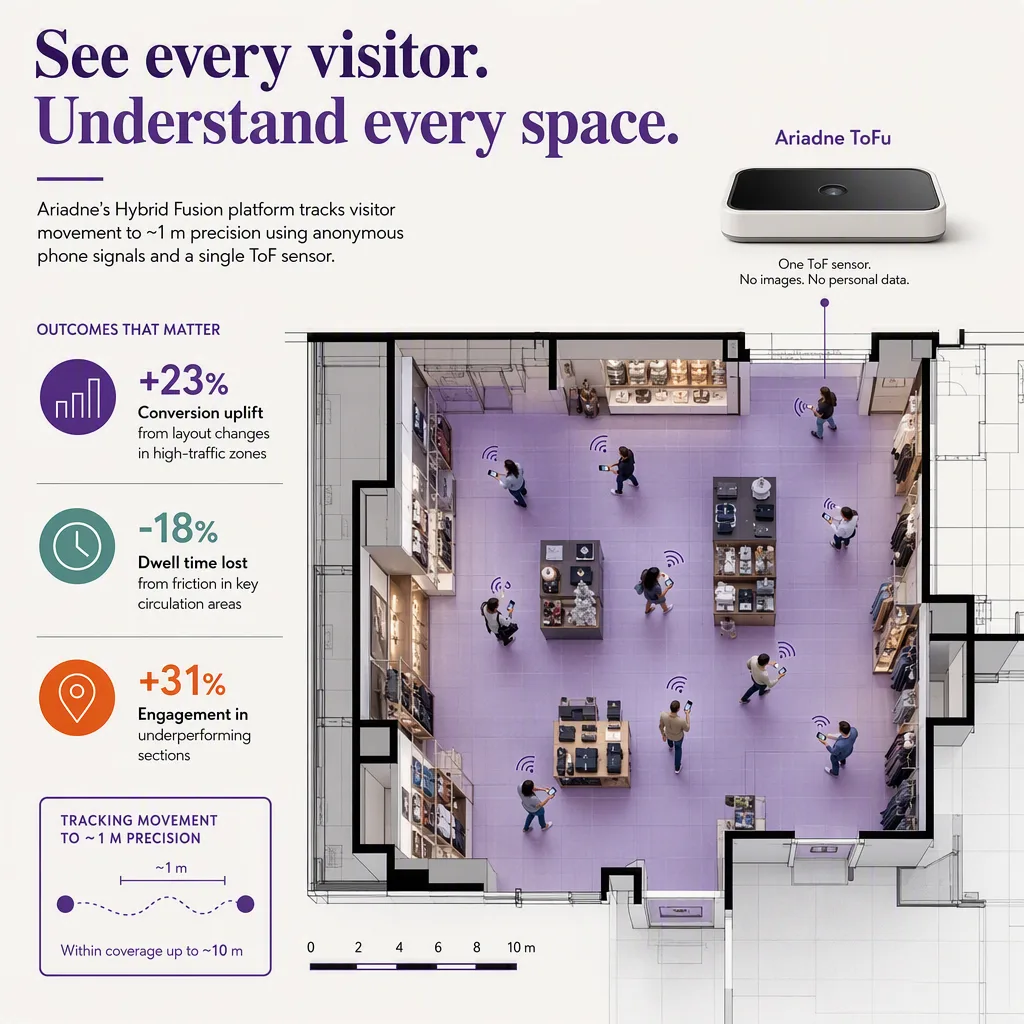
Ariadne verwandelt Grundrisse in Echtzeit-Führung über App, Web, Kioske und Signage, auf einer datenschutzfreundlichen Positionierungsschicht, dieselbe Plattform wie in dem Indoor-Navigation-Pillar. Für Krankenhäuser zählt die Form: keine patientenbezogene Identität in der Führungsschicht, und dieselbe Messgrundlage, die zeigt, wo Journeys tatsächlich hängen, sodass das Wegeleitbudget dort landet, wo Besucher nachweislich verloren gehen.
---


